Behavior
What are quick tips for managing Miniature Schnauzer gastrointestinal disorders?
Consider feeding smaller, more frequent meals, and avoid sudden diet changes. A consistent feeding schedule can also help stabilize their digestive system.

Quick answer
What are quick tips for managing Miniature Schnauzer gastrointestinal disorders?
Consider feeding smaller, more frequent meals, and avoid sudden diet changes. A consistent feeding schedule can also help stabilize their digestive system.
Miniature Schnauzer gastrointestinal disorders can be a serious concern for dog owners. These issues can lead to discomfort and health complications.
Owners of Miniature Schnauzers, especially first-time dog parents, may struggle with these disorders. Understanding the signs can help prevent serious health issues down the line.
This guide is not medical advice. If your dog shows pain, sudden behavior change, or worsening symptoms, consult a licensed veterinarian.
Some links may be affiliate links. We may earn a commission at no extra cost to you. We only suggest products we believe are helpful for dog owners.
We research and check what we publish, but we do not warrant that any figure, date, price, or statement is accurate, complete, or current, and we accept no liability for any loss, cost, injury, or other harm arising from the use of this site. Use it as one reference among several. You remain responsible for your own decisions and for your dog's care - confirm anything that matters with a licensed veterinarian or another qualified professional before you act on it. Full disclaimer.
Check this first
It's crucial to recognize when your Miniature Schnauzer's gastrointestinal disorders require immediate veterinary attention. Look for red-flag signs that indicate an emergency situation. These include persistent vomiting, blood in the stool, severe abdominal pain, or signs of dehydration such as excessive drooling or lethargy. If your dog shows any of these symptoms, call your vet right away.
On the other hand, mild gastrointestinal issues can often be monitored at home. If your Schnauzer experiences occasional diarrhea or vomiting but remains active and hydrated, you may not need an immediate vet visit. In these cases, keep an eye on their behavior and diet. Maintaining a regular feeding schedule and avoiding sudden changes in food can help manage these mild symptoms.
However, if mild symptoms persist for more than 24 hours or worsen, it's time to consult your vet. A proactive approach can help prevent more severe health issues down the road. Always trust your instincts; if you feel something is off, it's better to err on the side of caution.
If any of these apply, call your vet or an emergency clinic now. The rest of this page is for the cases that are not an emergency.
Miniature Schnauzer gastrointestinal disorders can lead to daily discomfort for your pup. Symptoms may include vomiting, diarrhea, and decreased appetite. These issues can stem from various triggers, such as dietary changes, stress, or underlying health conditions.
Gastrointestinal disorders are relatively common in Miniature Schnauzers. Many owners report experiencing these issues at least once during their dog's life, especially as they age. Regular vet check-ups can help catch problems early.
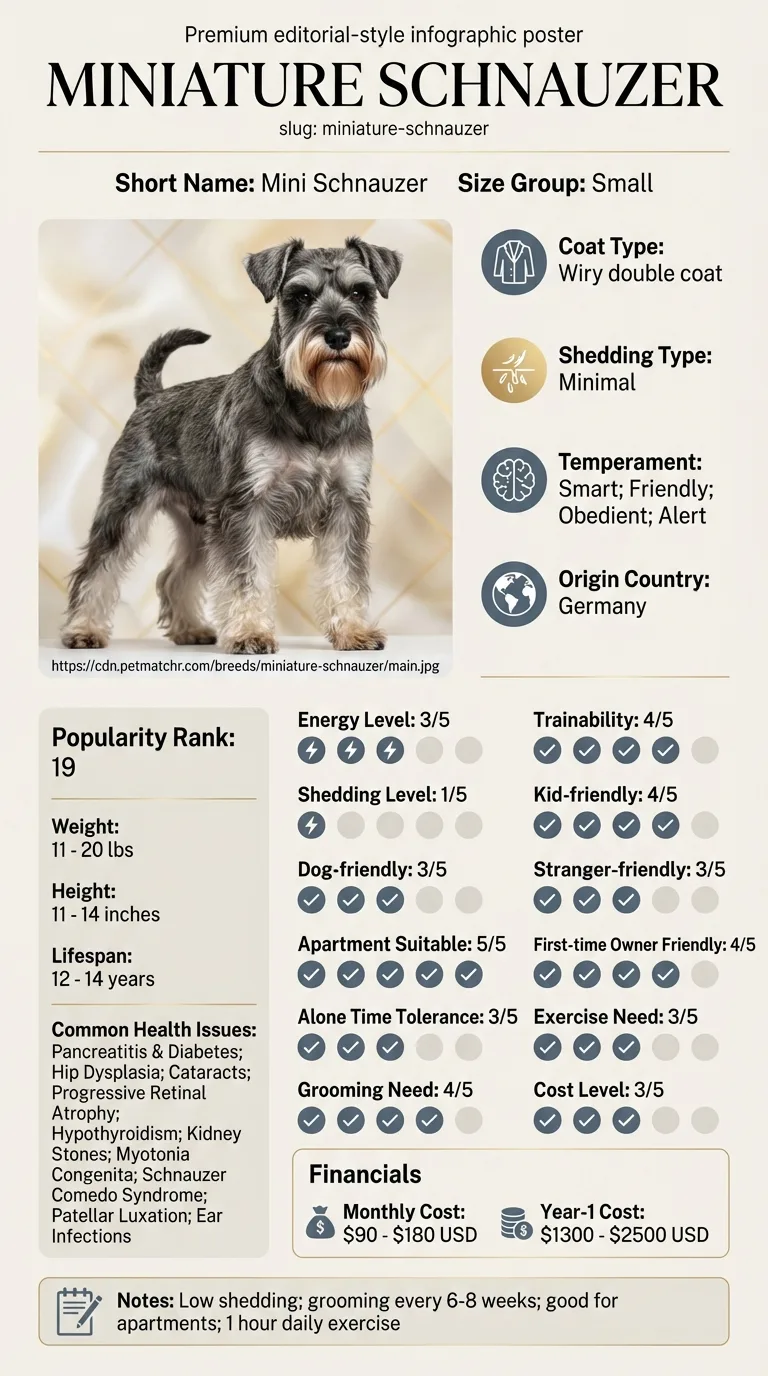
Miniature Schnauzers are prone to certain genetic conditions that can affect their gastrointestinal health. Issues like pancreatitis and inflammatory bowel disease are more common in this breed. Their wiry double coat and overall size can also correlate with digestive sensitivities.
Diet plays a significant role in gastrointestinal disorders. Low-quality food or sudden changes in diet can upset their stomachs. Stress from changes in their environment or routine may also trigger gastrointestinal issues.
Consult a vet if your Miniature Schnauzer experiences persistent vomiting, diarrhea, or signs of pain. If dietary changes don't improve their symptoms, it's crucial to rule out serious conditions like pancreatitis or gastrointestinal blockages.
Avoiding common mistakes can help your Miniature Schnauzer with gastrointestinal disorders. Here are some behaviors to steer clear of.
Start here: Miniature Schnauzer Most Common Genetic Disorders: Screening
See all Miniature Schnauzer health problems, which breeds are prone to gastrointestinal disorders, or the full Miniature Schnauzer breed guide for temperament, exercise needs and ownership costs.
Most owners can start seeing improvements in their Miniature Schnauzer's gastrointestinal issues within a few weeks of adopting a consistent management plan.
Success means your Miniature Schnauzer experiences fewer gastrointestinal symptoms, such as vomiting or diarrhea, and shows improved overall energy and well-being.
Emily, a first-time dog owner, noticed her Miniature Schnauzer, Max, frequently had stomach issues. After several vet visits and much research, she learned that Max had a mild case of inflammatory bowel disease. She worked closely with her veterinarian to adjust Max's diet and incorporate a probiotic supplement. Within a month, Max's symptoms improved dramatically, allowing him to enjoy his daily walks and playtime without discomfort.
Key takeaway: With the right dietary changes and a vet-approved plan, you can effectively manage your Miniature Schnauzer's gastrointestinal disorders and enhance their quality of life.
Miniature Schnauzers can experience gastrointestinal disorders due to various factors, including diet, stress, and genetic predispositions. Common issues include inflammatory bowel disease, acid reflux, and pyloric stenosis. It's crucial to observe their diet and consult a vet for proper diagnosis.
To help manage gastrointestinal disorders in your Miniature Schnauzer, begin with a high-quality, balanced diet tailored to their needs. Regular vet check-ups and monitoring for stressors, like changes in routine, can also make a significant difference.
Signs may include vomiting, diarrhea, loss of appetite, or excessive gas. If your Mini Schnauzer shows any of these symptoms, it's important to consult your veterinarian for further evaluation.
While training won't directly resolve gastrointestinal disorders, it can reduce stress and anxiety, which may contribute to digestive issues. Teaching your Miniature Schnauzer commands and providing mental stimulation can help them feel more at ease.
Yes, diets that are high in fiber and low in fat are often recommended for Miniature Schnauzers with gastrointestinal disorders. Consult your vet for specific dietary recommendations that suit your dog's unique health needs.
You can help by providing a balanced diet tailored to their needs, ensuring they stay hydrated, and avoiding table scraps. Regular vet check-ups can also help manage any ongoing issues.
You should take your Miniature Schnauzer to the vet if symptoms persist for more than 24 hours or if they show signs of severe discomfort or dehydration. Timely intervention can prevent more serious health issues.
Yes, stress can contribute to gastrointestinal issues. Changes in environment, routine, or even separation anxiety can trigger these problems, so it's crucial to monitor their emotional well-being.
Yes, easily digestible foods like boiled chicken and rice are often recommended for dogs with gastrointestinal issues. Always consult your vet for specific dietary recommendations tailored to your Miniature Schnauzer's needs.
Consider feeding smaller, more frequent meals, and avoid sudden diet changes. A consistent feeding schedule can also help stabilize their digestive system.
Treatment costs can vary widely, ranging from $300 to $1,500 depending on the severity and type of disorder. Regular vet visits are essential for managing health.
Absolutely! Stress can exacerbate gastrointestinal issues, so creating a calm environment and maintaining a routine can be beneficial for your Mini Schnauzer's overall health.
A one-page prep sheet for this condition: the signs, the questions to ask, what to get priced. Unlocks here.
You get: Vet visit prep sheet
No spam. One-click unsubscribe. See our privacy policy.
Preview page 1 before you decide.