Health
What's the biggest clue that points to a liver shunt rather than a behavior issue?
Symptoms that noticeably worsen after meals, since that timing points toward a metabolic toxin buildup rather than a purely behavioral cause.

Quick answer
What's the biggest clue that points to a liver shunt rather than a behavior issue?
Symptoms that noticeably worsen after meals, since that timing points toward a metabolic toxin buildup rather than a purely behavioral cause.
A puppy that seems oddly disoriented after meals, unusually small for its litter, or slow to house-train isn't necessarily just a difficult puppy — it can be a vascular problem affecting how toxins are cleared from the blood.
This is most relevant to owners of puppies showing unexplained neurological or growth abnormalities, particularly those noticing symptoms that seem to worsen after meals rather than staying constant.
This guide is not medical advice. If your dog shows pain, sudden behavior change, or worsening symptoms, consult a licensed veterinarian.
Some links may be affiliate links. We may earn a commission at no extra cost to you. We only suggest products we believe are helpful for dog owners.
We research and check what we publish, but we do not warrant that any figure, date, price, or statement is accurate, complete, or current, and we accept no liability for any loss, cost, injury, or other harm arising from the use of this site. Use it as one reference among several. You remain responsible for your own decisions and for your dog's care - confirm anything that matters with a licensed veterinarian or another qualified professional before you act on it. Full disclaimer.
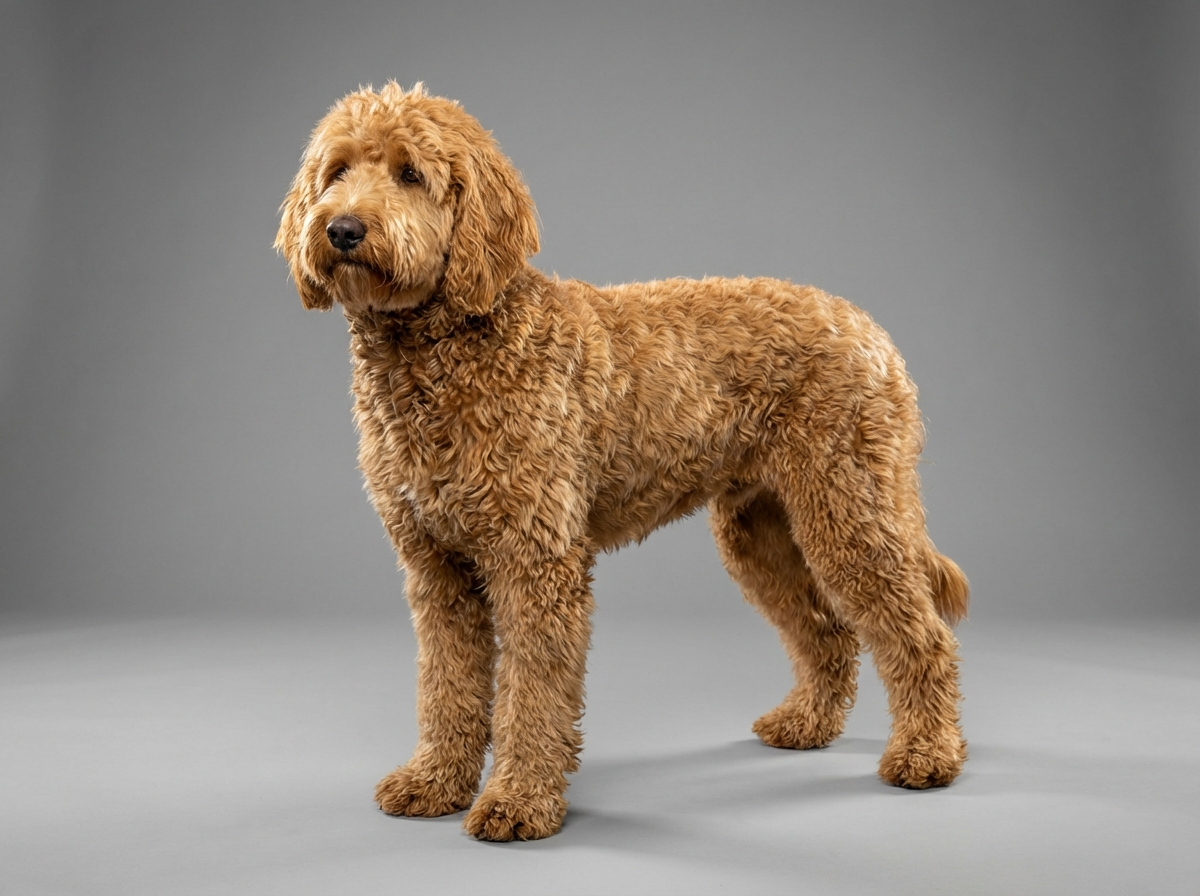
A liver shunt is an abnormal blood vessel that lets blood bypass the liver's filtering function, allowing toxins like ammonia to build up and affect the brain and nervous system. In Goldendoodle puppies, it typically shows up as a confusing cluster of signs including disorientation after meals, smaller size than littermates, and difficulty with house-training, rather than any single obvious symptom.
Liver Shunts, or portal vein abnormalities, are a documented health concern in Goldendoodles, and congenital shunts specifically are one of the more commonly diagnosed liver-related conditions in young dogs presenting with unexplained growth or neurological symptoms.
Portosystemic shunts are documented across a range of breeds, and while neither Golden Retriever nor Poodle lineage carries a uniquely dominant predisposition compared to certain other breeds, congenital vascular abnormalities like this can still occur in any line, making it a genuine, if less predictable, risk within the Goldendoodle cross.
There isn't an environmental trigger that causes a congenital shunt, since it's a vascular abnormality present from birth, but diet composition, specifically protein content and timing of meals, directly affects how severely and how often symptoms appear once the underlying shunt exists.
Bring a puppy in promptly for evaluation if you notice disorientation, head pressing, unusual smallness compared to littermates, or persistent house-training difficulty. Treat active seizures or sudden severe disorientation as an emergency requiring immediate veterinary care.
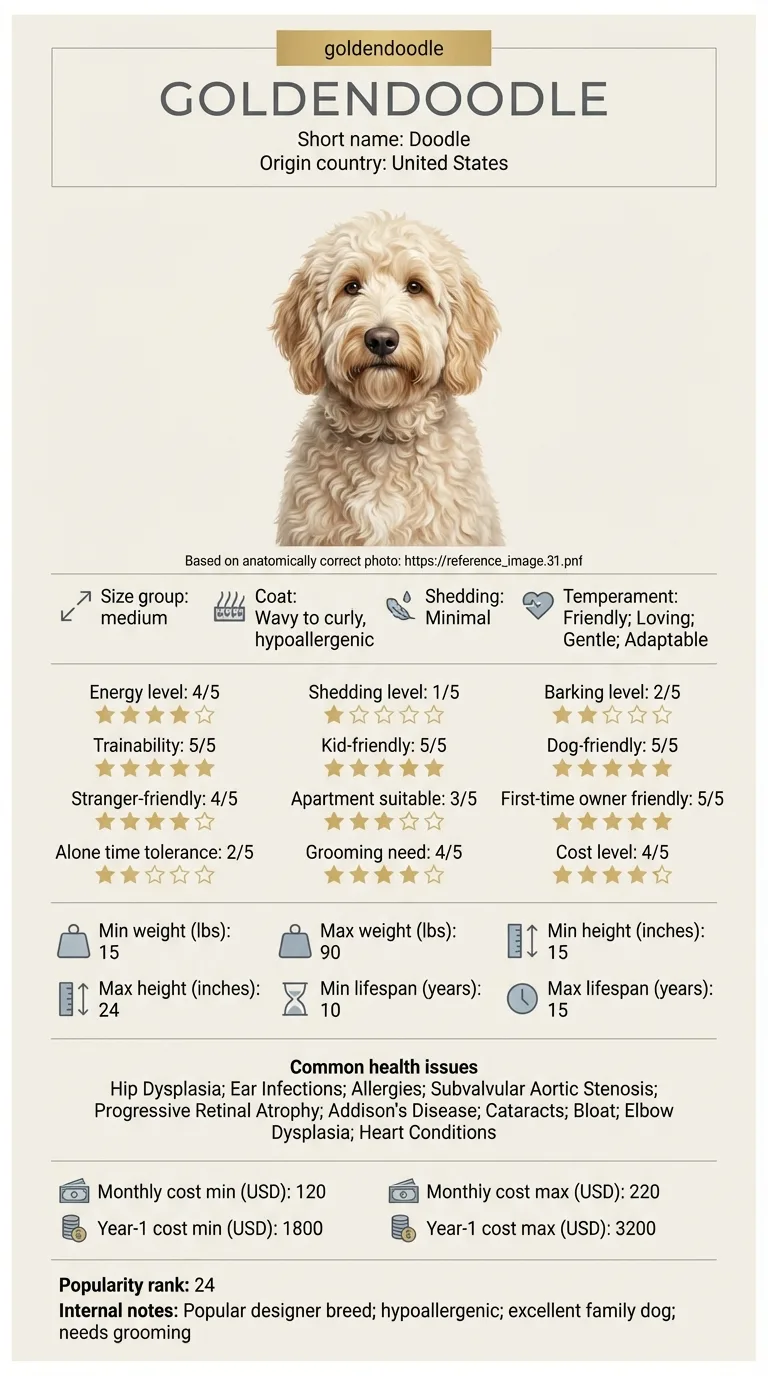
See all Goldendoodle health problems, which breeds are prone to liver shunts, or the full Goldendoodle breed guide for temperament, exercise needs and ownership costs.
Initial bloodwork screening can often be completed within a single visit, with confirmatory imaging typically scheduled within one to two weeks if bile acids are abnormal. Surgical recovery, when surgery is pursued, generally involves several weeks of restricted activity and follow-up bloodwork to confirm improved liver function.
Success looks like an accurate diagnosis reached before severe or repeated toxin-related episodes occur, and, for surgical candidates, a puppy that goes on to grow and develop normally once the shunt is corrected and the liver has time to adapt.
Because a shunt allows toxins, particularly ammonia from protein digestion, to bypass liver filtering, the resulting hepatic encephalopathy can cause disorientation, head pressing against walls or furniture, apparent blindness, seizures, or unusual lethargy, especially after a protein-rich meal when toxin production temporarily spikes. This meal-linked pattern is one of the more distinctive clues, since symptoms that noticeably worsen an hour or two after eating point toward a metabolic rather than a purely behavioral cause.
A shunted puppy is also commonly smaller than littermates, since chronic toxin exposure and poor liver function affect normal growth and development. Some shunted puppies show unusually slow or unsuccessful house-training, since increased thirst and urination, another common effect of impaired liver function, work against normal bladder training progress no matter how consistent an owner is.
Congenital shunts, present from birth, are the type most often diagnosed in young dogs and are typically a single abnormal vessel that can, in many cases, be surgically corrected. Diagnosis usually involves bloodwork showing elevated bile acids, sometimes alongside imaging like ultrasound or a specialized scan to directly visualize the abnormal vessel.
Because these signs can be mistaken individually for normal puppy behavior, mentioning the full pattern together, rather than one symptom at a time, helps a vet connect the dots faster.

If you think your Doodle has liver shunts, the plan is three steps: write down what you have seen and when it started, book a veterinary appointment rather than waiting for the next flare, and take video of the behaviour or symptom before you go — the thing you are worried about rarely happens in the consulting room. Screening in the parents covers hip dysplasia, ear infections, allergies.
What the vet visit should produce is a diagnosis and a written plan, not just reassurance: what is being ruled out, what the monitoring interval is, and which signs mean you come back sooner. Ask what the treatment costs across a year rather than per visit, because that is the number that decides whether you are managing this condition or reacting to it.
Between appointments, keep a short log — dates, what you saw, what changed. It is the single most useful thing an owner brings to a follow-up, and for liver shunts it is often what separates a clear pattern from a guess.
Aidan noticed his Goldendoodle puppy, Juniper, would sometimes stare blankly at the wall or seem oddly unsteady about an hour after her evening meal, though she seemed completely normal the rest of the day. She was also noticeably smaller than her two littermates. Aiden mentioned the meal-linked pattern specifically at her next vet visit rather than describing the episodes in isolation. Her vet recognized the pattern immediately and ran a bile acids test, which came back significantly elevated. An ultrasound confirmed a single congenital liver shunt. Juniper underwent surgical correction, and after a recovery period on a prescribed diet, her energy and coordination returned to normal, with follow-up bloodwork eventually showing improved liver function.
Key takeaway: Describing the full pattern of symptoms together, especially the timing relative to meals, gave Juniper's vet exactly the clue needed to suspect a liver shunt rather than a vague behavioral quirk.
Congenital shunts, present from birth, are the most common type diagnosed in young dogs. Acquired shunts can develop later in life secondary to severe liver disease, but this is a different and less common scenario in puppies.
Bloodwork showing elevated bile acids, particularly after a meal, is often the first strong clue, followed by imaging such as ultrasound, CT angiography, or nuclear scintigraphy to directly visualize and confirm the abnormal vessel.
Medical management, including a specific low-protein diet and medications to reduce toxin production and absorption, can control symptoms in some dogs, but surgical correction generally offers the best long-term outcome for a single congenital shunt when the dog is a good surgical candidate.
If treated surgically and the liver recovers well, many dogs can eventually transition off a strict low-protein diet under veterinary guidance. Dogs managed medically without surgery typically need lifelong dietary management.
Protein digestion produces ammonia, which a shunt allows to bypass the liver's filtering process, so toxin levels in the blood can spike temporarily after a protein-rich meal, which is exactly why symptoms often worsen in that window.
For a single congenital shunt in an otherwise good surgical candidate, success rates are generally favorable, though it's a specialized surgery best performed by an experienced veterinary surgeon, and recovery involves careful post-operative monitoring.
Symptoms that noticeably worsen after meals, since that timing points toward a metabolic toxin buildup rather than a purely behavioral cause.
A bile acids test, often measured before and after a meal, is a standard first-line screening test.
Diagnostic imaging and surgical correction together commonly run into the several-thousand-dollar range depending on the specific procedure used.
Many dogs treated successfully, especially surgically, go on to live a normal or near-normal life, though outcomes depend on shunt type and severity.
Active seizures or severe disorientation from toxin buildup require immediate veterinary attention; milder signs still warrant prompt, not emergency, evaluation.
A one-page prep sheet for this condition: the signs, the questions to ask, what to get priced. Unlocks here.
You get: Vet visit prep sheet
No spam. One-click unsubscribe. See our privacy policy.
See a sample page before you decide.
Early access list
The free prep sheet covers the same-day warning signs, a symptom log and the questions to ask. We are considering a fuller kit that adds a cost worksheet for the usual tests and treatments (US price ranges with their sources) and a plain-English guide to ways of covering the bill. It is not built yet; this list tells us whether it is worth building.
One email, no spam, unsubscribe anytime. Information only, not veterinary advice.