Health
What's the classic trigger for a pancreatitis episode?
An unusually fatty meal or treat is the most commonly documented trigger, often tied to holidays or table scraps.

Quick answer
What's the classic trigger for a pancreatitis episode?
An unusually fatty meal or treat is the most commonly documented trigger, often tied to holidays or table scraps.
The classic story behind a pancreatitis diagnosis is almost always some version of 'he got into something fatty' followed by vomiting that just won't stop.
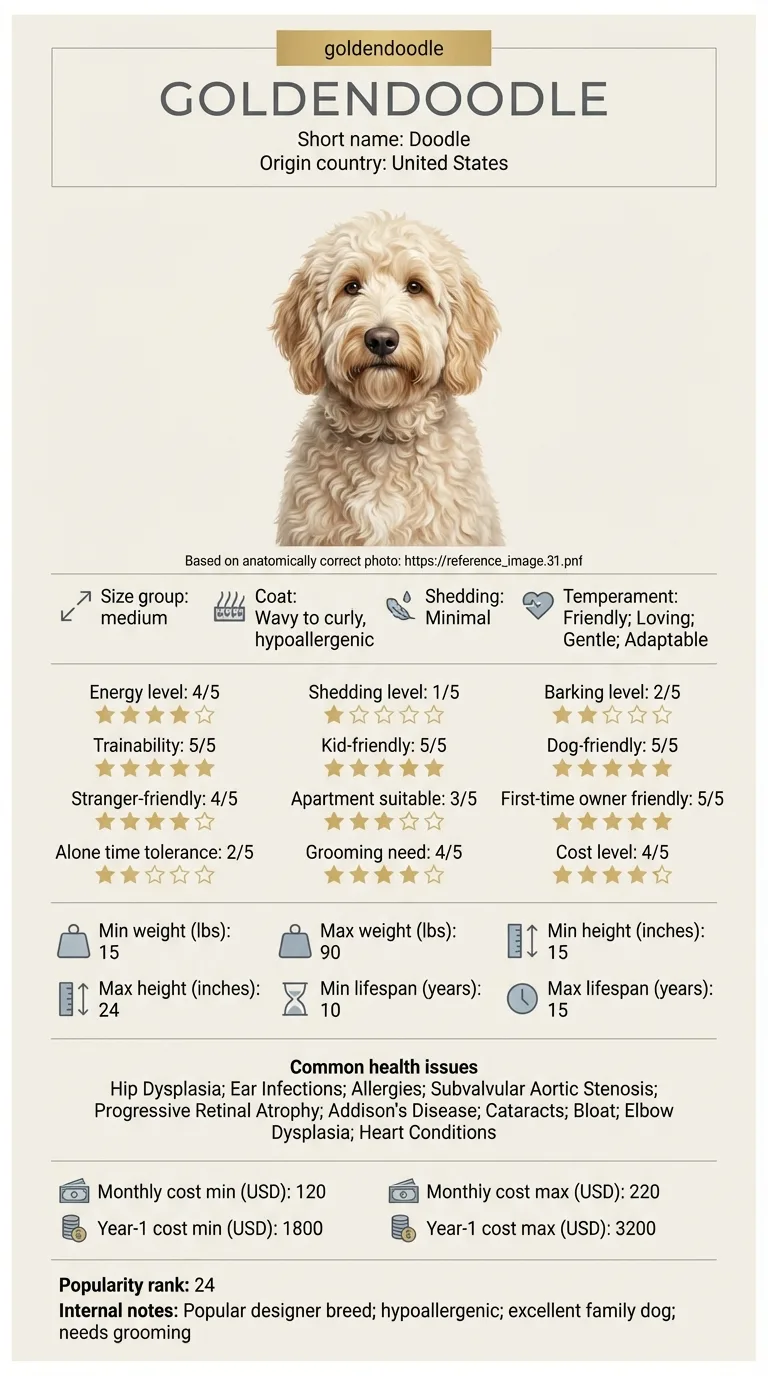
This affects owners around holidays, cookouts, and any event with rich, fatty food within a food-motivated dog's reach, as well as owners of overweight Goldendoodles who carry elevated baseline risk.
This guide is not medical advice. If your dog shows pain, sudden behavior change, or worsening symptoms, consult a licensed veterinarian.
Some links may be affiliate links. We may earn a commission at no extra cost to you. We only suggest products we believe are helpful for dog owners.
We research and check what we publish, but we do not warrant that any figure, date, price, or statement is accurate, complete, or current, and we accept no liability for any loss, cost, injury, or other harm arising from the use of this site. Use it as one reference among several. You remain responsible for your own decisions and for your dog's care - confirm anything that matters with a licensed veterinarian or another qualified professional before you act on it. Full disclaimer.
Acute pancreatitis is a sudden, often severe inflammation of the pancreas, most classically triggered by an unusually fatty meal that causes digestive enzymes to activate prematurely and damage pancreatic tissue. Severity ranges from mild, self-limiting episodes to life-threatening complications, making prompt veterinary evaluation essential for any suspected case.
Pancreatitis is listed among this breed's documented health issues, and dietary indiscretion involving fatty food remains one of the most commonly reported triggers across dogs generally, making it a genuinely common presentation in general practice and emergency settings.
Pancreatitis in Goldendoodles reflects a general canine susceptibility rather than one specific inherited defect unique to this cross, though the breed's documented food motivation, inherited from both Golden Retriever and Poodle lines, can increase the odds of a dog managing to access an unusually fatty meal or treat.
A single high-fat meal is the most classic and directly documented environmental trigger, with obesity, sudden dietary changes, and unsupervised access to garbage or rich food all compounding the risk of triggering an acute episode.
Seek same-day veterinary evaluation for repeated vomiting, a hunched or painful posture, loss of appetite, or lethargy, especially following a known dietary indiscretion. Treat persistent vomiting with visible distress or lethargy as urgent rather than waiting to see if it passes.
See all Goldendoodle health problems, which breeds are prone to pancreatitis, or the full Goldendoodle breed guide for temperament, exercise needs and ownership costs.
Mild pancreatitis episodes often improve within a few days of supportive hospital care and dietary rest. Severe cases can require a week or more of hospitalization and closer monitoring for complications.
Success looks like a full recovery from the acute episode, confirmed by resolving symptoms and improving bloodwork, followed by a permanent shift to a lower-fat diet and stricter treat management to reduce the risk of a repeat episode.
A high-fat meal stimulates the pancreas to produce a surge of digestive enzymes, and in a susceptible dog, that surge can trigger the enzymes to activate too early, while still inside the pancreas rather than after reaching the intestine where they're meant to work. Those activated enzymes begin digesting the pancreas's own tissue, causing the intense inflammation, pain, and secondary complications that define an acute episode.
Obesity is one of the more consistently documented risk factors for pancreatitis, both because carrying excess weight is often associated with richer diets and more frequent treats, and because fat tissue itself contributes to a more inflammatory baseline state in the body. A Goldendoodle already carrying extra weight is starting from a higher-risk baseline before any single fatty meal even enters the picture.
Severity varies enormously, from a mild, self-limiting episode managed with a short hospital stay and dietary rest, to a severe, life-threatening episode involving systemic complications like organ dysfunction. This range is exactly why any suspected pancreatitis episode needs veterinary evaluation rather than being managed at home with a wait-and-see approach, since there's no reliable way to predict severity from symptoms alone in the first few hours.
Any combination of these signs, especially following a known dietary indiscretion, warrants prompt veterinary evaluation.

If you think your Doodle has pancreatitis, the plan is three steps: write down what you have seen and when it started, book a veterinary appointment rather than waiting for the next flare, and take video of the behaviour or symptom before you go — the thing you are worried about rarely happens in the consulting room. Screening in the parents covers hip dysplasia, ear infections, allergies.
What the vet visit should produce is a diagnosis and a written plan, not just reassurance: what is being ruled out, what the monitoring interval is, and which signs mean you come back sooner. Ask what the treatment costs across a year rather than per visit, because that is the number that decides whether you are managing this condition or reacting to it.
Between appointments, keep a short log — dates, what you saw, what changed. It is the single most useful thing an owner brings to a follow-up, and for pancreatitis it is often what separates a clear pattern from a guess.
Silas's Goldendoodle, Marmalade, managed to snag a plate of leftover turkey skin and gravy off a low side table during a Thanksgiving gathering. By that evening, she was vomiting repeatedly and stood hunched with her rear end raised, clearly uncomfortable. Silas brought her to an emergency vet, where bloodwork confirmed elevated pancreatic enzymes consistent with acute pancreatitis. Marmalade was hospitalized for two days on IV fluids, anti-nausea medication, and pain control before gradually being reintroduced to a low-fat diet. She recovered fully, and Silas now keeps rich foods well out of reach during gatherings and has permanently switched her regular diet to a lower-fat formula on his vet's recommendation.
Key takeaway: A single rich meal was enough to trigger a genuine emergency, which is exactly why fatty table scraps are worth avoiding entirely rather than treating as an occasional harmless indulgence.
There's no fixed amount — susceptibility varies significantly by individual dog, prior pancreatic health, and overall weight, but even a single unusually rich meal or treat has been documented to trigger an episode in a susceptible dog.
It's the most classic and commonly documented trigger, but pancreatitis can occasionally occur without an obvious dietary cause, sometimes linked to other underlying conditions or occurring with no identifiable trigger at all.
A combination of bloodwork, including specific pancreatic enzyme tests, alongside abdominal ultrasound imaging is typically used to confirm a diagnosis and assess severity.
Mild cases are often managed with IV fluids, anti-nausea medication, pain control, and a gradual reintroduction of a low-fat diet. Severe cases may require extended hospitalization and more intensive supportive care for complications.
Yes — a dog that's had one episode is generally considered at elevated risk for future episodes, which is why long-term dietary management, specifically avoiding high-fat foods, matters even after full recovery.
Mild cases generally recover well with prompt treatment, but severe cases can involve serious systemic complications and can be life-threatening, which is exactly why any suspected episode needs immediate veterinary evaluation rather than home management.
An unusually fatty meal or treat is the most commonly documented trigger, often tied to holidays or table scraps.
Repeated vomiting, often alongside a hunched or painful-looking posture, is typically the earliest noticeable sign.
Hospitalization, bloodwork, and imaging for a moderate episode commonly run into the hundreds to low thousands depending on severity.
Yes — obesity is a well-documented risk factor, both from typically richer diets and the inflammatory effects of excess fat tissue itself.
Avoiding fatty table scraps and rich treats, and maintaining a lean body weight, are the most practical and effective preventive steps available.
A one-page prep sheet for this condition: the signs, the questions to ask, what to get priced. Unlocks here.
You get: Vet visit prep sheet
No spam. One-click unsubscribe. See our privacy policy.
Preview page 1 before you decide.