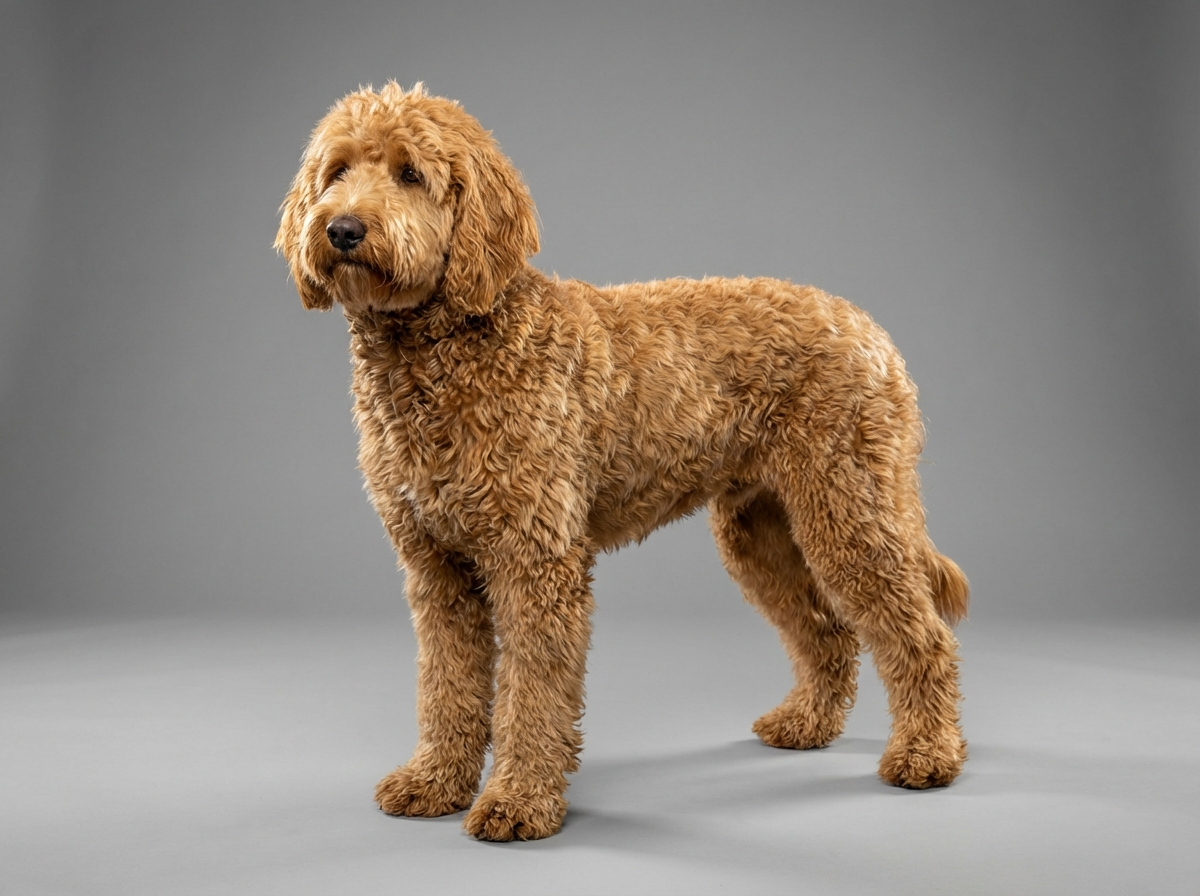
Health
Can I tell if my Goldendoodle is overweight just by looking?
Not reliably — the dense coat hides weight gain more than a short coat would, so a hands-on body condition check is more accurate.

Quick answer
Can I tell if my Goldendoodle is overweight just by looking?
Not reliably — the dense coat hides weight gain more than a short coat would, so a hands-on body condition check is more accurate.
You can't always see a Goldendoodle getting overweight the way you'd notice it on a short-coated dog, which is exactly why it tends to sneak past even attentive owners.
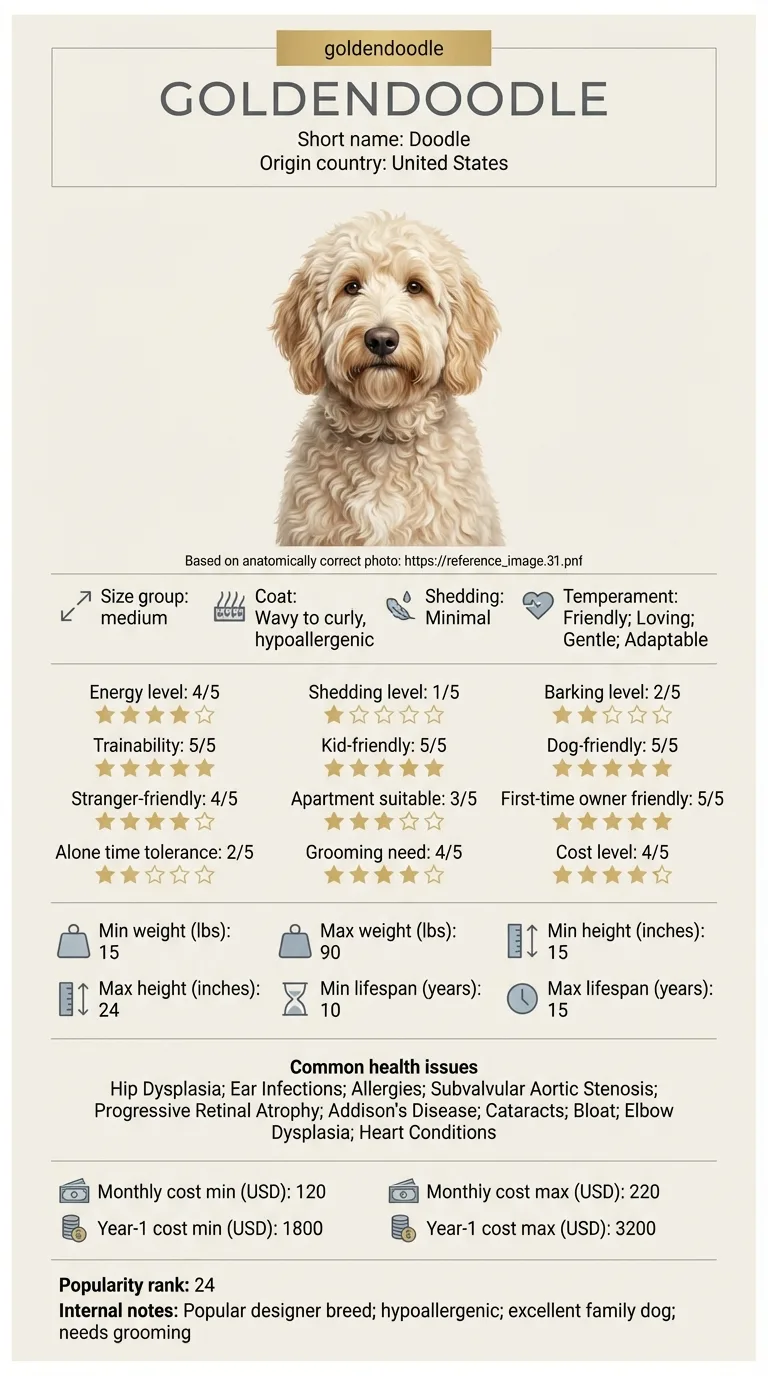
This affects owners of Goldendoodles at every life stage, but especially those with a food-motivated, treat-loving individual, and owners whose dog's activity level has recently dropped due to age, injury, or a change in routine without a matching adjustment to food portions.
This guide is not medical advice. If your dog shows pain, sudden behavior change, or worsening symptoms, consult a licensed veterinarian.
Some links may be affiliate links. We may earn a commission at no extra cost to you. We only suggest products we believe are helpful for dog owners.
We research and check what we publish, but we do not warrant that any figure, date, price, or statement is accurate, complete, or current, and we accept no liability for any loss, cost, injury, or other harm arising from the use of this site. Use it as one reference among several. You remain responsible for your own decisions and for your dog's care - confirm anything that matters with a licensed veterinarian or another qualified professional before you act on it. Full disclaimer.
Obesity in Goldendoodles is complicated by two breed-specific factors: a dense coat that visually hides weight gain longer than a short coat would, and a strong, food-motivated temperament inherited from both parent breeds that makes portion control an ongoing effort rather than a one-time fix. Excess weight also compounds several other documented risks in the breed, including joint, cardiac, and heat-tolerance issues.
Obesity is documented as a weight management challenge specific to this breed, driven partly by coat type masking visible weight gain and partly by the strong food motivation both parent breeds are known for.
Both Golden Retrievers and Poodles are commonly described as food-motivated, eager-to-please breeds, a combination that makes Goldendoodles highly trainable but also prone to accepting more food and treats than they need. The breed's dense, wavy-to-curly coat additionally masks visual signs of weight gain more than a short coat would, delaying when owners typically notice a problem.
Free-feeding, uncounted treats during training, reduced activity without a corresponding reduction in food, and inconsistent portion measurement all directly contribute to gradual weight gain, compounded by how easily that gain goes unnoticed under a dense coat.
Schedule a body condition assessment at routine visits, and discuss a structured weight-loss plan if your vet identifies excess weight. There's rarely an emergency dimension to obesity itself, though a sudden, unexplained weight change in either direction warrants investigation.
See all Goldendoodle health problems, which breeds are prone to obesity, or the full Goldendoodle breed guide for temperament, exercise needs and ownership costs.
A structured weight-loss plan typically shows measurable progress within four to eight weeks of consistent portion control and exercise, with full weight normalization often taking several months depending on how much weight needs to come off.
Success looks like a confirmed healthy body condition score on a hands-on vet exam, not just a visual impression through the coat, maintained consistently over time rather than achieved once and allowed to slip back.
A body condition score, the hands-on method vets use to assess whether a dog is at a healthy weight, relies partly on being able to feel and sometimes see the outline of ribs and waist. A dense, curly coat adds visual bulk that can mask early-to-moderate weight gain from a casual glance, meaning owners often don't notice until the coat itself is trimmed shorter and the dog's true shape becomes visible, sometimes revealing more weight gain than expected.
Both Golden Retrievers and Poodles are commonly described as food-motivated breeds, and that trait combines in Goldendoodles with a strong eagerness to please and a high responsiveness to training rewards — which paradoxically means treat-based training, if not carefully portioned, can meaningfully contribute to weight gain in a breed that's otherwise a joy to train specifically because of how food-motivated it is.
Excess weight compounds several other documented risks in this breed directly: it adds mechanical stress to joints already carrying hip and elbow dysplasia risk, increases cardiac workload in a breed with documented heart condition risk, and worsens heat tolerance in a breed already more heat-sensitive than short-coated dogs of similar size. Weight isn't just its own isolated problem here — it's a multiplier on nearly every other condition documented in the breed.
Because the usual visual and behavioral cues are less reliable here, a more deliberate, measured approach tends to work better than general 'feed less, walk more' advice.

If you think your Doodle has obesity, the plan is three steps: write down what you have seen and when it started, book a veterinary appointment rather than waiting for the next flare, and take video of the behaviour or symptom before you go — the thing you are worried about rarely happens in the consulting room. Screening in the parents covers hip dysplasia, ear infections, allergies.
What the vet visit should produce is a diagnosis and a written plan, not just reassurance: what is being ruled out, what the monitoring interval is, and which signs mean you come back sooner. Ask what the treatment costs across a year rather than per visit, because that is the number that decides whether you are managing this condition or reacting to it.
Between appointments, keep a short log — dates, what you saw, what changed. It is the single most useful thing an owner brings to a follow-up, and for obesity it is often what separates a clear pattern from a guess.
Ivy brought her Goldendoodle, Murphy, in for his annual checkup, expecting a routine visit. Her vet's hands-on body condition check revealed Murphy was carrying noticeably more weight than his coat suggested — his ribs were difficult to feel under a layer of extra padding that the dense coat had completely hidden from view. Ivy realized that Murphy's daily training treats, generous in her mind because he was 'such a good boy,' had never been subtracted from his regular meal portions. She started weighing his food precisely and switched training rewards to small portions of his regular kibble instead of separate treats. Over four months, Murphy lost the recommended amount of weight, confirmed at follow-up visits by an improved, easily felt body condition score.
Key takeaway: A coat this dense can hide real weight gain from casual observation, which is why a hands-on vet assessment, not a visual glance, is what actually catches the problem in time.
Ask your vet for a hands-on body condition score, which involves feeling for ribs, waist definition, and abdominal tuck rather than relying on visual assessment alone, since the coat can hide moderate weight gain surprisingly well.
Yes, especially in a breed this food-motivated and trainable — frequent treat-based training sessions can add up to a significant portion of daily calories if not deliberately subtracted from regular meal portions.
Excess weight adds mechanical stress to joints already at risk for hip and elbow dysplasia, increases workload on a heart already carrying documented cardiac risk, and worsens heat tolerance in a breed that's already more heat-sensitive due to its coat.
A gradual rate, generally around one to two percent of body weight per week, is considered safe and sustainable; more rapid weight loss can carry its own health risks and should be supervised by a vet.
A vet-recommended weight-management formula can help by providing satiety with fewer calories, but portion control and treat accounting matter at least as much as the specific food chosen.
The coat masking visual cues and the breed's strong food motivation both genuinely make ongoing maintenance harder than in a less food-driven, short-coated breed, which is why regular hands-on body condition checks matter more here than a purely visual approach.
Not reliably — the dense coat hides weight gain more than a short coat would, so a hands-on body condition check is more accurate.
Yes, and they should be subtracted from regular meal portions rather than treated as a separate, uncounted extra.
Roughly one to two percent of body weight per week is generally considered a safe, sustainable pace under veterinary guidance.
Yes significantly — excess weight adds direct mechanical and cardiac workload that worsens outcomes for both joint and heart conditions documented in this breed.
Many owners find it helpful for portion satisfaction, though consistent measured portions matter more than the specific food brand chosen.
A one-page prep sheet for this condition: the signs, the questions to ask, what to get priced. Unlocks here.
You get: Vet visit prep sheet
No spam. One-click unsubscribe. See our privacy policy.
Preview page 1 before you decide.