Health
Does hip dysplasia prevalence vary by breeder, not just by breed?
Yes, significantly — a well-screened breeding program's rates can differ substantially from an unscreened one within the same breed.

Quick answer
Does hip dysplasia prevalence vary by breeder, not just by breed?
Yes, significantly — a well-screened breeding program's rates can differ substantially from an unscreened one within the same breed.
The question isn't really 'do Goldendoodles get hip dysplasia,' it's 'which Goldendoodle lines have breeders actually been screening out of, and which haven't.'
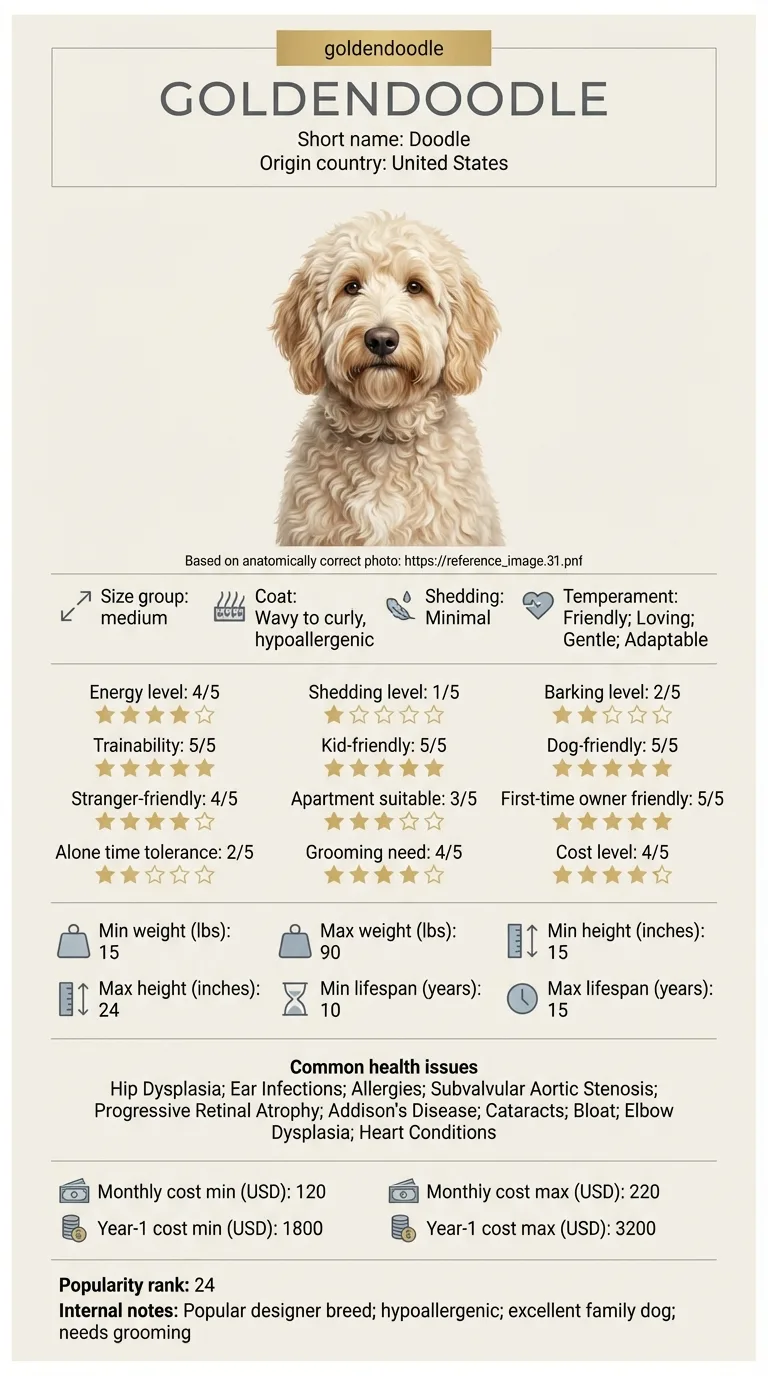
This is most relevant to prospective buyers comparing breeders and trying to weigh health screening claims, and current owners trying to understand whether their dog's diagnosis reflects bad luck or a preventable gap in the breeding pipeline.
This guide is not medical advice. If your dog shows pain, sudden behavior change, or worsening symptoms, consult a licensed veterinarian.
Some links may be affiliate links. We may earn a commission at no extra cost to you. We only suggest products we believe are helpful for dog owners.
Hip dysplasia prevalence in Goldendoodles isn't a single fixed number — it's a blend of the risk carried by Golden Retriever and Poodle lines, weighted heavily by how thoroughly individual breeding parents were actually screened. Understanding this helps buyers evaluate a specific breeder's practices rather than relying on a vague breed-wide reputation.
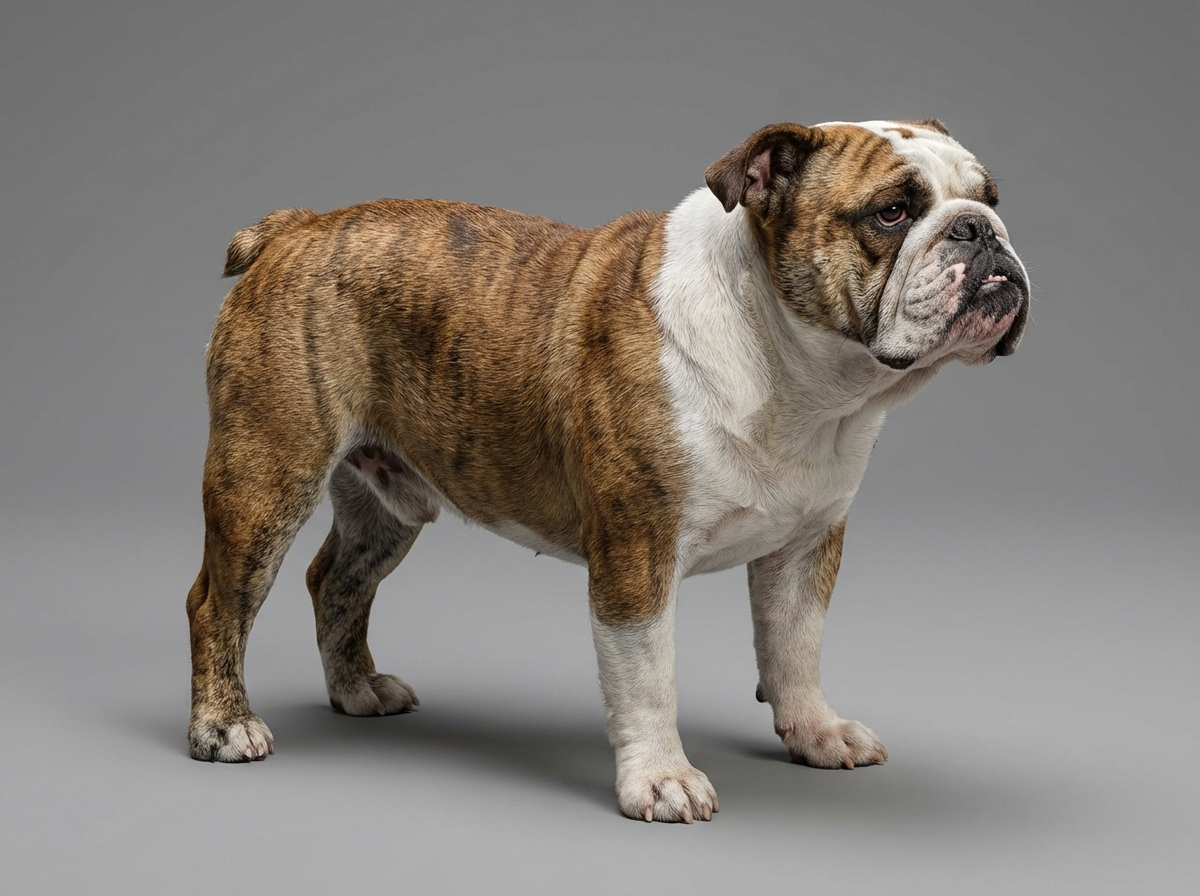
Hip Dysplasia is documented as a common health issue in this breed overall, and it affects numerous other breeds across the size spectrum, from large breeds down to smaller ones like French Bulldogs, underscoring that joint conformation and genetics, not just body size, drive prevalence.
Both Golden Retrievers and Poodles carry independently documented hip dysplasia risk, and neither side of a Goldendoodle cross offers a reliably 'clean' genetic contribution the way some other crosses might. That means overall breed prevalence for Goldendoodles largely mirrors whatever combined risk exists across the wider Golden Retriever and Poodle breeding population.
The single biggest environmental driver of prevalence isn't something in an individual dog's daily life — it's breeding practice. Whether or not a specific litter's parents were screened before breeding has an outsized effect on that litter's actual risk compared to the breed-wide average.
Discuss hip screening timing with your vet at your puppy's early wellness visits, and follow up promptly if your vet notices any gait abnormality, reluctance to jump, or asymmetric muscle development during a routine exam.
See all Goldendoodle health problems, which breeds are prone to hip dysplasia prevalence, or the full Goldendoodle breed guide for temperament, exercise needs and ownership costs.
Evaluating a breeder's screening documentation is something you can and should complete before ever picking up a puppy — it takes as little as one honest conversation and a records check. An individual hip evaluation for your own dog is typically a single vet visit once your dog is old enough for reliable X-rays.
Success looks like an informed decision made with real documentation in hand, whether that's choosing a well-screened breeder before adopting or understanding, after the fact, why your own dog's risk profile turned out the way it did.
Hip dysplasia prevalence numbers you'll find for any cross-bred dog are really a blend of the rates in its contributing populations, weighted by how much health screening actually happened in the specific parent dogs used. A Goldendoodle bred from two OFA-certified, hip-screened parents with several generations of screened ancestors behind them carries meaningfully lower risk than one bred from parents with no documented hip evaluation at all, even though both puppies get called the same breed name.
This is a big part of why breed-wide prevalence statistics, useful as a general reference point, can be misleading applied to any one specific puppy. A responsible multi-generational breeding program that actively screens out affected dogs can push its own lines' rates well below the raw breed-wide average, while a high-volume breeder skipping screening entirely can produce puppies well above it.
Goldendoodles are also affected by the fact that they draw from two breeds — Golden Retrievers and Poodles — that both carry documented hip dysplasia risk independently. Unlike a defect unique to one parent line, there's no 'clean' side of the cross to dilute risk from, which is part of why screening both parent lines specifically matters more here than it might for a hybrid combining one high-risk and one low-risk breed.
Since prevalence tracks so closely with screening practices, evaluating a specific breeder's documentation matters more than any single breed-wide statistic.

If you think your Doodle has hip dysplasia prevalence, the plan is three steps: write down what you have seen and when it started, book a veterinary appointment rather than waiting for the next flare, and take video of the behaviour or symptom before you go — the thing you are worried about rarely happens in the consulting room. Screening in the parents covers hip dysplasia, ear infections, allergies.
What the vet visit should produce is a diagnosis and a written plan, not just reassurance: what is being ruled out, what the monitoring interval is, and which signs mean you come back sooner. Ask what the treatment costs across a year rather than per visit, because that is the number that decides whether you are managing this condition or reacting to it.
Between appointments, keep a short log — dates, what you saw, what changed. It is the single most useful thing an owner brings to a follow-up, and for hip dysplasia prevalence it is often what separates a clear pattern from a guess.
Miguel was comparing two local Goldendoodle breeders before adopting. The first breeder had OFA hip certifications on file for both parent dogs going back two generations, verifiable through the OFA's own public database. The second breeder described their dogs as 'super healthy' but had no paperwork beyond a basic vet wellness check. Miguel chose the first breeder, paying a bit more for the puppy. Years later, at a dog park, he ran into an owner from the second breeder's most recent litter whose Goldendoodle had been diagnosed with moderate hip dysplasia at eighteen months old — a diagnosis that led to a costly management plan neither the owner nor the breeder had anticipated. Miguel's own dog, now four years old, has had a clean hip evaluation and no joint issues so far.
Key takeaway: Screening documentation from a specific breeder tells you far more about your actual puppy's risk than any general statistic about the breed as a whole.
Not inherently — a Goldendoodle's risk is essentially a blend of whatever risk existed in its specific parent dogs. A well-screened Goldendoodle can have lower documented risk than an unscreened purebred of either parent breed, and vice versa.
Size variant alone isn't the dominant factor; screening history of the specific parent dogs matters more. That said, larger body size generally does put more mechanical load on a joint that's already anatomically loose, which can make symptoms more noticeable sooner in bigger individuals.
Only as reliable as the documentation behind it. Ask specifically for OFA or PennHIP certification numbers you can look up independently rather than accepting a verbal claim, since hip screening is an objective, recorded process, not a subjective opinion.
Yes. Hip dysplasia is polygenic, meaning multiple genes contribute to it, so even two well-screened parents can occasionally produce an affected puppy. Screening reduces the odds significantly but doesn't eliminate them entirely.
Many vets recommend a baseline hip evaluation around one to two years old regardless of parental screening, both for your own dog's individual health record and because parental screening reduces but doesn't remove individual risk.
Because hip dysplasia tracks with joint conformation and inherited laxity, not purely with body size — some smaller breeds carry the same structural joint issues seen in classic large-breed cases, which is a useful reminder that breed size alone doesn't predict risk reliably.
Yes, significantly — a well-screened breeding program's rates can differ substantially from an unscreened one within the same breed.
OFA or PennHIP hip evaluation results for both parent dogs, ideally with documentation you can verify independently.
No — it meaningfully reduces risk since the trait is polygenic, but it doesn't guarantee every puppy will be free of the condition.
Yes, as a general reference point for the breed overall, but it shouldn't replace checking a specific breeder's actual screening documentation.
Many owners find the higher upfront cost worthwhile against the potentially much larger long-term cost of managing an unscreened dysplastic joint.
A one-page prep sheet for this condition: the signs, the questions to ask, what to get priced. Unlocks here.
You get: Vet visit prep sheet
No spam. One-click unsubscribe. See our privacy policy.
Preview page 1 before you decide.