Health
What is the first sign of diabetes in a dog?
A clear increase in drinking and urinating, usually alongside weight loss despite a good appetite. That combination warrants a blood and urine test.

Quick answer
What is the first sign of diabetes in a dog?
A clear increase in drinking and urinating, usually alongside weight loss despite a good appetite. That combination warrants a blood and urine test.
The first thing owners notice is usually the water bowl. A dog that has always drunk normally and is now emptying it twice a day is telling you something specific.
Owners of middle-aged and older dogs noticing increased thirst and urination, and newly diagnosed owners weighing whether twice-daily injections for the rest of a dog's life are something they can genuinely commit to.
This guide is not medical advice. If your dog shows pain, sudden behavior change, or worsening symptoms, consult a licensed veterinarian.
Some links may be affiliate links. We may earn a commission at no extra cost to you. We only suggest products we believe are helpful for dog owners.
We research and check what we publish, but we do not warrant that any figure, date, price, or statement is accurate, complete, or current, and we accept no liability for any loss, cost, injury, or other harm arising from the use of this site. Use it as one reference among several. You remain responsible for your own decisions and for your dog's care - confirm anything that matters with a licensed veterinarian or another qualified professional before you act on it. Full disclaimer.
Diabetes in dogs is a deficiency of insulin, the hormone that moves sugar from the bloodstream into the body's cells. Sugar accumulates in the blood, spills into the urine and drags water with it, which produces the thirst and urination that owners notice. It requires lifelong insulin treatment and a highly consistent daily routine.
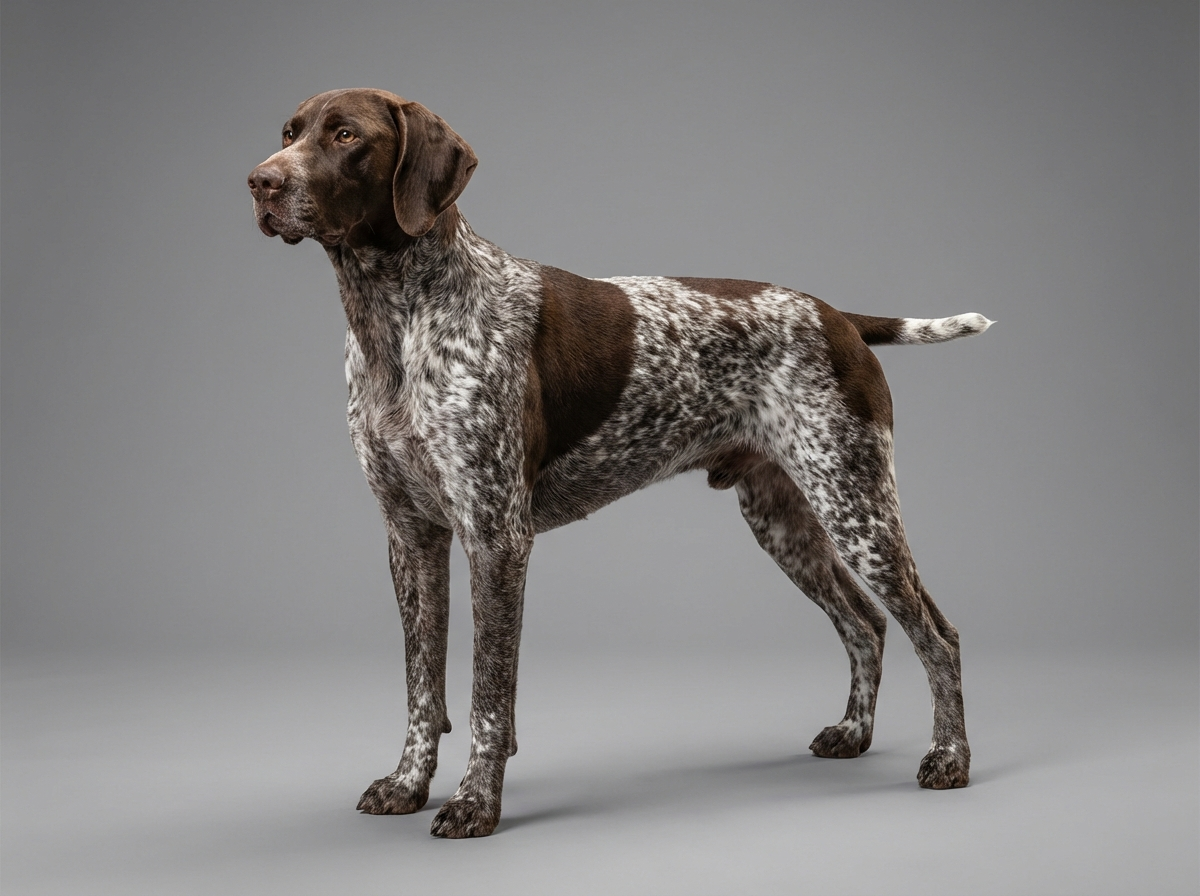
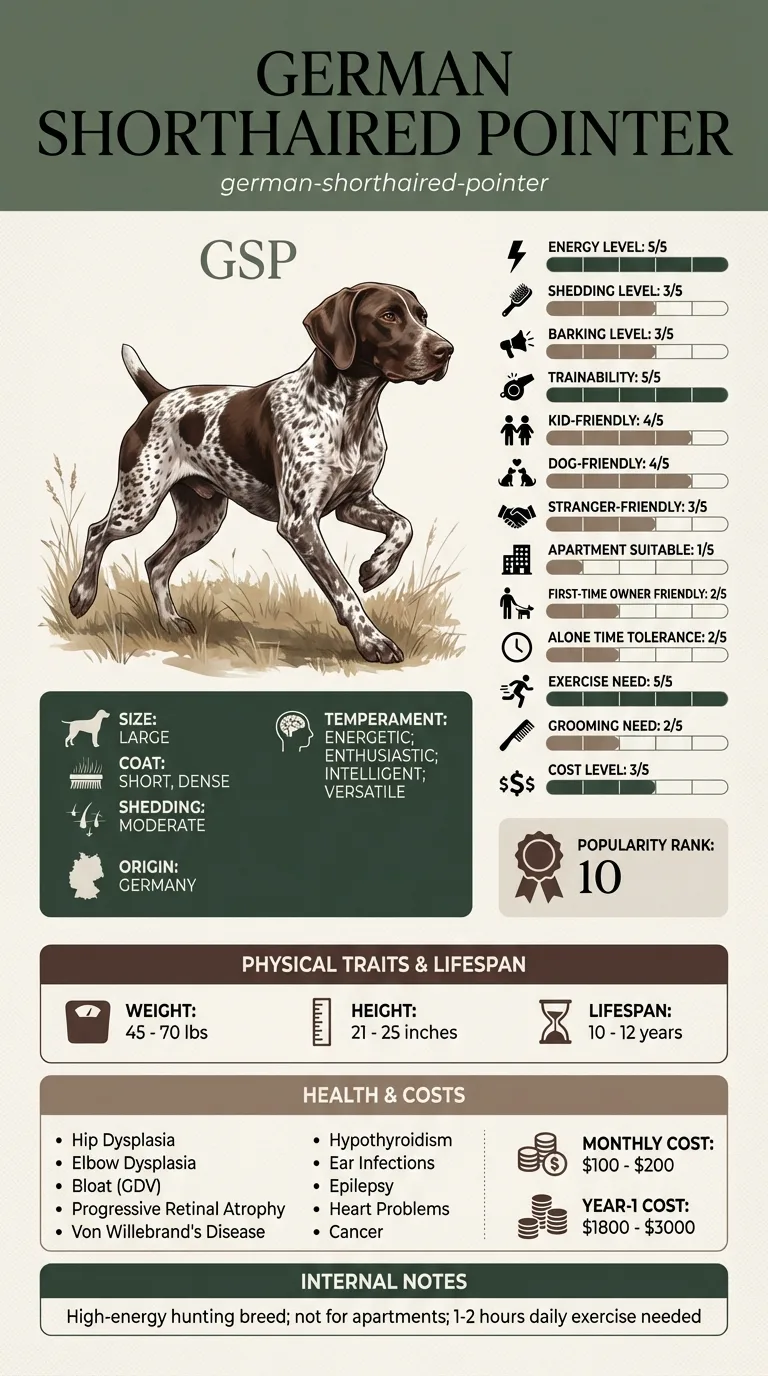
Diabetes is not listed among the German Shorthaired Pointer's documented health issues, which cover joint dysplasia, bloat, retinal disease, a bleeding disorder, thyroid disease, ear infections, epilepsy, heart problems and cancer. Across dogs generally it is a recognised endocrine disease of middle age and beyond, with several other breeds more strongly represented.
There is no documented diabetic predisposition in the German Shorthaired Pointer, and the breed's own metabolic profile is arguably protective: a lean, heavily worked athlete rated five out of five for exercise need is not the classic diabetic candidate. The breed fact that does bear on management is hypothyroidism, which is on the GSP's documented list and which complicates metabolic control when present, so a diabetic pointer will usually have its thyroid checked as part of the workup.
Diet and body condition matter, though less directly than in humans. Sustained excess weight contributes to insulin resistance and makes control harder once disease is established. High-fat feeding raises pancreatitis risk, and pancreatitis is a route into diabetes. The most important environmental factor after diagnosis is household routine: a home where two people feed the dog without coordinating, or where meal times drift by several hours, produces an unstable diabetic regardless of the medicine.
Book an appointment promptly for increased drinking and urinating, for weight loss with a normal or increased appetite, or for cloudiness developing in the eyes over weeks. Go to an emergency clinic immediately for a diabetic dog that is vomiting repeatedly, has stopped eating, is weak or collapsed, is breathing deeply and rapidly, or has breath with an unusual sweet smell, since those suggest diabetic ketoacidosis, which is life-threatening. Also treat as an emergency any dog that becomes wobbly, disoriented, glassy-eyed or has a seizure after an insulin dose, which points to blood sugar that has fallen dangerously low.
See all German Shorthaired Pointer health problems, which breeds are prone to diabetes, or the full German Shorthaired Pointer breed guide for temperament, exercise needs and ownership costs.
Stabilisation usually takes four to twelve weeks, with repeated blood glucose assessments and dose adjustments during that period. Thirst and urination often improve within days of starting insulin. Once stable, monitoring settles into checks every three to six months. Cataracts, if they develop, tend to do so within the first year and often quickly.
A dog with a stable weight, normal thirst, good energy and a settled insulin dose, living an essentially normal life inside a predictable routine. Well-managed diabetic dogs commonly live for years after diagnosis. Success is measured in the reliability of the household as much as in any number on a blood test.
The classic presentation is consistent and, once you know it, hard to mistake. It is the combination that matters rather than any single item.
This is the part worth being honest about before a diagnosis rather than after it, because the medicine is straightforward and the logistics are not.
A diabetic dog needs insulin by injection, usually twice daily, roughly twelve hours apart, every day for the rest of its life. The injections themselves are easy and dogs tolerate them well; the demanding part is the rigidity. Meals must be consistent in size, content and timing, because insulin is dosed against an expected food intake. Missed meals, extra treats and irregular days all destabilise the system.
Exercise is the complication specific to this breed. Physical activity lowers blood sugar, so a dog whose insulin was dosed for a normal day and then goes hunting for four hours can drop dangerously low. For a German Shorthaired Pointer, rated at the top of the scale for exercise need and typically worked in bursts across a season rather than evenly year-round, this needs planning with your vet rather than improvising. Many diabetic GSPs continue to work; what changes is that the workload becomes predictable and the owner learns to recognise and treat a low.
None of this is beyond an organised household. But it is a genuine commitment of routine, and it is fair to know that in advance.

If you think your GSP has diabetes, the plan is three steps: write down what you have seen and when it started, book a veterinary appointment rather than waiting for the next flare, and take video of the behaviour or symptom before you go — the thing you are worried about rarely happens in the consulting room. Screening in the parents covers hip dysplasia, elbow dysplasia, bloat (gdv).
What the vet visit should produce is a diagnosis and a written plan, not just reassurance: what is being ruled out, what the monitoring interval is, and which signs mean you come back sooner. Ask what the treatment costs across a year rather than per visit, because that is the number that decides whether you are managing this condition or reacting to it.
Between appointments, keep a short log — dates, what you saw, what changed. It is the single most useful thing an owner brings to a follow-up, and for diabetes it is often what separates a clear pattern from a guess.
Fennel was seven when her owner started refilling the kitchen bowl three times a day instead of once. She was eating everything put in front of her and had still dropped noticeably over the ribs. He measured her intake for three days with a marked jug before ringing the practice, which turned out to be the most useful thing he did. Diagnosis was straightforward. What took work was the routine. She was spayed as part of the plan, started on twice-daily insulin, and moved to measured meals at fixed times. Stabilisation took nine weeks and three dose adjustments. The hunting question was the one he cared about. His vet worked out a protocol for high-activity days and taught him to recognise a low. Fennel worked that season on shorter, planned outings rather than open-ended days. She is now ten, still working, and the household runs on a shared written log stuck to the fridge.
Key takeaway: The medicine was the easy part. What made it work was measuring the water before the appointment and building a routine two people could both follow afterwards.
Diabetes is not among the breed's documented health issues. It occurs across dogs generally, most often in middle-aged and older animals, and is more common in several other breeds. A GSP can develop it, but it is not something the breed is flagged for.
No. Because canine diabetes is an insulin deficiency, diet supports treatment but cannot replace it. Any product or protocol claiming to manage a diabetic dog without insulin should be treated with real scepticism, and the consequences of trying are serious.
High blood sugar drives an alternative sugar pathway inside the lens, drawing water in and turning the lens opaque. It can happen within weeks and often affects both eyes. Cataract surgery can restore vision in a stable diabetic dog, and it is worth asking about early.
Frequently yes, with planning. Your vet will help you adjust for high-activity days and teach you to recognise a low blood sugar episode. What does not work is a dog on a fixed insulin dose doing four hours one day and nothing the next without any adjustment.
Blood sugar falling too low, usually from too much insulin, a missed meal or unexpected exercise. The dog becomes wobbly, disoriented, weak or glassy-eyed, and can progress to seizures and collapse. Your vet will give you a specific plan for it, and you should have it written down.
Yes, and usually promptly. The hormonal cycle in an entire bitch directly opposes insulin and makes the diabetes almost impossible to stabilise. Spaying is normally part of the treatment plan rather than an optional extra.
A clear increase in drinking and urinating, usually alongside weight loss despite a good appetite. That combination warrants a blood and urine test.
Not at first, but it becomes one. A diabetic dog that is vomiting, weak, breathing oddly or collapsed needs an emergency clinic immediately.
Ongoing insulin, syringes, a prescription diet and regular monitoring make this a permanent monthly cost, plus the initial stabilisation period which is more intensive.
Substantially. Meals and injections roughly twelve hours apart, every day, with consistent food and planned exercise. It is manageable but not flexible.
A one-page prep sheet for this condition: the signs, the questions to ask, what to get priced. Unlocks here.
You get: Vet visit prep sheet
No spam. One-click unsubscribe. See our privacy policy.
See a sample page before you decide.
Early access list
The free prep sheet covers the same-day warning signs, a symptom log and the questions to ask. We are considering a fuller kit that adds a cost worksheet for the usual tests and treatments (US price ranges with their sources) and a plain-English guide to ways of covering the bill. It is not built yet; this list tells us whether it is worth building.
One email, no spam, unsubscribe anytime. Information only, not veterinary advice.