Health
Is hypothyroidism a documented issue in Chinese Shar-Peis?
Yes, it's one of the specific health conditions commonly noted for this breed, making proactive screening worthwhile.

Quick answer
Is hypothyroidism a documented issue in Chinese Shar-Peis?
Yes, it's one of the specific health conditions commonly noted for this breed, making proactive screening worthwhile.
A slower metabolism doesn't announce itself with one clear symptom, it shows up as a handful of small changes that only add up once someone connects the dots.
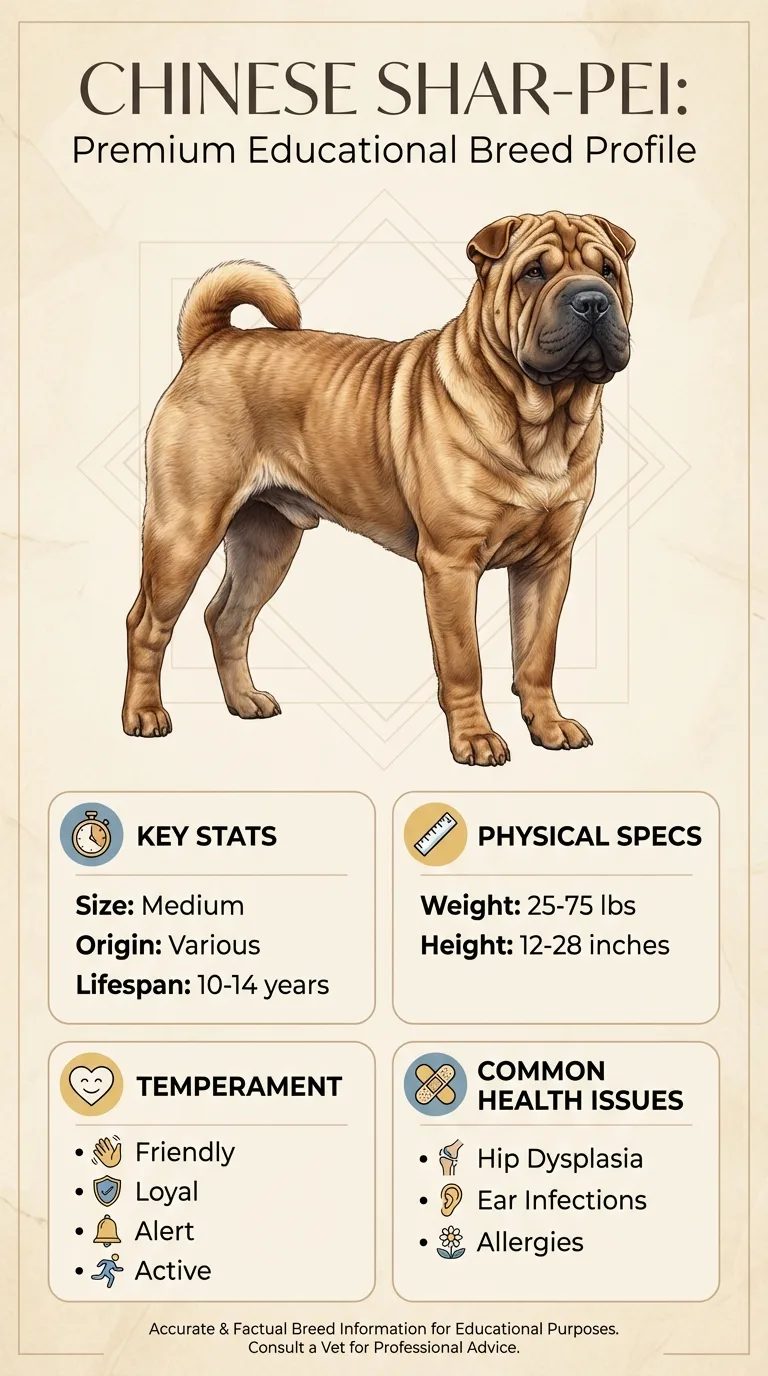
Owners of middle-aged and senior Shar-Peis noticing weight gain without diet changes, a dull or thinning coat, or unexplained low energy in a dog that's always been fairly calm anyway.
This guide is not medical advice. If your dog shows pain, sudden behavior change, or worsening symptoms, consult a licensed veterinarian.
Some links may be affiliate links. We may earn a commission at no extra cost to you. We only suggest products we believe are helpful for dog owners.
We research and check what we publish, but we do not warrant that any figure, date, price, or statement is accurate, complete, or current, and we accept no liability for any loss, cost, injury, or other harm arising from the use of this site. Use it as one reference among several. You remain responsible for your own decisions and for your dog's care - confirm anything that matters with a licensed veterinarian or another qualified professional before you act on it. Full disclaimer.
Hypothyroidism, a deficiency in thyroid hormone that slows metabolism throughout the body, is a specifically documented health issue in the Chinese Shar-Pei. Its symptoms, weight gain, coat changes, and lethargy, can be easy to overlook in a breed that's already naturally calm and low-energy, making routine bloodwork more reliable than visual symptom-watching alone.
Hypothyroidism is one of the small number of conditions specifically flagged as common in this breed, making it a reasonable candidate for proactive screening in middle-aged and senior Shar-Peis rather than a rare surprise diagnosis.
The Chinese Shar-Pei has a documented predisposition to hypothyroidism, often driven by an underlying autoimmune process that gradually damages the thyroid gland's hormone-producing tissue over years, a pattern common across several purebred lines with concentrated genetics.
While hypothyroidism itself is primarily genetic and autoimmune in origin rather than environmentally caused, factors like obesity and low activity can compound and mask its symptoms, making the underlying hormone deficiency harder for owners to notice without bloodwork.
Schedule a thyroid panel if you notice unexplained weight gain, a duller or thinning coat, increased skin or ear infections, cold intolerance, or a further drop in energy beyond your dog's normal baseline. These combined signs are worth investigating with bloodwork rather than attributing to age or personality alone.
Start here: Chinese Shar-Pei Most Common Genetic Disorders: Screening
See all Chinese Shar PEI health problems, which breeds are prone to hypothyroidism, or the full Chinese Shar PEI breed guide for temperament, exercise needs and ownership costs.
Most dogs show noticeable improvement in energy and coat quality within four to eight weeks of starting thyroid medication at the correct dose, though full coat regrowth can take a few months longer.
Success looks like normalized thyroid bloodwork on recheck, a return to typical energy levels, and improved coat and skin condition, maintained through consistent daily medication and periodic monitoring rather than a one-time fix.
Classic hypothyroidism symptoms include weight gain without any change in diet, a dull or thinning coat, increased skin infections, cold intolerance, and lethargy. In most breeds, a sudden drop in energy stands out clearly against an otherwise active baseline. In the Chinese Shar-Pei, a breed that's naturally calm and low-energy to begin with, that same drop in energy can look like the dog simply being itself, just a little more so. Weight gain can be similarly easy to explain away given the breed's low exercise drive, and increased skin infections can get folded into the general skin-fold maintenance routine most Shar-Pei owners already manage daily. This overlap between hypothyroidism symptoms and normal Shar-Pei traits is exactly why routine bloodwork, not just visual observation, is the more reliable way this condition gets caught in the breed.
A full thyroid panel, not just a basic screening thyroid test, is the more reliable way to confirm hypothyroidism, since a single T4 reading can be affected by other illnesses or even certain medications and produce a misleading result on its own. Once confirmed, treatment is refreshingly straightforward compared to many chronic conditions: a daily synthetic thyroid hormone tablet, dosed and adjusted by your vet based on periodic bloodwork, brings hormone levels back to normal and resolves most symptoms within weeks to a couple of months. It is, however, a lifelong daily medication once started, and skipping doses or adjusting them without veterinary guidance can let symptoms creep back or cause the dose to be poorly calibrated at the next recheck.

If you think your Chinese has hypothyroidism, the plan is three steps: write down what you have seen and when it started, book a veterinary appointment rather than waiting for the next flare, and take video of the behaviour or symptom before you go — the thing you are worried about rarely happens in the consulting room. Screening in the parents covers skin fold dermatitis, entropion, familial shar-pei fever.
What the vet visit should produce is a diagnosis and a written plan, not just reassurance: what is being ruled out, what the monitoring interval is, and which signs mean you come back sooner. Ask what the treatment costs across a year rather than per visit, because that is the number that decides whether you are managing this condition or reacting to it.
Between appointments, keep a short log — dates, what you saw, what changed. It is the single most useful thing an owner brings to a follow-up, and for hypothyroidism it is often what separates a clear pattern from a guess.
Lola, an eight-year-old Shar-Pei in Chicago, had gained nearly six pounds over a year despite her owner keeping her food portions exactly the same. Her owner initially assumed it was just middle age slowing her down further, since Lola had never been particularly energetic to begin with. At her annual exam, her vet suggested a full thyroid panel given the breed's known predisposition, and it came back showing clearly low thyroid hormone levels. Lola started a daily thyroid tablet, and within two months her energy had noticeably picked up and the extra weight began coming off with her usual diet and walks alone.
Key takeaway: Because Lola was never an especially energetic dog to begin with, her hypothyroidism hid in plain sight for over a year, and a single bloodwork panel, not a change in behavior, was what finally explained it.
Yes, it's specifically documented as one of the more common health issues in this breed, making it worth screening for proactively in middle-aged and senior dogs rather than waiting for obvious symptoms.
Weight gain without diet changes, a dull or thinning coat, increased skin or ear infections, cold intolerance, and low energy are the classic pattern, though in this breed several of these can be mistaken for normal traits.
A full thyroid panel, measuring multiple hormone markers rather than a single basic value, gives the most reliable diagnosis, since standalone readings can be skewed by other illness or certain medications.
It isn't cured, but it's very effectively managed with a daily synthetic thyroid hormone tablet that restores normal hormone levels and resolves most symptoms within weeks to a couple of months of starting treatment.
Yes, once diagnosed, thyroid hormone replacement is typically a lifelong daily medication, with periodic bloodwork to confirm the dose remains correctly calibrated over time.
Yes, low thyroid hormone commonly contributes to a dull, thinning coat and increased susceptibility to skin infections, which can compound this breed's already existing skin fold challenges.
Many vets suggest baseline thyroid screening as part of middle-age wellness bloodwork, often starting around five to six years old, given how documented this condition is in the breed.
Yes, it's one of the specific health conditions commonly noted for this breed, making proactive screening worthwhile.
A daily synthetic thyroid hormone tablet, dosed by your vet and adjusted based on periodic bloodwork, is the standard lifelong treatment.
It's generally an affordable daily medication, though periodic thyroid panel bloodwork to confirm correct dosing adds recurring cost over the year.
It can be, especially if there's been no diet change; a thyroid panel is a reasonable next step if unexplained weight gain shows up.
It can contribute to lower energy and lethargy, which can be subtle in an already calm breed, making bloodwork more reliable than behavior-watching alone.
A one-page prep sheet for this condition: the signs, the questions to ask, what to get priced. Unlocks here.
You get: Vet visit prep sheet
No spam. One-click unsubscribe. See our privacy policy.
Preview page 1 before you decide.