DogBreedCompass
← Back to breed profile

Chinese Shar-Pei Separation Anxiety: Independence Doesn't Guarantee Immunity

Quick answer

Can an independent breed like the Shar-Pei get separation anxiety?

Yes, breed temperament describes a population tendency, not a guarantee, and individual Shar-Peis can develop genuine separation anxiety despite the breed's general reputation.

A breed known for being independent isn't the same as a breed immune to genuine distress when left alone, and assuming otherwise is exactly how early signs get missed.

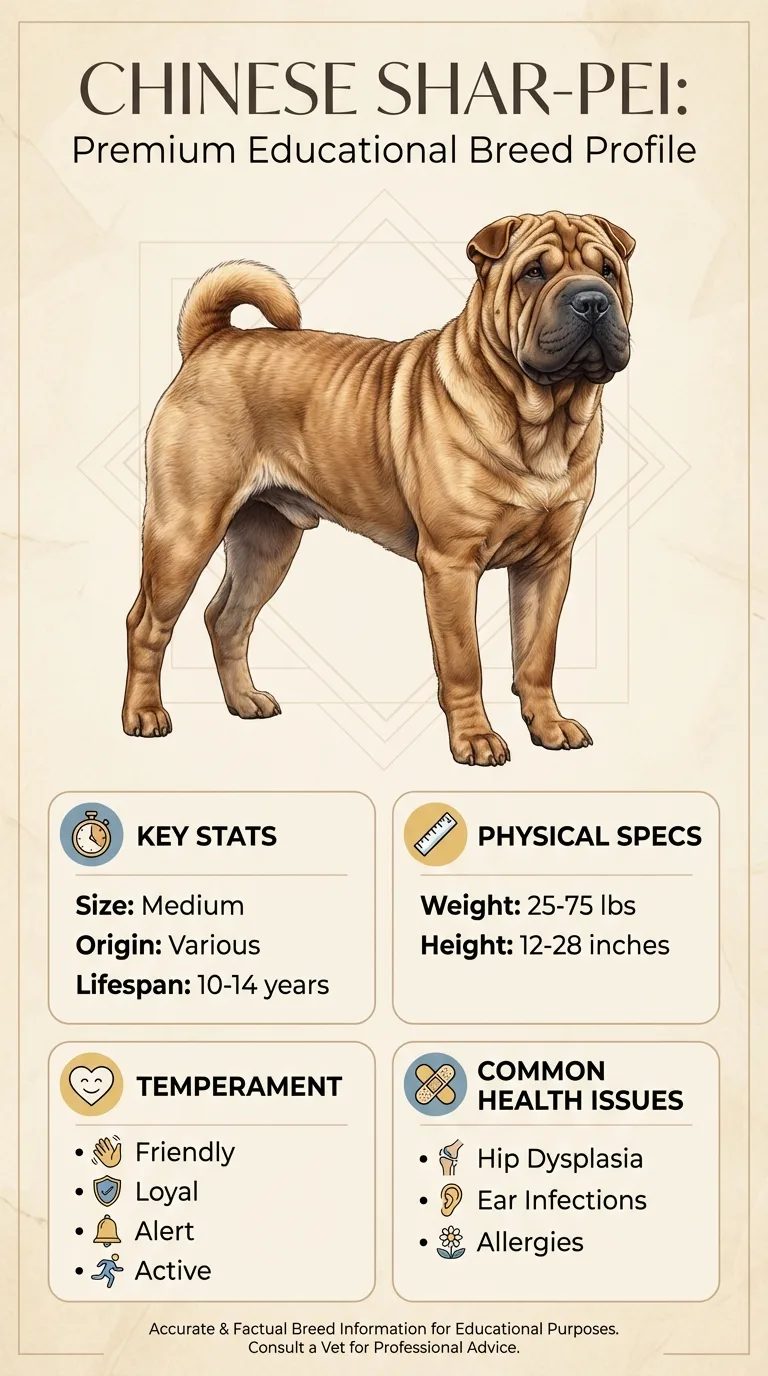
Chinese Shar-Pei Separation Anxiety: Independence Doesn't Guarantee Immunity infographic

Owners of Shar-Peis showing destructive behavior, house soiling, excessive vocalization, or other distress specifically when left alone, even if the breed's general reputation made this seem unlikely.

Important reminder

This guide is not medical advice. If your dog shows pain, sudden behavior change, or worsening symptoms, consult a licensed veterinarian.

Some links may be affiliate links. We may earn a commission at no extra cost to you. We only suggest products we believe are helpful for dog owners.

What this problem looks like

Despite the Chinese Shar-Pei's reputation as an independent, reserved breed, individual dogs can still develop genuine separation anxiety, particularly those adopted later in life or bonded unusually intensely with a specific person. Recognizing the distinct signs of true separation anxiety, rather than dismissing distress based on the breed's general reputation, allows for earlier and more effective intervention.

Common triggers

  • A recent change in household routine or owner's schedule
  • Adoption later in life or rescue from a difficult prior situation
  • An unusually intense bond with one particular person
  • A recent move or other major environmental change
  • Underlying medical conditions occasionally mimicking anxiety-driven behavior

While this breed's general temperament tends toward better alone-time tolerance than many, separation anxiety in individual dogs is common enough across dog breeds broadly that Shar-Pei owners shouldn't assume their dog is exempt based on breed reputation alone.

Why this happens

Breed factors

The Chinese Shar-Pei's generally moderate alone-time tolerance reflects a population-level tendency rather than a guarantee for every individual, and dogs within this breed still vary significantly in how intensely they bond with specific people, meaning some individuals develop genuine attachment-driven anxiety despite the breed's general reputation.

Environment factors

A recent change in household routine, a new work schedule requiring longer absences, a household move, or adoption from a difficult prior situation can all contribute to or trigger separation anxiety in an individual dog regardless of general breed temperament.

What you can try

At-home strategies

  • Practice gradual desensitization to departure cues, like picking up keys or putting on shoes, without immediately leaving, to reduce anticipatory anxiety.
  • Build up alone time incrementally, starting with very short absences and gradually increasing duration as your dog stays calm.
  • Leave a recording device or camera to document actual behavior patterns while you're away, helping distinguish true anxiety from boredom.
  • Provide a safe, comfortable space with familiar scents and a long-lasting enrichment item during departures.
  • Avoid dramatic greetings or departures, which can heighten a dog's emotional response to the transition itself.

When to consider a trainer

A trainer or certified behaviorist experienced in separation anxiety specifically can provide a structured desensitization protocol, which tends to be more effective and faster than an unstructured, trial-and-error approach at home.

When to talk to your vet

Consult your vet if separation-related distress is severe, includes self-injury, or doesn't improve with consistent desensitization training, since medication alongside behavioral training may be appropriate for more severe cases. Also rule out any underlying medical cause if house soiling or other symptoms seem inconsistent with a purely behavioral pattern.

See all Chinese Shar PEI health problems, which breeds are prone to separation anxiety, or the full Chinese Shar PEI breed guide for temperament, exercise needs and ownership costs.

Realistic expectations

Mild cases often show improvement within a few weeks of consistent desensitization training, while more severe, deeply established anxiety can take several months of structured work, sometimes alongside medication, to meaningfully improve.

Success looks like a dog that settles calmly during owner absences, without destructive behavior, house soiling, or excessive vocalization, achieved through consistent training rather than assuming the breed's general reputation would resolve the issue on its own.

Why Breed Averages Don't Predict Individual Dogs

This breed's moderate alone-time tolerance rating reflects a genuine population-level tendency: many Shar-Peis, given their reserved, self-contained temperament, do settle reasonably well without constant human attention. But temperament traits exist on a spectrum within any breed, not as a uniform trait every individual dog shares equally, and a Shar-Pei that's bonded intensely with one particular person, especially one adopted later in life, rescued from a difficult situation, or raised with an unusually attached routine from puppyhood, can develop genuine separation anxiety despite the breed's general reputation. This matters because owners sometimes dismiss early anxiety signs specifically because they don't expect this breed to develop the condition, delaying recognition and intervention exactly when early, consistent training would be most effective.

What Separation Anxiety Actually Looks Like, Not Just Boredom

True separation anxiety is distinguishable from ordinary boredom-driven mischief by its timing and pattern: destructive behavior concentrated specifically around exit points like doors and windows, house soiling despite being otherwise fully house-trained, excessive vocalization that starts shortly after the owner leaves rather than randomly throughout the day, and sometimes physical signs of distress like drooling or pacing captured on a camera. A dog engaging in scattered mischief throughout a long day home alone is more likely bored or under-exercised; a dog that panics within minutes of the door closing and settles the moment the owner returns is showing a genuinely different, anxiety-driven pattern. Recognizing this distinction matters because the training and management approaches for the two situations look quite different, and treating true separation anxiety as simple boredom tends to leave the actual underlying distress unaddressed.

Chinese Shar-Pei Separation Anxiety: Independence Doesn't Guarantee Immunity - What Separation Anxiety Actually Looks Like, Not Just Boredom

Jasper's Office Return

Jasper, a Shar-Pei in Tulsa, had always seemed perfectly content alone during his owner's years of remote work, fitting the breed's independent reputation exactly. When his owner returned to an office three days a week, Jasper started chewing at the door frame and howling within minutes of being left, behavior his owner almost dismissed given how unlikely it seemed for this particular breed. A trainer specializing in separation anxiety confirmed it was genuine, not stubbornness or boredom, and set up a gradual desensitization plan starting with very short absences. Over six weeks of consistent practice, Jasper's door-frame chewing and howling stopped entirely.

Key takeaway: Jasper's owner nearly let the breed's general reputation talk her out of taking his distress seriously, and recognizing that individual dogs don't always match breed averages was what got him the actual help he needed.

Frequently asked questions

Can a Chinese Shar-Pei really develop separation anxiety despite its independent reputation?

Yes, breed temperament reflects a population-level tendency, not a guarantee for every individual dog. A Shar-Pei that's bonded intensely with a particular person or household can develop genuine separation anxiety regardless of the breed's general reputation.

How is separation anxiety different from boredom?

Separation anxiety is specifically tied to the owner's absence, with destructive behavior often concentrated around exit points, distress starting shortly after departure, and calming quickly upon return. Boredom-driven mischief tends to be more scattered throughout a long day alone regardless of specific timing.

What are the classic signs of separation anxiety?

Destructive behavior near doors or windows, house soiling despite being otherwise house-trained, excessive barking or howling shortly after the owner leaves, and pacing or drooling are all classic signs worth documenting with a camera if possible.

Are certain Shar-Peis more prone to separation anxiety?

Dogs adopted later in life, rescued from difficult situations, or raised with an unusually constant human presence from puppyhood may be more prone, since these circumstances can foster a more intense attachment than the breed's general reputation would suggest.

How is separation anxiety treated?

Gradual desensitization to departure cues, building up alone time incrementally, and sometimes anti-anxiety medication prescribed by a vet for more severe cases are standard approaches, often most effective when started early rather than after the behavior has become deeply ingrained.

Should I get a second dog to help with separation anxiety?

This can help in some cases but isn't a guaranteed fix, since separation anxiety is often specifically about the absence of a particular person rather than being alone in general, so a companion dog doesn't always resolve the underlying attachment-driven distress.

Can medication help with separation anxiety?

Yes, for more severe cases, a vet may prescribe anti-anxiety medication alongside behavioral training, though medication alone without a training component rarely resolves the underlying issue completely.

Quick answers

View more answers
Behavior

Can an independent breed like the Shar-Pei get separation anxiety?

Yes, breed temperament describes a population tendency, not a guarantee, and individual Shar-Peis can develop genuine separation anxiety despite the breed's general reputation.

Behavior

What distinguishes separation anxiety from boredom?

Anxiety-driven distress is concentrated around the owner's departure and exit points and calms quickly on return, while boredom-driven mischief is more scattered throughout the day.

Behavior

What's an early sign of separation anxiety to watch for?

Destructive behavior near doors or windows, or vocalization that starts shortly after you leave, are early signs worth documenting.

Training

Does separation anxiety require medication?

Not always; many cases improve with gradual desensitization training alone, though more severe cases may benefit from vet-prescribed medication alongside training.

Costs

How much does separation anxiety treatment cost?

Costs range from free self-guided training techniques to the expense of professional trainer support and, for severe cases, ongoing medication.

Related DogBreedCompass guides

Take the right questions to the vet first

Behaviour changes often start with pain. The prep sheet for this page covers what to rule out, and what to ask.

You get: Vet visit prep sheet

No spam. One-click unsubscribe. See our privacy policy.

Preview page 1 before you decide.

Related guides