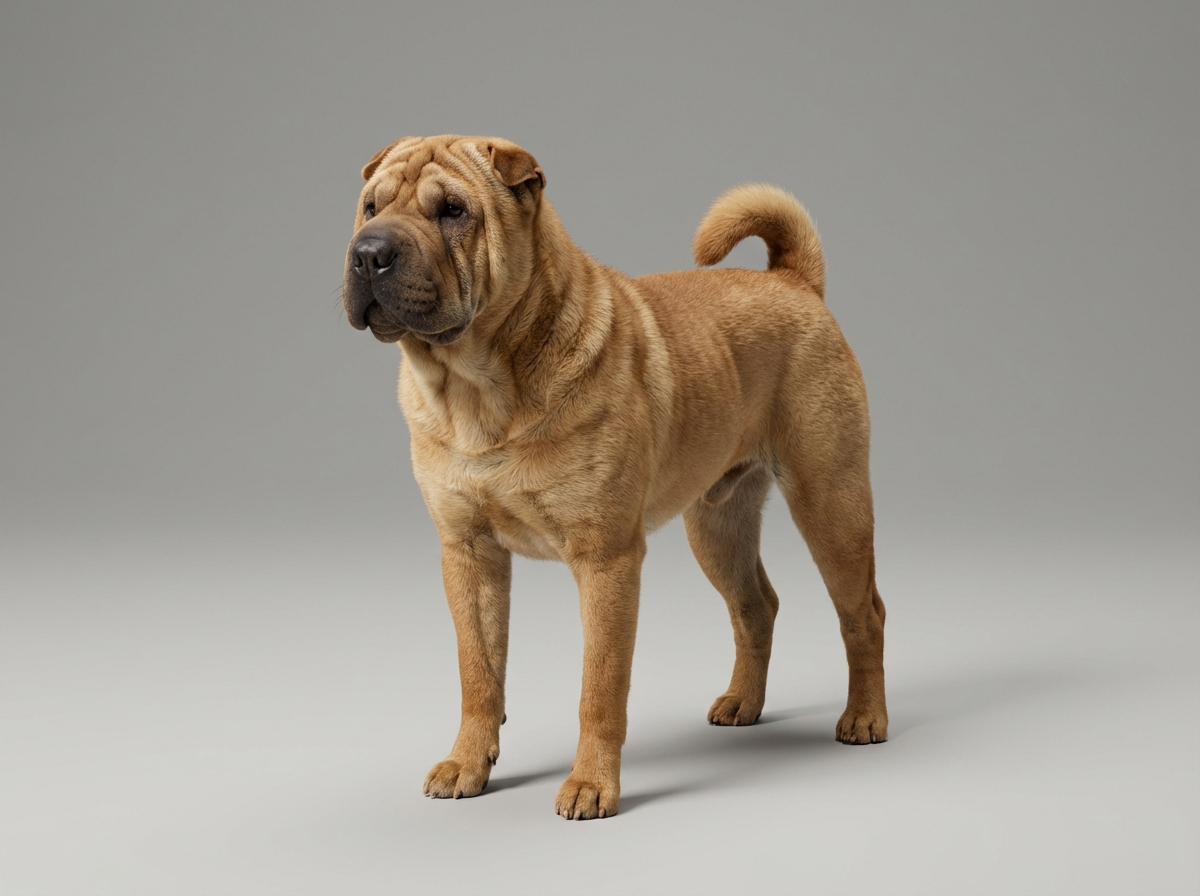
Health
Is this breed's face actually brachycephalic?
No — its documented profile shows loose, folded skin, a different structure from the shortened skull that defines true brachycephalic breeds.

Quick answer
Is this breed's face actually brachycephalic?
No — its documented profile shows loose, folded skin, a different structure from the shortened skull that defines true brachycephalic breeds.
Wrinkled and flat-faced are not the same thing, even though they sometimes get lumped together in casual breed descriptions — this page draws that line clearly.
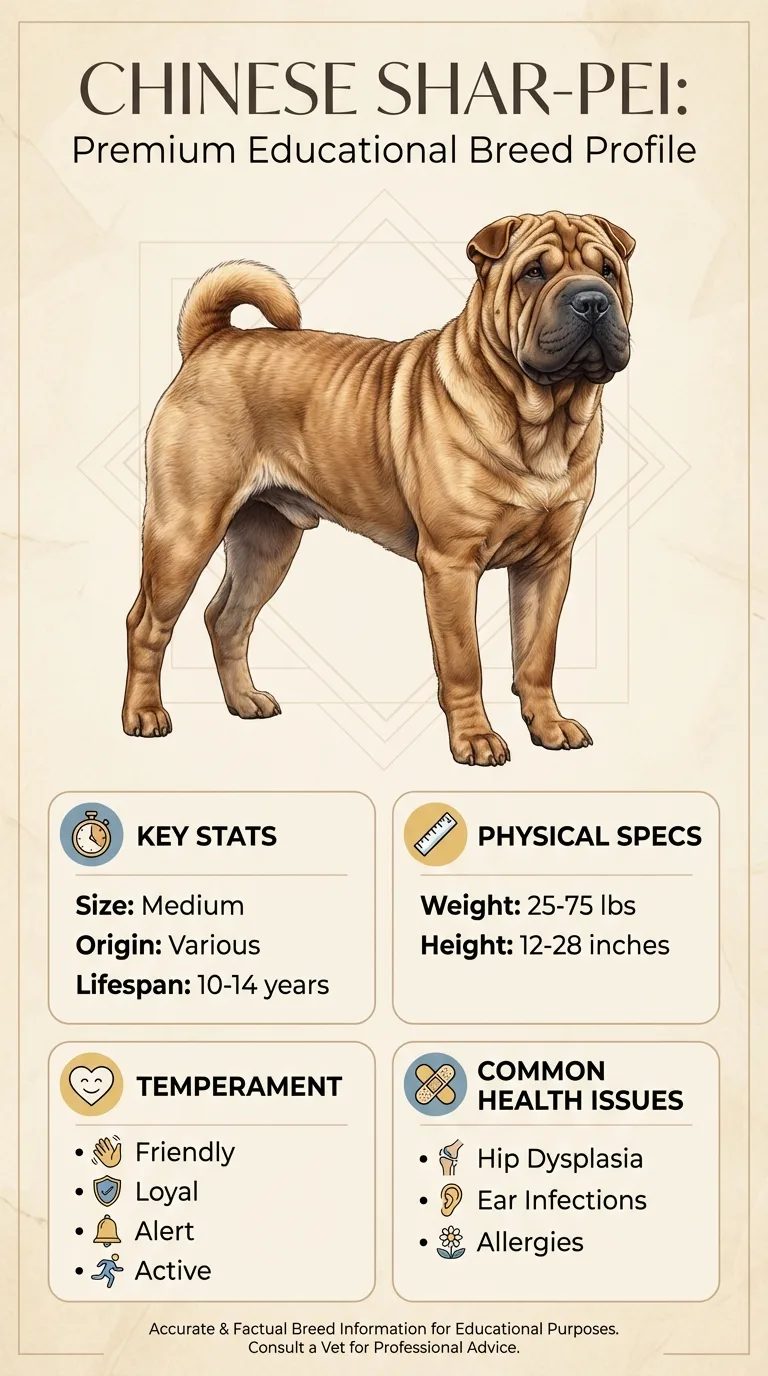
Owners who've seen this breed grouped with bulldogs and pugs in generic 'flat-faced breed' warnings, and anyone trying to figure out whether their dog's occasional snoring or heavy breathing in heat means something serious.
This guide is not medical advice. If your dog shows pain, sudden behavior change, or worsening symptoms, consult a licensed veterinarian.
Some links may be affiliate links. We may earn a commission at no extra cost to you. We only suggest products we believe are helpful for dog owners.
We research and check what we publish, but we do not warrant that any figure, date, price, or statement is accurate, complete, or current, and we accept no liability for any loss, cost, injury, or other harm arising from the use of this site. Use it as one reference among several. You remain responsible for your own decisions and for your dog's care - confirm anything that matters with a licensed veterinarian or another qualified professional before you act on it. Full disclaimer.
Brachycephalic Obstructive Airway Syndrome requires a specific shortened-skull anatomy that isn't part of the Chinese Shar-Pei's documented profile. This breed's facial folds are a skin-based feature tied to documented entropion, not a skeletal airway obstruction, though general heat and exercise caution still applies for genuinely documented reasons.
Not documented as occurring in this breed. True BOAS is specifically associated with breeds carrying the shortened-skull anatomy this breed's documented profile doesn't include.
This breed's documented facial folds stem from loose skin, not a shortened skull, so it lacks the anatomical basis for true BOAS. Its documented entropion is the actual, correctly attributed facial-fold-related health issue.
Heat and humidity remain relevant to this breed's comfort because of its fold-heavy skin and documented lower exercise tolerance, independent of any airway-specific mechanism.
See your vet for labored breathing, blue-tinged gums, collapse, or breathing changes that appear suddenly — these are always urgent in any dog. Persistent loud snoring that's new or worsening is also worth a specific evaluation.
Start here: Chinese Shar-Pei Most Common Genetic Disorders: Screening
See all Chinese Shar PEI health problems, which breeds are prone to brachycephalic airway syndrome boas, or the full Chinese Shar PEI breed guide for temperament, exercise needs and ownership costs.
There's no BOAS-specific timeline relevant to this breed, since it isn't a documented condition here. General heat-season caution is a recurring, seasonal habit rather than a one-time fix.
Success means understanding your dog's actual documented anatomy well enough to focus care on what's genuinely relevant — heat and fold management — rather than worrying about a condition this breed doesn't carry.
True BOAS involves specific structural features — a shortened skull with soft tissue that hasn't shortened at the same rate, resulting in an overlong soft palate, narrowed nostrils, and a windpipe that can be abnormally small relative to body size. These features physically narrow the airway and are why affected dogs work harder to breathe, especially in heat or after exercise.
The Chinese Shar-Pei's documented profile doesn't list brachycephalic features or BOAS among its known health issues. Its face carries thick, loose skin and folds, which is a cosmetic and skin-fold issue — one connected to this breed's documented entropion — not the skeletal shortening that defines true brachycephalic airway obstruction.
Heat and exercise caution is still worth practicing here, just for different, genuinely documented reasons.

If you think your Chinese has brachycephalic airway syndrome (boas), the plan is three steps: write down what you have seen and when it started, book a veterinary appointment rather than waiting for the next flare, and take video of the behaviour or symptom before you go — the thing you are worried about rarely happens in the consulting room. Screening in the parents covers skin fold dermatitis, entropion, familial shar-pei fever.
What the vet visit should produce is a diagnosis and a written plan, not just reassurance: what is being ruled out, what the monitoring interval is, and which signs mean you come back sooner. Ask what the treatment costs across a year rather than per visit, because that is the number that decides whether you are managing this condition or reacting to it.
Between appointments, keep a short log — dates, what you saw, what changed. It is the single most useful thing an owner brings to a follow-up, and for brachycephalic airway syndrome (boas) it is often what separates a clear pattern from a guess.
Aiden had read several general articles grouping wrinkled-faced breeds with brachycephalic dogs and assumed his Shar-Pei Zhu's occasional loud snoring meant an airway problem requiring surgery, similar to what he'd read about bulldogs. At a routine visit, his vet examined Zhu's airway structure directly and explained that Zhu's skull wasn't shortened the way a true brachycephalic dog's is — the snoring was mild and unrelated to any obstruction, more a product of loose throat skin during deep sleep. Aiden shifted his attention instead to keeping Zhu cool and dry during summer walks, which turned out to be the genuinely relevant precaution for his dog.
Key takeaway: A wrinkled face and a shortened skull are two different things — knowing which one your dog actually has changes what's actually worth worrying about.
No, not based on its documented profile. True brachycephalic breeds have a specific shortened-skull anatomy that physically narrows the airway. This breed's facial folds are a skin structure issue, documented alongside entropion, not a skull-shape airway condition.
Mild snoring can occur in many dogs regardless of skull shape, sometimes related to loose skin around the throat and muzzle. If snoring is loud, worsening, or accompanied by labored breathing while awake, it's worth a vet check rather than an assumption.
Yes — not because of documented BOAS, but because this breed's documented lower exercise needs and heat-trapping skin folds are genuine, separate reasons to avoid overexertion in high heat.
Any individual dog can develop a breathing issue unrelated to breed-typical anatomy. The point here is specifically that BOAS, the shortened-skull airway condition, isn't documented for this breed the way it is for true brachycephalic breeds.
Casual or generic breed descriptions sometimes group any dog with facial wrinkles under a broad 'flat-faced' label without checking actual skull structure or documented health data.
No — any dog can develop a breathing problem, and any labored breathing, blue-tinged gums, or collapse always needs immediate vet attention. It just means BOAS specifically isn't the documented, expected cause for this breed.
Only if an individual exam turned up a specific, unrelated airway abnormality in that dog, not as a routine consideration based on breed alone, since this breed's documented profile doesn't include the anatomy that typically leads to that recommendation.
No — its documented profile shows loose, folded skin, a different structure from the shortened skull that defines true brachycephalic breeds.
Yes, given this breed's documented lower exercise needs and heat-trapping skin folds, though the reason differs from true BOAS breeds.
Only if a vet identifies a specific individual airway concern on exam, not as a routine expectation based on this breed's documented profile.
This breed doesn't carry the same documented likelihood of airway surgery costs that true BOAS breeds often face.
Yes, its documented low exercise needs and fold-heavy skin both argue for caution in hot weather regardless of airway status.
A one-page prep sheet for this condition: the signs, the questions to ask, what to get priced. Unlocks here.
You get: Vet visit prep sheet
No spam. One-click unsubscribe. See our privacy policy.
Preview page 1 before you decide.