What are genetic disorders in Chinese Shar-Pei dogs?
A genetic disorder is a condition influenced by inherited traits. Other factors, including injury, development, age, environment, and general health, can also affect a dog's signs. A Chinese Shar-Pei's breed label alone cannot show whether that dog has a genetic disorder.
What are the most common genetic disorders discussed for Chinese Shar-Pei dogs?
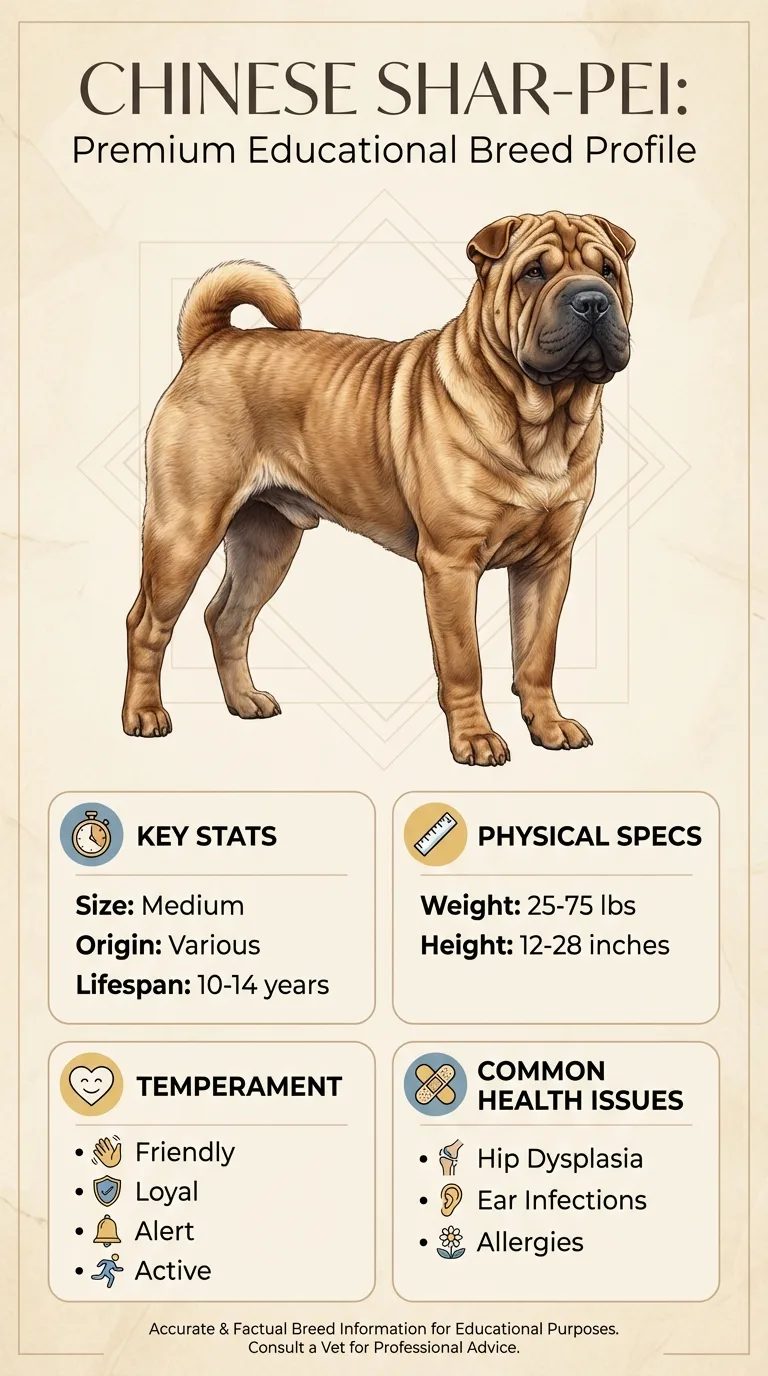
The available page data lists hip dysplasia, ear infections, and allergies as Chinese Shar-Pei health concerns. It does not identify which genetic disorders are most common in the breed or give breed-specific rates, so it would not be accurate to make that claim for every Chinese Shar-Pei.
How do I stop Chinese Shar-Pei most common genetic disorders from getting worse?
You cannot safely stop an inherited risk at home. Support your dog with regular veterinary care, a body condition your veterinarian considers healthy, prompt attention to new signs, and only veterinarian-approved medicines, supplements, or activity changes.
Can Chinese Shar-Pei most common genetic disorders training help?
Training cannot prevent or treat a genetic disorder. Gentle, force-free training can help with cooperative care and a calm routine if your veterinarian recommends activity limits. Do not use training to push through pain, itchiness, weakness, or reduced stamina.
What signs should I watch for in my Chinese Shar-Pei?
Contact a veterinarian for persistent limping, stiffness, reluctance to rise or exercise, repeated ear discomfort, ongoing itching, reduced energy, or a sudden behavior change. These signs can have many causes and need professional evaluation.
What is hip dysplasia in dogs?
Hip dysplasia is an abnormal development of the hip joint that can contribute to discomfort or mobility changes. Similar signs can also come from injury, arthritis, or other conditions, so a veterinarian may use an examination and imaging to investigate the cause.
Are ear infections or allergies genetic disorders?
Ear infections and allergies are included in the available health information, but neither one confirms a genetic cause. Recurrent scratching, head shaking, ear odor, redness, or skin irritation should be assessed by a veterinarian instead of treated as a breed diagnosis.
What should I ask about a Chinese Shar-Pei's health history?
Ask for any available medical and family-history information, including previous diagnoses and treatments. Those records can help your veterinarian ask better questions, but they are not a guarantee that a dog will or will not develop a condition.
When should I take my Chinese Shar-Pei to the vet?
Seek urgent help for collapse, breathing difficulty, sudden severe weakness, inability to stand, or severe pain. For persistent limping, recurring ear or skin discomfort, or a sustained change in activity or behavior, book a veterinary appointment promptly.
What should I expect after a health concern is found?
There is no single timeline because it depends on the underlying cause and your dog's response to the veterinary plan. A veterinarian can explain what monitoring, treatment, and activity changes are appropriate after an assessment.