Health
Is CDDY a real concern for Brittany owners?
No, this genetic trait isn't part of this breed's genetic background. Brittanys have normal limb and spine proportions.

Quick answer
Is CDDY a real concern for Brittany owners?
No, this genetic trait isn't part of this breed's genetic background. Brittanys have normal limb and spine proportions.
This isn't a milder version of a risk this breed carries, it's a genetic trait that simply isn't present in a Brittany's genome the way it is in short-legged breeds.
This mix-up affects owners who've encountered CDDY on a generic breed health list and are trying to figure out whether their normally proportioned Brittany actually needs to worry about it.
This guide is not medical advice. If your dog shows pain, sudden behavior change, or worsening symptoms, consult a licensed veterinarian.
Some links may be affiliate links. We may earn a commission at no extra cost to you. We only suggest products we believe are helpful for dog owners.
We research and check what we publish, but we do not warrant that any figure, date, price, or statement is accurate, complete, or current, and we accept no liability for any loss, cost, injury, or other harm arising from the use of this site. Use it as one reference among several. You remain responsible for your own decisions and for your dog's care - confirm anything that matters with a licensed veterinarian or another qualified professional before you act on it. Full disclaimer.
Chondrodystrophy, or CDDY, is a specific genetic trait producing short legs and an early disc degeneration pattern in breeds like Dachshunds and Corgis. Brittanys don't carry this trait; they have normal, proportionate limb and spine development, which means the disease mechanism behind CDDY simply isn't part of this breed's genetic makeup.
CDDY is not documented in this breed's genetic profile at all, since Brittanys don't carry the gene variant responsible for it. This page addresses the mislabeling directly rather than a condition that occurs in this breed.
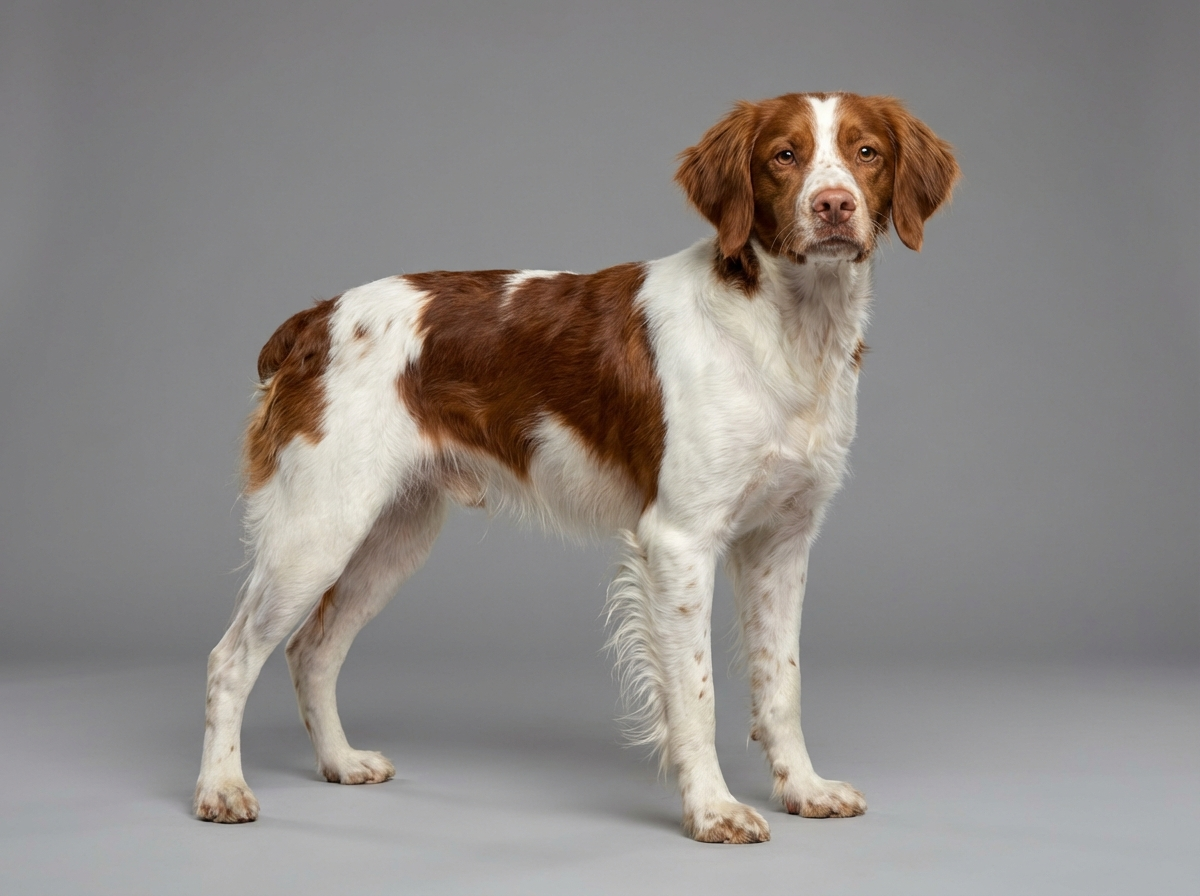
Brittanys were developed as an athletic, leggy pointing gundog, a body type incompatible with the short-legged, long-backed proportions CDDY produces. There is no documented presence of the FGF4 gene variant responsible for chondrodystrophy in this breed's genetic background.
Nothing about this breed's environment or lifestyle changes its underlying genetics. Any disc or joint concern that does arise in an individual Brittany stems from age-related wear, activity level, or the breed's documented hip and elbow dysplasia risk, not from a chondrodystrophic genetic trait.
See your vet for any signs of joint pain, disc-related weakness, or mobility changes, evaluated on their own merits rather than assumed to follow a chondrodystrophic pattern this breed doesn't have. Sudden hind-limb weakness or apparent paralysis is always an emergency regardless of the suspected cause.
See all Brittany health problems, which breeds are prone to chondrodystrophy cddy, or the full Brittany breed guide for temperament, exercise needs and ownership costs.
There's no medical timeline involved in correcting a misunderstanding about genetics. Once an owner confirms their Brittany's actual documented traits with their vet, this concern typically resolves in a single conversation.
Success is having accurate information about this breed's real genetic profile, and redirecting attention toward the joint and disc concerns that are actually documented for Brittanys instead.
CDDY is a specific, identifiable genetic variant that causes an abnormal, early form of bone growth in the limbs, shortening the legs, and it's also strongly linked to a specific pattern of early disc degeneration, since the same gene variant affects cartilage development throughout the body, including the intervertebral discs. Breeds like Dachshunds carry this variant as a defining, standard breed trait.
Brittanys, bred as a leggy, athletic pointing gundog, show no such trait: normal limb length, normal spine proportions, and no documented genetic basis for the early disc calcification pattern CDDY produces. This is a genetic fact about the breed's standard conformation, not a spectrum where some Brittanys have it mildly and others don't.
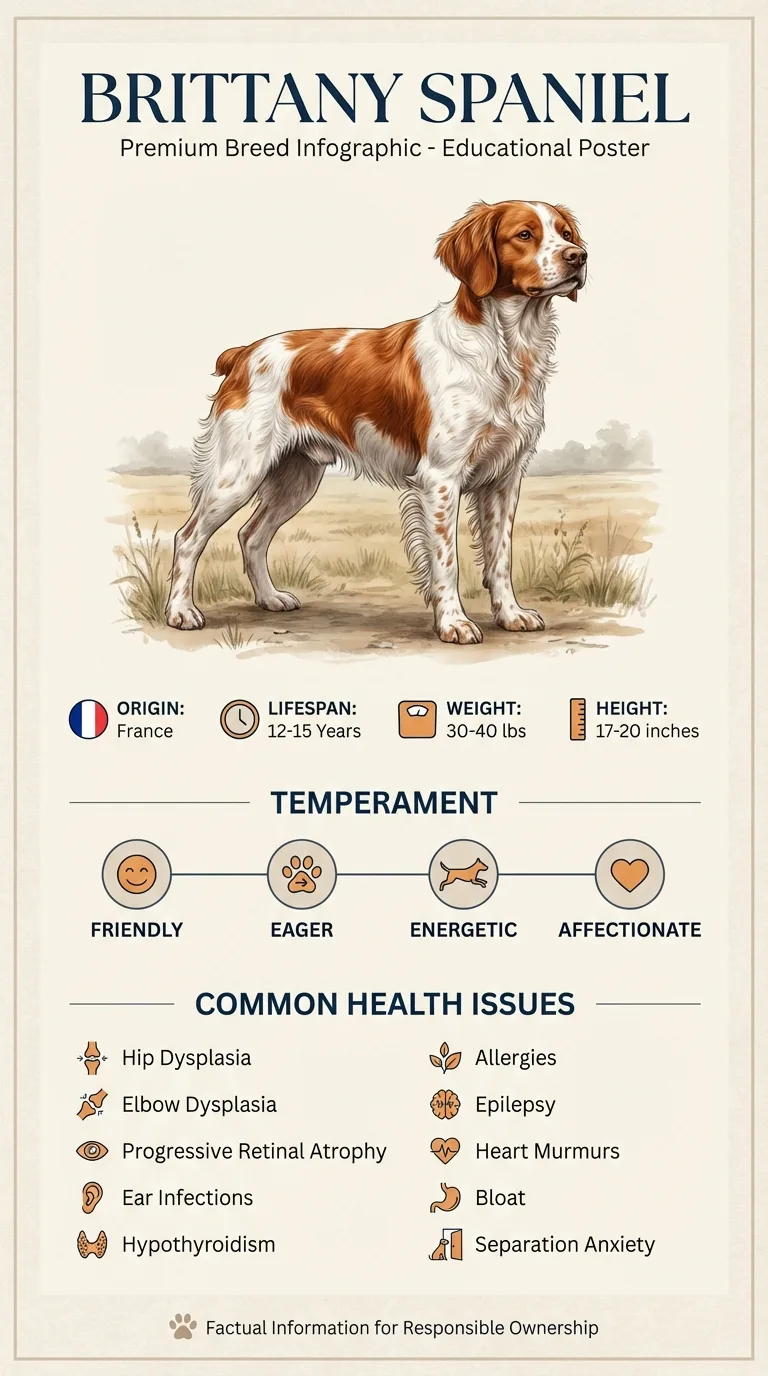
Instead of a chondrodystrophic risk, a Brittany's real considerations are hip and elbow dysplasia and age-related, activity-driven wear.

Brett came across CDDY listed as a Brittany health concern while researching before adopting Sadie, a six-month-old puppy, and grew worried about her future mobility, picturing the short-legged, long-backed dogs he'd seen affected by early disc disease in online videos. At Sadie's next puppy checkup, he brought up his concern directly. Her vet explained clearly that CDDY is a defined genetic trait found in breeds like Dachshunds and Corgis, and that Brittanys, with their normal leg and spine proportions, simply don't carry it. What the vet did flag as genuinely relevant were Sadie's documented hip and elbow dysplasia risks, and they discussed a sensible puppy activity plan around that instead. Brett appreciated having the record set straight early, since it let him focus his attention on the joint concerns that actually applied to Sadie rather than a condition that had nothing to do with her.
Key takeaway: Not every genetic condition listed for a breed actually applies to it. Confirming a claim with a vet redirects attention toward the real, documented risks worth planning for.
No. CDDY is a specific genetic variant documented in breeds like Dachshunds and Corgis, and it isn't part of this breed's genetic background. Brittanys have normal limb and spine proportions.
This usually comes from generic breed-health templates that list conditions across many breeds without confirming which ones actually have documented genetic evidence for that specific breed.
No, disc disease can still occur, but it follows the slower, age-related degenerative pattern seen in normally proportioned breeds, not the early-onset genetic pattern CDDY causes in chondrodystrophic breeds.
There's little reason to, since the trait isn't part of this breed's documented genetic profile. Testing is more relevant for breeds where CDDY is a known, segregating trait.
Hip dysplasia and elbow dysplasia are the joint conditions documented as concerns in this breed, both mechanically unrelated to chondrodystrophy.
This isn't documented as occurring in the breed's standard population. A Brittany with notably short legs relative to breed standard would be an unusual individual variation, not an expected or common trait.
No, this genetic trait isn't part of this breed's genetic background. Brittanys have normal limb and spine proportions.
Dachshunds, Corgis, Basset Hounds, and other short-legged, long-backed breeds carry this documented genetic variant, not Brittanys.
It generally avoids the early-onset disc surgery costs common in chondrodystrophic breeds, though this breed has its own separate documented costs worth planning for.
Teaching calm ramp use and controlled jumping habits protects against this breed's actual documented risks, hip and elbow dysplasia, rather than a chondrodystrophic trait it doesn't have.
No, those guides are built around a genetic trait and body type this breed doesn't share; general joint and activity guidance suited to a normally proportioned dog is more appropriate.
A one-page prep sheet for this condition: the signs, the questions to ask, what to get priced. Unlocks here.
You get: Vet visit prep sheet
No spam. One-click unsubscribe. See our privacy policy.
Preview page 1 before you decide.