Health
Does BOAS apply to Brittanys?
No, BOAS requires specific brachycephalic structural features like narrowed nostrils and an overlong soft palate, none of which are part of this breed's anatomy.

Quick answer
Does BOAS apply to Brittanys?
No, BOAS requires specific brachycephalic structural features like narrowed nostrils and an overlong soft palate, none of which are part of this breed's anatomy.
BOAS isn't a general 'breathing problem' label, it's a specific set of physical structures acting together. Without those structures, the syndrome itself can't develop, no matter how the label gets applied on a health list.
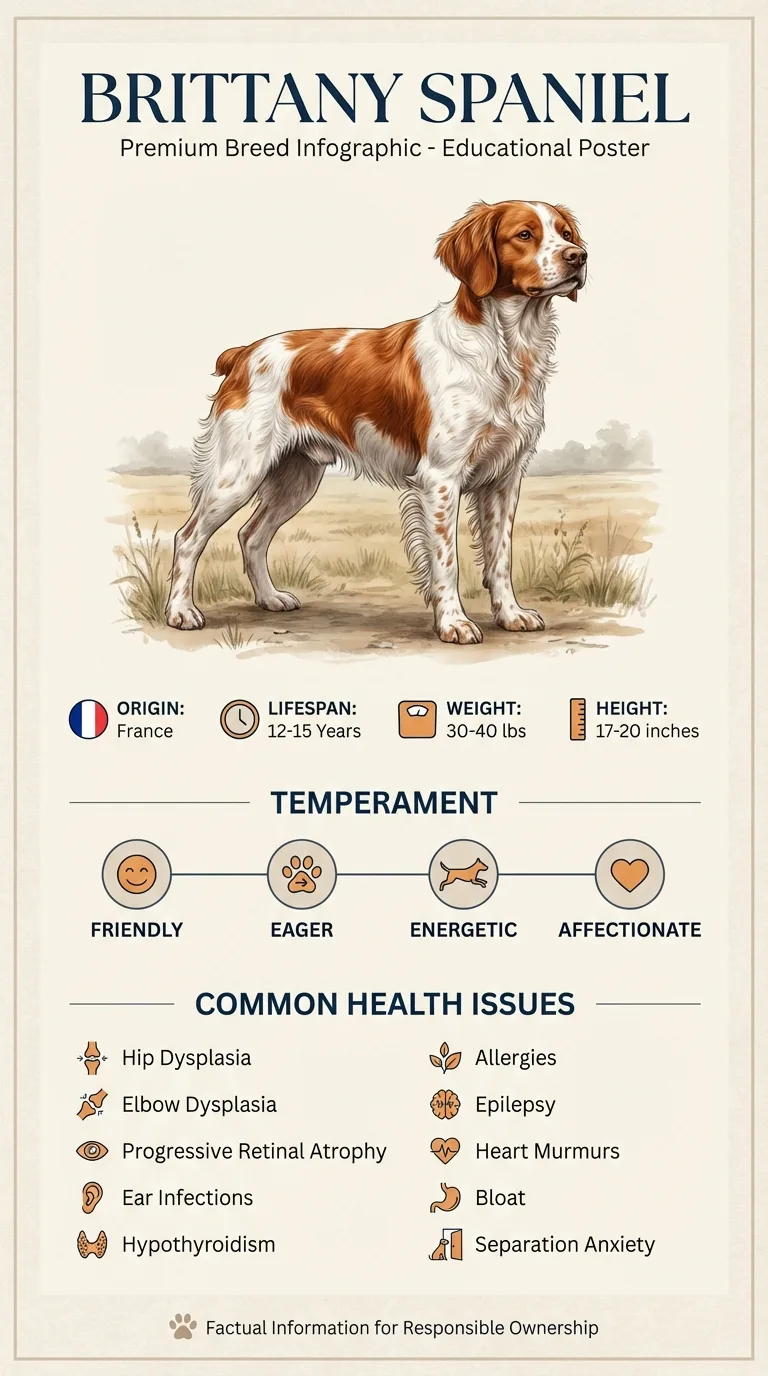
This matters most for owners who've read alarming BOAS content aimed at flat-faced breeds and are worried it applies to their Brittany's snoring, panting, or breathing during exercise, when the actual anatomy involved is completely different.
This guide is not medical advice. If your dog shows pain, sudden behavior change, or worsening symptoms, consult a licensed veterinarian.
Some links may be affiliate links. We may earn a commission at no extra cost to you. We only suggest products we believe are helpful for dog owners.
We research and check what we publish, but we do not warrant that any figure, date, price, or statement is accurate, complete, or current, and we accept no liability for any loss, cost, injury, or other harm arising from the use of this site. Use it as one reference among several. You remain responsible for your own decisions and for your dog's care - confirm anything that matters with a licensed veterinarian or another qualified professional before you act on it. Full disclaimer.
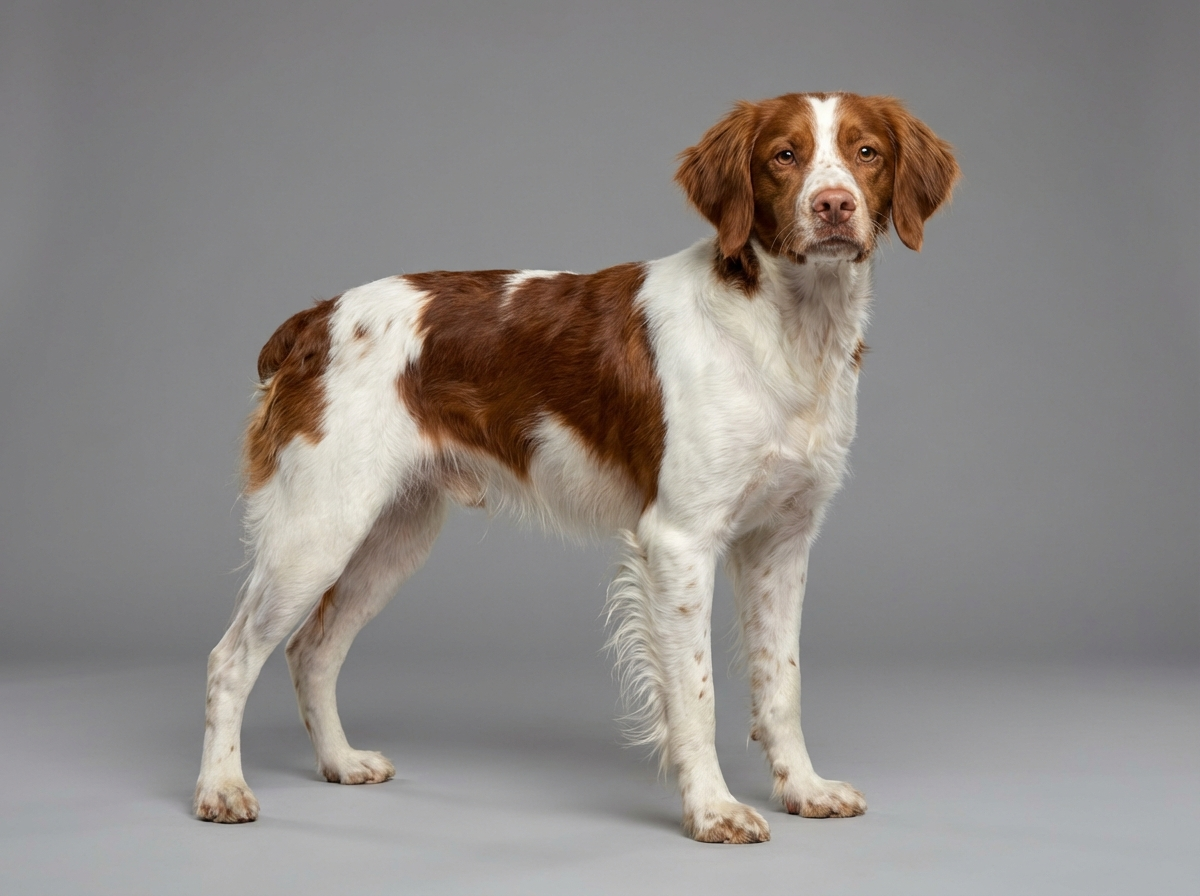
BOAS is a structural airway syndrome requiring specific anatomical features found in flattened-face breeds. A Brittany's normal, moderately long muzzle and throat structure don't include any of the four physical features that define the syndrome, so BOAS itself isn't part of this breed's documented risk profile.
BOAS as a diagnosed condition is not documented in this breed, since the anatomy required for it doesn't exist in a Brittany's muzzle and throat structure. This page addresses the mislabeling directly rather than a condition that actually occurs here.
This breed's muzzle was shaped by selection for scenting ability and airflow efficiency during sustained field work, the opposite design pressure from the flattened faces that produce BOAS. There's no documented structural feature in this breed's anatomy, narrowed nostrils, an overlong soft palate, or a narrowed windpipe, that would allow the syndrome to develop.
Nothing in this breed's typical environment changes its throat or nasal structure. Any genuine breathing concern in an individual Brittany would come from an unrelated cause, such as infection, allergy, or an isolated injury, rather than from the structural mechanism behind BOAS.
See your vet if your Brittany develops persistent noisy breathing at rest, ongoing loud snoring, or breathing distress that doesn't resolve with rest and cooling. These aren't expected features of this breed's anatomy, so they're worth investigating rather than assuming they fit a syndrome that doesn't apply here.
See all Brittany health problems, which breeds are prone to brachycephalic airway syndrome boas, or the full Brittany breed guide for temperament, exercise needs and ownership costs.
There's no treatment timeline for a condition that doesn't apply to this breed's anatomy. Clarifying the mismatch with your vet typically resolves any related concern in a single conversation.
Success is having an accurate picture of this breed's real airway anatomy, and directing attention toward heat and exertion management, the genuinely relevant concern, instead of a structural syndrome that doesn't fit.
BOAS is diagnosed based on specific physical structures, not general noisy breathing.
Since the structural syndrome doesn't apply, breathing-related attention for a Brittany is better spent on heat and exertion management. This is a high-drive sporting breed that will often keep working past the point it should safely stop, especially in warm weather, and that behavioral tendency, not airway structure, is what actually causes heat-related breathing distress in this breed.
Our dedicated page on heat and exertion covers that real risk in depth, including how to recognize the difference between normal heavy panting after hard work and genuine overheating distress.

Iris grew concerned after Birdie, her young Brittany, came back from a hard retrieving session breathing loudly through an open mouth, and a quick search brought up BOAS as a listed breed concern. She brought it up anxiously at Birdie's next appointment. Her vet examined Birdie's nostrils, palate, and throat and confirmed everything was structurally normal, explaining that BOAS requires specific physical features found in flat-faced breeds, none of which Birdie had. The heavy breathing was simply a fit, hardworking dog recovering from genuine exertion on a warm afternoon. What the vet did recommend was building in more frequent water and shade breaks during Birdie's training sessions, since her drive meant she'd keep working past a sensible stopping point on her own. Iris now watches for a level, structured cooldown rather than worrying about her airway structure.
Key takeaway: Heavy panting after real exertion isn't the same as a structural airway syndrome. For this breed, managing exertion and heat matters far more than anything related to BOAS.
BOAS requires specific structural features, narrowed nostrils, an overlong soft palate, and a narrowed windpipe, that are part of brachycephalic anatomy. A Brittany's normal muzzle doesn't have these structures, so the syndrome as defined doesn't apply.
This usually comes from generic breed-health content that applies a standard list of conditions across many breeds without verifying whether the underlying anatomy actually matches. It's worth checking any specific structural condition against your dog's real anatomy.
Not based on structure alone. Occasional snoring or heavy panting after exercise can happen in any breed for many reasons. BOAS specifically requires the anatomical features described above, which this breed's throat and nasal structure don't have.
Persistent noisy breathing at rest, or breathing distress that doesn't resolve with rest and cooling, is worth a vet visit regardless of breed. For this breed specifically, overexertion in heat is the more relevant everyday concern than any structural airway syndrome.
BOAS corrective surgeries address the specific structural problems described above. Since those structures aren't part of this breed's anatomy, this type of surgery wouldn't be relevant to a Brittany's normal breathing structure.
Yes, heat tolerance is genuinely relevant, but the mechanism is different: it's about a high-drive dog overexerting itself in warm weather rather than a structural airway restriction limiting airflow.
No, BOAS requires specific brachycephalic structural features like narrowed nostrils and an overlong soft palate, none of which are part of this breed's anatomy.
Narrowed nostrils, an elongated soft palate, a narrowed windpipe, and everted laryngeal tissue, all features of flat-faced breed anatomy, not this breed's.
It generally avoids the airway-surgery costs common in flat-faced breeds, though this breed has other documented health costs worth planning for separately.
Training a reliable recall and pacing cues to manage exertion in heat addresses this breed's real breathing-related risk far more than anything related to BOAS.
Not for structural reasons, since this breed lacks that anatomy, but sensible heat and exertion pacing is still worth practicing for this high-drive breed's own reasons.
A one-page prep sheet for this condition: the signs, the questions to ask, what to get priced. Unlocks here.
You get: Vet visit prep sheet
No spam. One-click unsubscribe. See our privacy policy.
Preview page 1 before you decide.