Health
What causes most hypothyroidism cases in dogs?
An autoimmune process called thyroiditis, where the immune system gradually destroys thyroid gland tissue over time.

Quick answer
What causes most hypothyroidism cases in dogs?
An autoimmune process called thyroiditis, where the immune system gradually destroys thyroid gland tissue over time.
By the time a Brittany shows the classic signs of low thyroid hormone, the immune system has often already been quietly damaging that gland for a year or more.
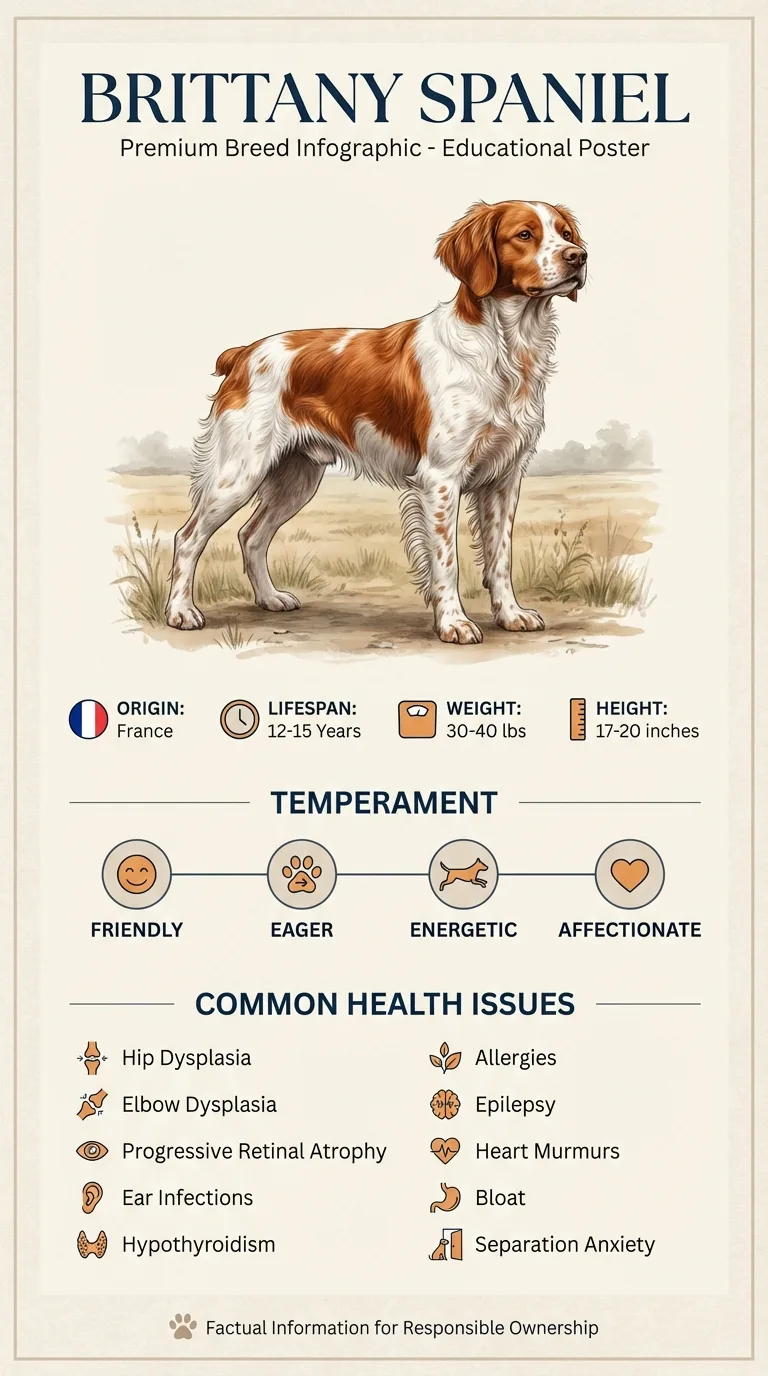
Breeders and owners planning to breed a Brittany face this issue most directly, since thyroiditis has a documented genetic and immune-mediated component that responsible breeding programs try to screen for using early antibody testing, well before a standard hormone panel would ever flag a problem.
This guide is not medical advice. If your dog shows pain, sudden behavior change, or worsening symptoms, consult a licensed veterinarian.
Some links may be affiliate links. We may earn a commission at no extra cost to you. We only suggest products we believe are helpful for dog owners.
We research and check what we publish, but we do not warrant that any figure, date, price, or statement is accurate, complete, or current, and we accept no liability for any loss, cost, injury, or other harm arising from the use of this site. Use it as one reference among several. You remain responsible for your own decisions and for your dog's care - confirm anything that matters with a licensed veterinarian or another qualified professional before you act on it. Full disclaimer.
Immune-mediated thyroiditis is the autoimmune mechanism believed to underlie most cases of the hypothyroidism documented in Brittanys. Rather than a hormone deficiency appearing out of nowhere, thyroiditis describes a slow, silent immune attack on thyroid tissue that typically runs for a year or more before hormone levels drop low enough to produce any visible symptom.
Given how strongly hypothyroidism is documented in this breed, and given that autoimmune thyroiditis is understood to be the leading cause of hypothyroidism in dogs generally, it's reasonable to consider thyroiditis the likely underlying process behind a meaningful share of Brittany thyroid cases.
This breed's documented tendency toward hypothyroidism points toward an underlying genetic predisposition to the autoimmune thyroid attack that most commonly causes it, which is why breeding programs concerned with long-term thyroid health increasingly look at antibody testing rather than relying on hormone panels alone.
Less is understood about specific environmental triggers for thyroiditis compared to its genetic component, though general immune health, stress, and possibly concurrent illness are areas of ongoing veterinary research interest.
Discuss thyroid antibody testing proactively if you're breeding your dog or researching a line with known thyroid issues, and pursue standard hormone testing promptly if your dog shows the classic hypothyroidism symptom cluster of weight gain, lethargy, and coat changes.
See all Brittany health problems, which breeds are prone to immune mediated thyroiditis, or the full Brittany breed guide for temperament, exercise needs and ownership costs.
Thyroiditis is understood to progress silently over roughly a year or more before hormone levels drop enough to cause symptoms, meaning antibody-positive but hormone-normal dogs may not need treatment for a significant stretch of time, monitored periodically instead.
Success looks like informed breeding decisions based on antibody data where relevant, and for pet owners, catching the eventual hormone-level hypothyroidism early enough that treatment starts before symptoms become severe.
The thyroid gland has considerable functional reserve, meaning it can keep producing enough hormone even while a meaningful percentage of its tissue has already been destroyed by immune attack. Symptoms of hypothyroidism, the fatigue, weight gain, and coat changes owners eventually notice, typically don't appear until roughly 75 percent of the gland's function has already been lost.
That's the core reason a standard thyroid hormone test can look completely normal in a young or middle-aged dog that's already deep into the autoimmune process. Antibody testing, specifically for thyroglobulin autoantibodies, is what can catch the disease during this earlier, hormone-normal window, which matters most for breeding decisions rather than day-to-day pet care.
Because the disease progresses over time, a single negative antibody test in a young dog doesn't guarantee lifelong immunity from developing thyroiditis later — periodic rechecking is part of how breeding programs manage this uncertainty.

A Brittany breeder noticed that two dogs from the same grandparent line had developed hypothyroidism by age six, despite normal thyroid panels at their two-year health checks. Curious, she began testing young breeding candidates for thyroglobulin antibodies rather than relying on hormone levels alone. One young male tested antibody-positive with completely normal hormone levels at eighteen months. Rather than breeding him immediately, she opted to retest annually and held off on using him in her program. By age four, his hormone levels had started to drop, confirming the antibody test had caught the process years before a standard panel would have shown anything unusual.
Key takeaway: Antibody testing can reveal a developing autoimmune process years before hormone levels change, which is exactly the window where it's most useful for breeding decisions.
Not exactly — thyroiditis is the underlying autoimmune process that, in most cases, eventually causes hypothyroidism once enough thyroid tissue has been destroyed. Hypothyroidism describes the resulting hormone deficiency itself.
A blood test that looks for antibodies the immune system has produced against thyroid tissue, which can reveal active thyroiditis even while hormone levels still look normal.
Because antibody testing can catch the autoimmune process years before hormone levels drop enough to cause symptoms, giving more useful information for breeding decisions than a standard hormone panel alone.
There's no treatment that reverses the autoimmune destruction itself. Once enough thyroid tissue is lost and hormone levels drop, treatment shifts to lifelong hormone replacement rather than addressing the immune process.
It's believed to have a genetic predisposition component, which is why family history and antibody screening in relatives can be relevant information when researching a breeding line.
It's most useful in young to middle-aged dogs being considered for breeding, since testing an already-diagnosed hypothyroid senior dog for antibodies provides less additional decision-making value.
An autoimmune process called thyroiditis, where the immune system gradually destroys thyroid gland tissue over time.
Roughly around three-quarters of the gland's function is typically lost before classic hypothyroidism symptoms become noticeable.
It's more commonly used for breeding decisions than routine pet care, since standard hormone testing is usually sufficient once symptoms actually appear.
It typically adds a modest amount to a standard thyroid panel, and is often bundled into more comprehensive thyroid testing packages.
It's a reasonable question to ask, particularly given this breed's documented thyroid concerns, though not every breeding program routinely performs it.
A one-page prep sheet for this condition: the signs, the questions to ask, what to get priced. Unlocks here.
You get: Vet visit prep sheet
No spam. One-click unsubscribe. See our privacy policy.
Preview page 1 before you decide.