Health
What's the classic sign of a congenital luxating patella?
A brief skip or hop on a hind leg during movement, followed by the dog resuming normal gait right away.

Quick answer
What's the classic sign of a congenital luxating patella?
A brief skip or hop on a hind leg during movement, followed by the dog resuming normal gait right away.
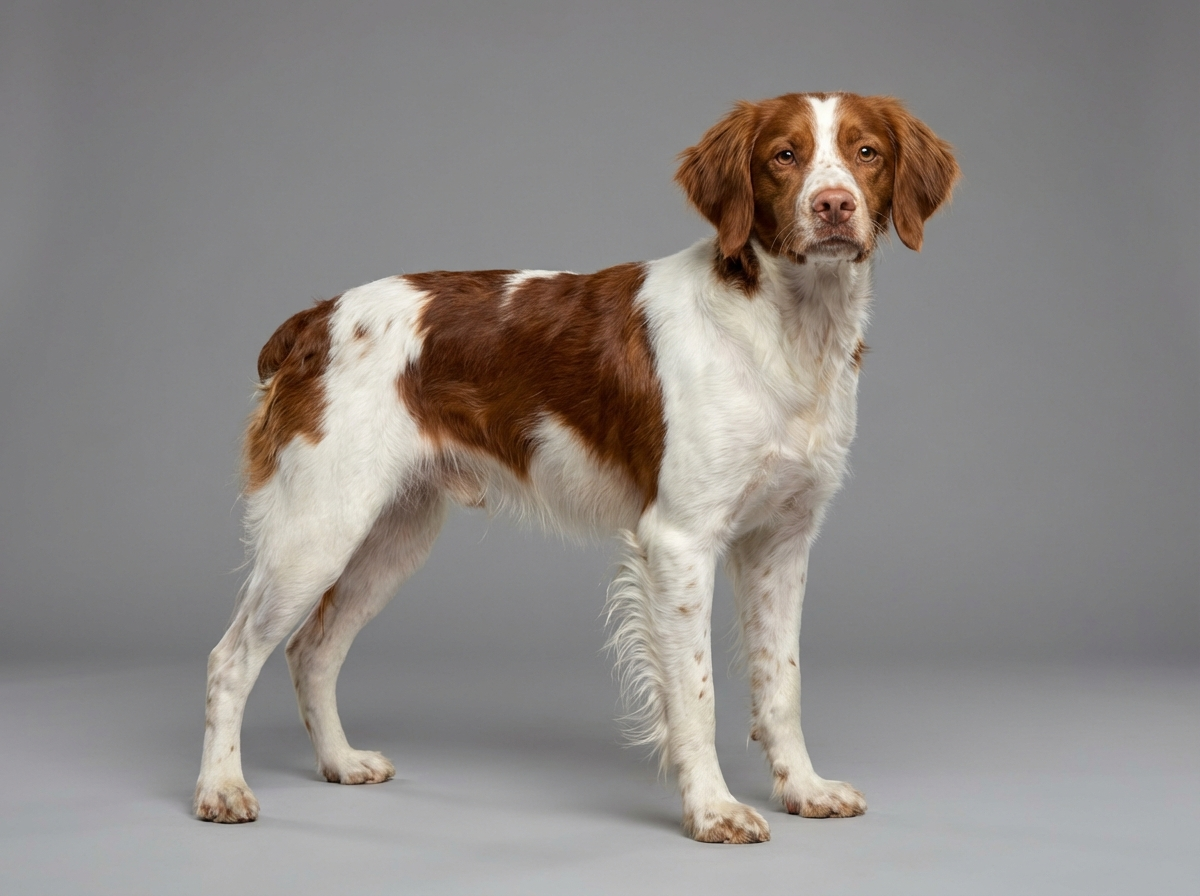
A puppy that occasionally holds up a back leg mid-stride, then shakes it out and keeps running like nothing happened, might have a kneecap slipping in and out of place rather than just being awkward.
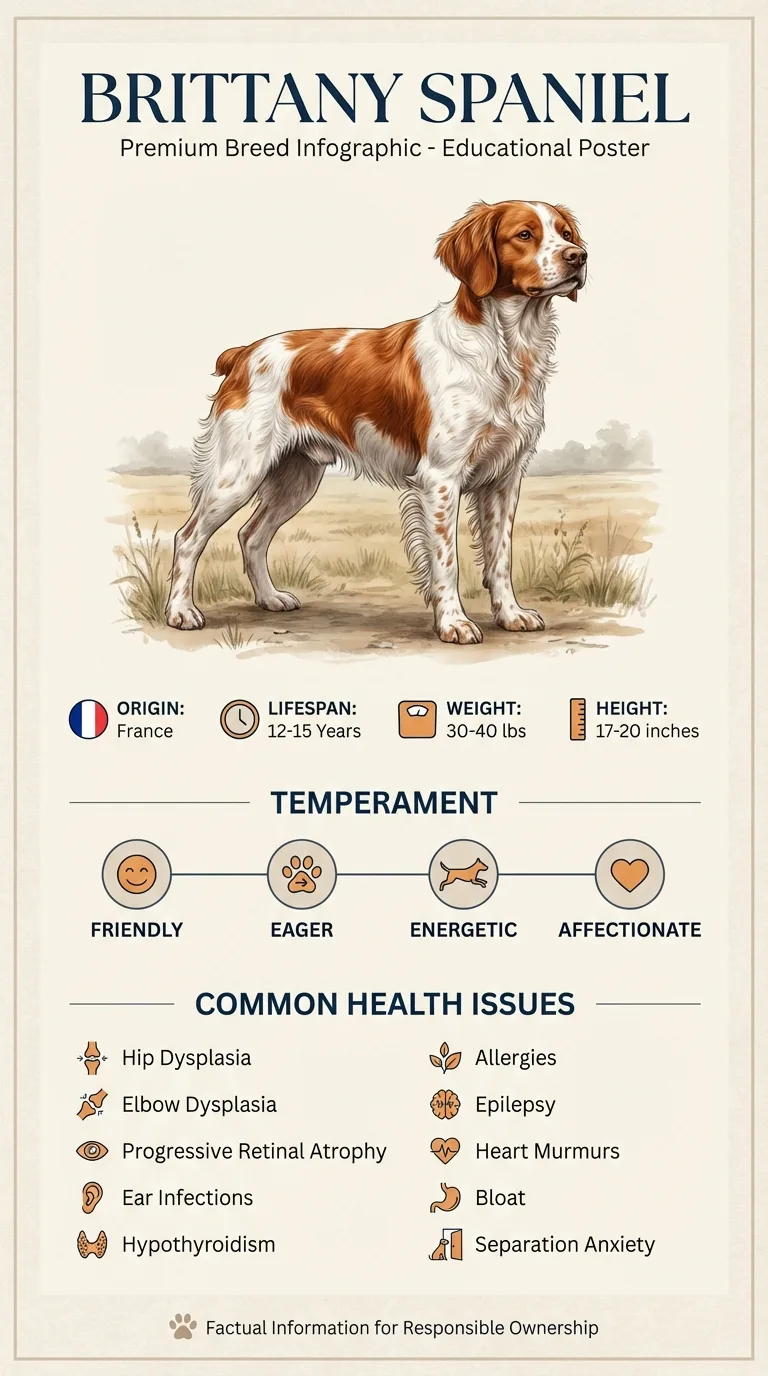
Owners of Brittany puppies notice this most, since the classic developmental sign, a brief skip or hop followed by normal movement, is easy to dismiss as a one-off stumble rather than a recurring pattern worth mentioning to a vet.
This guide is not medical advice. If your dog shows pain, sudden behavior change, or worsening symptoms, consult a licensed veterinarian.
Some links may be affiliate links. We may earn a commission at no extra cost to you. We only suggest products we believe are helpful for dog owners.
We research and check what we publish, but we do not warrant that any figure, date, price, or statement is accurate, complete, or current, and we accept no liability for any loss, cost, injury, or other harm arising from the use of this site. Use it as one reference among several. You remain responsible for your own decisions and for your dog's care - confirm anything that matters with a licensed veterinarian or another qualified professional before you act on it. Full disclaimer.
Congenital patellar luxation is a developmental condition where a shallow knee groove allows the kneecap to slip out of place, most classically documented in small and toy breeds. While it's not a defining risk category for Brittanys, developmental cases can appear in medium breeds, and recognizing the classic intermittent-skip pattern early makes a real difference in how it's managed.
This developmental form is less of a defining risk for Brittanys than it is for small and toy breeds, but it's a recognized possibility worth ruling out in any puppy showing the classic intermittent hind-limb skip.
While not specifically documented on this breed's health list, developmental patellar luxation reflects how the knee's supporting anatomy formed during growth, which can occur in any breed including medium sporting dogs like the Brittany, even though it's statistically less common here than in small breeds.
Growth rate and weight during puppyhood influence how a mild structural predisposition plays out. A lean, gradually conditioned puppy places less stress on a marginally unstable kneecap than an overweight or rapidly growing one.
Mention any recurring hind-limb skip or hop at your next vet visit, and seek prompt evaluation if the leg starts staying held up more often or the dog shows signs of pain or reduced activity.
See all Brittany health problems, which breeds are prone to luxating patellas, or the full Brittany breed guide for temperament, exercise needs and ownership costs.
Mild, low-grade cases are often simply monitored over months to years, with many dogs never needing intervention. Higher-grade cases typically move toward a surgical decision within the dog's first two years, once growth is more complete.
Success looks like a stable, low-grade case that doesn't progress, or a higher-grade case corrected surgically before significant arthritis develops, allowing the dog to stay active and comfortable long-term.
The kneecap normally rides in a groove at the front of the thigh bone, held in place by surrounding tendons and ligaments as the knee bends and straightens. In congenital patellar luxation, that groove is too shallow, or the alignment of the leg's supporting structures is slightly off, so the kneecap can pop out of its groove, usually toward the inside of the leg, before popping back in on its own.
This condition is graded on a scale from I to IV: Grade I luxates only with manual pressure and pops right back; Grade IV involves a kneecap that stays permanently displaced and can't be manually repositioned. Most developmental cases identified in puppyhood sit at the milder end of that scale.
Grade alone doesn't automatically dictate treatment — how much it affects the individual dog's comfort and function matters just as much as the number on the chart.

Rosie, a Brittany puppy, would occasionally hold up a back leg for a step or two while running in the yard, then resume normal movement as if nothing happened. Her owner mentioned it at her six-month wellness visit almost as an afterthought. Her vet found a Grade II luxating patella on exam and recommended monitoring with a weight-management plan rather than immediate surgery, given how infrequent the skipping was. At her one-year recheck, the grade hadn't worsened, and Rosie has continued as an active, healthy young dog with no surgery needed so far, though her vet continues to reassess at each annual visit.
Key takeaway: An intermittent, easy-to-dismiss skip is worth mentioning specifically at vet visits — it's often the only visible sign of a developmental joint issue that's much easier to manage early.
It's not documented as a defining breed concern the way it is in many small and toy breeds, but developmental cases can occur in medium breeds including Brittanys, so it's worth knowing the signs.
Often within the first year, since the congenital form relates to how the knee groove and surrounding structures developed, though a mild case can go unnoticed for longer if it's not causing visible symptoms.
No. Milder grades, particularly Grade I and sometimes Grade II, are often managed conservatively with weight control and monitoring, while higher grades more often benefit from surgical correction.
It can, particularly with continued activity on an unstable joint, which is why periodic rechecks are useful even in a mild, seemingly stable case.
Not exactly — this is the congenital, developmental form present from a shallow knee groove since birth, distinct from a kneecap dislocation caused by a specific traumatic injury later in life.
Yes, over time, repeated luxation can contribute to cartilage wear and arthritis in the joint, which is part of why higher-grade cases are often treated surgically rather than left unaddressed.
A brief skip or hop on a hind leg during movement, followed by the dog resuming normal gait right away.
Yes, it's most classically documented in small and toy breeds, though developmental cases can occur in medium breeds like Brittanys too.
It varies by grade and clinic, but surgical correction commonly ranges from around a thousand to a few thousand dollars per knee.
Moderate, controlled activity while you get a vet evaluation is reasonable; complete restriction usually isn't necessary for a mild, occasional case.
Yes, keeping a dog lean reduces stress on an unstable kneecap and can slow progression or reduce symptom frequency in milder cases.
A one-page prep sheet for this condition: the signs, the questions to ask, what to get priced. Unlocks here.
You get: Vet visit prep sheet
No spam. One-click unsubscribe. See our privacy policy.
Preview page 1 before you decide.