Training
Which trains faster?
The Brittany, rated Very High (5/5) versus the Jack Russell's Moderate (3/5).

Quick answer
Which trains faster?
The Brittany, rated Very High (5/5) versus the Jack Russell's Moderate (3/5).
Brittany Spaniel or Jack Russell Terrier? On paper they differ most on barking, and on the scales Brittany Spaniel is the heavier at 30–40 lbs. Here is how the two compare on everything that shapes an ordinary week.
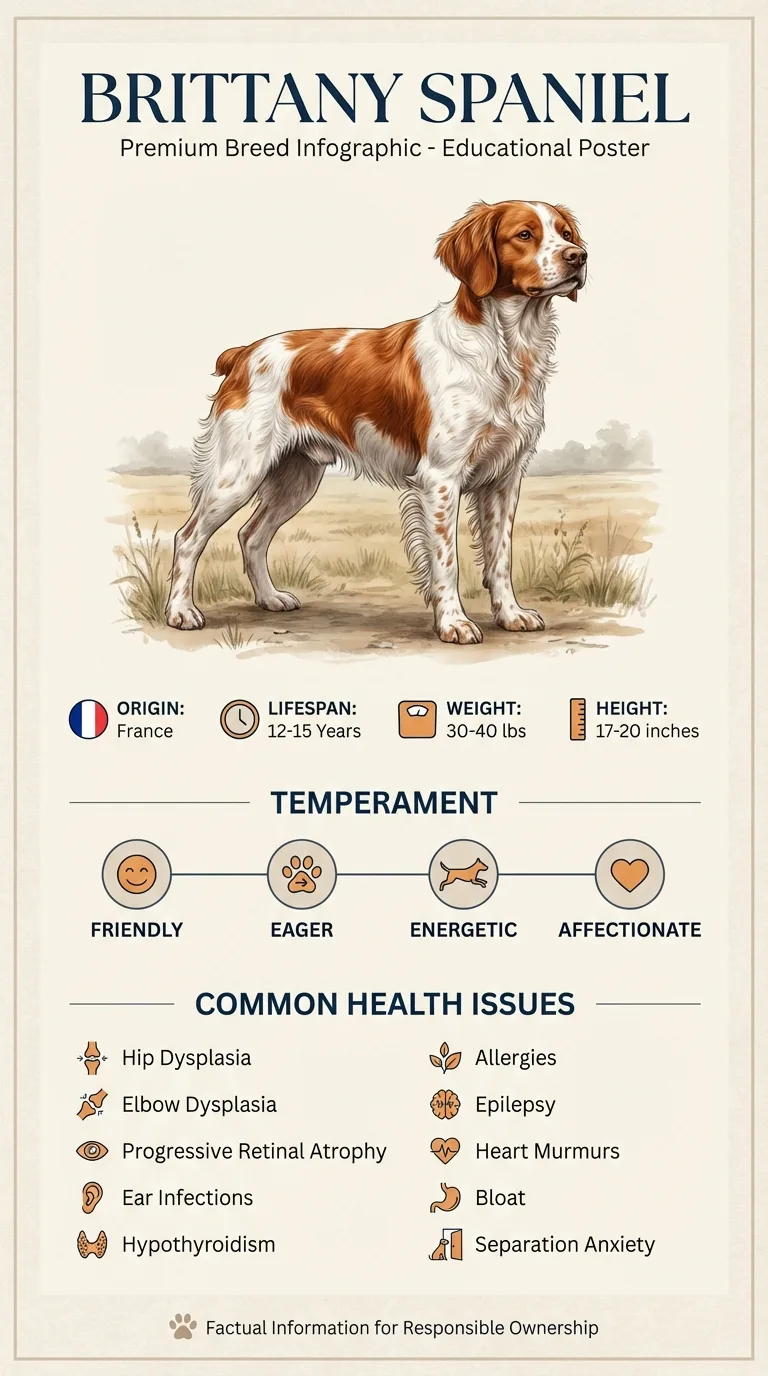
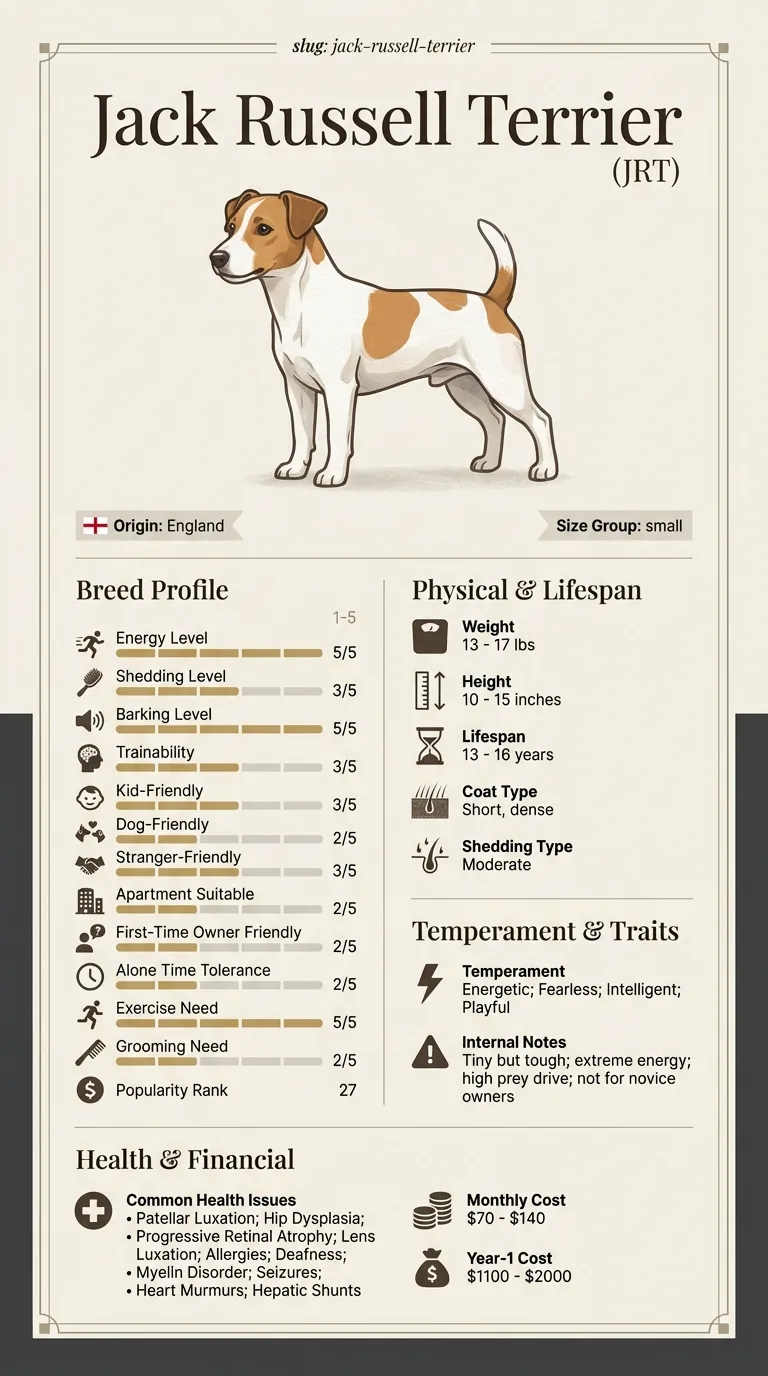
This is for someone already down to Brittany Spaniel and Jack Russell Terrier and deciding between them. For this pair the decision usually turns on barking and good with other dogs, so those are covered first and in most detail. Anyone choosing from a flat has a clear answer here: Brittany Spaniel rates 3/5 against 2/5. Breed history is left out; what follows is what you will actually live with.
Between Brittany Spaniel and Jack Russell Terrier, barking is what separates them, and Brittany Spaniel is the lower-effort dog of the two to keep.
Choose Brittany Spaniel if you are in a flat or a smaller home, this is your first dog and your walking routine is modest.
Choose Jack Russell Terrier if a smaller dog suits your car, your home or your back, you want a dog that can keep up with an active routine and you want a dog that is more watchful with visitors.
| Feature | brittany | jack russell terrier | Winner |
|---|---|---|---|
| Size class | medium | small | Equal |
| Weight | 30–40 lbs | 13–17 lbs | Equal |
| Height | 17–20 in | 10–15 in | Equal |
| Lifespan | 12–15 years | 13–16 years | jack russell terrier |
| Exercise need | High (4/5) | Very high (5/5) | brittany |
| Grooming need | Low (2/5) | Low (2/5) | Equal |
| Shedding | Moderate (3/5) | Moderate (3/5) | Equal |
| Energy level | High (4/5) | Very high (5/5) | Equal |
| Barking | Low (2/5) | Very high (5/5) | brittany |
| Apartment suitability | Moderate (3/5) | Low (2/5) | brittany |
| Good for first-time owners | High (4/5) | Low (2/5) | brittany |
| Tolerates being alone | Low (2/5) | Low (2/5) | Equal |
| Trainability | Very high (5/5) | Moderate (3/5) | brittany |
| Good with kids | Very high (5/5) | Moderate (3/5) | brittany |
| Good with other dogs | Very high (5/5) | Low (2/5) | brittany |
| Friendly to strangers | High (4/5) | Moderate (3/5) | brittany |
| Cost level | Moderate (3/5) | Low (2/5) | jack russell terrier |
| Coat | Medium, wavy coat | Short, dense | Equal |
| Origin | France | England | Equal |
| Typical monthly cost | $90–$180 | $70–$140 | Equal |
| Typical first-year cost | $1,300–$2,500 | $1,100–$2,000 | Equal |
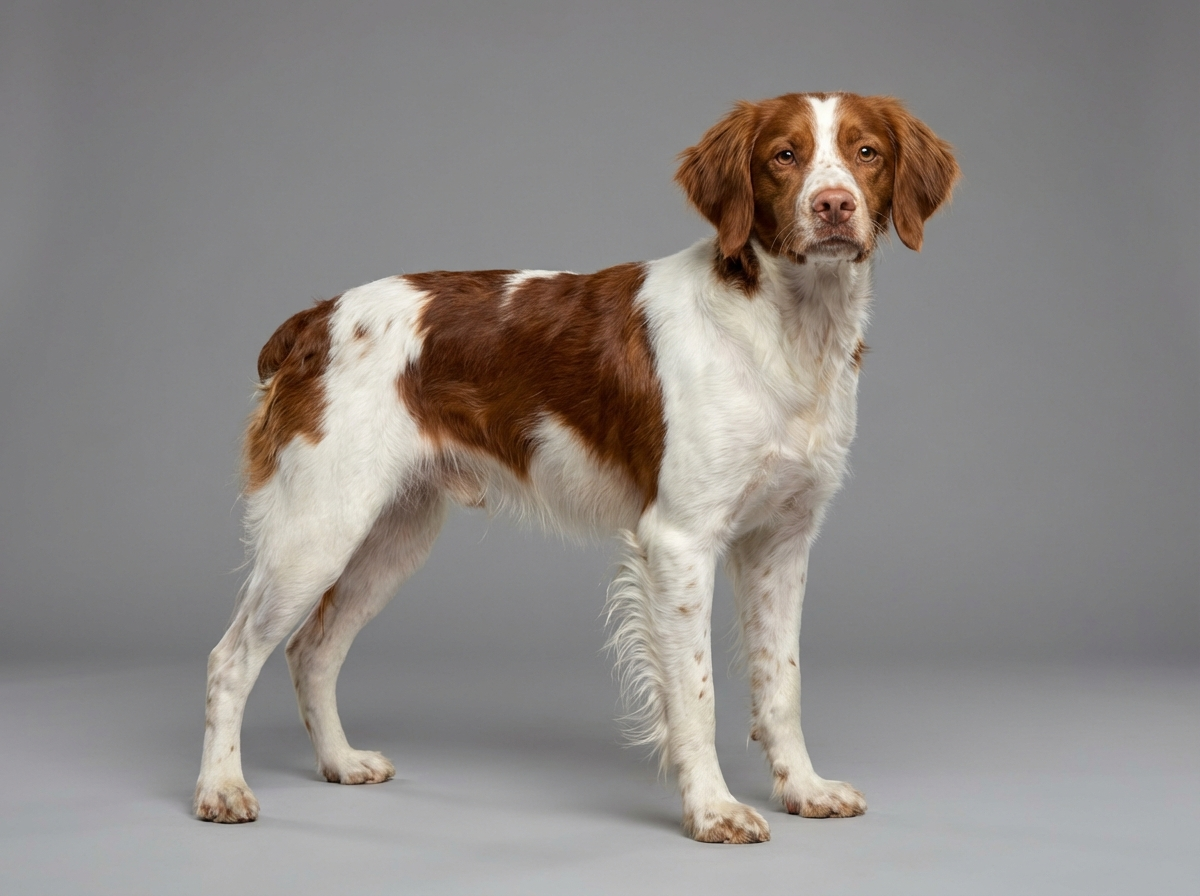
Thirty to 40 pounds of Brittany against 13 to 17 pounds of Jack Russell Terrier -- roughly double the mass, packed into a taller frame too, 17 to 20 inches versus 10 to 15. Stand them side by side and the size class label undersells the difference: "medium" versus "small" doesn't quite convey that a Brittany can outweigh a Jack Russell more than two to one. Both breeds move like athletes rather than lap dogs, wiry and built for work, but a Brittany's longer legs and bird-dog proportions read as a different animal entirely next to the Jack Russell's low, compact terrier build made for going into dens after quarry.
Ninety minutes. That's roughly what a serious Jack Russell owner might budget daily for real exercise, and the data backs the instinct -- Very High (5/5) exercise need against the Brittany's still-substantial High (4/5). Neither dog is a couch companion. The Brittany was bred to hunt birds across open fields for hours; the Jack Russell was bred to chase and dig with relentless persistence. Both tie in the table's energy-level column at the top of the scale, meaning the honest question for a prospective owner isn't "which is more active" so much as "do I currently have 60-plus minutes a day of real physical output to give either of these dogs, because neither will settle for less."
Tie, tie. Both the Brittany and Jack Russell Terrier land at Low (2/5) for grooming need and Moderate (3/5) for shedding, numbers close enough that coat care simply isn't the deciding factor between them. A weekly brushing session handles either dog's coat without professional intervention -- the Brittany's medium wavy coat needs slightly more attention during seasonal blowouts, while the Jack Russell's short, dense coat sheds more steadily but briefly per session. Neither breed drools, neither needs trims, and neither will show up on a groomer's high-maintenance list. Anyone weighing this pair specifically on ease of coat care can set the question aside entirely and focus on temperament and exercise instead.
Picture a downtown loft with a shared hallway: a Jack Russell there rates Very High (5/5) for barking, the loudest score on this entire page, against the Brittany's Low (2/5) -- a genuinely stark contrast for anyone with neighbors close enough to hear through a wall. Apartment suitability follows the same lean, Moderate (3/5) for the Brittany against Low (2/5) for the Jack Russell. Both breeds tie at Low (2/5) for tolerating time alone, so neither is the dog for a household gone ten hours a day regardless of unit size. But if the specific worry is noise complaints, the Jack Russell's alert, vocal terrier instinct is the number that should give a shared-wall owner real pause.
A Brittany scores Very High (5/5) on trainability -- the single highest mark in the entire comparison table -- while the Jack Russell sits at Moderate (3/5), a gap that traces directly to breeding purpose. Brittanys were shaped for close cooperative work with a hunter, responding to commands at a distance; Jack Russells were shaped to work independently underground, out of sight and out of earshot, a job that rewards initiative over obedience. That inherited independence is still there in the family dog version, described in its own temperament list as Fearless. First-time-owner ratings echo the split exactly: High (4/5) for the Brittany, Low (2/5) for the Jack Russell, among the lowest first-time-owner scores in this whole dataset.
With kids it isn't close: Very High (5/5) for the Brittany against Moderate (3/5) for the Jack Russell. With other dogs it's even wider -- Very High (5/5) versus Low (2/5), and Jack Russells carry a well-documented history of same-sex aggression and scrappy encounters that a multi-dog household needs to plan around seriously, not casually. Strangers show the same pattern at a smaller scale, High (4/5) against Moderate (3/5). Both temperament lists share the word Energetic, and both dogs genuinely enjoy their people, but the Brittany's Affectionate, Eager nature translates into a more uniformly easygoing presence around unpredictable variables -- kids, guests, other pets -- than the Jack Russell's Fearless, independent streak typically does.
Thirteen to 16 years for the Jack Russell edges out the Brittany's 12 to 15, a modest gap, though both health lists run to exactly ten conditions each -- an unusually even match on paper. The Brittany's list leans toward joint and systemic issues: Hip and Elbow Dysplasia, Hypothyroidism, Epilepsy, and notably Separation Anxiety, a behavioral condition tied to its Low tolerance for being alone. The Jack Russell's list leans toward sensory and neurological risk: Lens Luxation, Deafness, a Myelin Disorder, and Seizures, alongside shared entries like Progressive Retinal Atrophy and Hip Dysplasia. Both breeds share Allergies and Heart Murmurs too, so neither is the clearly "healthier" pick -- the specific risks just point in different directions.
Twenty dollars separates their typical monthly costs at the low end -- $90 to $180 for the Brittany against $70 to $140 for the Jack Russell -- a gap that widens slightly across the first year, $1,300-$2,500 versus $1,100-$2,000. Cost level itself splits Moderate (3/5) for the Brittany against Low (2/5) for the Jack Russell, driven mainly by the Brittany's larger body needing proportionally more food and larger-dose medication, not by any dramatic difference in care complexity. Neither breed carries the grooming or specialist-vet premiums seen in flat-faced or giant breeds elsewhere in this dataset. On a strict budget, the Jack Russell is the marginally cheaper dog to keep, though the gap is small enough that other factors should carry more weight in the decision.
Brittany Spaniel weighs 30–40 lbs and lives 12–15 years; Jack Russell Terrier weighs 13–17 lbs and lives 13–16 years. The two diverge most on barking, good with other dogs and good for first-time owners and 2 other rated axes. They are level on tolerates being alone, grooming need and shedding, so those cannot decide it. The comparison marks an easier option only where one exists. Facts like weight and country of origin are not scored. Both dogs are rated from the same dataset, which is what makes the numbers comparable with each other even though any individual dog sits somewhere inside its breed's range.

The Brittany, by a wide margin -- it rates Very High (5/5) trainability, the highest score in this whole comparison, against the Jack Russell's Moderate (3/5).
The Jack Russell, considerably -- Very High (5/5) against the Brittany's Low (2/5), making it a real consideration for anyone with close neighbors.
Brittanys, clearly -- Very High (5/5) against the Jack Russell's Low (2/5); Jack Russells have a documented history of tension with other dogs, especially same-sex pairings.
Both need a lot, but the Jack Russell edges out the Brittany, Very High (5/5) against High (4/5) -- neither suits an owner without 60-plus minutes of daily activity to give.
The Jack Russell Terrier, typically 13 to 16 years, against the Brittany's 12 to 15.
Yes, more so than a Jack Russell -- High (4/5) against Low (2/5), largely because of the Brittany's stronger trainability and cooperative temperament.
Neither does particularly well -- both tie at Low (2/5) for tolerating time alone, and Separation Anxiety appears specifically on the Brittany's health list.
The Brittany, rated Very High (5/5) versus the Jack Russell's Moderate (3/5).
The Jack Russell Terrier, Very High (5/5) barking versus the Brittany's Low (2/5).
The Brittany, Very High (5/5) versus the Jack Russell's Low (2/5).
The Jack Russell Terrier, roughly $70-$140 versus the Brittany's $90-$180.
Secure checkout on Stripe. We never see your card.
7-day money-back guarantee. Instant access.
Health information here is general and is not veterinary advice. If your dog shows pain, sudden behaviour change, or worsening symptoms, consult a licensed veterinarian.
Some links on this site are affiliate links. We may earn a commission at no extra cost to you, and we only suggest products we believe are helpful for dog owners.
We research and check what we publish, but we do not warrant that any figure, date, price, or statement is accurate, complete, or current, and we accept no liability for any loss, cost, injury, or other harm arising from the use of this site. Use it as one reference among several. You remain responsible for your own decisions and for your dog's care - confirm anything that matters with a licensed veterinarian or another qualified professional before you act on it. Full disclaimer.
Match your lifestyle to the right dog.
Take quizNot sure which breed is right for you? Take our 2-minute quiz to find out.
Take the quiz