Health
What's the main sign owners notice first with hypothyroidism?
Unexplained weight gain paired with reduced energy is usually the first pattern owners notice, often before any coat changes appear.

Quick answer
What's the main sign owners notice first with hypothyroidism?
Unexplained weight gain paired with reduced energy is usually the first pattern owners notice, often before any coat changes appear.
Your once-tireless Brittany is gaining weight despite the same food and exercise, and its coat has lost its shine. That combination is a classic hypothyroidism pattern, not just middle age.
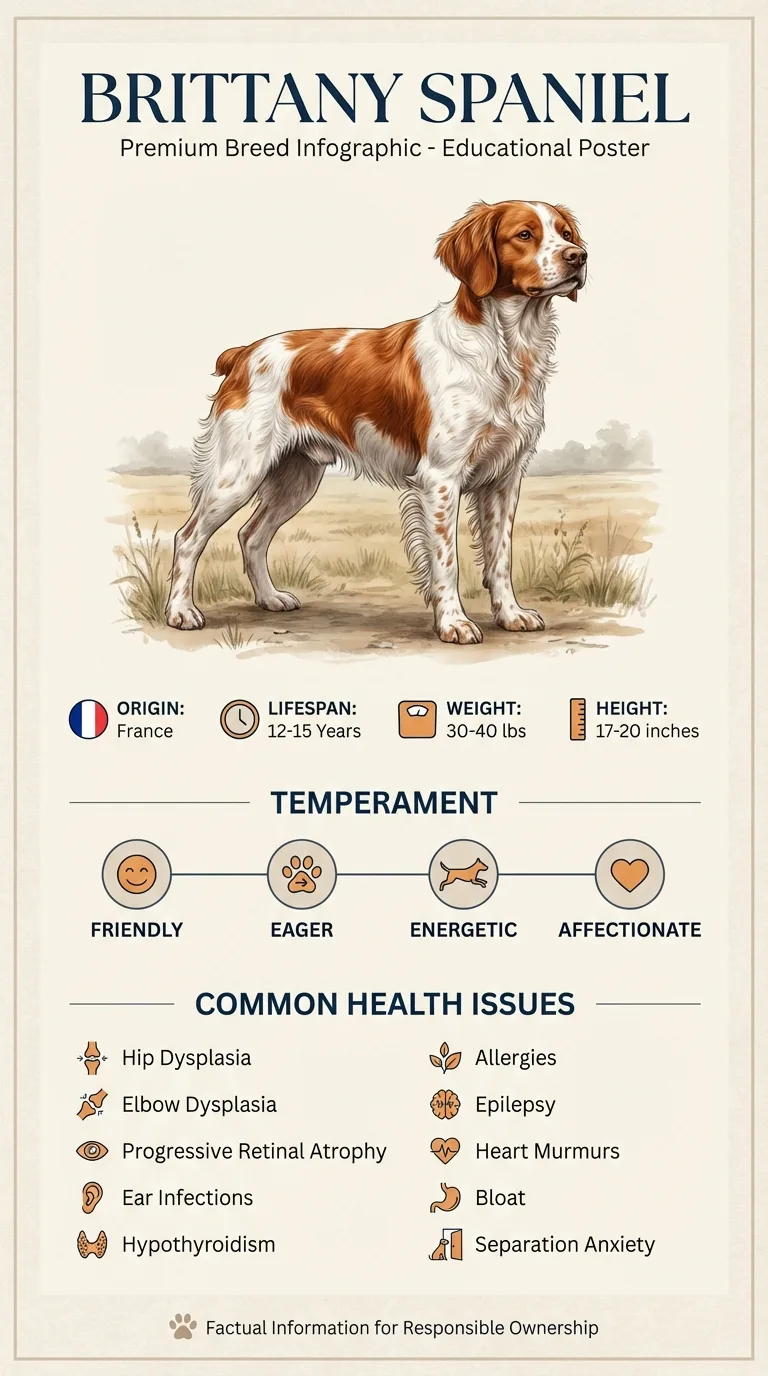
Owners of middle-aged Brittanys are the most likely to encounter this, since hypothyroidism typically develops between four and ten years old. It's easy for the early signs to be mistaken for normal aging or a simple need for a diet change, delaying the actual diagnosis.
This guide is not medical advice. If your dog shows pain, sudden behavior change, or worsening symptoms, consult a licensed veterinarian.
Some links may be affiliate links. We may earn a commission at no extra cost to you. We only suggest products we believe are helpful for dog owners.
We research and check what we publish, but we do not warrant that any figure, date, price, or statement is accurate, complete, or current, and we accept no liability for any loss, cost, injury, or other harm arising from the use of this site. Use it as one reference among several. You remain responsible for your own decisions and for your dog's care - confirm anything that matters with a licensed veterinarian or another qualified professional before you act on it. Full disclaimer.
Hypothyroidism is a documented health issue in Brittanys, where the thyroid gland produces too little hormone to maintain a normal metabolic rate. Because this breed's baseline is unusually high energy, the resulting slowdown, weight gain, and coat changes tend to be more obviously out of character here than in a naturally lower-energy breed, which can actually help owners catch it sooner.
As a named item on this breed's documented health list, hypothyroidism is recognized as a genuinely common endocrine issue in Brittanys, particularly from middle age onward, making it one of the more likely explanations for an unexplained energy or weight change in an older dog.
Hypothyroidism is specifically documented in this breed, suggesting a genetic predisposition, most often tied to an autoimmune process that gradually damages thyroid tissue over years before hormone levels drop low enough to cause symptoms.
Weight, activity level, and how closely subtle changes are tracked all affect how early this gets caught. An owner used to their dog's high baseline energy may notice a slowdown faster than an owner of a naturally calmer breed, simply because the contrast is sharper.
Bring up a cluster of weight gain, lethargy, coat thinning, or skin changes at your next visit — these together warrant thyroid bloodwork, even though none of them individually is an emergency.
See all Brittany health problems, which breeds are prone to hypothyroidism, or the full Brittany breed guide for temperament, exercise needs and ownership costs.
Once the correct medication dose is established, usually confirmed with a recheck four to eight weeks after starting treatment, most dogs show real improvement in energy within weeks and full coat recovery within a few months.
Success is a dog back near its normal energy and weight, on a stable daily medication dose confirmed by periodic bloodwork, with hypothyroidism becoming a routine, low-effort part of daily care rather than an ongoing concern.
No single sign confirms hypothyroidism, but this cluster appearing together in a middle-aged dog is the classic picture that sends a vet toward thyroid bloodwork specifically.
A full thyroid panel, rather than a single basic thyroid value, gives the clearest picture, since some other illnesses can temporarily suppress a basic thyroid reading without true hypothyroidism being present. Once confirmed, treatment is a twice-daily synthetic thyroid hormone pill, dosed based on body weight and adjusted through periodic bloodwork.
Most dogs show noticeable improvement in energy within a few weeks of starting the correct dose, with coat and weight changes taking longer, often a few months, to fully resolve. This is a lifelong daily medication, not a short course, but it's generally inexpensive and very effective once the dose is dialed in correctly.

If you think your Brittany has hypothyroidism, the plan is three steps: write down what you have seen and when it started, book a veterinary appointment rather than waiting for the next flare, and take video of the behaviour or symptom before you go — the thing you are worried about rarely happens in the consulting room. Screening in the parents covers hip dysplasia, elbow dysplasia, progressive retinal atrophy.
What the vet visit should produce is a diagnosis and a written plan, not just reassurance: what is being ruled out, what the monitoring interval is, and which signs mean you come back sooner. Ask what the treatment costs across a year rather than per visit, because that is the number that decides whether you are managing this condition or reacting to it.
Between appointments, keep a short log — dates, what you saw, what changed. It is the single most useful thing an owner brings to a follow-up, and for hypothyroidism it is often what separates a clear pattern from a guess.
Maple, a seven-year-old Brittany known for pulling her owner out the door every morning, started lingering by her bed instead. Over about four months, she gained nearly ten pounds despite no change in her food, and her once-glossy coat looked dull. Her owner initially assumed she was simply aging, but mentioned the changes at her annual exam. A full thyroid panel confirmed hypothyroidism, and she started on twice-daily medication. Within six weeks, Maple was back to demanding her morning walks. Her weight normalized over the following few months, and her coat regained its shine well before her next scheduled recheck.
Key takeaway: A dramatic personality shift in an energetic breed is rarely 'just aging' — it's worth ruling out a treatable hormone deficiency before accepting it as the new normal.
Most commonly between four and ten years old, though it can occur outside that range. It's uncommon in young puppies.
No, but it's very manageable. Daily synthetic thyroid hormone medication effectively replaces what the gland isn't producing, and most dogs live full, active lives once properly dosed.
Through blood testing, typically a full thyroid panel rather than a single value, since some non-thyroid illnesses can temporarily lower basic thyroid readings without true hypothyroidism being the cause.
Yes, periodic rechecks are needed to confirm the medication dose stays correct, since dosing needs can shift somewhat over a dog's lifetime, especially with weight changes.
Yes, indirectly. Reduced thyroid hormone weakens the skin's normal barrier function and can make recurrent skin infections more likely until the underlying hormone deficiency is treated.
There's a genetic component in many cases, often linked to an autoimmune process affecting the thyroid gland, which is part of why it's worth discussing family history with a breeder if you're getting a puppy.
Unexplained weight gain paired with reduced energy is usually the first pattern owners notice, often before any coat changes appear.
The daily pill itself is generally inexpensive; the main recurring cost is periodic bloodwork to confirm the dose stays correct.
Energy often improves within a few weeks, while coat and weight changes typically take a couple of months to fully resolve.
Untreated, yes — reduced stamina and cold sensitivity can change how much a dog wants to do. Once treated, most dogs return close to their normal routine.
Some owners notice a more withdrawn or less engaged demeanor before treatment, which often improves once hormone levels are corrected.
A one-page prep sheet for this condition: the signs, the questions to ask, what to get priced. Unlocks here.
You get: Vet visit prep sheet
No spam. One-click unsubscribe. See our privacy policy.
Preview page 1 before you decide.