Health
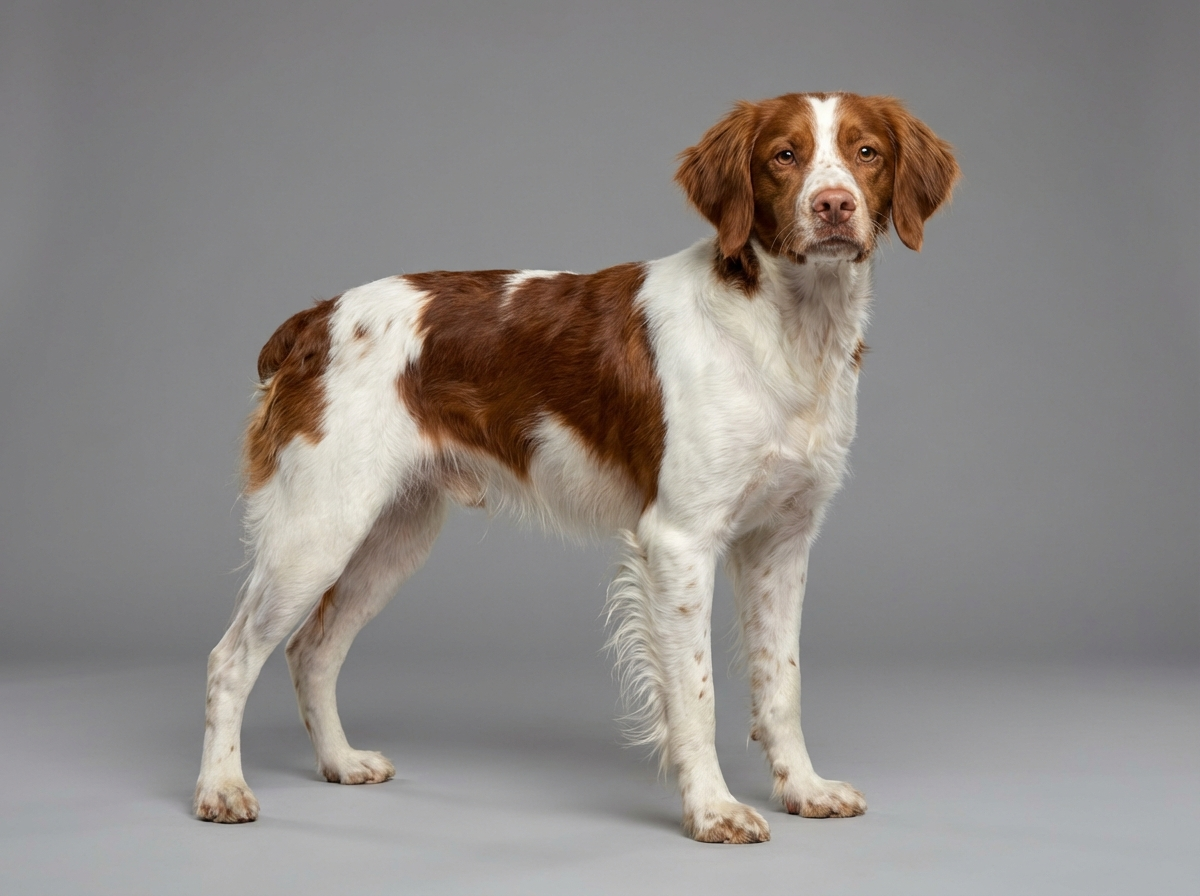
Is a Brittany's body shape a disc disease risk factor?
Not particularly — its normal, proportional build differs from the short-legged breeds most strongly linked to early-onset disc disease.

Quick answer
Is a Brittany's body shape a disc disease risk factor?
Not particularly — its normal, proportional build differs from the short-legged breeds most strongly linked to early-onset disc disease.
Your Brittany isn't built like the breeds most associated with disc disease, but a normal spine can still wear down over years of an active life.
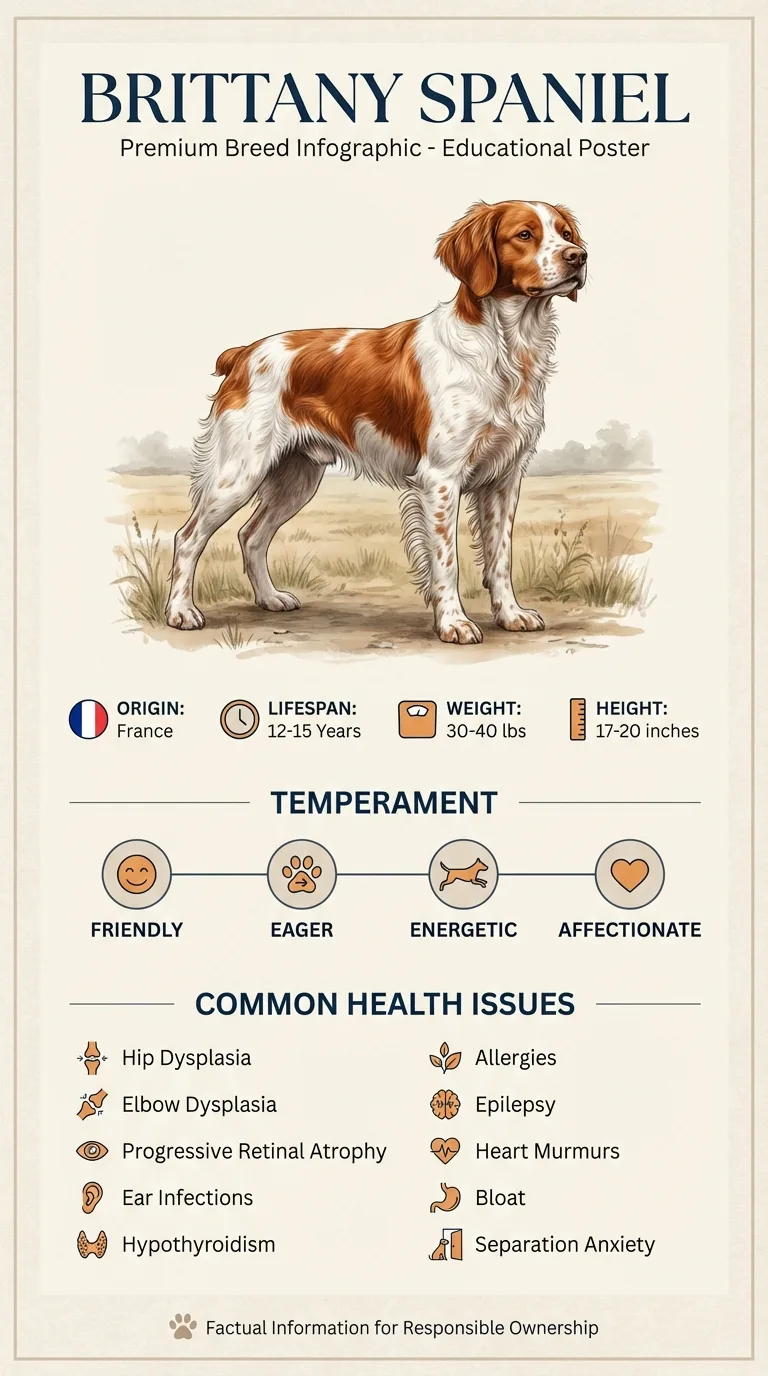
Owners of older, still-active Brittanys are the most likely to encounter this, since gradual disc degeneration tends to appear in middle-aged and senior dogs rather than young ones, often after years of jumping, hard field work, or general athletic activity.
This guide is not medical advice. If your dog shows pain, sudden behavior change, or worsening symptoms, consult a licensed veterinarian.
Some links may be affiliate links. We may earn a commission at no extra cost to you. We only suggest products we believe are helpful for dog owners.
We research and check what we publish, but we do not warrant that any figure, date, price, or statement is accurate, complete, or current, and we accept no liability for any loss, cost, injury, or other harm arising from the use of this site. Use it as one reference among several. You remain responsible for your own decisions and for your dog's care - confirm anything that matters with a licensed veterinarian or another qualified professional before you act on it. Full disclaimer.
Intervertebral disc disease describes disc material pressing on the spinal cord, but the disease looks meaningfully different depending on a dog's build. In a normally proportioned breed like the Brittany, the more realistic pattern is gradual, age-related disc degeneration rather than the sudden, early-onset ruptures seen in short-legged, long-backed breeds, which changes both the typical age of onset and the usual presentation.
This form of disc disease is less of a defining risk for Brittanys than it is for chondrodystrophic breeds, but gradual, age-related disc changes are a realistic possibility in any aging, active dog, including this breed, especially from middle age onward.
Brittanys don't carry the short-legged, long-backed body type most strongly linked to early-onset disc disease, so this breed's disc concerns are better understood as a normal aging process affecting an athletic dog's spine after years of activity, rather than a breed-defining structural risk.
A lifetime of moderate, well-conditioned activity tends to support spinal health, while a mix of long inactive stretches and sudden intense exertion, or carrying excess weight, adds cumulative stress that can speed age-related disc wear.
See your vet for reluctance to jump, a hunched posture, sensitivity around the back, or any gait change, and treat sudden hind-limb weakness, dragging, or loss of coordination as an emergency requiring same-day evaluation.
See all Brittany health problems, which breeds are prone to intervertebral disc disease ivdd, or the full Brittany breed guide for temperament, exercise needs and ownership costs.
Gradual disc degeneration typically develops over years, with signs worsening slowly rather than appearing overnight, though a triggering event like a hard jump can cause a more sudden flare on top of existing degeneration.
Success looks like a dog managed comfortably through weight control, moderate activity, and pain management as needed, with mobility changes slowed rather than reversed, since disc degeneration itself isn't something that heals back to its original state.
Discs sit between the vertebrae, acting as cushions that absorb shock along the spine. In chondrodystrophic breeds with short, curved legs, the disc's cartilage tends to calcify early and can rupture suddenly, sometimes causing acute paralysis in a young dog. In a normally built breed like the Brittany, disc degeneration is far more likely to follow the more gradual pattern seen in humans and many other animals: discs slowly lose water content and elasticity with age, bulging outward rather than rupturing suddenly.
This slower pattern, sometimes called the fibroid or age-related type, tends to cause a gradually worsening back pain and mild coordination changes rather than the sudden collapse associated with the acute type more common in short-legged breeds.
These signs develop gradually rather than overnight in this form of disc disease, which means they're easy to attribute to general aging or arthritis unless specifically considered.

Ranger, a ten-year-old Brittany who'd hunted every season of his life, started taking longer to get up from naps and stopped jumping into the truck bed on his own. His owner initially chalked it up to simple old age. A vet exam found back sensitivity and a mild gait change, and X-rays showed narrowing between two vertebrae consistent with age-related disc degeneration, without any acute rupture. Ranger's owner added a ramp for the truck, switched to anti-inflammatory medication during flare-ups, and shortened his hunting days. He's stayed comfortable and active for two years since, with no further progression noted at his last recheck.
Key takeaway: Gradual disc degeneration in a normally built breed rarely announces itself dramatically — small mobility changes over months are the real early signal.
Not in the same way. Brittanys have a normal body proportion rather than the short-legged, long-backed build most strongly associated with the acute, early-onset form of disc disease seen in chondrodystrophic breeds.
Yes, gradual, age-related disc degeneration can occur in dogs of any build, including normally proportioned breeds like the Brittany, typically later in life than the acute form seen in predisposed breeds.
A vet exam assessing pain, gait, and reflexes is the starting point, with advanced imaging like an MRI or CT scan used to confirm the location and severity if surgery is being considered.
Often it can be managed conservatively with rest, pain management, and controlled activity, especially if signs are mild, though severe or progressive cases may need surgical evaluation.
A lifetime of normal, moderate activity isn't a known direct cause, though sudden high-impact stress on an already-aging spine, like a bad jump, can trigger a flare in a disc that's already degenerating.
No — arthritis, muscle strain, and other spinal conditions can look similar. A vet exam is needed to distinguish between these rather than assuming disc disease from signs alone.
Not particularly — its normal, proportional build differs from the short-legged breeds most strongly linked to early-onset disc disease.
It's more typical in middle-aged to senior dogs rather than young ones, unlike the acute form seen in predisposed breeds.
Reducing repeated high-impact jumping, like onto furniture or out of vehicles, is a reasonable precaution for an aging spine regardless of breed.
Conservative management with medication is relatively affordable; advanced imaging and surgery, if needed, can run into the thousands of dollars.
Yes, discomfort can make a normally social dog more irritable or withdrawn, especially around handling of the back or being picked up.
A one-page prep sheet for this condition: the signs, the questions to ask, what to get priced. Unlocks here.
You get: Vet visit prep sheet
No spam. One-click unsubscribe. See our privacy policy.
Preview page 1 before you decide.