Health
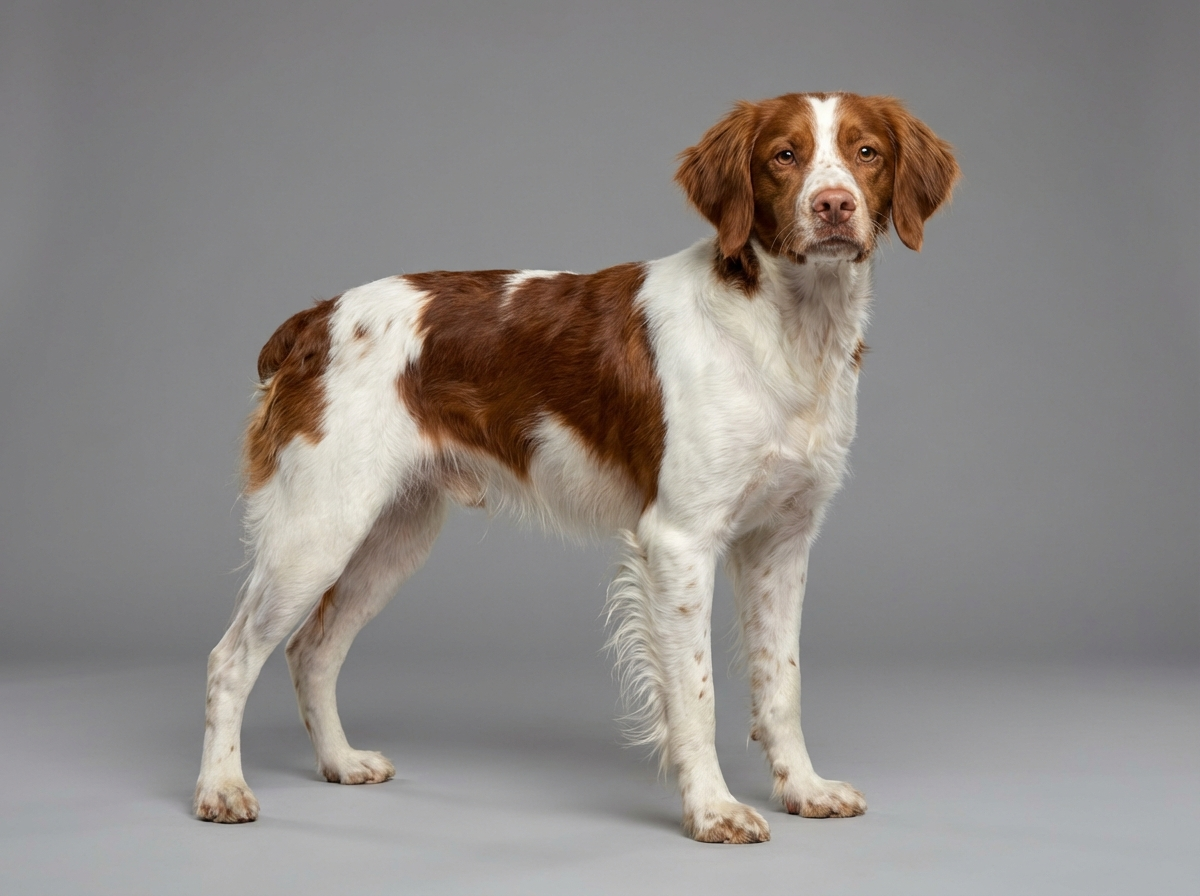
Do Brittanys have a body shape prone to back problems?
No, unlike long-backed breeds, Brittanys have a normal athletic build. Back strain in this breed comes from repetitive hard activity, not body shape.

Quick answer
Do Brittanys have a body shape prone to back problems?
No, unlike long-backed breeds, Brittanys have a normal athletic build. Back strain in this breed comes from repetitive hard activity, not body shape.
A Brittany's back problems usually start the same way a human athlete's do: years of hard, repetitive motion on a body that was never built to be fragile, but wasn't built to be indestructible either.
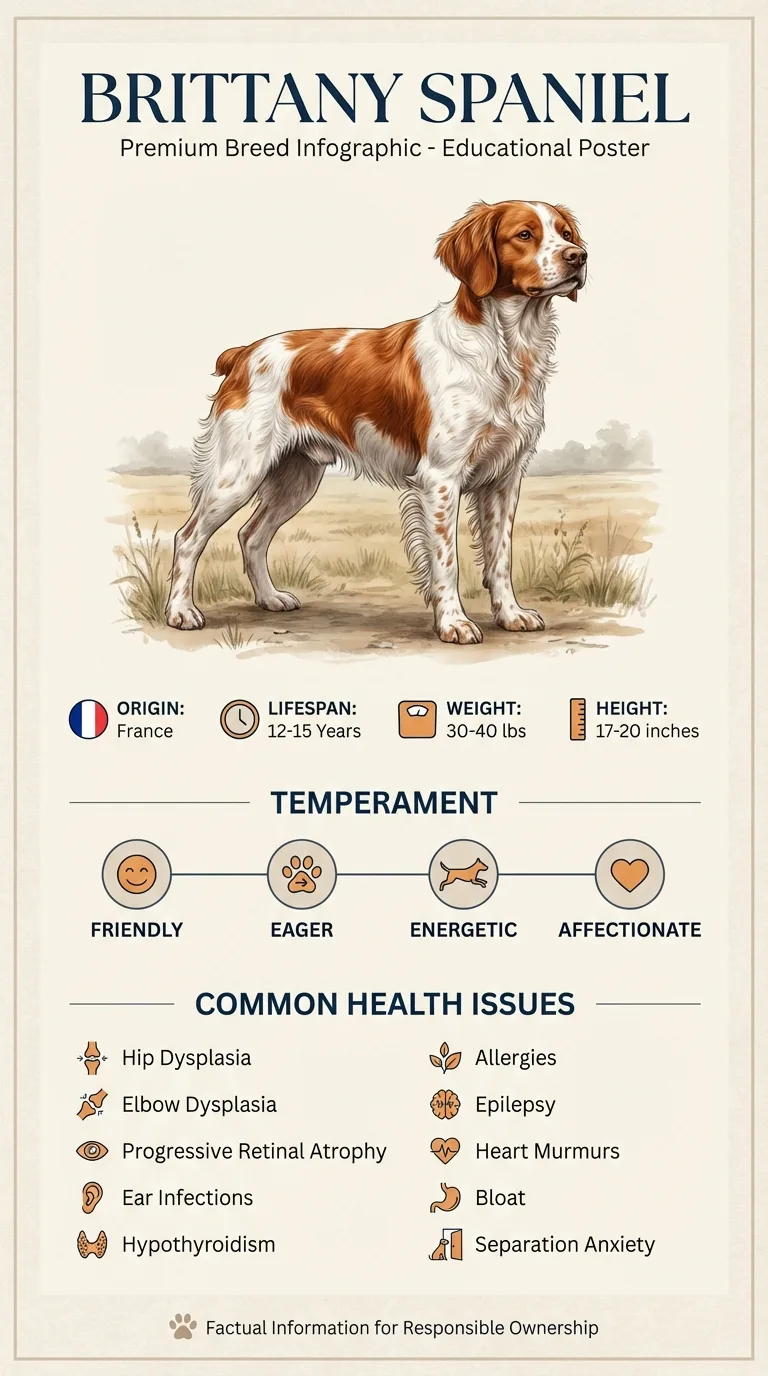
Owners of dogs used heavily for field trials, hunting, or agility are the ones most likely to see back strain show up, simply because their dogs put more repetitive stress on the spine than a companion dog on daily neighborhood walks.
This guide is not medical advice. If your dog shows pain, sudden behavior change, or worsening symptoms, consult a licensed veterinarian.
Some links may be affiliate links. We may earn a commission at no extra cost to you. We only suggest products we believe are helpful for dog owners.
We research and check what we publish, but we do not warrant that any figure, date, price, or statement is accurate, complete, or current, and we accept no liability for any loss, cost, injury, or other harm arising from the use of this site. Use it as one reference among several. You remain responsible for your own decisions and for your dog's care - confirm anything that matters with a licensed veterinarian or another qualified professional before you act on it. Full disclaimer.
Back problems in a Brittany are a wear-and-use issue rather than a body-shape flaw. This breed's normal, athletic proportions aren't the source of risk that a long-backed breed's genetics would be; instead, years of hard running, jumping, and sharp turns during field work gradually strain the muscles and ligaments supporting the spine.
Back strain isn't tracked as a distinct documented statistic for this breed, but given how physically demanding typical Brittany activity levels are, mild strain episodes are a realistic and common occurrence over a working dog's lifetime, even if severe cases are less frequent.
Brittanys are bred for sustained, athletic field work rather than a body type prone to spinal problems, so this isn't a structural predisposition the way it is in chondrodystrophic breeds. The breed's high energy and drive, however, mean owners and dogs alike are more likely to push activity levels that create repetitive mechanical stress on the back over time.
Hard surfaces, frequent jumping without steps or ramps, inconsistent conditioning between active and slow seasons, and carrying extra weight all raise the mechanical load on the back during normal activity, regardless of the dog's underlying build.
See your vet if stiffness or reluctance to jump lasts more than a day or two, if your dog yelps when touched along the spine, or if there's any sign of weakness or wobbliness in the hind legs. Sudden inability to walk, dragging of the hind legs, or apparent paralysis is an emergency requiring immediate care.
See all Brittany health problems, which breeds are prone to back problems, or the full Brittany breed guide for temperament, exercise needs and ownership costs.
A mild soft tissue strain typically improves within one to two weeks of rest and any vet-recommended treatment. Dogs with recurring strain from ongoing hard activity may need an adjusted long-term routine rather than a single fix.
Success looks like a dog that can keep doing the work it loves with fewer flare-ups, achieved through smarter conditioning and recovery habits, not necessarily the complete absence of any stiffness ever again.
Hard stops, sharp turns while pointing or flushing, jumping in and out of vehicles, and repeated leaping over obstacles all load the spine and the supporting soft tissue around it. Over years, this repetitive stress can cause muscle strain, ligament irritation, or contribute to disc wear, particularly in a dog that's also carrying some extra weight or has an underlying joint issue elsewhere that changes how it moves.
This is a mechanical, use-based pattern rather than a structural flaw built into the breed. A Brittany kept lean, conditioned gradually, and given recovery time between hard sessions is far less likely to develop chronic back trouble than one pushed hard year-round without a break.
These signs can be subtle in a dog trained to push through discomfort, so a change from the dog's own normal baseline matters more than comparing to any general checklist.

Hannah's Brittany, Fern, had spent the off-season mostly lounging around the house, then went straight into a full weekend of hard field trial training the moment the season opened. By Sunday evening, Fern was hunched and reluctant to jump onto the couch, something she'd always done without a second thought. Hannah's vet found tenderness along Fern's lower back consistent with a soft tissue strain, with no signs pointing to a disc problem. Fern was put on a week of rest with a short course of anti-inflammatory medication, and Hannah eased her back into training over the following two weeks rather than resuming full intensity immediately. The following season, Hannah started conditioning Fern gradually a month before the opener instead of going from zero to full effort in a single weekend, and the stiffness never recurred.
Key takeaway: The jump from an idle off-season to full-intensity field work is often the real trigger for back strain in an athletic dog, not the dog's body shape. Gradual conditioning matters as much as any single precaution.
No. That description applies to chondrodystrophic breeds like Dachshunds, which have a genetically shortened leg and altered spine structure. Brittanys have a normal, athletic build, and back strain in this breed comes from activity and use, not body shape.
Repeated hard jumps, sharp direction changes during field work, and jumping in and out of vehicles or off high furniture are the most common culprits, especially without a proper warm-up or conditioning routine.
Rest, anti-inflammatory medication if your vet prescribes it, and a gradual, supervised return to activity are the typical approach for a soft tissue strain. Persistent or worsening symptoms may need imaging to rule out a more serious disc issue.
You can reduce the risk with a proper warm-up before hard activity, ramps for vehicle access, maintaining a lean body weight, and building conditioning gradually across a season rather than going from idle to intense all at once.
Soft tissue back strain is a muscle and ligament issue that typically improves with rest. Disc disease involves the cushioning discs between vertebrae and can be more serious; our dedicated guide on back and spine issues covers that distinction in depth.
Complete rest is often recommended short-term for an acute flare, but your vet's guidance should determine the full plan, since prolonged total inactivity isn't ideal for an athletic dog's long-term joint and muscle health either.
No, unlike long-backed breeds, Brittanys have a normal athletic build. Back strain in this breed comes from repetitive hard activity, not body shape.
A hunched posture after activity or new reluctance to jump into the car are usually the earliest visible signs.
A straightforward strain treated with rest and anti-inflammatories is a modest vet visit cost, while imaging to rule out a disc issue adds more if symptoms persist.
Teaching a calm 'wait' before jumping into vehicles or onto furniture reduces repetitive jarring impact, which lowers cumulative strain over the dog's life.
It's a reasonable precaution, especially for an older dog or one recovering from a strain, even if a young healthy dog can normally jump without issue.
A one-page prep sheet for this condition: the signs, the questions to ask, what to get priced. Unlocks here.
You get: Vet visit prep sheet
No spam. One-click unsubscribe. See our privacy policy.
Preview page 1 before you decide.