Health
What is a liver shunt in simple terms?
An abnormal blood vessel that lets blood bypass the liver's filtering function, allowing toxins to build up in the body.

Quick answer
What is a liver shunt in simple terms?
An abnormal blood vessel that lets blood bypass the liver's filtering function, allowing toxins to build up in the body.
A puppy that seems small for its age, occasionally disoriented after meals, or slow to house-train might be showing early liver shunt signs rather than just being a difficult puppy.
Owners of new puppies who notice subtle developmental or behavioral oddities face the hardest challenge here, since these signs are genuinely easy to dismiss as normal puppy quirks, especially in a breed where this condition isn't a well-known documented risk.
This guide is not medical advice. If your dog shows pain, sudden behavior change, or worsening symptoms, consult a licensed veterinarian.
Some links may be affiliate links. We may earn a commission at no extra cost to you. We only suggest products we believe are helpful for dog owners.
We research and check what we publish, but we do not warrant that any figure, date, price, or statement is accurate, complete, or current, and we accept no liability for any loss, cost, injury, or other harm arising from the use of this site. Use it as one reference among several. You remain responsible for your own decisions and for your dog's care - confirm anything that matters with a licensed veterinarian or another qualified professional before you act on it. Full disclaimer.
A liver shunt is a congenital abnormality where blood bypasses the liver's filtering function, letting toxins circulate unchecked. This isn't part of Brittany's documented health profile and is considered uncommon in this breed compared to certain small breeds where it's more classically seen, but it remains a condition worth understanding, particularly for new puppy owners noticing unexplained developmental or behavioral oddities.
Liver shunts aren't documented as a Brittany-specific concern and are considered rare in this breed compared to small breeds like Yorkshire Terriers, where the condition is far more classically associated and studied.
Because liver shunts aren't part of this breed's documented health list, Brittanys aren't considered a high-risk breed for this specific congenital condition, unlike some small breeds where it's a recognized concern requiring closer screening.
Diet composition, particularly protein content and timing of meals, can influence how noticeable symptoms are in an affected puppy, since toxin production from protein digestion is what a healthy liver would normally filter out.
Bring up a cluster of poor growth, post-meal disorientation, poor appetite, or slow house-training progress at a vet visit, and seek prompt care for any seizure-like episode or sudden collapse, which would warrant urgent evaluation.
See all Brittany health problems, which breeds are prone to liver shunts, or the full Brittany breed guide for temperament, exercise needs and ownership costs.
Diagnosis typically involves bloodwork followed by imaging over the course of a few vet visits. Surgical treatment, when needed, often shows meaningful improvement within weeks to months, though full recovery and monitoring can extend over a longer period.
Success looks like a puppy correctly diagnosed and treated appropriately, going on to grow and develop normally, since outcomes for treated congenital shunts are often quite good when caught reasonably early.
Normally, blood from the intestines travels through the portal vein directly to the liver, which filters out toxins, particularly ammonia from protein digestion, before that blood reaches the rest of the body. In a portosystemic shunt, an abnormal vessel allows some or most of that blood to bypass the liver entirely, meaning unfiltered toxins circulate to the brain and other organs.
This is why signs can look neurological (disorientation, staring into space, circling), gastrointestinal (poor appetite, vomiting), or simply developmental (small stature, poor muscle growth) — the underlying problem is toxin buildup affecting multiple systems at once, not a single localized issue.
None of these signs are exclusive to liver shunts, and most puppies showing one or two of them have something far more mundane going on. The concern rises when several of these appear together in a puppy that isn't thriving as expected.

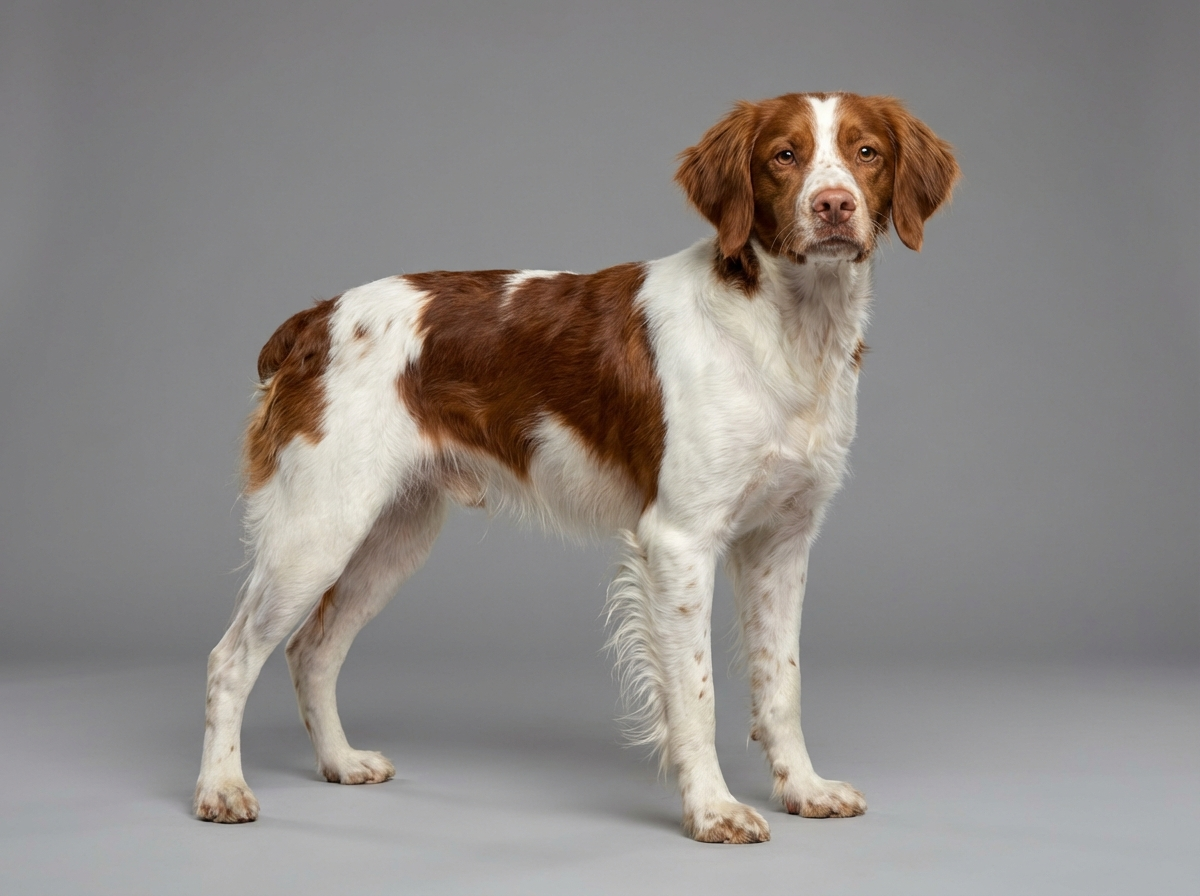
Pepper, a Brittany puppy, was noticeably smaller than her littermates and seemed to stare blankly into space for a few seconds every so often, usually not long after dinner. Her owner initially assumed she was just the runt of the litter. At her four-month checkup, her vet noted the pattern and ran a bile acids test, which came back significantly elevated. Follow-up imaging confirmed a single congenital liver shunt. Pepper had surgery to correct the vessel at five months old, and her owner reports she caught up to a normal size within the following year, with the staring episodes resolving completely after recovery.
Key takeaway: A puppy that seems 'just small' alongside odd post-meal behavior is worth a specific conversation with your vet, even in a breed where this condition isn't typically expected.
No, this isn't a condition specifically documented on this breed's health list. It's more classically associated with certain small breeds, though it can occur, rarely, in any breed.
Bloodwork showing elevated bile acids is often the first clue, followed by advanced imaging like ultrasound, CT, or specialized studies to locate the abnormal vessel.
Yes, many cases are treated surgically to close or restrict the abnormal vessel, sometimes combined with dietary management, and outcomes are often good when caught and treated appropriately.
Most congenital shunts produce signs within the first year of life, often within the first few months, though severity and timing vary based on the specific vessel involved.
No — a shunt is a structural blood vessel abnormality present from birth, distinct from liver failure, which involves the liver tissue itself being damaged or diseased.
Not automatically — puppies vary in size for many normal reasons. It's worth mentioning at a vet visit if paired with other signs like poor appetite or unusual behavior, rather than treated as an isolated concern.
An abnormal blood vessel that lets blood bypass the liver's filtering function, allowing toxins to build up in the body.
No, it's not documented as a breed-specific concern here and is considered uncommon in this breed.
A bile acids test is the standard initial screening tool, often followed by imaging if results are abnormal.
Diagnostic imaging and surgical correction can be a significant expense, often running into the thousands of dollars depending on the case's complexity.
Yes, some affected puppies still play and interact normally much of the time, with concerning signs appearing only intermittently, particularly after meals.
A one-page prep sheet for this condition: the signs, the questions to ask, what to get priced. Unlocks here.
You get: Vet visit prep sheet
No spam. One-click unsubscribe. See our privacy policy.
Preview page 1 before you decide.