Health
How long is a dog pregnancy?
Roughly nine weeks from ovulation, though dates measured from mating are less reliable than veterinary timing.

Quick answer
How long is a dog pregnancy?
Roughly nine weeks from ovulation, though dates measured from mating are less reliable than veterinary timing.
The most useful number in a whelping is the clock. Strong straining for thirty minutes with no puppy delivered is not patience being tested. It is a veterinary call.
First-time breeders preparing for a Bichon litter and wanting to know what the genuine warning signs are, and owners of an unexpectedly pregnant bitch who need to understand what is ahead.
This guide is not medical advice. If your dog shows pain, sudden behavior change, or worsening symptoms, consult a licensed veterinarian.
Some links may be affiliate links. We may earn a commission at no extra cost to you. We only suggest products we believe are helpful for dog owners.
We research and check what we publish, but we do not warrant that any figure, date, price, or statement is accurate, complete, or current, and we accept no liability for any loss, cost, injury, or other harm arising from the use of this site. Use it as one reference among several. You remain responsible for your own decisions and for your dog's care - confirm anything that matters with a licensed veterinarian or another qualified professional before you act on it. Full disclaimer.
Pregnancy and whelping complications in a small breed cluster around three mechanisms: a puppy too large to pass, contractions too weak to be effective, and metabolic demands that outstrip a small bitch's reserves. All three are manageable with veterinary involvement and dangerous without it. The single most useful preparation is agreeing timings and contact arrangements with a practice before labour begins.
The majority of small-breed whelpings proceed without surgical intervention, but the proportion requiring veterinary assistance is high enough that no breeder should plan on a straightforward delivery. Figures quoted online assigning large risk multipliers to specific breeds should be treated cautiously; the practical point is that small size raises the stakes regardless of the exact percentage.
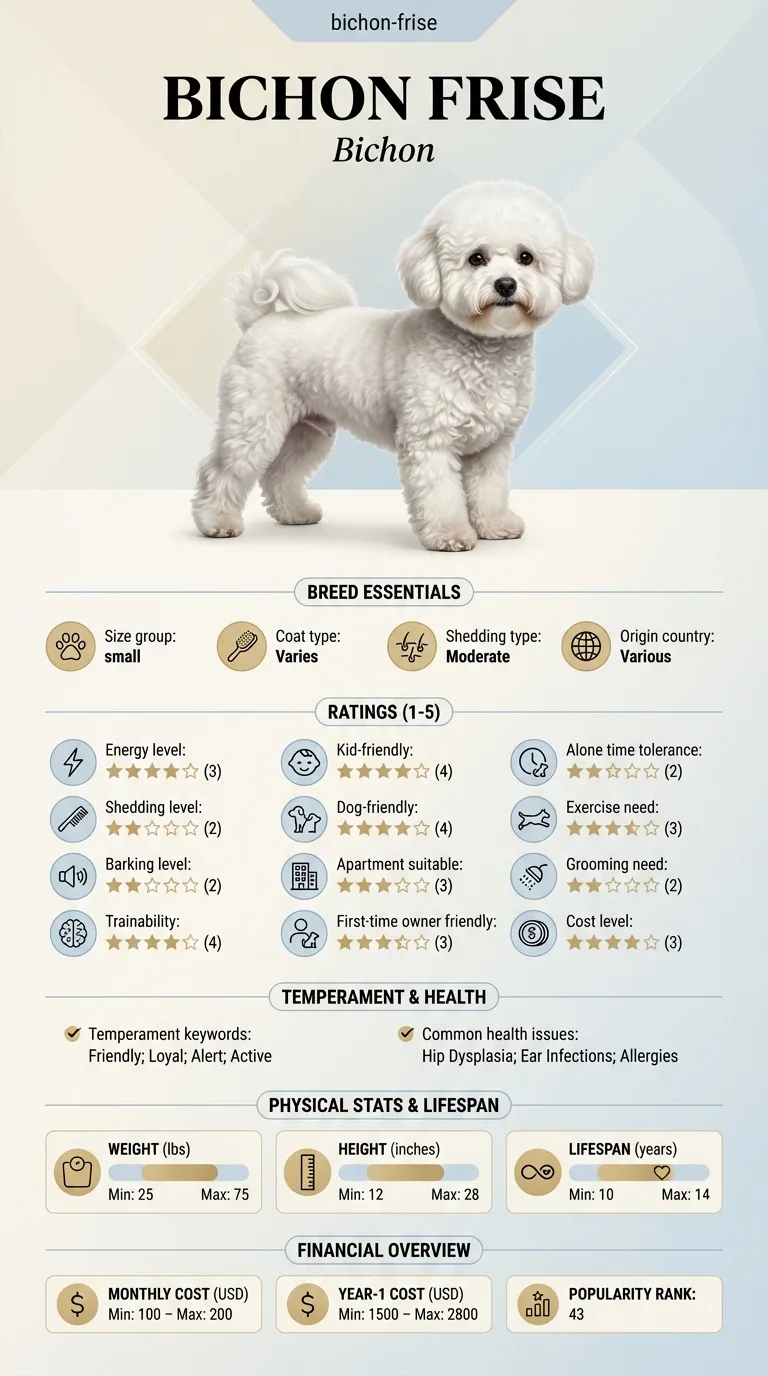
Size is the driver, and it operates through the birth canal rather than through anything specific to the Bichon. A bitch of 12 to 18 pounds standing nine to twelve inches tall has a small pelvis, and a litter of two or three concentrates growth into fewer puppies. The breed is not one selected for an exaggerated head shape, which is genuinely favourable compared with flat-faced breeds where the head-to-pelvis mismatch makes natural delivery unlikely.
Preparation determines outcomes more than any single factor. A breeder who has agreed a plan with a practice, knows the out-of-hours arrangements and has budgeted for surgery responds differently at two in the morning than one who has not. Nutrition through pregnancy influences puppy size. Stress and disturbance during labour can stall contractions, which is why the whelping area should be quiet, warm, familiar and set up well in advance.
Call immediately for thirty minutes of strong straining with no puppy delivered, two hours of contractions between puppies with nothing produced, green or dark discharge before the first puppy, a puppy visibly stuck, or a bitch who collapses, has tremors or seizures at any point during or after whelping. Post-whelping, seek same-day care for a foul-smelling discharge, a hot painful mammary gland, fever, refusal to eat, or a bitch ignoring her puppies. Do not attempt to pull a stuck puppy yourself.
See all Bichon Frise health problems, which breeds are prone to pregnancy complications, or the full Bichon Frise breed guide for temperament, exercise needs and ownership costs.
Pregnancy runs roughly nine weeks. Active labour typically delivers a small litter over several hours. The lactation period covering the highest metabolic demand is the first three to five weeks, which is also the window for calcium-related emergencies. Puppies stay with the litter until at least eight weeks.
A bitch who recovers her weight and condition, puppies gaining steadily every day, no emergency admissions, and a breeder who knew before labour started exactly who to ring and at what point. Success is a boring whelping.
Whelping has intervals that are considered normal and intervals that are not. Writing these down before labour starts is far more useful than trying to judge in the moment.
Two problems dominate small-breed whelping, and they are related to size in different ways.
The first is obstruction. A small litter means each puppy receives a larger share of the available nutrition and can grow bigger, while the birth canal remains small. A litter of two in a 15-pound bitch can produce puppies too large to pass, and that is a surgical situation rather than one that resolves with time.
The second is metabolic. Producing milk draws heavily on calcium reserves, and a small bitch feeding a litter has limited reserve to draw on. If blood calcium falls sharply, the result is a condition that begins as restlessness and panting and progresses to muscle tremors, stiffness, fever and seizures. It usually strikes in the first few weeks after whelping and is a genuine emergency requiring immediate veterinary treatment.
A third consideration is uterine inertia, where contractions simply become ineffective. This is more common in small litters, because the hormonal signal driving labour is weaker with fewer puppies.
None of these is a reason not to breed. They are reasons to have a veterinary relationship established before the mating rather than after labour starts.

If you think your Bichon has pregnancy complications, the plan is three steps: write down what you have seen and when it started, book a veterinary appointment rather than waiting for the next flare, and take video of the behaviour or symptom before you go — the thing you are worried about rarely happens in the consulting room. Screening in the parents covers skin allergies, patellar luxation, bladder stones.
What the vet visit should produce is a diagnosis and a written plan, not just reassurance: what is being ruled out, what the monitoring interval is, and which signs mean you come back sooner. Ask what the treatment costs across a year rather than per visit, because that is the number that decides whether you are managing this condition or reacting to it.
Between appointments, keep a short log — dates, what you saw, what changed. It is the single most useful thing an owner brings to a follow-up, and for pregnancy complications it is often what separates a clear pattern from a guess.
Elin's Bichon, Wren, was scanned at four weeks and found to be carrying only two puppies. Her vet flagged this immediately: small litters mean large puppies and often weak contractions, and they agreed in advance that thirty minutes of unproductive straining meant a phone call. Elin wrote the intervals on a card and taped it above the whelping box. Labour started at eleven at night. The first puppy arrived after twenty minutes of straining. The second did not. At thirty-two minutes Elin rang. Wren was in theatre within the hour and the second puppy, noticeably larger than the first, was delivered by caesarean. Both puppies and Wren did well.
Key takeaway: A small litter is a warning rather than a relief. Agreeing the intervals with a vet in advance turned a decision made under pressure into simply reading a card and dialling.
Small breeds typically produce small litters, often in the range of one to five. A very small litter is not automatically good news, because fewer puppies can mean larger individual puppies and a weaker hormonal drive to labour, both of which increase the chance of needing intervention.
They are not a breed where caesarean is the expected route, unlike some flat-faced breeds where the head-to-pelvis ratio makes natural birth unlikely. Many Bichon litters are delivered normally. That said, small-breed whelping carries real risk and the possibility should be planned and budgeted for.
For this breed the most relevant screening is veterinary patella examination and eye assessment, since patellar luxation and cataracts are documented concerns. A general health check confirming the bitch is a suitable weight and free of dental disease is also worthwhile before a pregnancy begins.
A sharp fall in blood calcium during lactation. It presents as restlessness, panting, stiffness, tremors and eventually seizures, usually within the first few weeks after whelping. It is an emergency. Do not supplement calcium during pregnancy to try to prevent it, because doing so can make it more likely rather than less.
Requirements rise substantially in the last third of pregnancy and dramatically during lactation, but the details matter and your vet should guide them. Overfeeding early in pregnancy contributes to oversized puppies and to a bitch carrying weight she does not need, which is unhelpful in a small breed.
Not on her first season, and not before she is physically and socially mature. Health screening results and an honest assessment of temperament matter more than a specific age. A bitch with a documented health condition that has a heritable component should not be bred at all.
The early signs are set out in the sections above, and they are the reason to book a veterinary appointment rather than wait. Pregnancy Complications in Bichons is diagnosed by a vet, not from a symptom list, and the sooner it is on record the more options remain open.
Roughly nine weeks from ovulation, though dates measured from mating are less reliable than veterinary timing.
After thirty minutes of strong unproductive straining, or two hours of contractions between puppies with nothing delivered.
An out-of-hours surgical delivery is a substantial bill and should be budgeted for before any mating takes place.
Somewhere quiet, warm and familiar, set up at least two weeks early so the bitch chooses it herself.
Minimal, gentle handling for health checks is fine. Let the bitch settle and avoid a stream of visitors in the first days.
A one-page prep sheet for this condition: the signs, the questions to ask, what to get priced. Unlocks here.
You get: Vet visit prep sheet
No spam. One-click unsubscribe. See our privacy policy.
Preview page 1 before you decide.