Behavior
What are Miniature Schnauzer pregnancy complications quick tips?
Keep regular vet appointments and maintain a healthy diet for your Mini Schnauzer. Monitor for any unusual signs and provide a quiet, comfortable space for them.

Quick answer
What are Miniature Schnauzer pregnancy complications quick tips?
Keep regular vet appointments and maintain a healthy diet for your Mini Schnauzer. Monitor for any unusual signs and provide a quiet, comfortable space for them.
Miniature Schnauzer pregnancy complications can be concerning and often require extra attention.
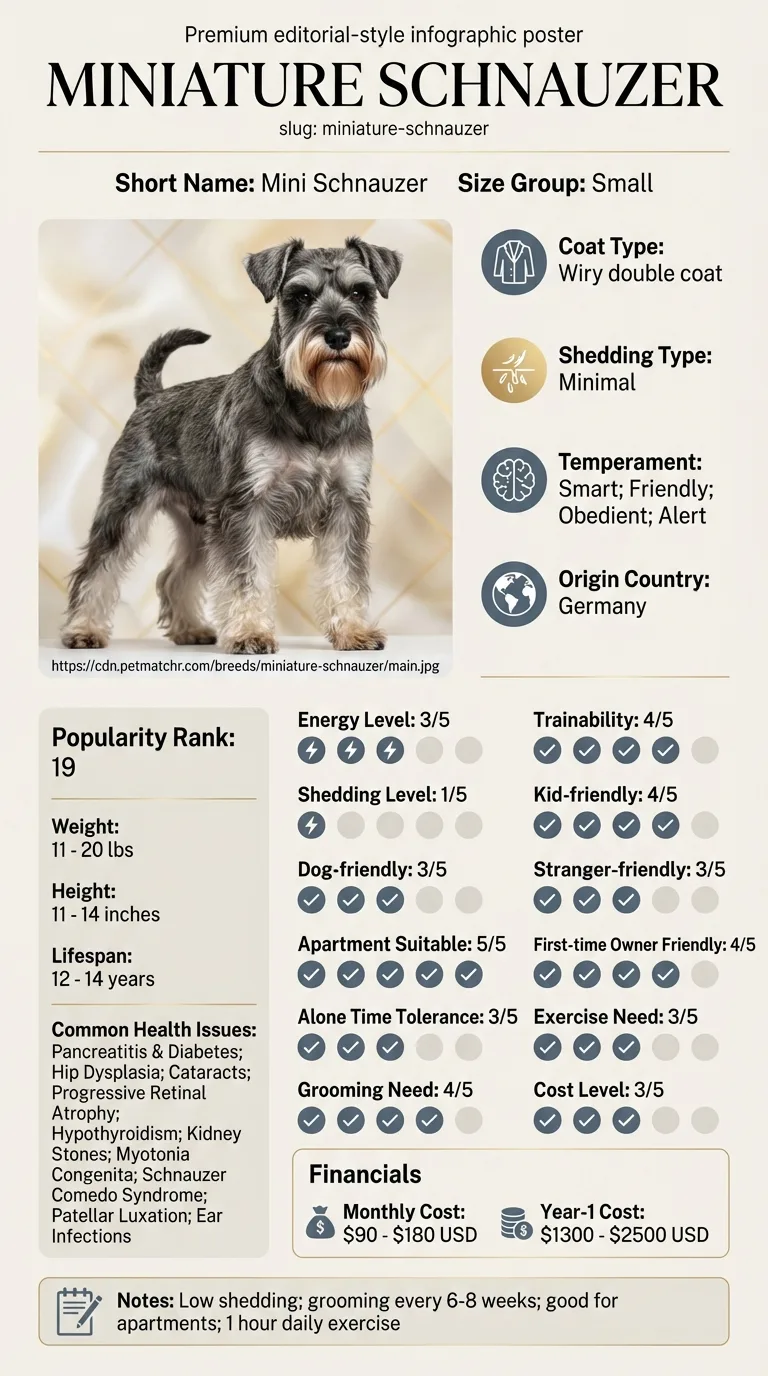
Owners of Miniature Schnauzers, especially first-time breeders, may face challenges during their dog’s pregnancy. This issue often affects those who are unprepared for potential health risks or complications that can arise.
This guide is not medical advice. If your dog shows pain, sudden behavior change, or worsening symptoms, consult a licensed veterinarian.
Some links may be affiliate links. We may earn a commission at no extra cost to you. We only suggest products we believe are helpful for dog owners.
We research and check what we publish, but we do not warrant that any figure, date, price, or statement is accurate, complete, or current, and we accept no liability for any loss, cost, injury, or other harm arising from the use of this site. Use it as one reference among several. You remain responsible for your own decisions and for your dog's care - confirm anything that matters with a licensed veterinarian or another qualified professional before you act on it. Full disclaimer.
Check this first
Pregnancy complications in Miniature Schnauzers can sometimes be serious. Knowing when to call your vet is crucial. If you notice any of these red-flag signs, seek immediate veterinary attention: severe vomiting, lethargy, excessive bleeding, or if your dog is unable to deliver puppies after several hours of labor.
On the other hand, if your Mini Schnauzer exhibits milder symptoms, such as slight discharge, occasional vomiting, or mild lethargy, you may monitor her at home. Create a comfortable space for her, ensure she has access to fresh water, and keep an eye on her behavior. If any symptoms worsen or new ones arise, contact your vet.
It's important to remember that every dog is unique. Regular check-ups with your vet during pregnancy can help catch potential issues early. Always trust your instincts; if something feels off, don’t hesitate to reach out for professional help.
If any of these apply, call your vet or an emergency clinic now. The rest of this page is for the cases that are not an emergency.
Miniature Schnauzer pregnancy complications can be distressing and often appear as signs of discomfort or distress in the mother. Common issues include prolonged labor, an increase in the risk of cesarean sections, and the potential for stillborn puppies. These complications can arise from various factors, including genetics, health issues, and even age.
Pregnancy complications in Miniature Schnauzers occur at a rate significantly higher than in many other breeds, with studies indicating a 419% increased risk. This heightened risk means that careful monitoring and veterinary support are essential during pregnancy.
Miniature Schnauzers may experience pregnancy complications due to their smaller size and specific genetic predispositions. Breeds like this can be more susceptible to issues such as hormonal imbalances or uterine problems, which can complicate pregnancy.
Environmental factors also play a significant role. Stressful surroundings, poor nutrition, or inadequate veterinary care can escalate risks. For example, a loud home environment may increase anxiety and affect a pregnant dog's health.
You should talk to your vet if you notice any unusual behaviors or symptoms, such as bleeding, excessive vomiting, or if your dog seems lethargic. Additionally, if complications arise, your vet can offer the necessary medical interventions.
Avoiding common mistakes can help improve your Miniature Schnauzer's pregnancy complications. Here are some behaviors to watch out for:
Start here: Miniature Schnauzer Most Common Genetic Disorders: Screening
See all Miniature Schnauzer health problems, which breeds are prone to pregnancy complications, or the full Miniature Schnauzer breed guide for temperament, exercise needs and ownership costs.
Typically, it takes about 4 to 6 weeks to stabilize a Miniature Schnauzer experiencing pregnancy complications. Regular vet visits are essential during this period.
Success means a healthy pregnancy with the mother and puppies thriving. You'll see reduced stress in your dog, improved health, and a smoother delivery.
When Mia, a first-time dog owner, noticed her Miniature Schnauzer Bella acting unusually during her pregnancy, she felt overwhelmed. Bella had been showing signs of distress and discomfort, which led Mia to seek help from a veterinarian. After a thorough check-up, they discovered Bella had pregnancy complications, which were common but serious. With guidance from the vet, Mia learned how to manage Bella's stress through a calming routine and proper nutrition. Over the next few weeks, Bella's health improved significantly, and she gave birth to three healthy puppies.
Key takeaway: Don't hesitate to seek veterinary help if your Miniature Schnauzer shows signs of pregnancy complications. Early intervention can lead to a happier and healthier experience for both the mother and her puppies.
Common complications include infections, low birth weight, and difficulty during delivery. It's essential to monitor your Mini Schnauzer closely for any signs of distress or unusual behavior.
To reduce complications, ensure your Mini Schnauzer receives regular veterinary care, a balanced diet, and proper prenatal care. Early intervention is key to addressing any potential issues.
If you notice signs of distress, such as excessive panting, vomiting, or lethargy, contact your vet immediately. It's better to err on the side of caution when it comes to your dog's health.
Training can help your Miniature Schnauzer remain calm and obedient during pregnancy. Teaching commands and creating a positive environment can ease their stress and improve outcomes.
Common signs of pregnancy complications in Miniature Schnauzers include excessive bleeding, prolonged labor, or lack of appetite. If your dog shows any of these symptoms, it's crucial to consult a vet immediately.
Support your Miniature Schnauzer by providing a quiet, comfortable space and ensuring she has a nutritious diet. Regular vet check-ups are essential to monitor her health and address any potential Miniature Schnauzer pregnancy complications.
You should take your Miniature Schnauzer to the vet if you notice any unusual behavior, such as excessive panting, lethargy, or difficulty moving. Regular check-ups are also important to keep her and her puppies safe.
Yes, pregnancy complications can impact your Miniature Schnauzer's future health. It's important to monitor her recovery and consult your vet for any ongoing issues that may arise post-pregnancy.
If your Miniature Schnauzer has experienced pregnancy complications before, inform your vet during her next pregnancy. They may suggest additional monitoring or special care to help prevent future issues.
Keep regular vet appointments and maintain a healthy diet for your Mini Schnauzer. Monitor for any unusual signs and provide a quiet, comfortable space for them.
Gather necessary supplies like whelping boxes, heating pads, and puppy food. Ensure you have a vet's contact information handy for emergencies.
Costs can vary widely but expect to spend between $300 and $1,000 on prenatal care, food, and supplies. Be prepared for additional expenses during and after delivery.
The average gestation period for a Miniature Schnauzer is about 63 days. It's crucial to monitor their health throughout this time.
A one-page prep sheet for this condition: the signs, the questions to ask, what to get priced. Unlocks here.
You get: Vet visit prep sheet
No spam. One-click unsubscribe. See our privacy policy.
Preview page 1 before you decide.