Behavior
What are some quick tips for Schnauzer (Standard) pregnancy complications?
Monitor her closely for unusual symptoms and maintain regular vet appointments. Provide a calm environment and ensure she is eating well.

Quick answer
What are some quick tips for Schnauzer (Standard) pregnancy complications?
Monitor her closely for unusual symptoms and maintain regular vet appointments. Provide a calm environment and ensure she is eating well.
Schnauzer (Standard) pregnancy complications can pose serious risks for both the mother and her puppies. Understanding these issues is crucial for any owner planning to breed.
Owners of Schnauzer (Standards) who are new to breeding often face these challenges. Busy families or first-time breeders might find themselves overwhelmed by the potential risks and need guidance on how to handle them.
This guide is not medical advice. If your dog shows pain, sudden behavior change, or worsening symptoms, consult a licensed veterinarian.
Some links may be affiliate links. We may earn a commission at no extra cost to you. We only suggest products we believe are helpful for dog owners.
We research and check what we publish, but we do not warrant that any figure, date, price, or statement is accurate, complete, or current, and we accept no liability for any loss, cost, injury, or other harm arising from the use of this site. Use it as one reference among several. You remain responsible for your own decisions and for your dog's care - confirm anything that matters with a licensed veterinarian or another qualified professional before you act on it. Full disclaimer.
Check this first
Schnauzer (Standard) pregnancy complications can vary greatly, and knowing when to act is crucial. If you notice any red-flag signs, it's time to call your vet immediately. These signs include heavy bleeding, severe abdominal pain, signs of distress, or if your dog is unable to deliver after more than two hours of strong contractions. Immediate veterinary attention is crucial in these situations.
On the other hand, some mild complications can be monitored at home. If your Schnauzer is experiencing minor discomfort such as light vomiting or a slight change in appetite, keep an eye on her but don’t panic. Ensure she is resting comfortably and provide her with a stress-free environment. Check in with your vet if symptoms persist or worsen.
Always trust your instincts. If you're ever unsure about your Schnauzer’s condition, it’s better to seek help sooner rather than later. Waiting too long can lead to serious health risks for both the mother and her puppies.
If any of these apply, call your vet or an emergency clinic now. The rest of this page is for the cases that are not an emergency.
Schnauzer (Standard) pregnancy complications can manifest in various ways, affecting both the mother and her puppies. These complications may include issues like poor nutrition, infections, or difficulties during birth. Owners may notice signs of distress or discomfort in their pregnant Schnauzer, which can be alarming and require immediate attention.
Pregnancy complications in Schnauzer (Standards) aren't extremely common, but they do occur. Studies show that these dogs can be at a 419% higher risk for complications compared to other breeds. It's crucial for owners to stay vigilant and seek veterinary care to ensure a healthy pregnancy.
Schnauzers (Standard) may experience pregnancy complications due to their medium size and genetic predispositions. Breeds with a history of health issues, such as hip dysplasia or hypothyroidism, can face increased risks during pregnancy. Additionally, the age and health of the mother play significant roles in potential complications.
Environmental factors like stress, poor nutrition, and inadequate veterinary care can also contribute to pregnancy complications. A chaotic home environment or lack of proper prenatal care can endanger the health of both the mother and her puppies. Ensuring a calm and supportive atmosphere is crucial during this time.
You should consult a veterinarian if your Schnauzer displays concerning symptoms, such as excessive vomiting, lethargy, or unusual discharge. Early intervention can be critical to prevent complications and ensure the health of both the mother and her puppies.
Avoiding common mistakes can help manage Schnauzer (Standard) pregnancy complications effectively. Here are some behaviors to watch out for:
Start here: Standard Schnauzer Most Common Genetic Disorders: Screening
See all Schnauzer Standard health problems, which breeds are prone to pregnancy complications, or the full Schnauzer Standard breed guide for temperament, exercise needs and ownership costs.
Expect to see improvements within 2 to 6 weeks of implementing changes. Consistency and patience are key during this period.
Success means your Schnauzer (Standard) has a smoother pregnancy with fewer complications, showing signs of good health and well-being.
Emily, a busy nurse from Texas, noticed that her Schnauzer (Standard), Bella, was experiencing serious pregnancy complications. Bella was lethargic, had trouble eating, and was visibly uncomfortable. After researching and consulting her vet, Emily adjusted Bella's diet, added prenatal vitamins, and set a regular routine that included gentle exercise. Over time, Bella's condition improved. She became more active and began to eat better, leading to a successful delivery of healthy puppies.
Key takeaway: With the right support and guidance, you can help your Schnauzer (Standard) manage pregnancy complications effectively.
Schnauzers (Standard) can experience pregnancy complications due to various factors, including genetic predisposition, age, and health conditions. It's essential to monitor your dog's health closely during pregnancy and consult a veterinarian for regular check-ups.
To reduce risks, ensure your Schnauzer is in good health before breeding. Regular vet visits, a balanced diet, and stress-free living conditions are crucial. Also, understand the signs of complications so you can act quickly if needed.
Common signs of pregnancy complications in Schnauzers (Standard) include excessive vomiting, lack of appetite, unusual discharges, and increased anxiety. If you notice any of these signs, consult your veterinarian promptly.
If your Schnauzer exhibits any signs of complications, take her to the vet as soon as possible. Early intervention can be critical in managing complications and ensuring her safety.
Training can help your Schnauzer feel more comfortable during pregnancy. Focus on positive reinforcement for calm behavior, and consider gentle obedience training to keep her engaged without overstressing her.
Schnauzers (Standard) face a significantly higher risk of complications, which can lead to health issues for both the mother and puppies. Effective management and veterinary support are vital to minimize these risks.
Provide a quiet, comfortable space for her to relax. Ensure she has access to nutritious food and water, and keep her stress levels low. Regular vet check-ups are also crucial for monitoring her health.
If your Schnauzer (Standard) shows signs of pregnancy complications, such as unusual discharges or lethargy, contact your vet immediately. Early intervention is crucial to ensure the health of both the mother and the puppies.
Yes, health tests can be performed to check for conditions that may lead to pregnancy complications. These may include ultrasounds to monitor the puppies' development and tests for common health issues in the breed.
Supporting your Schnauzer (Standard) during pregnancy involves providing a nutritious diet, regular but gentle exercise, and a quiet, comfortable space for her to rest. Regular vet visits are also essential to monitor her health.
You should be particularly vigilant during the last trimester of your Schnauzer's pregnancy. This is when complications are most likely to arise, so regular check-ups with the vet are important.
Monitor her closely for unusual symptoms and maintain regular vet appointments. Provide a calm environment and ensure she is eating well.
Create a safe space for her with her favorite toys and blankets. Gentle training and reassurance can also help ease her anxiety.
A balanced diet rich in nutrients is essential. Consult your vet for specific dietary recommendations based on her health needs.
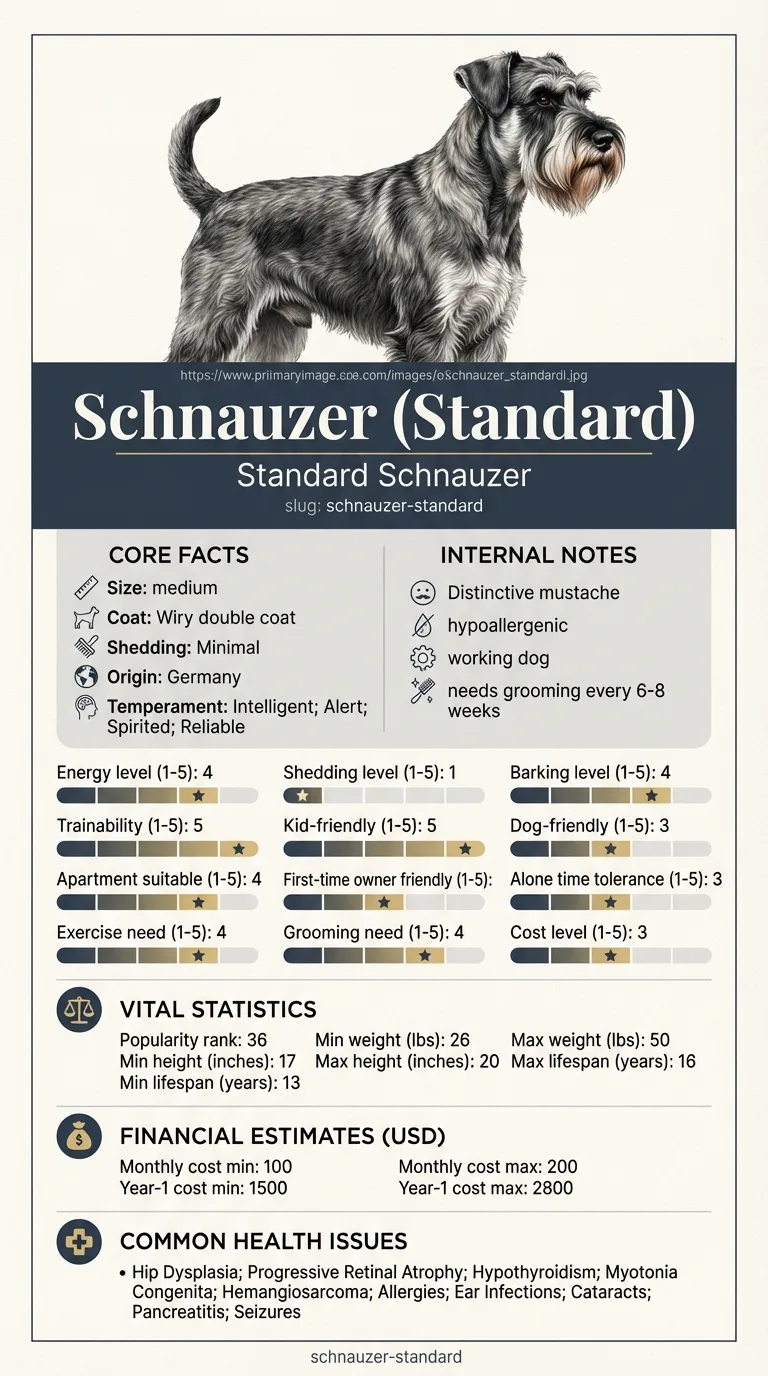
Costs can vary widely, typically between $100 to $200 monthly for vet visits and care. Be prepared for additional expenses if complications arise.
A one-page prep sheet for this condition: the signs, the questions to ask, what to get priced. Unlocks here.
You get: Vet visit prep sheet
No spam. One-click unsubscribe. See our privacy policy.
Preview page 1 before you decide.