Costs
Bichon Frise cost in Fargo
About $76–$144/month, $1,050–$2,000 for year one — below average, with a real, genuine cold-tolerance advantage from this breed's documented dense double coat, though extremities still need protection.

See Bichon Frise price across all cities →
Quick answer
Bichon Frise cost in Fargo
About $76–$144/month, $1,050–$2,000 for year one — below average, with a real, genuine cold-tolerance advantage from this breed's documented dense double coat, though extremities still need protection.
A Bichon Frise in Fargo costs about $76–$144 a month, with the first year around $1,050–$2,000 — below the national average, worth a real, encouraging note: this breed's documented dense double coat offers genuinely more natural insulation against North Dakota's brutal winters than a thin, single-coated small breed would have, though exposed paws and ears still need protection.
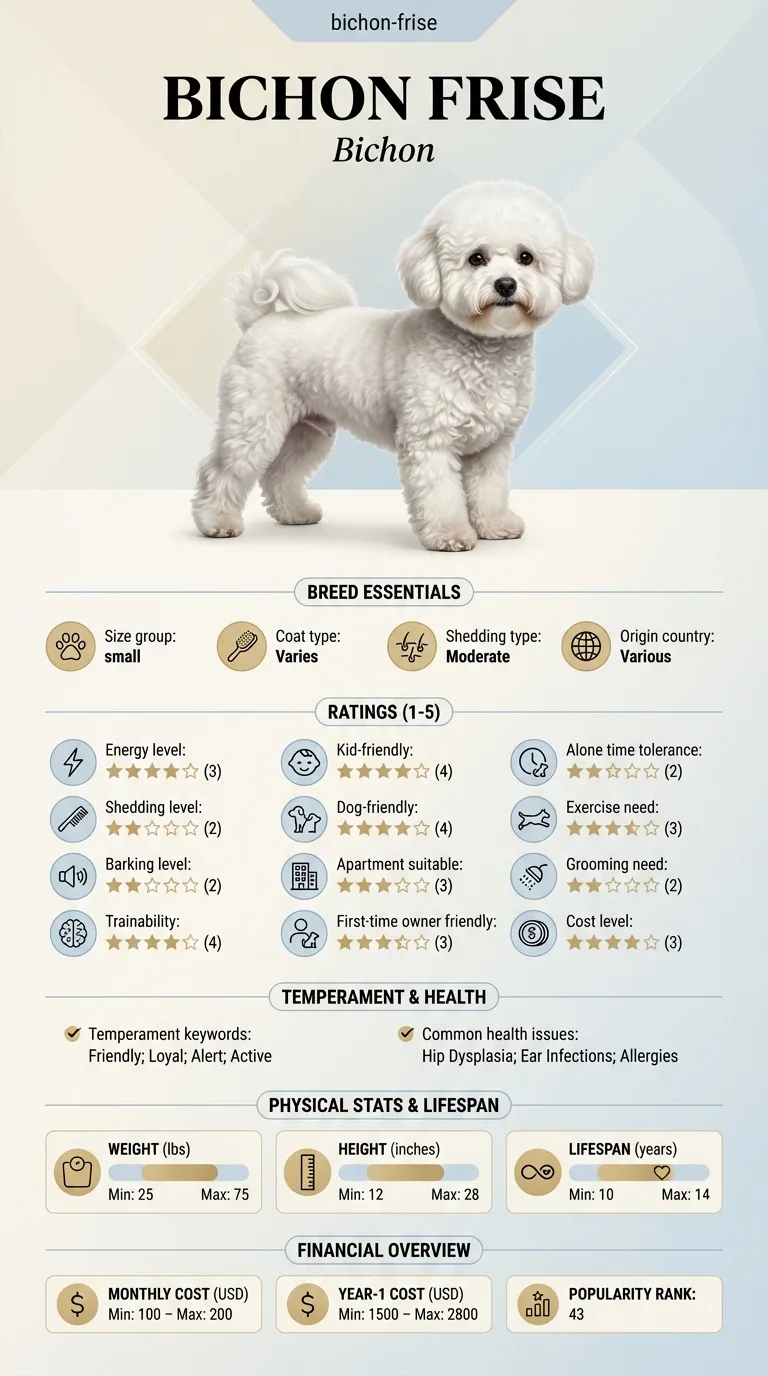
Skin Allergies and Patellar Luxation are the breed's more commonly documented health risks most likely to produce an unplanned bill, alongside this breed's real, documented Bladder Stones risk. This breed's genuine attachment to its people means alone-time tolerance is a real ongoing consideration, requiring attention regardless of city.
These figures reflect Fargo's genuinely below-average general pricing, with a real note on this breed's documented double-coat cold advantage and the exceptionally short parasite season this site tracks.
Estimate · source: estimation · confidence: medium · updated 2026-10-06 · not a quote
| Item | Cost range |
|---|---|
One-time setup (initial vet visit, spay/neuter, gear) Covers the first exam, vaccinations, spay/neuter if needed, and basic gear — priced at Fargo's below-average rates. | $270 - $455 |
| Item | Cost range |
|---|---|
Food Priced below the national average for this breed's small-to-medium size, reflecting North Dakota's favorable general pricing. | $25 - $41 |
Professional grooming (every 4-6 weeks) A genuinely top-tier recurring cost for this breed given its documented grooming need, though priced below the national average here. | $48 - $85 |
Each range starts from a national baseline for this breed's size class and is then adjusted for local cost of living and veterinary pricing. The baselines, and the source each one came from, are listed on our sources page (dataset 2026.09). Two inputs, the purchase price and the emergency reserve, have no published national figure we could verify, so we leave them to you rather than invent them.
These are planning estimates, not quotes. Your own numbers will move with the individual dog, your vet and your insurer. Build a budget with your own figures.
For a Bichon Frise in Fargo, insurance is genuinely worth taking seriously given this breed's documented skin, joint and bladder-stone risks, independent of the metro's favorable general cost of living.
Given this breed's real, varied documented health risk profile, insurance purchased while the dog is young is worth pricing out seriously before anything is on record.
Owners who've built a genuinely solid emergency fund and are comfortable managing a procedure or ongoing condition themselves can reasonably self-insure instead.
Fargo's below-average costs and short parasite season help, and winter booties cost far less than treating frostbite.
This breed's documented coat type genuinely includes a dense, insulating undercoat beneath the curly outer layer, a real structural advantage many thin, single-coated small breeds simply don't have when facing a climate as harsh as North Dakota's. That insulation helps the body retain warmth more effectively during Fargo's genuinely brutal winters than it would for a less-coated breed of similar size.
That advantage has real limits, though: exposed skin on the nose, ear tips and paw pads still faces genuine frostbite risk during extended cold exposure, regardless of how well-insulated the body itself is. Booties for icy, salted walks and limiting extended outdoor time during the coldest snaps remain worth doing despite the coat's real natural advantage.
Fargo otherwise ranks among the more affordable general cost-of-living metros this site tracks, and the region's genuinely short flea-and-tick season, one of the shortest this site tracks, offers a real, meaningful savings on parasite prevention.

A Fargo Bichon Frise owner braced for their new puppy to struggle through the first real cold snap, having previously owned a thin-coated small breed that hated winter entirely. To their surprise, the dog's dense double coat kept its body noticeably warmer on shorter walks, though the family still added booties once ice and road salt became a factor.
Key takeaway: In Fargo specifically, this breed's real documented double coat offers a genuine cold-tolerance advantage, though paws and extremities still need real protection.
About $76–$144, below the national average, reflecting North Dakota's generally favorable general cost of living.
Roughly $1,050–$2,000, including the initial vet exam, spay/neuter if needed, and gear on top of ongoing monthly costs.
Better than many small breeds — its documented dense double coat provides real insulation, though exposed skin on the nose, ears and paws still needs protection during extended cold.
Yes — booties for icy, salted walks and limiting extended outdoor time during the coldest snaps remain worth doing despite the coat's real natural advantage.
Worth pricing out given the breed's documented skin, joint and bladder-stone risks, bought while the dog is young and before anything is on record.
Around $600 covers a typical significant vet visit in this market, reflecting Fargo's below-average local pricing.
About $76–$144/month, $1,050–$2,000 for year one — below average, with a real, genuine cold-tolerance advantage from this breed's documented dense double coat, though extremities still need protection.
This guide is not medical advice. If your dog shows pain, sudden behavior change, or worsening symptoms, consult a licensed veterinarian.
Some links may be affiliate links. We may earn a commission at no extra cost to you. We only suggest products we believe are helpful for dog owners.
We research and check what we publish, but we do not warrant that any figure, date, price, or statement is accurate, complete, or current, and we accept no liability for any loss, cost, injury, or other harm arising from the use of this site. Use it as one reference among several. You remain responsible for your own decisions and for your dog's care - confirm anything that matters with a licensed veterinarian or another qualified professional before you act on it. Full disclaimer.
One sheet with every line item, the emergency fund and when insurance pays off - unlocks on this page.
You get: 12-month budget sheet
No spam. One-click unsubscribe. See our privacy policy.
See a sample page before you decide.