Health
What's the classic sign of pancreatitis in a dog?
Vomiting, abdominal pain, and a hunched posture, often following a fatty meal or dietary indiscretion.

Quick answer
What's the classic sign of pancreatitis in a dog?
Vomiting, abdominal pain, and a hunched posture, often following a fatty meal or dietary indiscretion.
A dog that suddenly refuses food, hunches with belly pain, and vomits repeatedly after a rich meal or table scraps may be dealing with a painful inflammation of the pancreas.
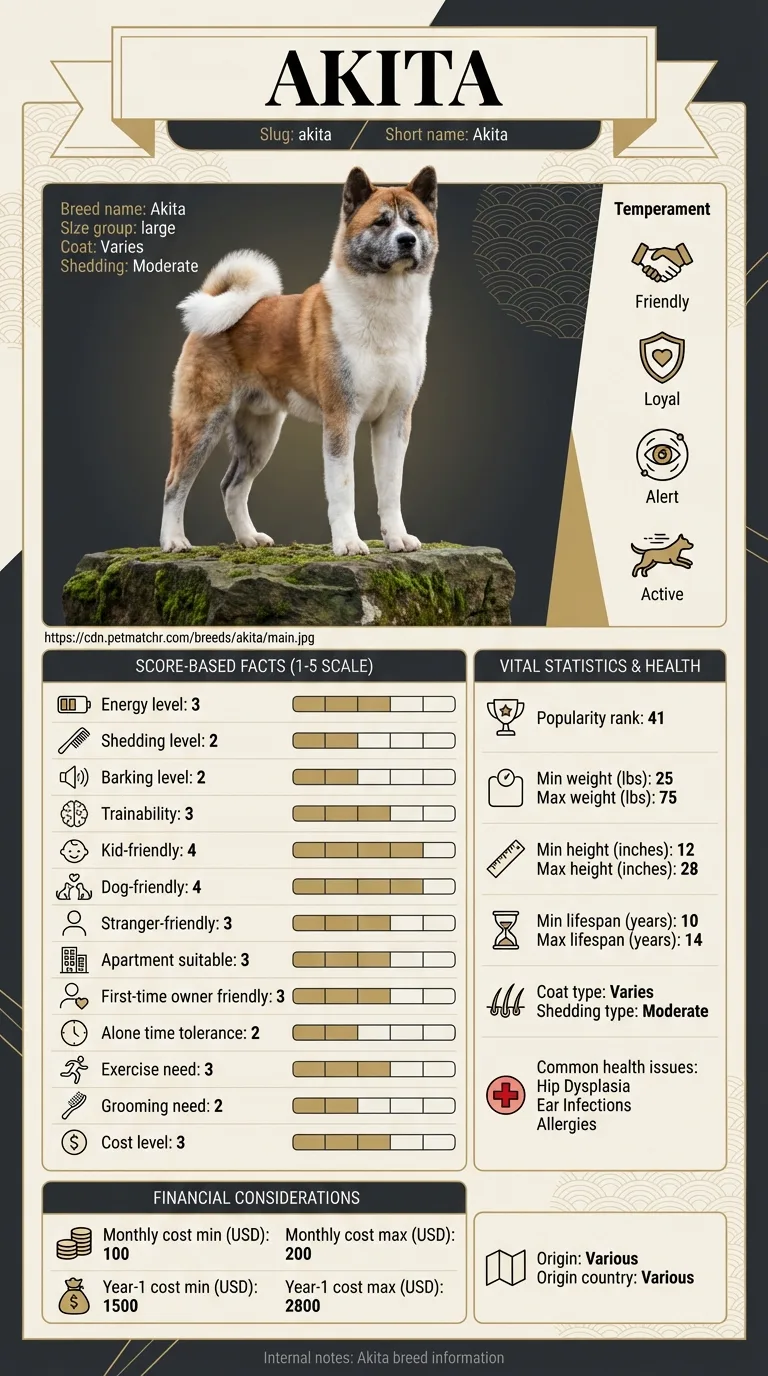
Owners whose Akitas have gotten into fatty table scraps, garbage, or a rich holiday meal are the ones who most often encounter an acute pancreatitis episode.
This guide is not medical advice. If your dog shows pain, sudden behavior change, or worsening symptoms, consult a licensed veterinarian.
Some links may be affiliate links. We may earn a commission at no extra cost to you. We only suggest products we believe are helpful for dog owners.
We research and check what we publish, but we do not warrant that any figure, date, price, or statement is accurate, complete, or current, and we accept no liability for any loss, cost, injury, or other harm arising from the use of this site. Use it as one reference among several. You remain responsible for your own decisions and for your dog's care - confirm anything that matters with a licensed veterinarian or another qualified professional before you act on it. Full disclaimer.
Check this first
Repeated vomiting, a hunched or 'praying' posture with the front end down and rear end up, significant abdominal pain, lethargy, or refusal to eat combined with vomiting all warrant same-day veterinary evaluation. Severe pancreatitis can lead to systemic complications, including organ damage, and shouldn't be managed at home.
A single episode of vomiting after a known dietary indiscretion, in a dog that's otherwise acting normally and not showing pain, can sometimes be monitored briefly, but pancreatitis is difficult to distinguish from other, potentially more serious causes of vomiting without a vet exam and bloodwork.
Because pancreatitis severity varies so widely and can escalate quickly, when in doubt, especially after a known rich or fatty meal, a same-day vet visit is the safer choice over waiting to see how symptoms develop.
If any of these apply, call your vet or an emergency clinic now. The rest of this page is for the cases that are not an emergency.
Pancreatitis is a painful inflammation of the pancreas most often triggered by a high-fat meal, and while it isn't documented as a specific genetic risk for the Akita, the breed's size and appetite make dietary-indiscretion episodes a real and recurring risk worth understanding and preventing.
Pancreatitis is one of the more common reasons dogs of any breed present to a vet with acute vomiting and abdominal pain, and a large dog with a hearty appetite and easy access to a busy kitchen or holiday table carries a realistic ongoing risk regardless of any specific genetic predisposition.
There isn't a documented Akita-specific genetic mechanism behind pancreatitis the way there is for bloat or urate stones. The breed-relevant factor here is more practical: a large, food-motivated dog has more opportunity to access rich or fatty food, whether through scavenging or well-meaning table scraps, than a smaller or less food-driven dog might.
Diet is the dominant environmental driver — specifically, sudden high-fat meals, table scraps, and access to trash or unsecured food. Obesity independently raises baseline risk as well, making weight management a relevant preventive factor alongside diet consistency.
See a vet the same day for repeated vomiting, a hunched or painful posture, lethargy, or refusal to eat, especially following a known rich meal or dietary indiscretion. Don't wait to see if a suspected episode resolves on its own.
Pancreatitis is often directly linked to specific dietary choices, which makes prevention genuinely achievable with the right habits.
See all Akita health problems, which breeds are prone to pancreatitis, or the full Akita breed guide for temperament, exercise needs and ownership costs.
Mild cases treated promptly often improve within a few days of supportive care. More severe cases requiring hospitalization can take one to two weeks to fully stabilize, with dietary management continuing well beyond that.
Success is a full recovery from an acute episode with no recurrence, supported by a consistent long-term low-fat diet and secured access to trash and rich foods going forward.
After a family gathering in Omaha, Patrick's Akita, Boone, got into some leftover fatty ham scraps left within reach. By the next morning, Boone was vomiting repeatedly and hunched over in obvious discomfort, refusing his breakfast entirely. Patrick brought him in the same day, and bloodwork confirmed pancreatitis. Boone was hospitalized for two days for fluids and pain control before going home on a bland, low-fat diet. Patrick has since kept counters and trash strictly off-limits and briefs visiting family every holiday season on not sharing food with Boone.
Key takeaway: A single rich meal can trigger a genuinely dangerous pancreatitis episode — securing food access is a simple habit that prevents most cases.
It's not documented as a breed-specific genetic risk the way bloat or urate stones are; it's a general canine condition that any breed can develop, most often triggered by diet.
A high-fat meal, whether from table scraps, getting into the trash, or a sudden rich holiday meal, is the most commonly identified trigger, though some cases occur without an obvious cause.
Bloodwork including specific pancreatic enzyme tests, sometimes combined with abdominal ultrasound, is the standard diagnostic approach.
Treatment usually includes IV fluids, anti-nausea medication, pain control, and a gradual reintroduction of a low-fat, easily digestible diet, often requiring hospitalization for more severe cases.
Mild cases managed on an outpatient basis might run a few hundred dollars; hospitalization for a more severe case can run $1,500 to $4,000 or more depending on length of stay.
Many dogs recover fully from a single episode with appropriate treatment, though repeated episodes can sometimes lead to chronic pancreatitis or, over time, diabetes if enough pancreatic tissue is damaged.
Keeping your dog on a consistent, appropriately low-fat diet, avoiding table scraps, and securing trash and food storage are the most effective preventive steps after a first episode.
Vomiting, abdominal pain, and a hunched posture, often following a fatty meal or dietary indiscretion.
No — it's a general canine condition, most often diet-triggered rather than breed-specific.
Mild cases run a few hundred dollars; hospitalization for severe cases can reach $1,500 to $4,000 or more.
Largely yes — avoiding fatty table scraps and securing trash access meaningfully lowers the risk.
Yes — a long-term lower-fat diet is commonly recommended to reduce the risk of recurrence.
A one-page prep sheet for this condition: the signs, the questions to ask, what to get priced. Unlocks here.
You get: Vet visit prep sheet
No spam. One-click unsubscribe. See our privacy policy.
Preview page 1 before you decide.