Living
Which handles being alone better?
The French Bulldog, rated Very high (5/5) versus the Bichon's Low (2/5).

Quick answer
Which handles being alone better?
The French Bulldog, rated Very high (5/5) versus the Bichon's Low (2/5).
Bichon Frise or French Bulldog? On paper they differ most on grooming need, and on the scales French Bulldog is the heavier at 20–30 lbs. Here is how the two compare on everything that shapes an ordinary week.
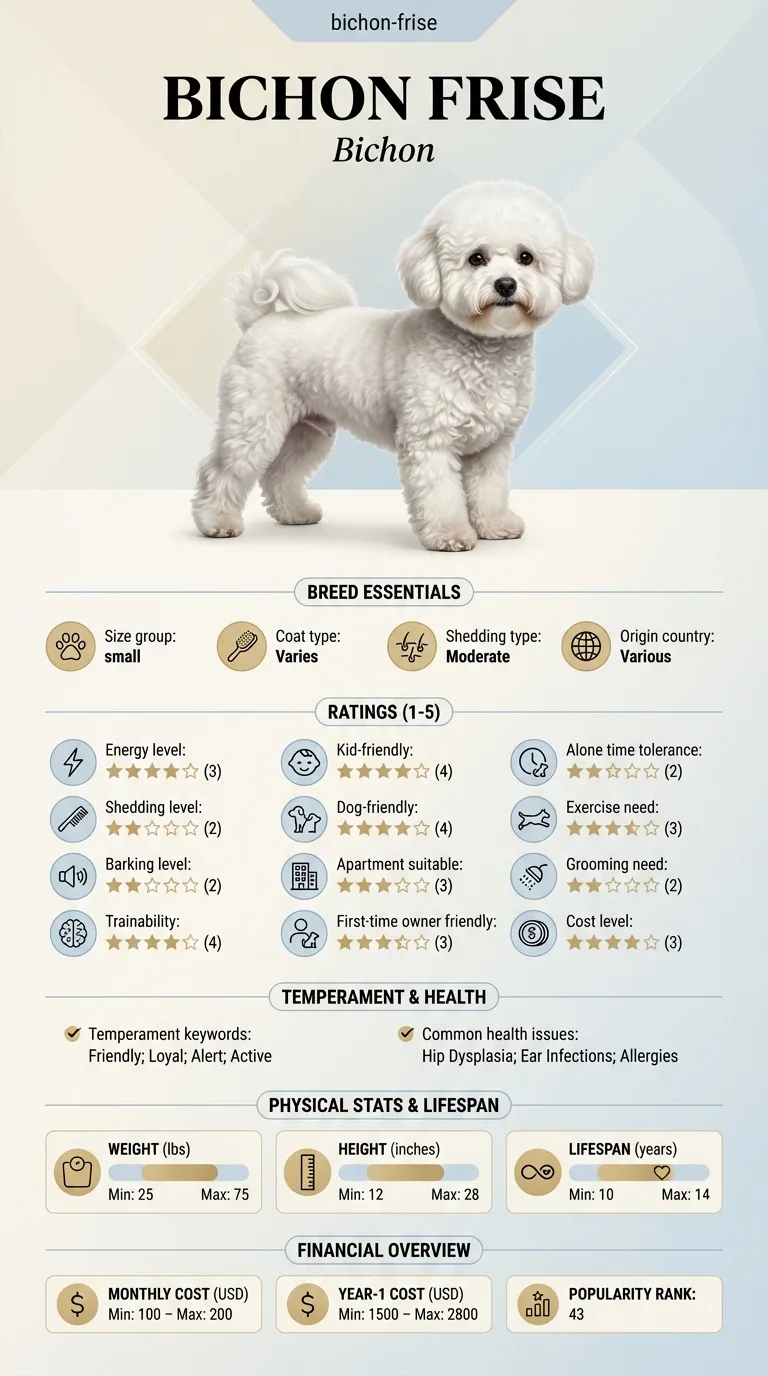
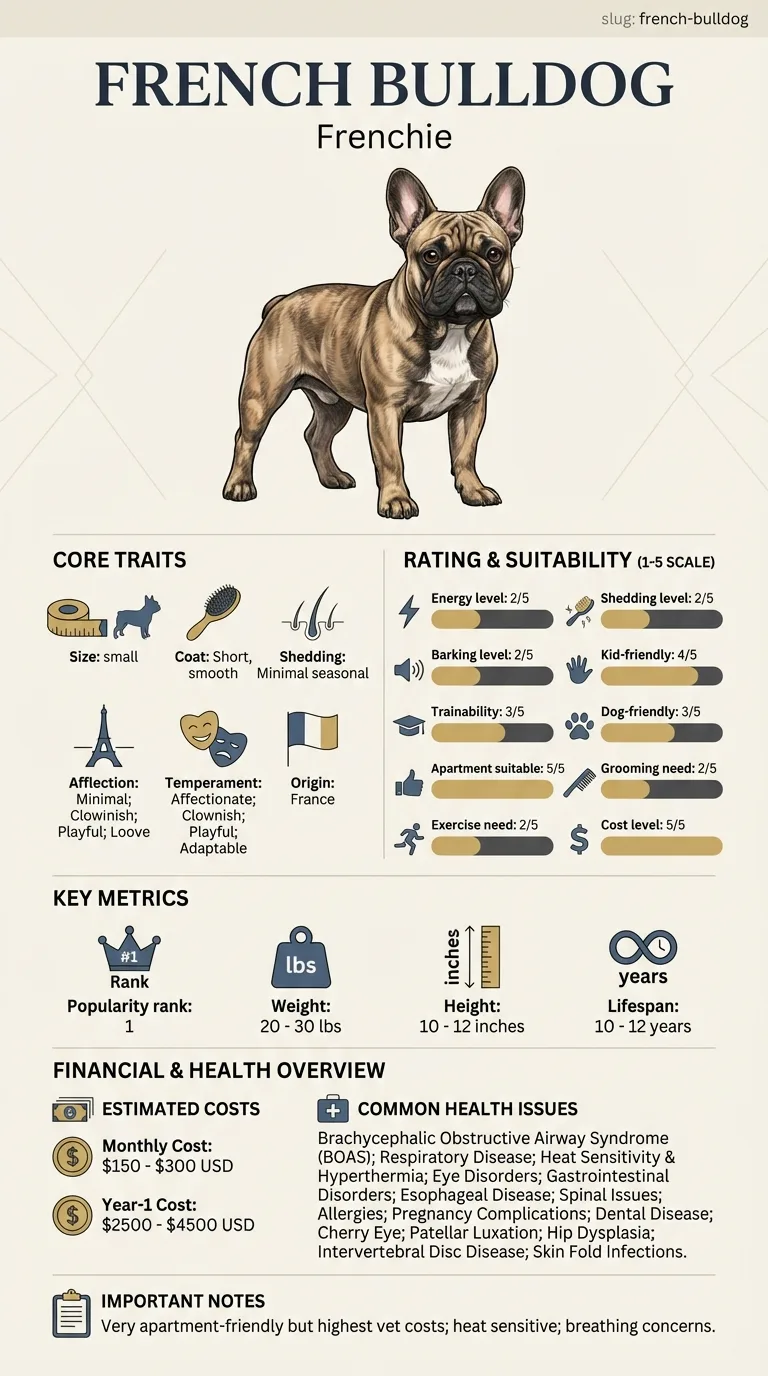
This is for someone already down to Bichon Frise and French Bulldog and deciding between them. For this pair the decision usually turns on grooming need and tolerates being alone, so those are covered first and in most detail. Both rate 5/5 for flats, so housing does not settle this one. It is written for the decision rather than the breed history.
Between Bichon Frise and French Bulldog, grooming need is what separates them, and French Bulldog is the lower-effort dog of the two to keep.
Choose Bichon Frise if shedding is a problem in your house, you already have another dog and a smaller dog suits your car, your home or your back.
Choose French Bulldog if this is your first dog, you do not want a standing grooming appointment and the dog will be alone during the working day.
| Feature | bichon frise | french bulldog | Winner |
|---|---|---|---|
| Size class | small | small | Equal |
| Weight | 12–18 lbs | 20–30 lbs | Equal |
| Height | 9–12 in | 10–12 in | Equal |
| Lifespan | 14–15 years | 10–12 years | bichon frise |
| Exercise need | Low (2/5) | Low (2/5) | Equal |
| Grooming need | Very high (5/5) | Low (2/5) | french bulldog |
| Shedding | Very low (1/5) | Low (2/5) | bichon frise |
| Energy level | Moderate (3/5) | Low (2/5) | Equal |
| Barking | Moderate (3/5) | Low (2/5) | french bulldog |
| Apartment suitability | Very high (5/5) | Very high (5/5) | Equal |
| Good for first-time owners | High (4/5) | Very high (5/5) | french bulldog |
| Tolerates being alone | Low (2/5) | Very high (5/5) | french bulldog |
| Trainability | Moderate (3/5) | Moderate (3/5) | Equal |
| Good with kids | High (4/5) | High (4/5) | Equal |
| Good with other dogs | High (4/5) | Moderate (3/5) | bichon frise |
| Friendly to strangers | High (4/5) | Moderate (3/5) | bichon frise |
| Cost level | Moderate (3/5) | Very high (5/5) | bichon frise |
| Coat | Curly, dense double coat | Short, smooth | Equal |
| Origin | Various | France | Equal |
| Typical monthly cost | $80–$150 | $150–$300 | Equal |
| Typical first-year cost | $1,100–$2,300 | $2,500–$4,500 | Equal |
Both breeds sit in the small size class, but the French Bulldog runs heavier at 20–30 lbs against the Bichon Frise's 12–18 lbs, despite similar heights of 10–12 inches versus 9–12 inches. That extra weight on a similar height frame reflects the Frenchie's stocky, muscular, brachycephalic build — a compact, thick-boned dog rather than the Bichon's light, fluffy-coated one. The Frenchie's flat face and broad chest give it an entirely different silhouette and, more importantly, different physical limitations around heat and breathing that the Bichon's build doesn't share at all.
Exercise need ties at Low (2/5) for both breeds, and energy level actually favors the Frenchie for calmness, rated Low (2/5) against the Bichon Frise's Moderate (3/5). Practically, this makes the French Bulldog one of the lowest-output breeds in this entire comparison set — short walks and indoor play genuinely suffice, and in fact vigorous exercise is actively discouraged given the breathing complications common to flat-faced breeds. The Bichon, while still an easy-exercise dog by most standards, is comparatively the livelier of the two, more likely to initiate play or zoom around the house between walks.
Grooming flips dramatically in the Frenchie's favor: Low (2/5) for the French Bulldog against Very high (5/5) for the Bichon Frise, since the Frenchie's short, smooth coat needs little more than occasional brushing while the Bichon's curly coat demands regular professional trims. Shedding is close — Low (2/5) for the Frenchie versus Very low (1/5) for the Bichon — so neither breed leaves much hair around, though the Frenchie does need regular cleaning of its facial skin folds to prevent infection, a maintenance task the Bichon's coat type doesn't require at all.
Both breeds tie at Very high (5/5) apartment suitability, and both are genuinely excellent small-space dogs given their compact size and low exercise needs. Barking favors the Frenchie, Low (2/5) against the Bichon's Moderate (3/5), making it the quieter of the two for noise-sensitive buildings. The biggest practical difference shows up in alone-time tolerance: the French Bulldog rates Very high (5/5), while the Bichon Frise rates just Low (2/5) — a dramatic gap that makes the Frenchie a far better fit for owners with long, unpredictable work hours who can't guarantee company throughout the day.
Trainability ties at Moderate (3/5) for both breeds, but first-time-owner suitability tips toward the Frenchie, Very high (5/5) against the Bichon Frise's High (4/5) — among the highest first-time-owner scores in this entire dataset. The French Bulldog's affectionate, clownish, playful, adaptable temperament makes it famously easygoing to live with, requiring less structured training discipline than working or sporting breeds while still being generally cooperative. Neither breed demands an experienced trainer, but the Frenchie's adaptability edges it out as arguably the lowest-effort option for someone who has never owned a dog before.
Both breeds tie at High (4/5) with kids, but the Bichon Frise pulls ahead with other dogs, High (4/5) versus the Frenchie's Moderate (3/5), and with strangers, High (4/5) versus the Frenchie's Moderate (3/5). The French Bulldog's affectionate, clownish nature makes it a beloved family companion, but it can be more selectively social than the universally friendly Bichon, particularly around unfamiliar dogs. Households that frequently host dog-park visits or big social gatherings may find the Bichon the smoother fit, while households wanting a devoted, comedic homebody will likely love the Frenchie just as much.
This is the starkest health gap in the batch: the Bichon Frise's 14–15 year lifespan comfortably exceeds the French Bulldog's 10–12 years, and the Frenchie's health list runs to fifteen separate conditions — led by Brachycephalic Obstructive Airway Syndrome (BOAS), respiratory disease, heat sensitivity and hyperthermia, plus eye disorders, gastrointestinal disorders, esophageal disease, spinal issues, allergies, pregnancy complications, dental disease, cherry eye, patellar luxation, hip dysplasia, intervertebral disc disease, and skin fold infections. Nearly all of it traces back to the breed's flat-faced, short-spined structure. The Bichon's five-item list of skin allergies, patellar luxation, bladder stones, cataracts, and dental disease is comparatively minor by contrast.
Cost level rates Very high (5/5) for the French Bulldog, the highest score in this comparison, against Moderate (3/5) for the Bichon Frise — reflected in monthly ranges of $150–$300 versus $80–$150 and first-year costs of $2,500–$4,500 versus $1,100–$2,300. That premium comes largely from the breed's popularity driving up purchase price, plus the real likelihood of specialized veterinary care for BOAS-related breathing issues, which can include surgery. Some Frenchies also require artificial insemination and C-section delivery due to their body shape, adding costs many buyers don't anticipate before bringing one home.
Bichon Frise weighs 12–18 lbs and lives 14–15 years; French Bulldog weighs 20–30 lbs and lives 10–12 years. The two diverge most on grooming need, tolerates being alone and cost level. They are level on apartment suitability, exercise need and good with kids, so those cannot decide it. In the table, a "winner" means easier for an ordinary household — not better. Size, coat and origin are recorded without a verdict. Because both breeds are scored the same way, the gaps are reliable even where the absolute numbers are rough.
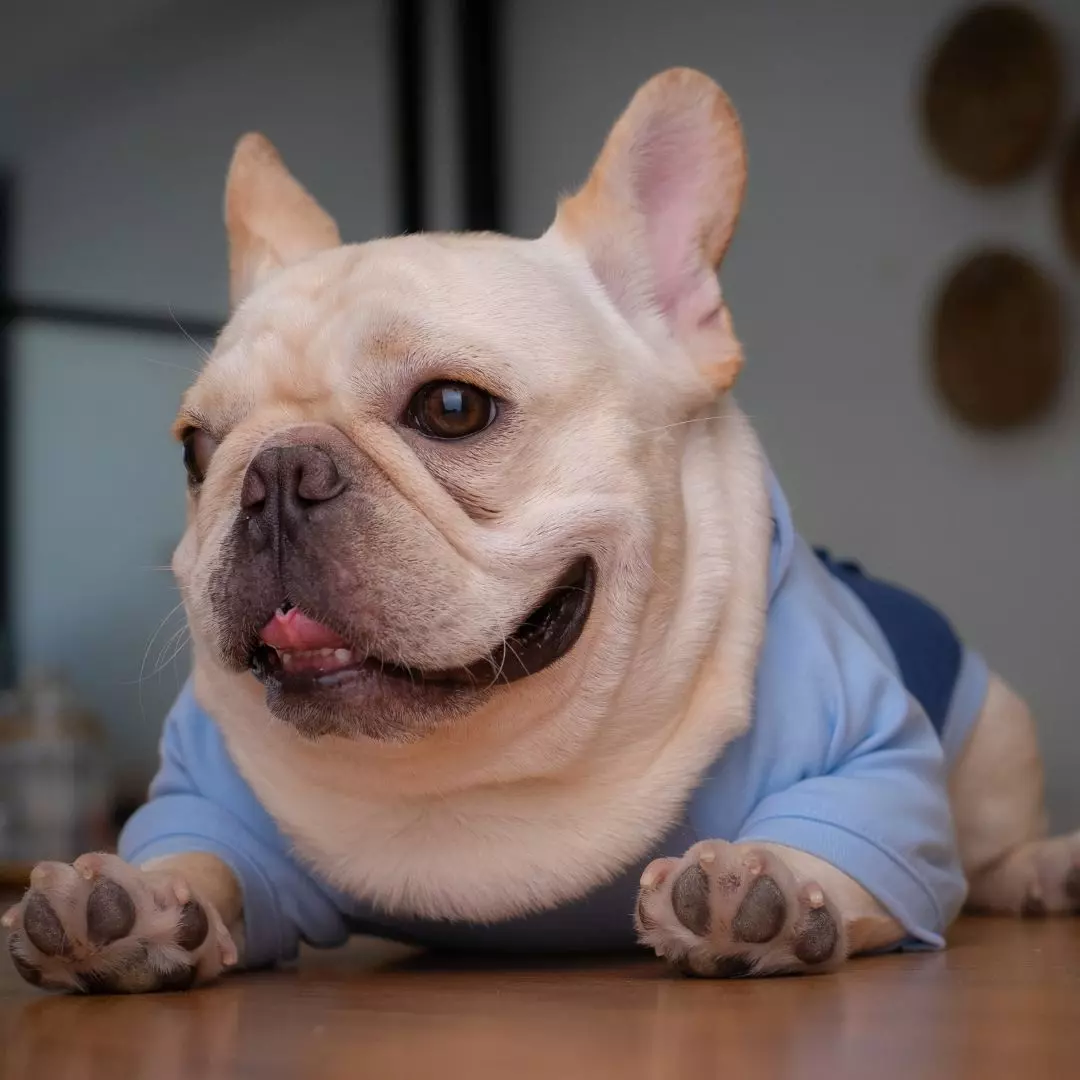
French Bulldogs rate Very high (5/5) on cost, with a $2,500–$4,500 first-year range versus the Bichon's $1,100–$2,300, driven by high purchase prices and the likelihood of BOAS-related veterinary care.
Brachycephalic Obstructive Airway Syndrome, a breathing condition caused by the breed's flat face and shortened airway — it's the Frenchie's leading health concern and can require surgical correction.
The French Bulldog, rated Very high (5/5) tolerance for being alone, dramatically ahead of the Bichon Frise's Low (2/5).
The French Bulldog, rated Low (2/5) versus the Bichon Frise's Very high (5/5), thanks to its short, smooth coat.
The Bichon Frise, at 14–15 years, versus the French Bulldog's 10–12 years — one of the largest lifespan gaps in this comparison.
Yes, very — it rates Very high (5/5) for first-time owners, among the highest scores available, thanks to its low exercise needs and adaptable temperament.
The French Bulldog, rated Low (2/5) versus the Bichon Frise's Moderate (3/5).
The French Bulldog, rated Very high (5/5) versus the Bichon's Low (2/5).
The French Bulldog, rated Low (2/5) versus the Bichon's Very high (5/5).
The French Bulldog, rated Very high (5/5) on cost versus the Bichon's Moderate (3/5).
The Bichon Frise, at 14–15 years versus the French Bulldog's 10–12 years.
Secure checkout on Stripe. We never see your card.
7-day money-back guarantee. Instant access.
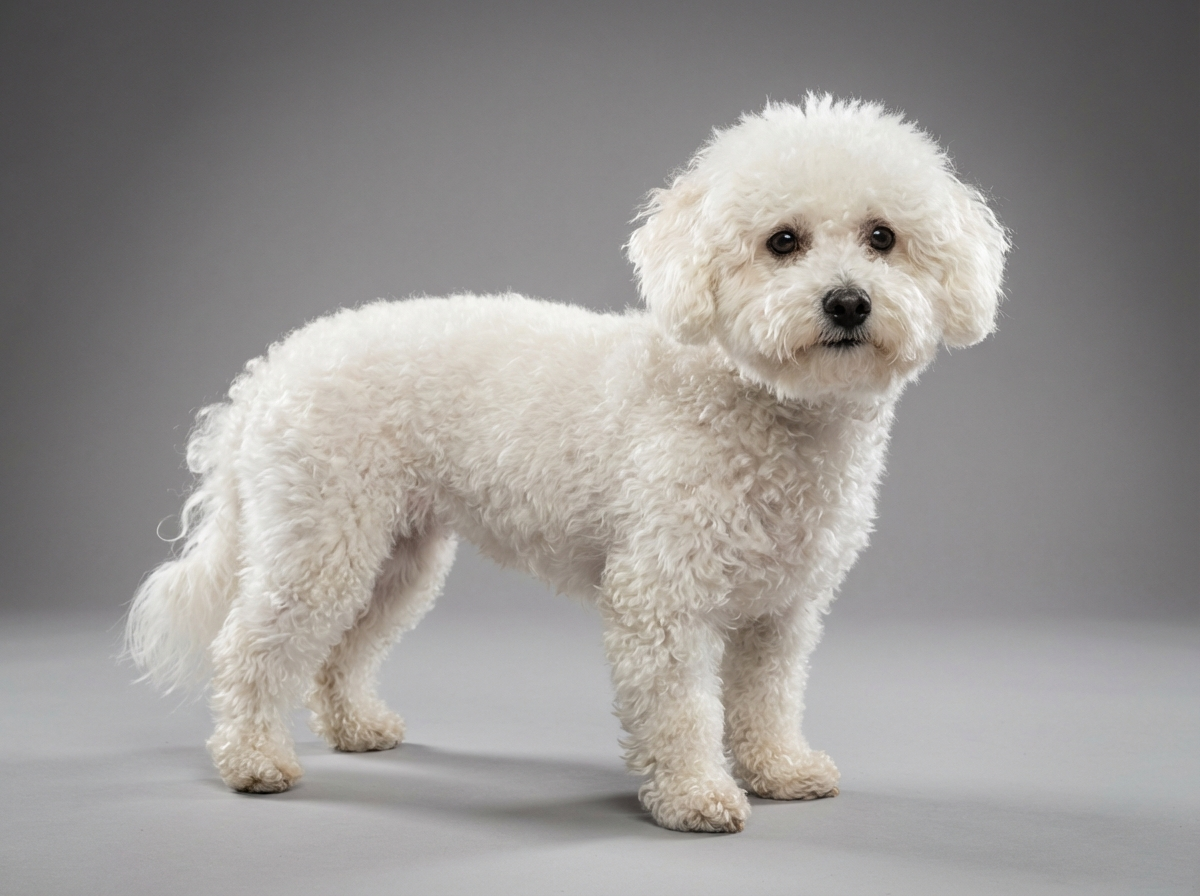
Health information here is general and is not veterinary advice. If your dog shows pain, sudden behaviour change, or worsening symptoms, consult a licensed veterinarian.
Some links on this site are affiliate links. We may earn a commission at no extra cost to you, and we only suggest products we believe are helpful for dog owners.
We research and check what we publish, but we do not warrant that any figure, date, price, or statement is accurate, complete, or current, and we accept no liability for any loss, cost, injury, or other harm arising from the use of this site. Use it as one reference among several. You remain responsible for your own decisions and for your dog's care - confirm anything that matters with a licensed veterinarian or another qualified professional before you act on it. Full disclaimer.
Match your lifestyle to the right dog.
Take quizNot sure which breed is right for you? Take our 2-minute quiz to find out.
Take the quiz