Health
How do I tell a seizure from a faint?
Seizures involve loss of awareness with jerking and a confused recovery. Faints are limp, brief, and followed by immediate normality.

Quick answer
How do I tell a seizure from a faint?
Seizures involve loss of awareness with jerking and a confused recovery. Faints are limp, brief, and followed by immediate normality.
Vets do not start with a diagnosis. They start with a location, because the same sign means completely different things depending on whether it comes from the brain, the spinal cord or a nerve.
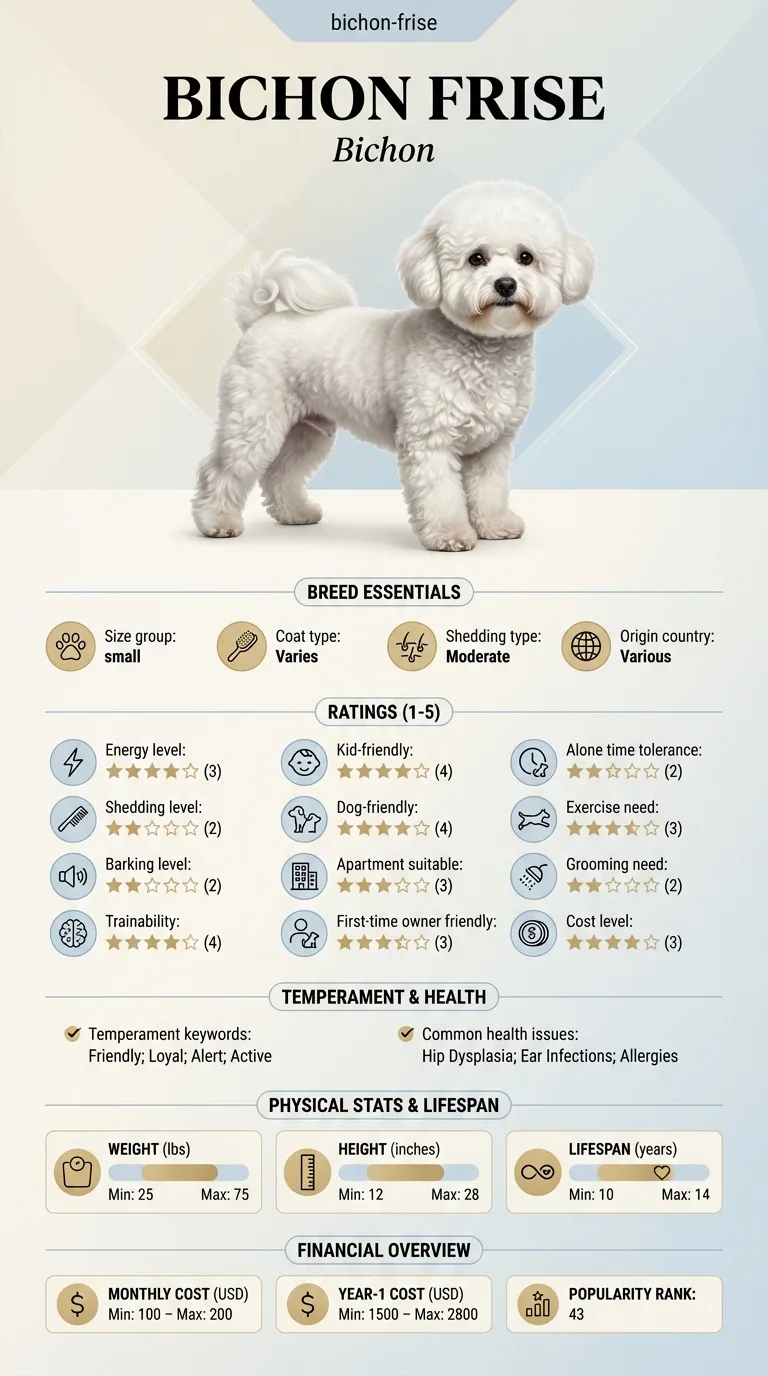
Owners who have witnessed something alarming and cannot tell whether it was a seizure, a faint or a fall, and owners of senior Bichons showing confusion who are trying to distinguish cognitive ageing from disease.
This guide is not medical advice. If your dog shows pain, sudden behavior change, or worsening symptoms, consult a licensed veterinarian.
Some links may be affiliate links. We may earn a commission at no extra cost to you. We only suggest products we believe are helpful for dog owners.
We research and check what we publish, but we do not warrant that any figure, date, price, or statement is accurate, complete, or current, and we accept no liability for any loss, cost, injury, or other harm arising from the use of this site. Use it as one reference among several. You remain responsible for your own decisions and for your dog's care - confirm anything that matters with a licensed veterinarian or another qualified professional before you act on it. Full disclaimer.
Neurologic disease is a category rather than a diagnosis, spanning seizures, balance disorders, spinal cord compression and nerve disease. What unites these presentations for an owner is that the signs are difficult to describe and easy to misclassify. The most valuable contribution an owner can make is an accurate account, ideally filmed, of what the episode actually looked like and what the dog was doing beforehand.
Neurological presentations make up a modest share of general practice cases but a large share of referrals, because they so often require advanced imaging to resolve. The Bichon Frise has no documented neurological predisposition. Its relevance to this breed comes from longevity: a dog that reaches 14 or 15 is far more likely to encounter age-associated cognitive and vestibular changes than one that does not.
There is no established Bichon neurological trait, and it would be misleading to construct one from a risk percentage of unclear origin. What the breed contributes is a long life. A documented lifespan of 14 to 15 years puts many Bichons into the age band where brain ageing, vestibular episodes and tumours become realistic possibilities. Small body size is a second, indirect factor, since a 12 to 18 pound dog reaches a toxic dose of an ingested substance from a much smaller quantity than a large dog would.
Access to toxins is the most preventable environmental cause of acute neurological signs in small dogs, and household items are the usual culprits. Falls from furniture and stairs account for a share of spinal injuries. For older dogs, an unchanging home layout, adequate lighting and predictable routine genuinely reduce the confusion associated with cognitive decline, whereas house moves and rearranged furniture tend to unmask it.
Go immediately for a seizure lasting more than about five minutes, repeated seizures without full recovery between them, sudden inability to walk or stand, sudden loss of vision, unresponsiveness, or any neurological sign following possible poisoning. Sudden head tilt with severe unsteadiness also warrants same-day assessment. Book within a few days for a single brief seizure with normal recovery, gradual behaviour change, night-time restlessness in a senior dog, or a mild persistent wobble. Bring your video and your notes.
See all Bichon Frise health problems, which breeds are prone to neurologic disease, or the full Bichon Frise breed guide for temperament, exercise needs and ownership costs.
Localisation happens in one appointment. Getting to a specific diagnosis can take weeks if referral and imaging are involved. Vestibular episodes often improve markedly within one to two weeks. Seizure control typically takes one to three months of dose adjustment before a stable pattern emerges.
For episodic conditions, success is a longer gap between events and a dog that is normal in between. For cognitive change, it is a settled night and a dog that still recognises its routine. For spinal problems, it is walking unaided. In every case it starts with knowing what you are actually dealing with.
Grouping what you have seen into one of these categories is genuinely useful information to bring to an appointment.
These three are confused constantly and the distinction shapes the entire investigation, so it is worth knowing what separates them.
A seizure typically involves loss of awareness with rhythmic paddling or jerking, often salivation, and sometimes urination or defecation. The recovery is the giveaway: dogs are usually disoriented, wobbly or ravenously hungry for minutes to hours afterwards. Many seizures happen during rest or sleep.
A faint, or syncope, is abrupt. The dog goes limp rather than rigid, there is little or no paddling, and recovery is quick and complete within seconds. It is far more likely to happen during exertion or excitement, and it usually points at the heart or circulation rather than the brain.
A collapse from weakness looks different again: the dog is aware throughout, simply unable to hold itself up.
If you take one practical thing from this page, make it this: film it. A short clip from a phone answers questions that fifteen minutes of description cannot, and it often determines whether the next test is an ECG or a brain scan.

If you think your Bichon has neurologic disease, the plan is three steps: write down what you have seen and when it started, book a veterinary appointment rather than waiting for the next flare, and take video of the behaviour or symptom before you go — the thing you are worried about rarely happens in the consulting room. Screening in the parents covers skin allergies, patellar luxation, bladder stones.
What the vet visit should produce is a diagnosis and a written plan, not just reassurance: what is being ruled out, what the monitoring interval is, and which signs mean you come back sooner. Ask what the treatment costs across a year rather than per visit, because that is the number that decides whether you are managing this condition or reacting to it.
Between appointments, keep a short log — dates, what you saw, what changed. It is the single most useful thing an owner brings to a follow-up, and for neurologic disease it is often what separates a clear pattern from a guess.
Marcus, thirteen, had three episodes over a fortnight where he went down and lay still for several seconds. His owner Lena described them as seizures and the practice began planning a neurological work-up. On the fourth occasion she caught eleven seconds on her phone. Marcus went limp rather than rigid, there was no paddling, and he stood up and walked off within about six seconds looking entirely normal. The vet watching that clip changed direction immediately. An ECG and a wearable monitor found a rhythm abnormality, and Marcus was referred to cardiology rather than neurology. The episodes stopped once his rhythm was treated.
Key takeaway: What an episode looks like matters more than what it is called. Eleven seconds of video moved the investigation from the brain to the heart and saved a great deal of time and money.
Neurological conditions are not among the breed's documented concerns, which are skin allergies, patellar luxation, bladder stones, cataracts and dental disease. Figures circulating online that assign large risk multipliers to breeds are usually drawn from populations and comparisons that do not apply to a Bichon.
Canine cognitive change is real and becomes more likely with age, which matters in a breed living 14 to 15 years. Typical signs are night-time restlessness, staring at walls, getting stuck in corners and altered social behaviour. It should still be investigated rather than assumed, since several treatable conditions look identical.
A common cause in older dogs is a vestibular episode that comes on abruptly with head tilt, unsteadiness and flicking eyes. Many improve substantially over one to two weeks. It nonetheless needs veterinary assessment, because more serious causes produce an identical initial picture.
A single seizure lasting under a couple of minutes with normal recovery needs prompt veterinary attention but is not usually a same-hour emergency. Seizures lasting more than about five minutes, or repeated seizures without full recovery in between, are genuine emergencies.
Usually a neurological examination first, then blood and urine testing to exclude metabolic causes, then advanced imaging such as MRI and sometimes analysis of spinal fluid. The examination narrows the location and determines whether the more expensive steps are needed at all.
Many can be managed effectively. Seizure disorders are commonly controlled with medication for years, vestibular episodes often resolve largely on their own, and some spinal problems are surgically correctable. Others are progressive, and honest prognosis discussion is part of the process.
Seizures involve loss of awareness with jerking and a confused recovery. Faints are limp, brief, and followed by immediate normality.
Move furniture away, do not put hands near the mouth, dim the room, note the time, and film if you safely can.
Advanced imaging with anaesthesia at a referral centre is one of the larger diagnostic costs owners encounter.
Discuss it with your vet. Remove hazards such as stairs and pools, and consider a camera. This breed tolerates being alone poorly anyway.
Not necessarily. Pain, vision loss, hearing loss and metabolic disease all produce similar behaviour and are treatable.
A one-page prep sheet for this condition: the signs, the questions to ask, what to get priced. Unlocks here.
You get: Vet visit prep sheet
No spam. One-click unsubscribe. See our privacy policy.
Preview page 1 before you decide.

