Health
What are quick tips for Schnauzer (Standard) neurologic disease?
Focus on regular vet check-ups, a balanced diet, and consistent exercise to support your Schnauzer's health. Early detection of any symptoms is key to managing potential issues.

Quick answer
What are quick tips for Schnauzer (Standard) neurologic disease?
Focus on regular vet check-ups, a balanced diet, and consistent exercise to support your Schnauzer's health. Early detection of any symptoms is key to managing potential issues.
Schnauzer (Standard) neurologic disease is a serious condition that can affect your dog's quality of life. Understanding this issue is crucial for responsible pet ownership.
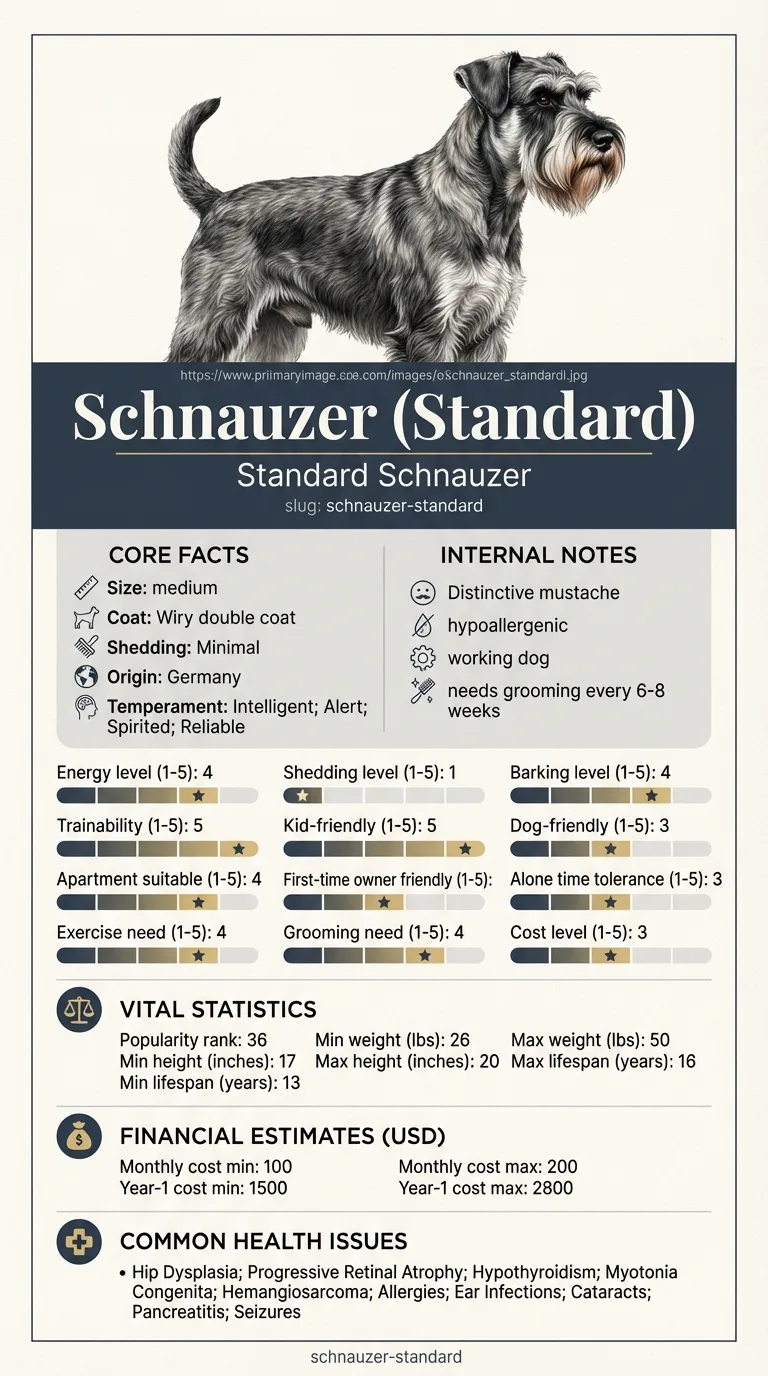
Owners of Schnauzer (Standards) often face challenges when their beloved pet shows unusual behavior or physical symptoms. This can be particularly concerning for first-time dog owners or busy families who might overlook subtle signs.
This guide is not medical advice. If your dog shows pain, sudden behavior change, or worsening symptoms, consult a licensed veterinarian.
Some links may be affiliate links. We may earn a commission at no extra cost to you. We only suggest products we believe are helpful for dog owners.
We research and check what we publish, but we do not warrant that any figure, date, price, or statement is accurate, complete, or current, and we accept no liability for any loss, cost, injury, or other harm arising from the use of this site. Use it as one reference among several. You remain responsible for your own decisions and for your dog's care - confirm anything that matters with a licensed veterinarian or another qualified professional before you act on it. Full disclaimer.
Check this first
It's crucial to recognize when Schnauzer (Standard) neurologic disease symptoms warrant immediate veterinary attention. If your Schnauzer shows signs like sudden loss of coordination, seizures, or extreme lethargy, these are red flags. Call your vet right away in these cases, as they may indicate a serious condition that requires prompt treatment.
If any of these apply, call your vet or an emergency clinic now. The rest of this page is for the cases that are not an emergency.
Schnauzer (Standard) neurologic disease can manifest as abnormal movements, seizures, or coordination issues. These symptoms can be distressing for both the dog and owner. Such conditions often stem from genetic predispositions, making awareness crucial for early intervention.
Neurologic diseases are relatively common in Schnauzers (Standard), with studies indicating they face a 291% higher risk than some other breeds. Regular veterinary check-ups can help catch these issues early.
Schnauzer (Standard) neurologic disease can stem from genetic predispositions. This breed may inherit conditions that affect their nervous system, making them more vulnerable to disorders. Certain health issues, like myotonia congenita, are more common in this breed and can lead to neurologic symptoms.
Environmental factors can also play a role. Stressful situations, lack of mental stimulation, or inadequate exercise can exacerbate neurologic issues. Additionally, exposure to toxins or injuries can contribute to the development of neurologic diseases in Schnauzers.
It's crucial to consult a vet if you notice any sudden changes in behavior, mobility issues, or signs of pain. Early intervention can make a significant difference in managing neurologic conditions.
Avoiding these common mistakes can help manage your Schnauzer (Standard)'s neurologic disease more effectively.
Start here: Standard Schnauzer Most Common Genetic Disorders: Screening
See all Schnauzer Standard health problems, which breeds are prone to neurologic disease, or the full Schnauzer Standard breed guide for temperament, exercise needs and ownership costs.
If you start care right away, you may see improvements in your Schnauzer's behavior within a few weeks. However, addressing neurologic disease is an ongoing process that might take several months to fully manage.
Success means your Schnauzer shows reduced symptoms, improved behavior, and a better quality of life. You'll notice them being more active, responsive to commands, and less anxious overall.
On the other hand, if your Schnauzer exhibits mild symptoms such as slight disorientation, occasional unsteady movements, or temporary changes in behavior, you may not need to rush to the vet immediately. Instead, monitor these behaviors closely and keep track of any changes over a few days. If symptoms worsen or persist, it's time to consult your vet for further evaluation.

Jessica, a busy nurse, adopted Max, a Standard Schnauzer, who was diagnosed with a neurologic disease. At first, Max struggled with anxiety and frequent seizures, making life challenging. After consulting a vet and enrolling in a specialized training program, Jessica learned how to create a calm environment and manage Max's needs. With consistent training and care, Max began to respond better, showing fewer symptoms and enjoying daily walks in the park.
Key takeaway: With the right support and training, managing a Schnauzer's neurologic disease can lead to significant improvements in their well-being and your relationship with them.
Schnauzers (Standard) may develop neurologic diseases due to genetic predispositions or underlying health issues. Factors like age, previous injuries, and certain health conditions can contribute to this risk. Regular vet check-ups are crucial in identifying any early signs.
While you can't always prevent neurologic diseases, maintaining a healthy diet and regular exercise can strengthen your dog's overall well-being. Early detection through vet visits can also help manage any emerging issues. Consider discussing preventive care and genetic testing with your veterinarian.
Signs of neurologic disease may include unsteady walking, seizures, or changes in behavior. Watch for signs like excessive barking, confusion, or difficulty in coordination. If you notice any of these symptoms, consult your vet promptly.
Treatment for neurologic disease varies based on the specific condition and severity. Options may include medication, physical therapy, or changes in diet. Always work closely with your vet to determine the best approach for your Schnauzer.
Yes, some neurologic diseases in Schnauzers (Standard) have a genetic basis. Breeders should conduct health screenings to reduce the risk of passing on genetic disorders. Researching a breeder's practices can help you find a healthier puppy.
As Schnauzers (Standard) age, they become more susceptible to neurologic diseases. Regular vet visits become increasingly important to monitor their health and catch any changes early. Older dogs may require different care strategies to manage their health effectively.
Early signs of neurologic disease in a Schnauzer (Standard) can include unusual behavior, difficulty in coordination, and changes in gait. You may also notice tremors or seizures. If you observe these symptoms, it's essential to consult a vet promptly.
For older Schnauzers (Standard) with neurologic issues, providing a stable environment is key. Regular vet check-ups and a consistent routine can help manage their condition. Consider gentle exercises to maintain mobility and mental stimulation to keep them engaged.
Yes, diet can play a role in your Schnauzer's neurologic health. A balanced diet rich in omega-3 fatty acids may support brain function. Always consult with your vet about the best dietary options for your dog's specific needs.
You should take your Schnauzer (Standard) to the vet if you notice persistent symptoms such as seizures, behavioral changes, or coordination issues. Early intervention can make a significant difference in managing neurologic diseases effectively.
Yes, gentle and positive reinforcement training methods can help Schnauzers (Standard) with neurologic disease. Focus on simple commands and short training sessions to avoid overwhelming them. Consistency and patience are key to making progress.
Focus on regular vet check-ups, a balanced diet, and consistent exercise to support your Schnauzer's health. Early detection of any symptoms is key to managing potential issues.
Use positive reinforcement techniques to encourage desired behaviors. Keep training sessions short and engaging to prevent frustration and fatigue.
A diet rich in omega-3 fatty acids and antioxidants can be beneficial for brain health. Consult your vet for specific dietary recommendations tailored to your Schnauzer's needs.
Yes, provide a safe environment to prevent injuries and monitor their activities closely. Adapt their exercise routine to match their abilities and comfort level.
A one-page prep sheet for this condition: the signs, the questions to ask, what to get priced. Unlocks here.
You get: Vet visit prep sheet
No spam. One-click unsubscribe. See our privacy policy.
Preview page 1 before you decide.