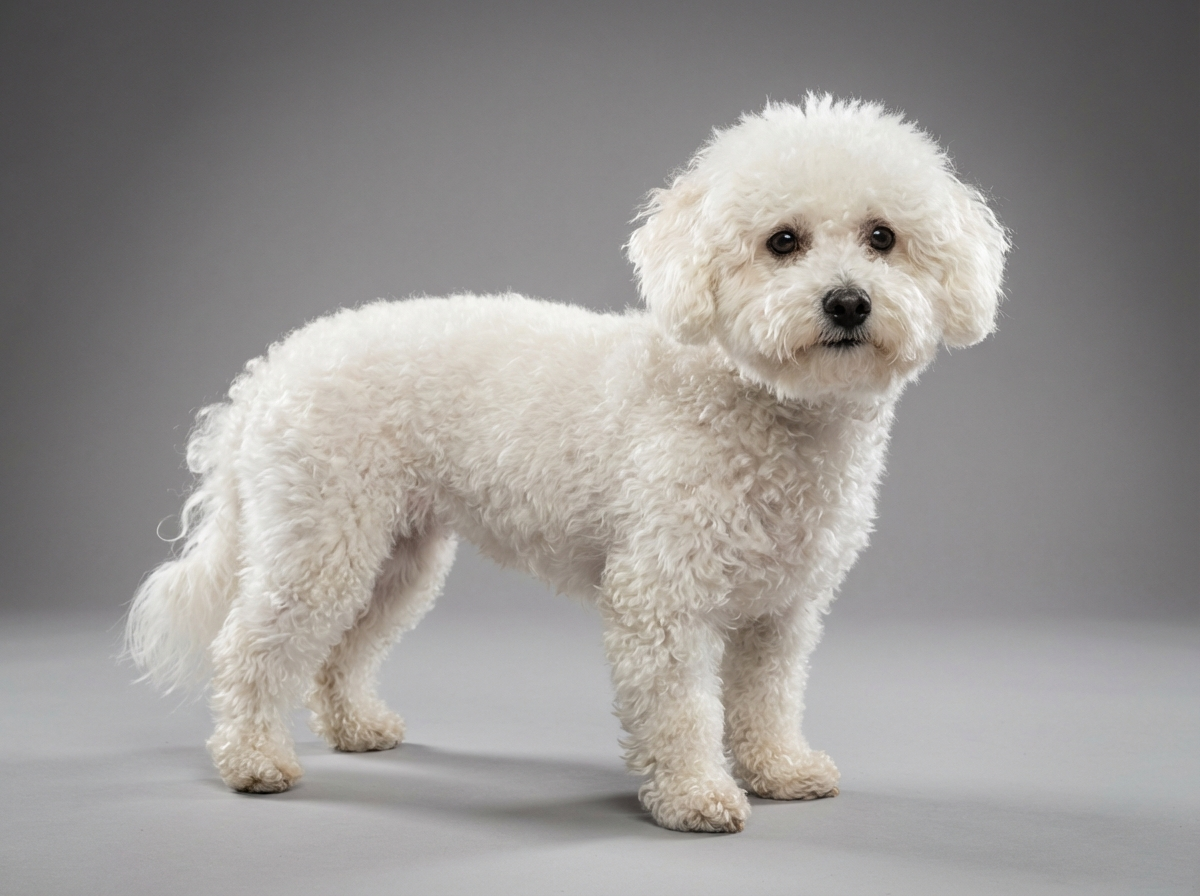
Living
What is the best summer clip for a Bichon Frise?
A short puppy clip of roughly half an inch balances cooling with sun protection and cuts brushing time dramatically.

Quick answer
What is the best summer clip for a Bichon Frise?
A short puppy clip of roughly half an inch balances cooling with sun protection and cuts brushing time dramatically.
A Bichon does not shed its way into summer. Whatever coat it is carrying in August is the coat you and your groomer decided on, and that decision has real consequences on a humid afternoon.
Owners heading into their first hot season with a Bichon, people arguing with a groomer about clip length, and anyone whose dog flops onto tile floors and refuses walks the moment temperatures climb.
This guide is not medical advice. If your dog shows pain, sudden behavior change, or worsening symptoms, consult a licensed veterinarian.
Some links may be affiliate links. We may earn a commission at no extra cost to you. We only suggest products we believe are helpful for dog owners.
We research and check what we publish, but we do not warrant that any figure, date, price, or statement is accurate, complete, or current, and we accept no liability for any loss, cost, injury, or other harm arising from the use of this site. Use it as one reference among several. You remain responsible for your own decisions and for your dog's care - confirm anything that matters with a licensed veterinarian or another qualified professional before you act on it. Full disclaimer.
Heat sensitivity in this breed is a manageable grooming and scheduling issue rather than a structural flaw. A Bichon breathes through a normal-length muzzle and pants efficiently, so its difficulty in hot weather comes from insulation it cannot shed. Owners who treat the coat as seasonal equipment, and who move activity out of the middle of the day, find summer mostly uneventful.
Nearly every Bichon owner notices some reduction in enthusiasm during hot months, and that mild version is normal rather than a problem. Genuine heat distress is uncommon in well-groomed dogs with sensible routines, and it clusters heavily in the situations that would endanger any breed, particularly enclosed vehicles.
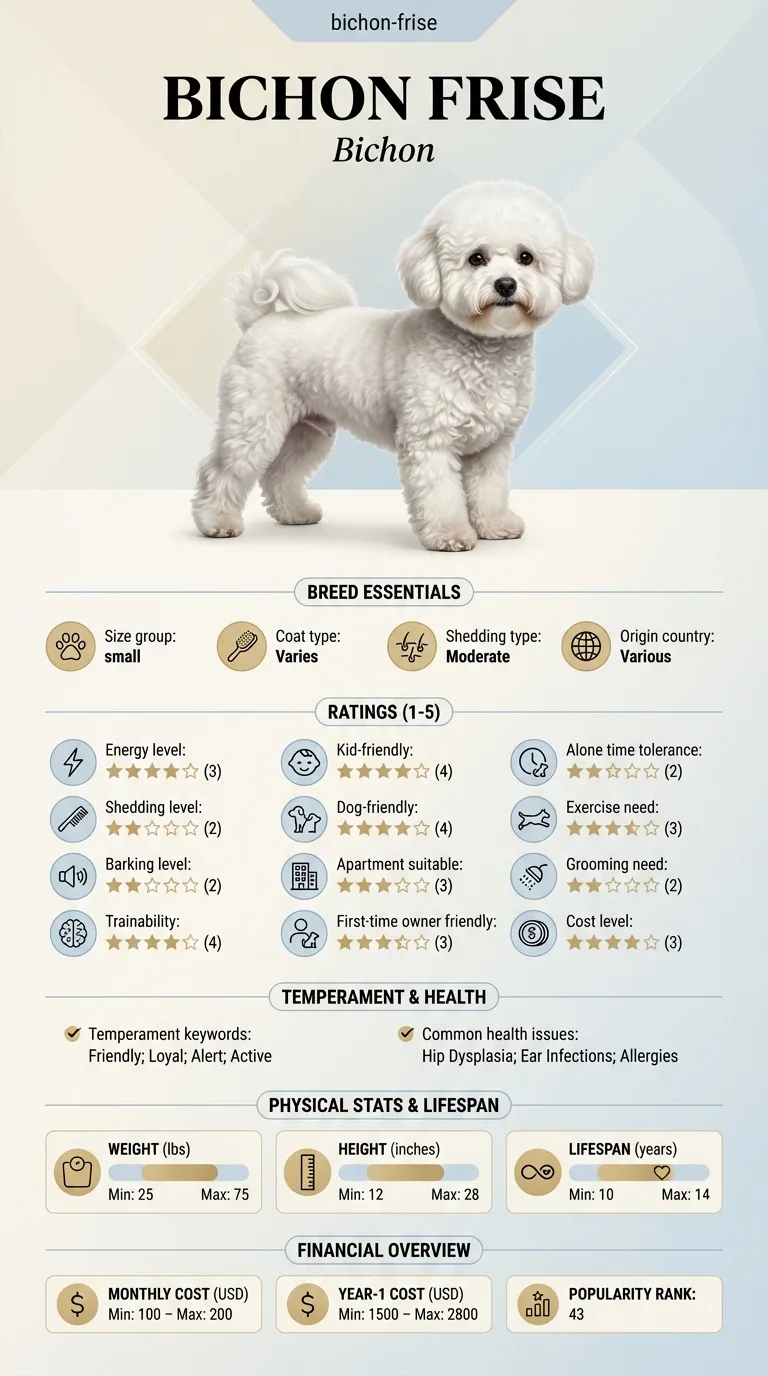
Two traits combine. The coat is a curly dense double coat with a very low shedding rate, so seasonal thinning that helps other dogs simply does not happen here. Body size is the second factor: at 12 to 18 pounds the dog has a relatively large surface area for its mass, which normally aids cooling, but the benefit is cancelled out when that surface is buried under trapped air. Grooming need for this breed is rated at the top of the scale, and heat is one of the reasons why.
Humidity is the environmental variable that matters most, because panting cools through evaporation and evaporation stalls in damp air. Still air is next: a shaded garden with no breeze can be worse than a sunny one with wind. Indoors, the risk points are rooms that heat up while the family is out, sun-facing conservatories, and cars, where interior temperature climbs faster than most owners expect even with windows cracked.
Heavy panting that does not settle within about ten minutes of rest in a cool place, bright red or very pale gums, vomiting, unsteadiness, or a dog that seems dull and disoriented after time in the heat all need veterinary attention the same day. Collapse or seizure activity after heat exposure is an emergency: begin cooling with tepid water and airflow and travel to a clinic immediately. Also worth a routine appointment if your dog's heat tolerance has clearly worsened year on year, since that can reflect weight gain, an airway change or an underlying condition rather than the weather.
See all Bichon Frise health problems, which breeds are prone to heat sensitivity, or the full Bichon Frise breed guide for temperament, exercise needs and ownership costs.
A clip changes things immediately; you will see the difference on the first walk. Retraining a dog to accept full-body grooming takes four to eight weeks of short daily sessions. Rebuilding a coat that has been shaved too close can take several months, which is why the decision is worth getting right the first time.
Your Bichon still wants its morning walk in July, settles calmly indoors during the hot hours, has a coat you can run a comb through to the skin anywhere on the body, and gets through the season without a single skin flare-up under a mat.
A Bichon has a soft undercoat beneath a coarser curly outer coat, and the two together trap a layer of still air against the skin. Still air is excellent insulation, which is why the coat works so well in cold weather and works against the dog in hot weather.
Because shedding is very low, that trapped layer does not thin out seasonally the way it does in a shedding breed. The undercoat instead stays in place, and if brushing is skipped it begins to felt into a mat. A matted coat is the worst-case version of this: it stops air moving entirely, holds moisture against the skin after a bath or a wet walk, and creates warm damp pockets where skin problems start.
Dogs cool mainly by panting, not through the skin, so the coat is not blocking sweat. What it blocks is convection: the movement of cooler air past a warm body. That is why a fan pointed at a well-brushed Bichon helps noticeably and a fan pointed at a matted one does very little.
The practical upshot is that grooming is heat management, not vanity. This breed sits at the top of the grooming-need scale for a reason, and summer is when skipping it costs the dog most.

There is no single correct summer clip. Each option trades cooling against sun protection and coat quality, and the right answer depends on your climate and your brushing habits.
Ruby had been kept in a full trim because her owner Elena loved the classic look. Each July, Ruby would plant herself at the front door and refuse to move past the driveway, and Elena assumed she was being stubborn. Her groomer found dense felted undercoat along Ruby's flanks and behind both ears, invisible under the styled surface. They agreed on a half-inch clip and a comb-through every evening while watching television. Within a week Ruby was walking the full loop again, though still only at seven in the morning. Elena went back to the longer trim in October and now books the short clip every May without discussion.
Key takeaway: A Bichon that refuses summer walks is usually reporting a coat problem rather than a temperament problem. Check what is under the styling before deciding the dog is being difficult.
A short clip usually helps; shaving to the skin usually does not. The coat provides genuine sun protection over pale skin, and taking it off entirely trades one problem for sunburn. A half-inch clip with regular brushing gives most of the cooling benefit without the downside.
Rather than fixing a number, judge the surface and the humidity. Press the back of your hand to the pavement for seven seconds; if you cannot hold it there, it is too hot for paws. High humidity matters more than the thermometer because panting relies on evaporation.
Usually because the dog has learned that the walk is uncomfortable. A breed with a modest exercise requirement has little motivation to push through heat. Shift the same route to early morning and most Bichons resume happily.
Yes, substantially. Mats compress the coat into a solid barrier that stops air moving and traps moisture against skin. In a breed already prone to skin allergies, a hot damp matted patch is how a routine summer turns into a course of medicated washes.
Its risk comes from coat density rather than from face shape. Unlike flat-faced breeds, a Bichon has a normal muzzle and a functional airway, so it pants efficiently. The insulation is the limiting factor, and that is something grooming can actually change.
Daily is ideal, and every other day is the realistic floor. Work in sections down to the skin rather than skimming the surface, because surface brushing leaves the undercoat felting quietly underneath a coat that looks fine.
The early signs are set out in the sections above, and they are the reason to book a veterinary appointment rather than wait. Heat Sensitivity in Bichons is diagnosed by a vet, not from a symptom list, and the sooner it is on record the more options remain open.
A short puppy clip of roughly half an inch balances cooling with sun protection and cuts brushing time dramatically.
Modestly. They help more once the coat is short enough for the dog's skin to be near the surface it is lying on.
Expect a groom every four to six weeks, and more frequently if you keep a full coat. It is a recurring line in this breed's budget.
Yes, with a short clip, air conditioning, and walks moved to dawn and dusk. Many do perfectly well in warm regions.
Short daily sessions with food, starting on easy areas. A dog that dreads the brush ends up matted, which is the real heat risk.
A one-page prep sheet for this condition: the signs, the questions to ask, what to get priced. Unlocks here.
You get: Vet visit prep sheet
No spam. One-click unsubscribe. See our privacy policy.
Preview page 1 before you decide.