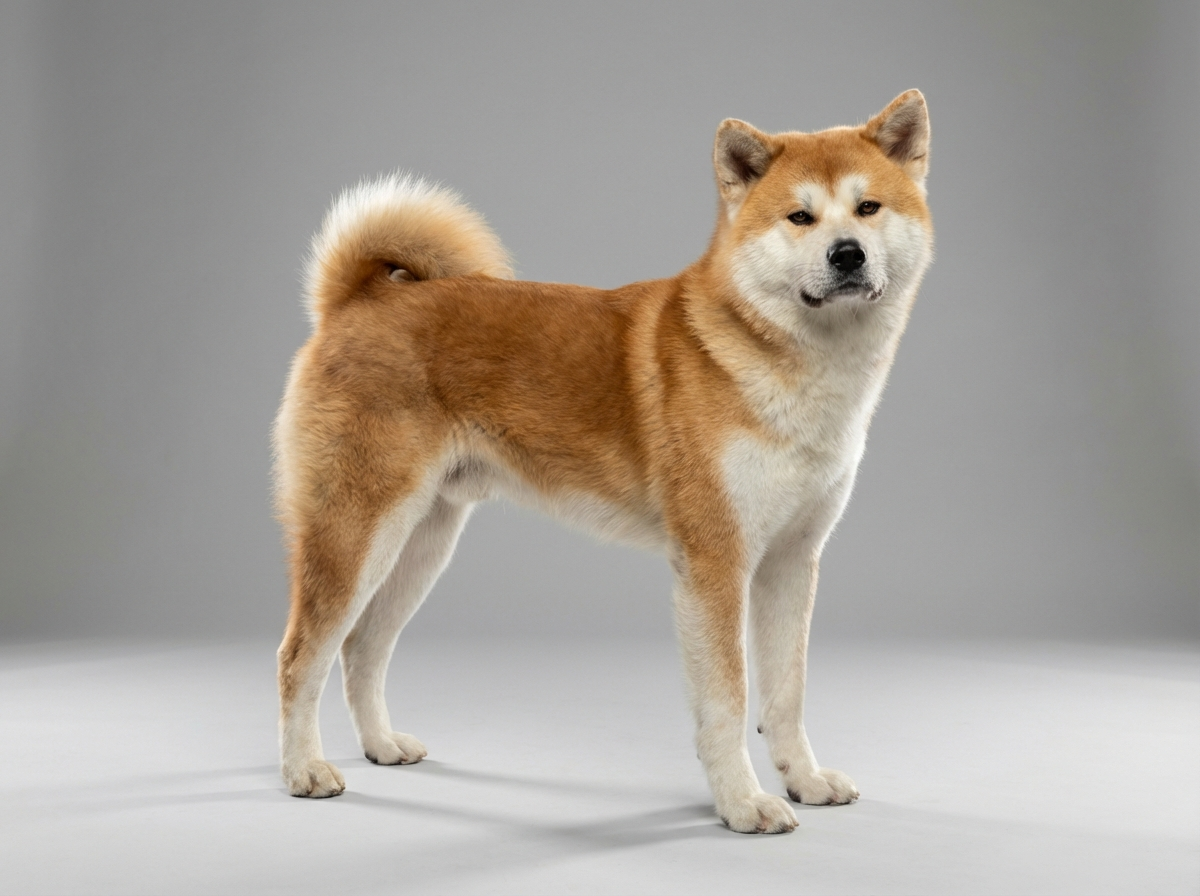
Health
Why is the Akita heat sensitive?
Its dense double coat was developed for cold climates and dissipates heat poorly.

Quick answer
Why is the Akita heat sensitive?
Its dense double coat was developed for cold climates and dissipates heat poorly.
A coat designed to keep a dog warm through mountain winters in northern Japan works against it the moment summer temperatures climb.
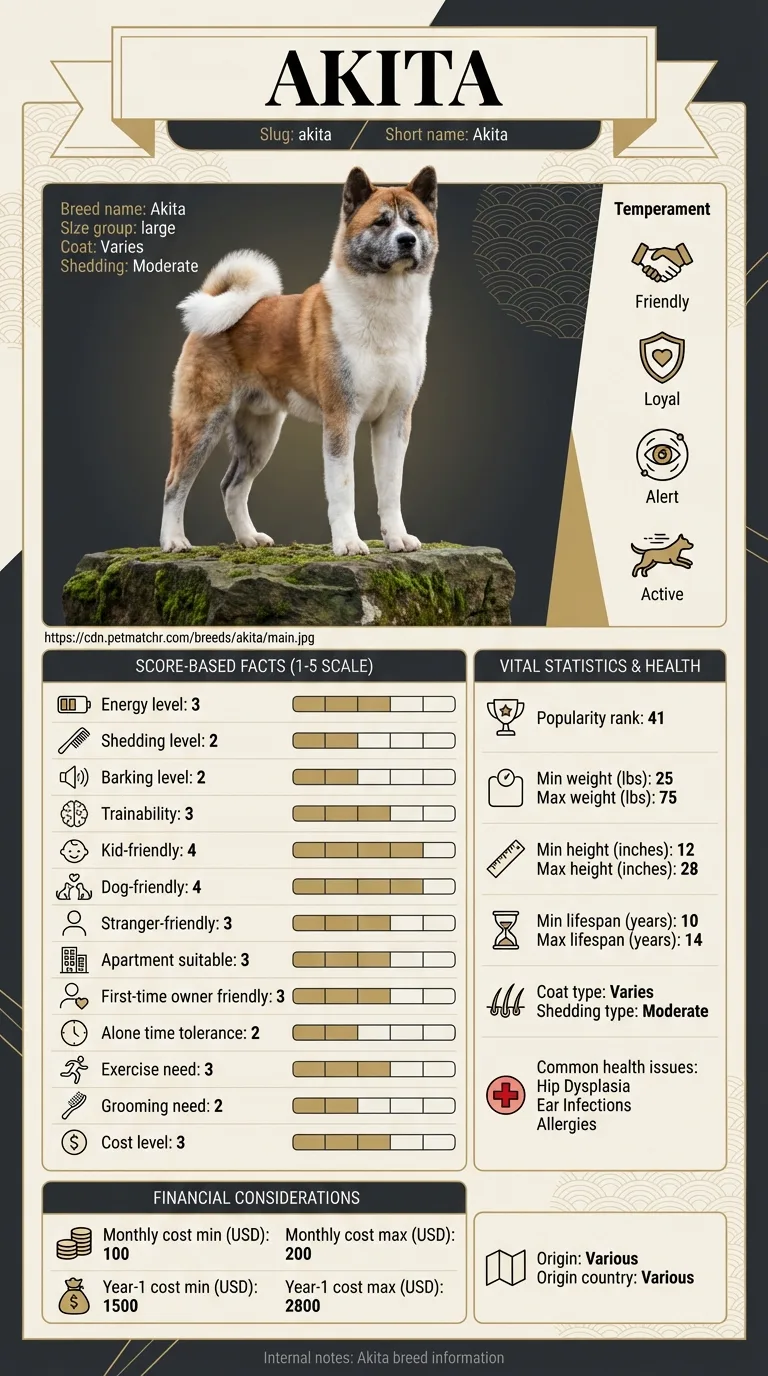
Owners in warm or humid climates, and any Akita owner during summer months regardless of location, are the ones who need to actively manage this trait.
This guide is not medical advice. If your dog shows pain, sudden behavior change, or worsening symptoms, consult a licensed veterinarian.
Some links may be affiliate links. We may earn a commission at no extra cost to you. We only suggest products we believe are helpful for dog owners.
We research and check what we publish, but we do not warrant that any figure, date, price, or statement is accurate, complete, or current, and we accept no liability for any loss, cost, injury, or other harm arising from the use of this site. Use it as one reference among several. You remain responsible for your own decisions and for your dog's care - confirm anything that matters with a licensed veterinarian or another qualified professional before you act on it. Full disclaimer.
Check this first
Collapse, disorientation, vomiting, extremely rapid or labored breathing, or bright red or blue-tinged gums in warm weather are signs of heatstroke and need immediate emergency veterinary care. Begin cooling your dog (move to shade or air conditioning, apply cool but not ice-cold water to the body, offer small amounts of water) while arranging immediate transport to a vet.
Heavy panting that eases within 10 to 15 minutes of rest, shade, and water is the normal cooling process and not cause for alarm on its own. Panting that doesn't ease, or that's accompanied by any of the more severe signs above, should be treated as an emergency.
Given how quickly heatstroke can progress in this heavily coated breed, when in doubt during hot weather, err on the side of immediate cooling and veterinary evaluation rather than waiting to see if symptoms resolve.
If any of these apply, call your vet or an emergency clinic now. The rest of this page is for the cases that are not an emergency.
Heat sensitivity is a genuine, well-understood trait of the Akita rooted in its dense double coat, developed for the cold, snowy climate of its native region. This isn't a minor quirk — it's an ongoing, real management consideration that shapes how owners should approach exercise timing, grooming, and outdoor access, especially in warm climates or during summer months.
Heat sensitivity is a universal trait of the breed rather than something that affects only some individuals — every Akita carries the same dense double coat that creates this vulnerability, making it a standard part of responsible care for the breed rather than an occasional concern.
The Akita's dense double coat, consisting of a coarse outer layer and a soft, thick undercoat, was shaped by the breed's origins in the mountainous, snowy Akita Prefecture of northern Japan. This coat excels at retaining body heat in cold conditions but is correspondingly poor at releasing it, which is the direct, well-understood mechanism behind this breed's heat sensitivity.
Ambient temperature and humidity are the dominant environmental factors, with humidity in particular reducing the effectiveness of panting as a cooling mechanism. Direct sun exposure, confinement in vehicles, and exercise timing all compound or mitigate this baseline coat-driven vulnerability.
Seek emergency care for collapse, disorientation, vomiting, or labored breathing in warm weather. Schedule a routine visit if you notice reduced heat tolerance that seems to be worsening or occurring even with reasonable precautions in place.
A few common habits make warm weather considerably harder on this breed than it needs to be. Avoid these.
See all Akita health problems, which breeds are prone to heat sensitivity, or the full Akita breed guide for temperament, exercise needs and ownership costs.
Managing heat sensitivity is an ongoing, seasonal commitment rather than something with an end date — it requires consistent attention throughout every warm season of your dog's life.
Success is a dog that stays comfortable and safe through warm weather via consistent management: appropriately timed exercise, good coat maintenance, and reliable access to shade and water.
In her first summer owning an Akita, Faith struggled to understand why her dog, Boone, seemed so much more affected by the Sacramento heat than her friend's Labrador. After some research and a conversation with her vet, Faith learned about the Akita's cold-climate coat and how poorly it dissipates heat compared to breeds developed for warmer regions. Faith adjusted her entire summer routine: walks moved to early morning, she started brushing Boone several times a week, and she set up a shaded, water-accessible area in the yard for any outdoor time. Boone's comfort and energy during summer months improved noticeably once these changes were consistently in place.
Key takeaway: Understanding the specific, coat-driven mechanism behind Akita heat sensitivity makes it possible to manage proactively rather than being caught off guard each summer.
Their dense double coat was developed for the cold, snowy mountainous climate of northern Japan, and while it's excellent at retaining body heat, it correspondingly dissipates heat poorly, making warm weather genuinely more taxing for this breed than for a short, single-coated dog.
No — this is a common misconception. The double coat provides some insulation against heat as well as cold, and shaving can disrupt normal regrowth patterns and increase sunburn risk without meaningfully improving heat tolerance.
There's no single universal number, but high heat combined with humidity is the more dangerous combination than heat alone; adjusting exercise timing and intensity based on both factors together is more useful than a fixed temperature cutoff.
Regular brushing, several times a week during heavy shedding seasons, helps remove loose undercoat and improve airflow to the skin, supporting more effective heat dissipation.
Only with reliable, continuous access to shade and water — extended unsupervised time outdoors in direct sun during hot weather carries real heatstroke risk for this breed.
Many owners find them a useful supplementary tool, particularly for outdoor time during hot weather, though they don't replace the fundamentals of shade, water, and appropriate exercise timing.
Yes — senior dogs and dogs with underlying health conditions like heart disease may have reduced heat tolerance on top of the breed's baseline sensitivity, warranting extra caution during warm weather.
Its dense double coat was developed for cold climates and dissipates heat poorly.
No — this is counterproductive and can disrupt coat regrowth without improving heat tolerance.
Early morning or evening, avoiding peak midday heat.
No — vehicle interiors heat up dangerously fast, especially risky for this breed's heat tolerance.
Yes — regular brushing to remove loose undercoat improves airflow and heat dissipation.
A one-page prep sheet for this condition: the signs, the questions to ask, what to get priced. Unlocks here.
You get: Vet visit prep sheet
No spam. One-click unsubscribe. See our privacy policy.
Preview page 1 before you decide.