Health
Is a sudden disc extrusion an emergency?
Yes, always — same-day veterinary care is essential, not a wait-and-see approach.

Quick answer
Is a sudden disc extrusion an emergency?
Yes, always — same-day veterinary care is essential, not a wait-and-see approach.
This page exists for one reason: to make sure you recognize this fast enough to act, because time genuinely determines the outcome here.
Owners whose dog suddenly yelped, went stiff, or stopped using its hind legs properly — often during or right after activity — and need to know what that means right now.
This guide is not medical advice. If your dog shows pain, sudden behavior change, or worsening symptoms, consult a licensed veterinarian.
Some links may be affiliate links. We may earn a commission at no extra cost to you. We only suggest products we believe are helpful for dog owners.
We research and check what we publish, but we do not warrant that any figure, date, price, or statement is accurate, complete, or current, and we accept no liability for any loss, cost, injury, or other harm arising from the use of this site. Use it as one reference among several. You remain responsible for your own decisions and for your dog's care - confirm anything that matters with a licensed veterinarian or another qualified professional before you act on it. Full disclaimer.
Type I intervertebral disc disease is a sudden, acute rupture of disc material that presses on the spinal cord all at once, causing sudden pain, wobbliness, or even hind-limb paralysis. Unlike gradual age-related disc wear, this is always an emergency, and how quickly a dog receives treatment meaningfully affects the odds of regaining normal function.
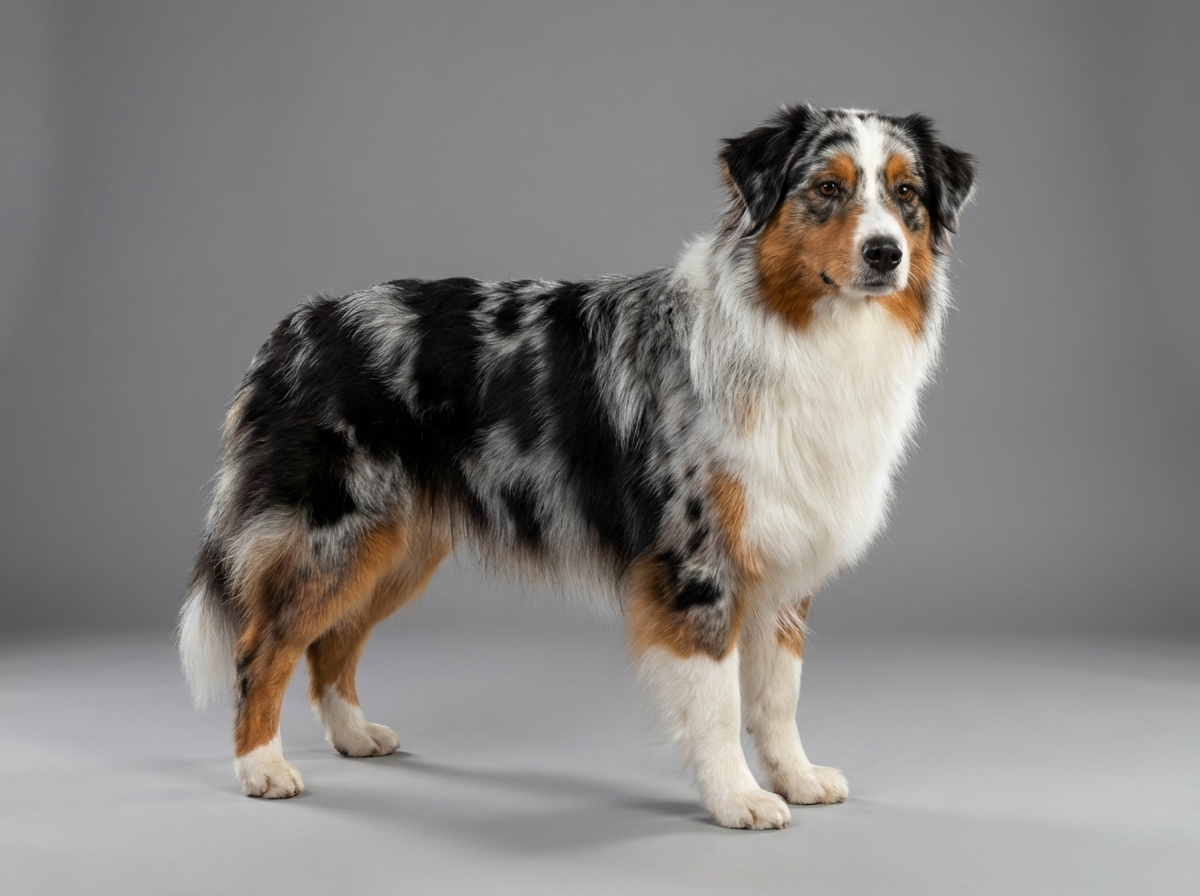
This isn't documented as an elevated risk for Australian Shepherds specifically, since they lack the conformation-driven risk seen in chondrodystrophic breeds, but acute disc extrusions can occur in any active breed and should always be treated as a real emergency when they do.
This breed's normal, proportionate build doesn't carry the conformation-linked risk seen in chondrodystrophic breeds, but its high activity level and frequent hard, athletic movement (jumping, sharp turns, herding work) does mean there's real mechanical opportunity for an acute injury to occur.
A hard fall, an awkward landing, a collision during play or work, or repeated high-impact activity over time can all directly trigger or contribute to a sudden disc rupture.
This is always a same-day emergency: a sudden yelp followed by reluctance to move, a rigid back, wobbly or dragging hind legs, knuckling of a paw, or any inability to stand needs immediate veterinary evaluation. Do not wait overnight or through a weekend to see if it improves.
See all Australian Shepherd health problems, which breeds are prone to intervertebral disc disease ivdd type i, or the full Australian Shepherd breed guide for temperament, exercise needs and ownership costs.
Emergency evaluation and imaging typically happen within hours of onset. If surgery is needed, recovery and rehabilitation can range from several weeks for milder cases to several months for more severe ones, with ongoing physical therapy often part of the plan.
For milder cases caught and treated quickly, success often means a full return to normal activity within weeks to a couple of months. For more severe cases, success is measured individually by a veterinary neurologist, ranging from full recovery to a managed, adapted quality of life.
A sudden Type I disc extrusion typically announces itself unmistakably: a yelp of pain during a jump, a twist, or sometimes for no obvious reason at all, followed by a dog that's reluctant to move, holds its back rigidly, or won't lower its head to eat or drink comfortably. In more severe cases, the hind legs are affected directly — wobbliness, dragging a paw, knuckling over onto the top of the foot instead of the pad, or a complete inability to stand.
The severity at onset genuinely varies, from a dog that's simply very sore and reluctant to move, to a dog with visible hind-limb weakness, to the most severe presentation where a dog can't move its hind legs or feel pain in them at all. Every point on that range needs the same response: same-day emergency veterinary evaluation, not a wait-and-see approach, because the degree of spinal cord compression can worsen quickly.
Unlike gradual disc wear, where waiting a few days to see if stiffness resolves is a reasonable approach, a sudden extrusion compressing the spinal cord can cause worsening damage the longer it goes untreated, particularly in more severe cases. Dogs that reach surgery quickly after losing deep pain sensation in the hind legs have meaningfully better odds of regaining function than dogs where treatment is delayed.
This is why the practical guidance here is simple and doesn't hedge: any sudden onset of back pain combined with any hind-limb weakness, wobbliness, or paralysis is a same-day emergency, full stop — not something to monitor overnight to see if it improves on its own.

Milo, a three-year-old Aussie, yelped sharply mid-play with another dog in the backyard, then stood frozen with his back arched. Within an hour, his owner noticed he was dragging his left hind paw slightly and seemed increasingly wobbly on that side. Rather than waiting to see if it passed, his owner drove straight to an emergency veterinary hospital. An exam and MRI confirmed a disc extrusion in his lower back, with mild-to-moderate spinal cord compression. Because Milo still had deep pain sensation and treatment began within hours, his surgeon was optimistic about his chances going into surgery. Milo underwent decompression surgery that same night and, after several weeks of strict rest followed by supervised rehabilitation, regained full use of his hind legs.
Key takeaway: The gap between 'wait and see' and 'go immediately' is exactly the gap that determined Milo's outcome — with this specific condition, speed isn't just helpful, it's often the single biggest factor in whether a dog walks normally again.
General disc wear builds gradually over weeks to months. A Type I extrusion happens suddenly — disc material ruptures out of position all at once and presses on the spinal cord, causing a sudden, often severe onset of pain or hind-limb dysfunction.
A sudden yelp followed by reluctance to move, a rigid or hunched back, wobbly or dragging hind legs, knuckling of a paw, or any inability to stand. All of these warrant same-day emergency care.
Yes — sometimes a disc ruptures during an ordinary movement like a jump or a twist that wouldn't normally cause any problem, without a dramatic fall or collision involved.
No — this should be treated as an emergency requiring same-day or immediate care, because the degree of spinal cord compression and resulting damage can worsen the longer it goes untreated.
Severity at presentation and how quickly treatment begins are the two biggest factors. Dogs still able to feel pain in the affected legs, and those treated quickly, generally have better odds than dogs with more severe, prolonged presentations.
Not always — very mild cases with pain but no neurological deficit are sometimes managed with strict rest and medical management, but any case with hind-limb weakness or paralysis typically needs urgent surgical evaluation to have the best chance at recovery.
This varies enormously by severity — some dogs recover full function within weeks, while more severe cases may need extended rehabilitation and, in some cases, don't fully regain normal function. A veterinary neurologist can give a realistic prognosis based on the specific case.
Yes, always — same-day veterinary care is essential, not a wait-and-see approach.
A sudden yelp, reluctance to move, a rigid back, wobbly or dragging hind legs, or an inability to stand.
Yes — it can occur during an ordinary jump or twist without any obvious accident.
Yes significantly — dogs treated quickly, especially before losing deep pain sensation, generally have better odds of regaining function.
Not for the mildest cases, but any hind-limb weakness or paralysis typically needs urgent surgical evaluation.
A one-page prep sheet for this condition: the signs, the questions to ask, what to get priced. Unlocks here.
You get: Vet visit prep sheet
No spam. One-click unsubscribe. See our privacy policy.
Preview page 1 before you decide.