Health
Is brachycephalic obstructive airway syndrome relevant to Australian Shepherds?
No, it's documented in flat-faced breeds like Bulldogs and Pugs, not established as occurring in Australian Shepherds.

Quick answer
Is brachycephalic obstructive airway syndrome relevant to Australian Shepherds?
No, it's documented in flat-faced breeds like Bulldogs and Pugs, not established as occurring in Australian Shepherds.
It's a real and sometimes serious condition, just not one that has anything to do with an Australian Shepherd's head shape.
This page is for owners who've read about brachycephalic breathing problems in general dog-health content and want to know whether it applies to their Aussie's occasional panting, snorting, or exercise huffing.
This guide is not medical advice. If your dog shows pain, sudden behavior change, or worsening symptoms, consult a licensed veterinarian.
Some links may be affiliate links. We may earn a commission at no extra cost to you. We only suggest products we believe are helpful for dog owners.
We research and check what we publish, but we do not warrant that any figure, date, price, or statement is accurate, complete, or current, and we accept no liability for any loss, cost, injury, or other harm arising from the use of this site. Use it as one reference among several. You remain responsible for your own decisions and for your dog's care - confirm anything that matters with a licensed veterinarian or another qualified professional before you act on it. Full disclaimer.
Brachycephalic features are a shortened-muzzle skull conformation well documented in breeds like Bulldogs, Pugs, and Boston Terriers, and this conformation is not present in Australian Shepherds. Any breathing changes, panting, or exercise fatigue in an Aussie should be evaluated as their own issue, not assumed to be related to brachycephalic airway obstruction.
Brachycephalic obstructive airway syndrome is common within the specific flat-faced breeds where it's documented, but it is not recognized as occurring in Australian Shepherds at any rate, making it essentially irrelevant to this breed's actual health picture.
Brachycephalic obstructive airway syndrome traces to specific skull-shortening genetics selected for in breeds like Bulldogs and Pugs, producing the compressed nasal passages and elongated soft palate that restrict airflow. The Australian Shepherd's breed standard calls for a muzzle roughly equal in length to the back skull, a mesocephalic proportion with no genetic link to the brachycephalic conformation.
Because this airway condition isn't tied to Australian Shepherd anatomy, there are no environmental triggers that make it more likely to appear in this breed. The environmental factors actually worth watching are heat and humidity during exercise, which can stress any athletic dog's cardiovascular and cooling systems regardless of muzzle length.
Contact your vet if panting doesn't settle after a reasonable rest period, if your dog seems to struggle to catch its breath at rest, or if you notice pale gums, wobbliness, or collapse during or after exercise. These point toward heat stress, a cardiac issue, or another medical cause that deserves evaluation, not a brachycephalic airway problem.
General dog-health articles sometimes discuss brachycephalic risks broadly enough that owners of any panting or snorting dog start to worry. Here's where that worry goes wrong for an Aussie.

See all Australian Shepherd health problems, which breeds are prone to brachycephalic features, or the full Australian Shepherd breed guide for temperament, exercise needs and ownership costs.
Because brachycephalic obstructive airway syndrome isn't relevant to Australian Shepherds, there's no progression or timeline to track for it in this breed. The only meaningful timeline is watching normal developmental panting and exercise tolerance stabilize as a puppy matures into an adult working dog.
Success here means redirecting research energy toward the breed's genuinely documented risks, like hip and elbow dysplasia, epilepsy, and inherited eye conditions, rather than a structural airway condition that doesn't apply. An Aussie owner who understands this distinction can focus checkups and questions on what will actually affect their dog's long-term health.
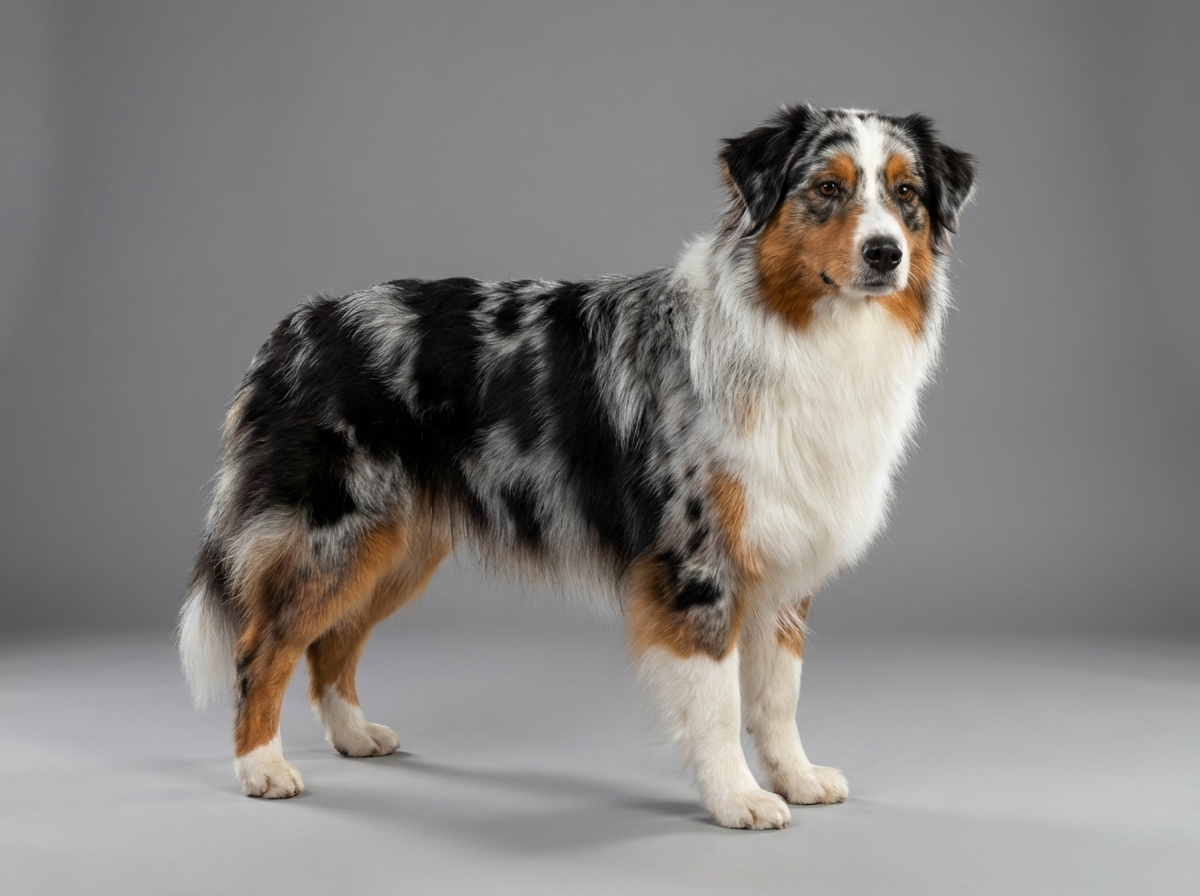
Veterinary anatomy classifies dog skulls on a spectrum: dolichocephalic (long-nosed, like Greyhounds), mesocephalic (medium, like most herding breeds), and brachycephalic (short and flattened, like Bulldogs and Pugs). The Australian Shepherd sits squarely in the mesocephalic middle, with a muzzle length proportionate to its skull that supports normal airflow during the sustained running and herding work the breed was built for.
Brachycephalic obstructive airway syndrome develops specifically from the compressed soft tissue and narrowed nasal passages that come with a shortened skull, a structure Aussies simply don't have. There's no documentation of this airway syndrome occurring in Australian Shepherds, and their working-dog head shape is part of why.
Heavy panting that doesn't settle within 10 to 15 minutes of rest, gums that look pale or bluish, or collapse during exercise are signs of heat stress or a genuine medical issue and warrant prompt veterinary attention regardless of breed. Australian Shepherds are athletic working dogs bred for endurance, so real exercise intolerance is more often tied to cardiac issues, heat, or an underlying condition like hypothyroidism than to any airway structure.
Because allergies are a documented issue in this breed, seasonal sneezing, nasal discharge, or coughing are worth flagging to a vet as their own concern. The practical guidance mirrors other breed-mismatch topics: take a genuine change in breathing or stamina seriously, but expect the workup to focus on causes that are actually relevant to an Australian Shepherd's physiology.

Teresa, in Asheville, North Carolina, spent an evening reading about brachycephalic obstructive airway syndrome after a neighbor's Pug went in for surgery to widen its nostrils. Her three-year-old Australian Shepherd, Scout, pants hard and sometimes snorts after a long round of frisbee, and Teresa wondered if the same airway problem applied to him. At Scout's next checkup she asked directly. Her vet explained that Scout's muzzle is a normal, functional length for a working herding dog, nothing like the shortened skull that causes BOAS in breeds like Pugs and Bulldogs, and that his post-exercise panting and occasional snort were consistent with a fit dog cooling down and clearing his nasal passage, not airway obstruction. The visit shifted Teresa's attention to what actually matters for Scout: keeping him lean, watching his hips and elbows as he ages, and knowing the early signs of the eye and thyroid conditions that do run in the breed.
Key takeaway: Panting and snorting after exercise in an Australian Shepherd almost always reflect normal cooling and a working dog's fitness demands, not a shortened-muzzle airway condition that simply isn't part of this breed's anatomy.
Brachycephalic features describe a shortened, flattened skull and muzzle shape that can compress a dog's airway, well documented in breeds like English and French Bulldogs, Pugs, and Boston Terriers. It's a structural, breed-defining trait tied to skull shape, not something that appears in breeds built with a longer muzzle.
No, Australian Shepherds have a moderately long, mesocephalic muzzle typical of working herding breeds, not the shortened skull that defines brachycephalic conformation. Brachycephalic obstructive airway syndrome is not documented as occurring in this breed.
Breeds most commonly documented with brachycephalic obstructive airway syndrome (BOAS) include English and French Bulldogs, Pugs, Boston Terriers, Boxers, Shih Tzus, and Pekingese. These breeds share the shortened muzzle and compressed nasal passages that create the airway restriction.
Occasional snorting or reverse-sneezing in an Australian Shepherd is usually a brief nasal irritation response, often from pollen, dust, or eating quickly, and resolves on its own within a minute or two. It's unrelated to airway anatomy and isn't a sign of the structural obstruction seen in brachycephalic breeds.
Watch for heavy exercise intolerance, excessive panting that doesn't settle with rest, or collapse during hot-weather activity, which point toward heat stress or an underlying medical issue rather than airway conformation. Allergies, which are documented in the breed, can also cause nasal congestion or coughing worth mentioning to your vet.
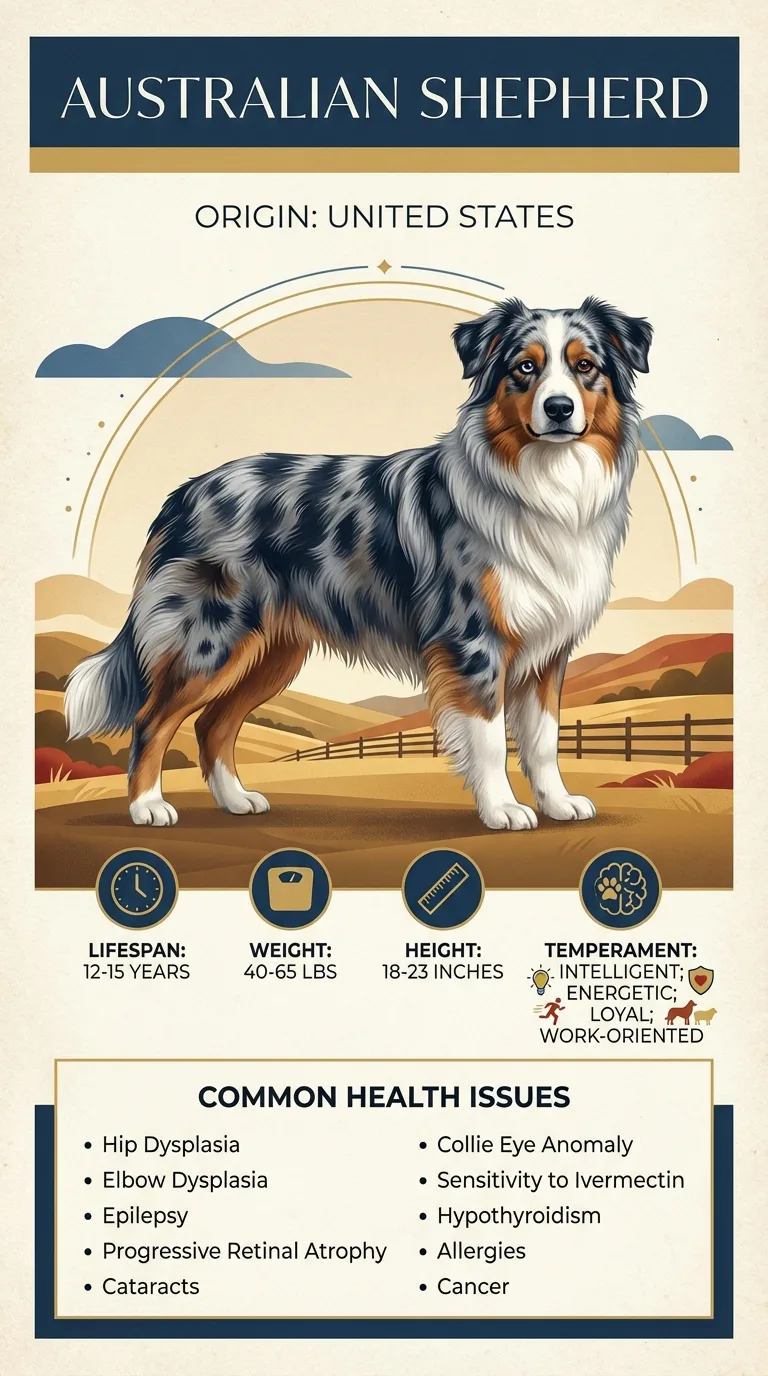
The breed's genuinely established health concerns include hip and elbow dysplasia, epilepsy, progressive retinal atrophy, cataracts, collie eye anomaly, hypothyroidism, allergies, cancer, and a sensitivity to ivermectin. None of these involve the skull-shape airway restriction seen in brachycephalic breeds.
There's no reason to, since brachycephalic obstructive airway syndrome and the surgeries used to correct it apply to dogs with the shortened-muzzle conformation, which an Australian Shepherd does not have. If your Aussie shows real breathing difficulty, your vet will look at causes like heat stress, allergies, or a cardiac or respiratory issue unrelated to skull shape.
No, it's documented in flat-faced breeds like Bulldogs and Pugs, not established as occurring in Australian Shepherds.
English and French Bulldogs, Pugs, Boston Terriers, Boxers, Shih Tzus, and Pekingese are the breeds documented with this shortened-muzzle conformation.
Yes, but that's ordinary exertion and heat-management risk for an athletic working breed, not an airway-structure problem.
No, since the condition doesn't apply to this breed, Aussie owners should instead budget for real risks like hip dysplasia screening and eye exams.
Training isn't relevant here, since brachycephalic airway syndrome is a structural condition unrelated to behavior and doesn't occur in this breed.
A one-page prep sheet for this condition: the signs, the questions to ask, what to get priced. Unlocks here.
You get: Vet visit prep sheet
No spam. One-click unsubscribe. See our privacy policy.
Preview page 1 before you decide.