Health
Is ARVC documented in Australian Shepherds?
No — it's characterized in Boxers and Doberman Pinschers, not established in Australian Shepherds.

Quick answer
Is ARVC documented in Australian Shepherds?
No — it's characterized in Boxers and Doberman Pinschers, not established in Australian Shepherds.
ARVC sounds like exactly the kind of silent, sudden threat every owner worries about, but the genetics behind it have been traced specifically to Boxer and Doberman bloodlines, not the Australian Shepherd.
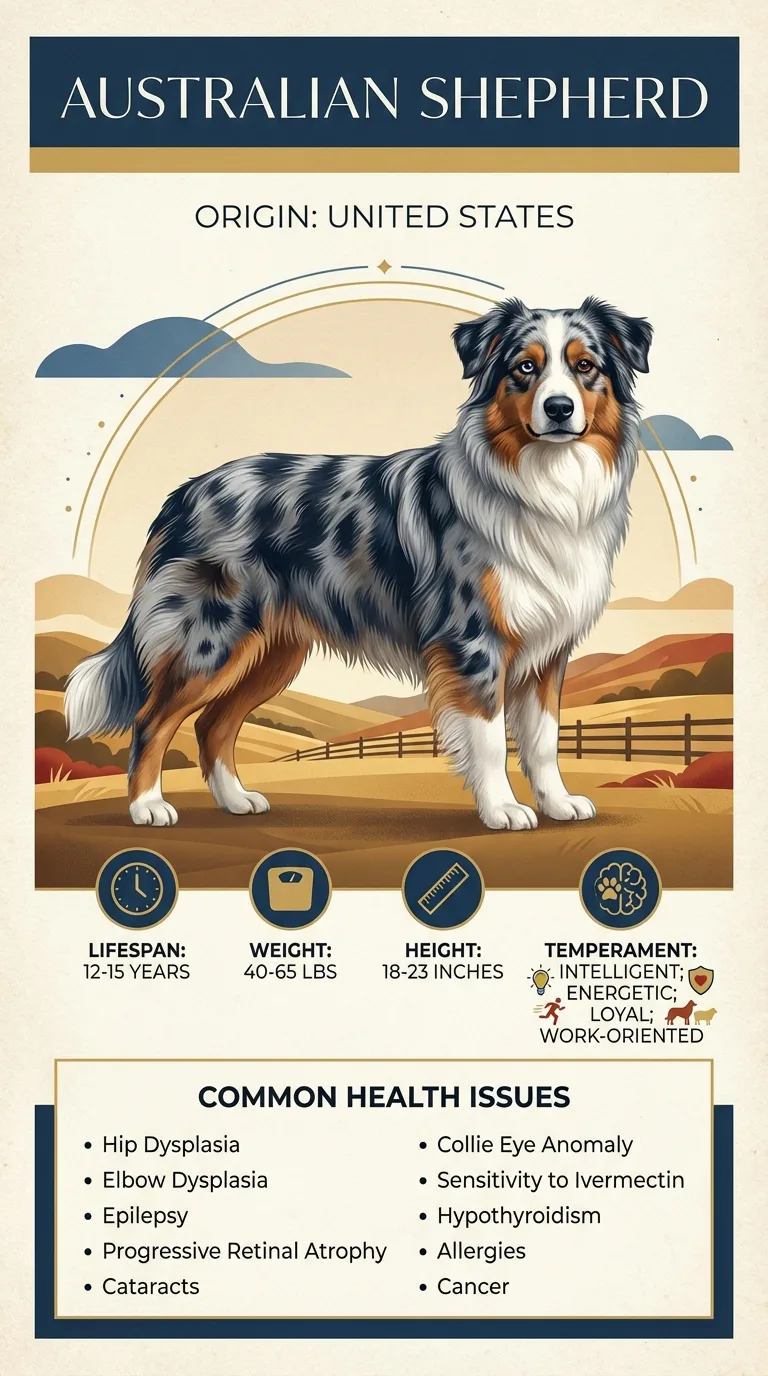
Owners who've read about ARVC in general dog-heart-health articles or Boxer and Doberman forums, and want to know whether their Aussie needs the same screening, are the audience for this page.
This guide is not medical advice. If your dog shows pain, sudden behavior change, or worsening symptoms, consult a licensed veterinarian.
Some links may be affiliate links. We may earn a commission at no extra cost to you. We only suggest products we believe are helpful for dog owners.
We research and check what we publish, but we do not warrant that any figure, date, price, or statement is accurate, complete, or current, and we accept no liability for any loss, cost, injury, or other harm arising from the use of this site. Use it as one reference among several. You remain responsible for your own decisions and for your dog's care - confirm anything that matters with a licensed veterinarian or another qualified professional before you act on it. Full disclaimer.
Arrhythmogenic right ventricular cardiomyopathy is a serious inherited heart rhythm disorder well documented in Boxers and Doberman Pinschers, but it is not established as occurring in Australian Shepherds. For an Aussie showing fainting or collapse, epilepsy, overheating, and dehydration are far more likely and far more relevant explanations to investigate first.
ARVC is considered one of the better-characterized inherited cardiomyopathies in dogs, but that characterization is specific to Boxers and Dobermans; it has no established prevalence figure in Australian Shepherds because it isn't recognized as occurring in the breed.
The genetic mutations associated with ARVC have been mapped in Boxer and Doberman Pinscher research populations, with striatin and PKP2 gene variants specifically implicated in those breeds. No comparable genetic link has been established in Australian Shepherd bloodlines, so there is no known breed-specific driver to describe here.
Because ARVC isn't recognized as relevant to Australian Shepherd genetics, there are no meaningful environmental triggers to discuss for this specific disease in this breed. Environmental factors that matter far more for Aussie heart and overall health are heat exposure during intense herding or agility work and maintaining a healthy weight to reduce joint strain.
See a vet the same day for any fainting, collapse, or sudden weakness, regardless of suspected cause. In an Australian Shepherd, that workup will reasonably prioritize seizure activity, heat stress, or thyroid function over an inherited cardiomyopathy that isn't documented in this breed.
ARVC's association with sudden collapse makes it an easy condition to worry about even when it doesn't apply to your dog's breed. These are the mistakes to avoid.
See all Australian Shepherd health problems, which breeds are prone to arrhythmogenic right ventricular cardiomyopathy arvc, or the full Australian Shepherd breed guide for temperament, exercise needs and ownership costs.
Because ARVC isn't an established concern for this breed, there's no meaningful screening timeline to track for it. The more useful timeline is the breed's standard schedule: puppy wellness exams, annual bloodwork from early adulthood, and eye and hip screening at the ages your vet recommends.
Success here means redirecting any real concern about fainting or collapse toward the causes actually documented in Australian Shepherds, especially epilepsy and heat-related stress, rather than pursuing Boxer- or Doberman-specific cardiac testing. A dog that gets a normal cardiac exam and a clear plan for its real breed risks is the practical win.
A dog that faints, collapses, or shows sudden weakness during or after exercise always needs a same-day veterinary visit, regardless of which specific heart condition an owner suspects. In an Australian Shepherd, that workup is more likely to turn up a seizure event, since epilepsy is a documented risk in this breed, than a Boxer-pattern arrhythmia.
Your vet will typically start with a physical exam, listen for murmurs or irregular rhythms, and may run bloodwork or an ECG before considering any breed-specific genetic panel. A single fainting episode that resolves on its own is still worth documenting and mentioning at the next checkup, even if it isn't an emergency.
The practical guidance mirrors other breed-mismatch situations: don't ignore a real collapse episode, but expect the differential your vet builds to center on Australian Shepherd realities like epilepsy, hypothyroidism, or heat stress rather than a Boxer-linked cardiomyopathy.

Australian Shepherds aren't flagged for inherited arrhythmogenic cardiomyopathy, but that doesn't mean heart health is irrelevant to the breed. Here's what genuinely deserves attention instead.

After her Australian Shepherd, Remy, briefly stumbled and seemed disoriented following an agility run in Asheville, North Carolina, Priya spent a night reading about ARVC in a Boxer-owner Facebook group and grew alarmed. Her vet's workup the next morning found no murmur or arrhythmia, but did note Remy was mildly dehydrated and recommended monitoring for any repeat episodes as possible early seizure activity given the breed's known epilepsy risk. Rather than pursuing a Boxer-specific cardiac referral, Priya adjusted Remy's exercise routine to include more water breaks and shaded rest, and scheduled a follow-up to track whether the stumbling recurred.
Key takeaway: A heart condition documented in Boxers and Dobermans isn't a realistic concern for an Australian Shepherd's collapse episode; heat management and the breed's real seizure risk are the genuinely useful focus.
Arrhythmogenic right ventricular cardiomyopathy is an inherited heart muscle disease that causes dangerous rhythm disturbances and sometimes sudden collapse. It's well documented in Boxers, often called Boxer cardiomyopathy, and in Doberman Pinschers.
No. It has not been established as occurring in Australian Shepherds; the genetic mutations linked to it have been identified specifically in Boxer and Doberman bloodlines.
A fainting episode always deserves a vet visit, but in an Australian Shepherd it's more likely tied to overheating, dehydration, or a seizure event than to a Boxer-linked cardiomyopathy. Bring a description of what happened to help your vet narrow the differential.
There's no validated ARVC genetic test built for Australian Shepherds, because the mutations behind the disease were characterized in Boxer and Doberman populations, not this breed. A general cardiac exam is the more useful step if you have concerns.
Congenital heart murmurs can occur in any breed and are worth checking at puppy exams, and hypothyroidism, which is documented in Aussies, can indirectly affect heart rate and energy. Neither is the same disease as ARVC.
Usually not; sudden fatigue after intense herding or agility work in this breed is more often dehydration, overheating, or normal exertion than a cardiac event. If the crash includes actual collapse, weakness lasting more than a few minutes, or blue-tinged gums, see a vet promptly.
Hip and elbow dysplasia, epilepsy, Progressive Retinal Atrophy, Collie Eye Anomaly, hypothyroidism, and the MDR1 mutation behind ivermectin sensitivity are all genuinely documented in this breed. Those are the conditions worth building a screening and monitoring plan around.
No — it's characterized in Boxers and Doberman Pinschers, not established in Australian Shepherds.
There's no validated ARVC genetic test for this breed, so a general vet cardiac exam is more useful than seeking breed-specific ARVC screening.
Overheating, dehydration, and seizure activity are far more common explanations in this breed than an inherited cardiomyopathy.
No — normal exercise management and heat precautions for an active herding breed are all that's warranted here.
No extra cardiac screening costs are warranted for ARVC specifically; budget instead for the breed's real health screenings like hip and eye exams.
A one-page prep sheet for this condition: the signs, the questions to ask, what to get priced. Unlocks here.
You get: Vet visit prep sheet
No spam. One-click unsubscribe. See our privacy policy.
See a sample page before you decide.
Early access list
The free prep sheet covers the same-day warning signs, a symptom log and the questions to ask. We are considering a fuller kit that adds a cost worksheet for the usual tests and treatments (US price ranges with their sources) and a plain-English guide to ways of covering the bill. It is not built yet; this list tells us whether it is worth building.
One email, no spam, unsubscribe anytime. Information only, not veterinary advice.