DogBreedCompass

Malamute or Papillon: The Toy Breed That Out-Trains a Sled Dog

The Papillon weighs 5 to 10 pounds, matches the Malamute's 4/5 energy rating, beats it two points on trainability, and lives four years longer. It also has a long coat that rates only 2/5 for grooming.

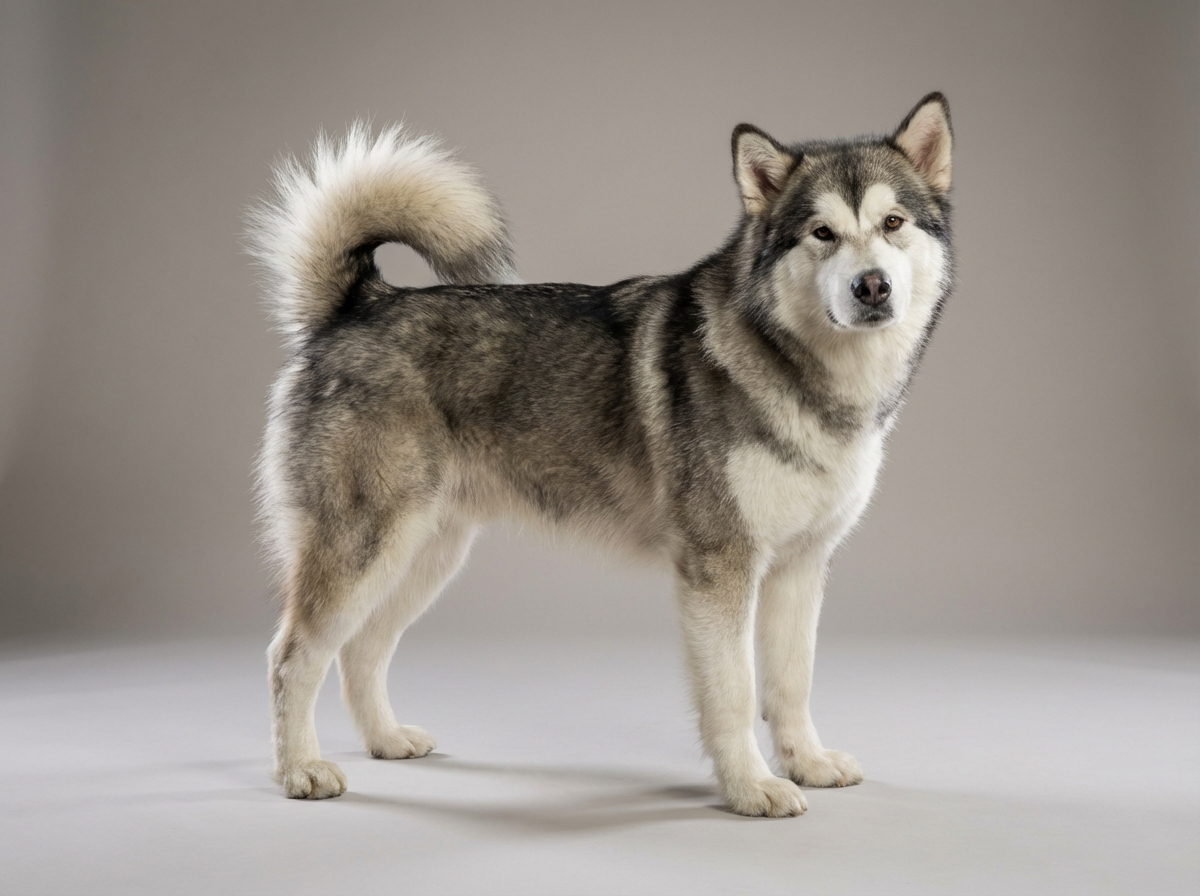
alaskan malamute infographic
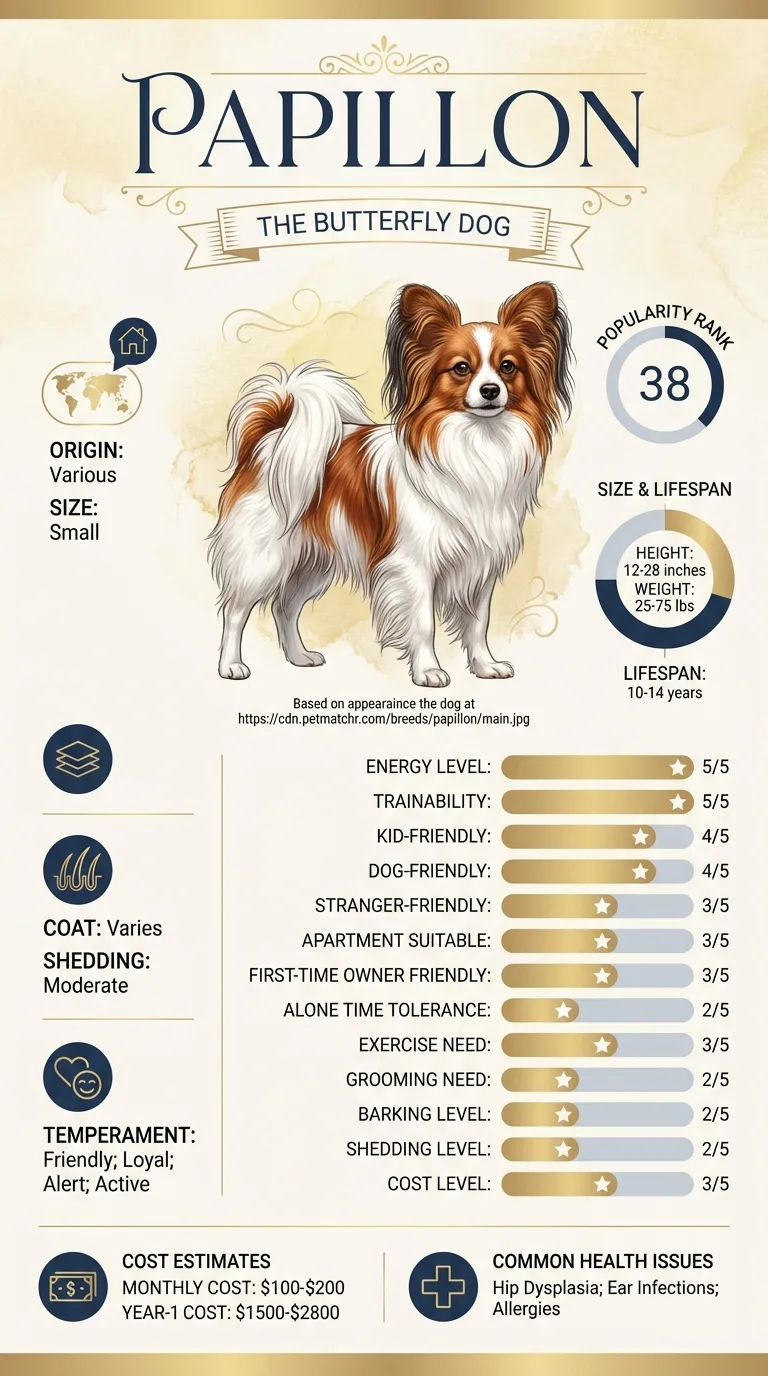
papillon infographic

This page is for someone who wants a dog to actually train and work with, and is deciding whether that requires a large breed at all — plus anyone who assumes a long-coated toy dog must be high maintenance.

Quick verdict

For anyone whose priority is training, sport or a long-lived companion in a small space, the Papillon is the better dog by a wide margin; the Malamute wins only on size, calm with children and physical presence.

Choose alaskan malamute if...

Choose the Alaskan Malamute if you specifically want a large outdoor working dog, you have cold weather, a secure garden and two hours a day, and you want a breed that is unbothered by rough handling from children.

Choose papillon if...

Choose the Papillon if you want a smart, portable, long-lived dog that trains at 5/5, fits any home at 5/5 for apartments, and costs 2/5 to run — and you can live with a 4/5 barking rating.

Head-to-head comparison

Featurealaskan malamutepapillonWinner
Weight75–110 lbs5–10 lbsEqual
Height23–25 in8–11 inEqual
Lifespan10–14 years14–16 yearspapillon
CoatThick double coatLong, silky single coatpapillon
Grooming need4/52/5papillon
Shedding5/5 — very heavy year-round2/5 — low to moderatepapillon
Energy level4/54/5Equal
Exercise need5/53/5papillon
Trainability3/55/5papillon
Barking3/54/5alaskan malamute
Good with kids5/53/5alaskan malamute
Good with other dogs3/54/5papillon
Friendly to strangers4/54/5Equal
Apartment suitability1/55/5papillon
Good for first-time owners2/54/5papillon
Tolerates being alone2/52/5Equal
Typical monthly cost$150–300$80–150papillon
Typical first-year cost$2,000–4,000$1,100–2,300papillon

Deep dive

5/5 against 3/5: the smartest dog on this page weighs eight pounds

The Papillon's 5/5 trainability is not a courtesy score awarded to a pretty toy breed. It is one of the most consistently high performers in small-dog obedience and agility, and its temperament keywords — alert, friendly, quick-witted, confident — describe a working mind in a very small body.

What that means practically is that a Papillon will learn faster than most large breeds and will keep offering behaviour long after a heavier dog has disengaged. It picks up sequences, discriminates between cues, and enjoys the process rather than tolerating it. Anyone who wants to do formal training, trick work, scent games, rally or agility can do all of it with a dog they can carry under one arm. It also means an untrained Papillon fills the vacuum itself, usually with barking and self-appointed door duty.

The Malamute's 3/5 sits at the other end for reasons of selection rather than intelligence. A freighting breed that had to make its own judgements on ice was rewarded for not consulting a handler. A Malamute understands what you have asked, evaluates it, and complies if the answer is favourable. Recall is the clearest expression of that gap: most Malamute owners never fully trust it, while a well-trained Papillon can be genuinely reliable — though its size means a bird of prey or a large loose dog remains a real risk regardless.

The two dogs also learn under different conditions. The Papillon wants short, fast, varied sessions and gets bored by repetition. The Malamute wants short sessions too, but for the opposite reason — it will simply stop cooperating once it decides the exercise is not worth the payment.

A long coat that rates only 2/5: why the Papillon is easier than it looks

This is the most counterintuitive line in the table. The Papillon has a long, silky coat with the famous fringed ears and a plumed tail, and yet it rates 2/5 for grooming — half the Malamute's rating and lower than several short-coated breeds.

The reason is that the Papillon is single-coated. There is no soft dense undercoat beneath the long outer hair, and undercoat is what mats. Without it, the coat lies flat, tangles rarely, and needs a comb through two or three times a week concentrating on the ear fringes, the trousers and the tail plume. There is no clipping schedule, no professional appointment required, and no seasonal blow. Shedding sits at 2/5 — noticeable but light.

Compare that with the Malamute's plush double coat: 4/5 grooming, 5/5 shedding, an undercoat rake taken to the skin two or three times a week, two annual blows during which the wool comes out in sheets, and matting risk behind the ears and in the trousers if the routine slips. And a firm rule against clipping, since the coat insulates in both directions.

The single-coat structure has one consequence in the other direction. A Papillon has almost no insulation, so it feels cold quickly and genuinely needs a coat in winter weather. It also has thin skin and fine bones, so rough terrain and rough play carry more risk than they would for a sturdier small breed.

The practical upshot: if hair volume in the house is a deciding factor, this is not a close contest. A Papillon is one of the lowest-effort long-coated dogs available, and the Malamute is at the top of the shedding scale.

A short health list with two entries specific to very small dogs

The Papillon's list is brief — patellar luxation, progressive retinal atrophy, dental disease, open fontanel and collapsing trachea — and it is one reason the breed reaches 14 to 16 years so reliably.

Open fontanel is the entry most people have never encountered. It is a soft spot on the top of the skull where the bones have not fully fused, a normal feature in newborn puppies that occasionally persists in toy breeds. A small persistent gap is often harmless and simply means the dog needs protecting from knocks to the head. A large one can be associated with more serious conditions, so it is worth a specific conversation with a vet if a breeder mentions it.

Collapsing trachea is the second, and it has a direct practical consequence: walk a Papillon on a harness, never a collar. The windpipe is supported by cartilage rings that can weaken and flatten, producing a distinctive dry honking cough that is worse with excitement, pressure on the throat or hot weather. Collar pressure on a five pound dog is a meaningful contributor, and switching to a harness is free insurance.

Dental disease is the toy-breed constant — forty-two teeth in a tiny jaw, crowding, plaque, early loss — and daily brushing plus periodic professional scaling under anaesthetic is what carries a Papillon comfortably into its teens. Patellar luxation is the common orthopaedic complaint and ranges from an occasional skipped step to a surgical case. Progressive retinal atrophy has DNA testing available.

The Malamute's list is longer and heavier: hip and elbow dysplasia, bloat, hypothyroidism, epilepsy, progressive retinal atrophy, hereditary cataracts, zinc-responsive dermatosis and inherited polyneuropathy. Ask its breeder for hip and elbow scores; ask a Papillon breeder about patellar evaluation and eye certification.

Matching 4/5 energy at wildly different scales

Both breeds rate 4/5 for energy, which surprises people who expect a toy dog to be a cushion ornament. The Papillon is busy, curious and physically capable well beyond its size — it will hike, it will run an agility course, it will keep going on a long walk when heavier dogs are flagging.

The difference is the exercise requirement: 3/5 against 5/5. A Papillon needs perhaps forty-five minutes of activity a day, and crucially a good share of that can be mental. Training sessions, scent games and trick work count as real exercise for a dog this clever, which means a bad-weather day is not a lost day and a small flat is not a limitation. Its 5/5 apartment rating is entirely earned.

The Malamute needs two hours minimum with physical resistance in it — a loaded pack, a pulling harness, a rig, steep ground, snow. Nothing indoors registers. Nothing mental substitutes. In a warm climate the Arctic coat pushes the routine to first and last light for months of the year.

Both rate 2/5 for tolerating time alone, and neither belongs in an empty house all day. The Papillon's version tends toward vocalising and anxiety; the Malamute's toward digging and escape. Its 4/5 barking rating is the Papillon's main household liability, and it is trainable at 5/5 — a reliable quiet cue and blocked window access make a real difference — but it starts from a naturally alert, announcing temperament.

On children the Malamute leads 5/5 to 3/5, and the reason is fragility. A Papillon has fine bones and can be badly hurt by a fall or a toddler's grip. It suits older children who understand how to handle a small dog.

Cost level 2/5 against 4/5, across sixteen years

The Papillon is one of the cheapest breeds to run on this site: $80–150 a month against the Malamute's $150–300, and $1,100–2,300 in the first year against $2,000–4,000. Cost level 2/5 against 4/5.

Every component favours it. Food is trivial. Grooming is a comb and no appointments, unlike almost every other long-coated toy breed. Weight-based veterinary pricing — prevention, anaesthesia, medication — is at the bottom of the scale. There is no professional de-shedding, no giant crate, no ramp, no reinforced fencing.

The two real costs are dental care and time. Dentals under general anaesthetic every one to three years across a 14 to 16 year life add up, and they are the intervention that most affects whether a small dog ages comfortably. Insurance premiums also climb steeply in the last third of a long life, which is the flip side of the breed's excellent lifespan.

Against that, the Malamute's costs are large and structural: food volume, weight-scaled veterinary charges, secure fencing, and equipment sturdy enough for a dog that pulls. Its grooming is free labour but consumes real hours.

The lifespan comparison deserves a final word. Fourteen to sixteen years against ten to fourteen is a two to four year difference, and for a dog bought in your thirties that is a genuinely different commitment. A Papillon is a long relationship in a small, cheap, portable, highly trainable package. If the shortlist genuinely contains both breeds, the honest question is whether you want a dog to work with or a dog to walk with — because on almost every other axis the small one wins.

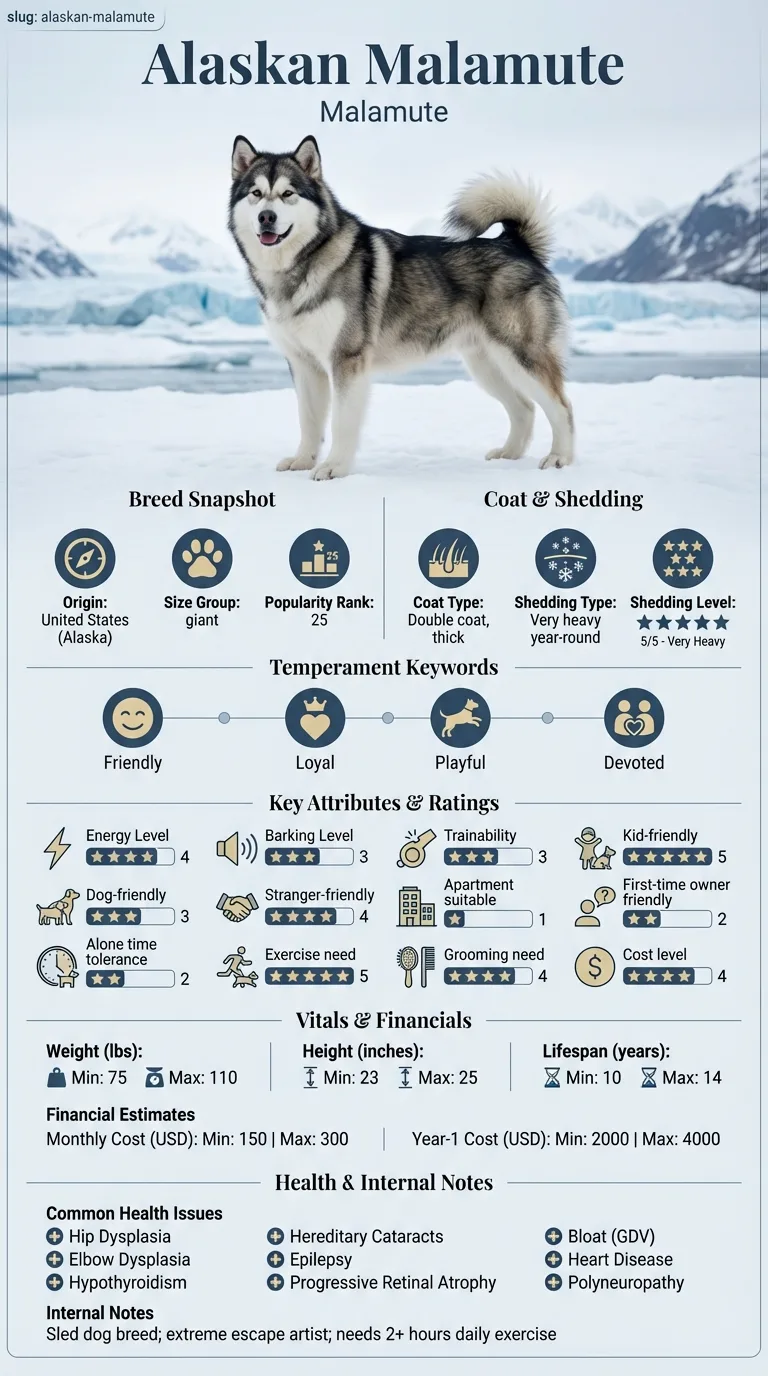
Alaskan Malamute vs Papillon at a glance

The Papillon weighs just 5 to 10 pounds, matches the Malamute's 4/5 energy rating, beats it by two points on trainability, and lives roughly four years longer. Its long coat, despite appearances, rates only 2/5 for grooming.

For anyone whose priority is training, dog sport, or a long-lived companion in a small space, the Papillon is the better dog by a wide margin. The Malamute wins only where size and physical presence matter: it is a large, calm dog around children who handle it roughly, in a way a 5 to 10 pound toy breed simply cannot be.

Choose the Malamute if you specifically want a large outdoor working dog, cold weather, a secure garden, and two hours a day, and you want a breed unbothered by rough handling from children. Choose the Papillon if you want a smart, portable, long-lived dog that trains at 5/5 and fits any home, and you can live with a 4/5 barking rating.

Frequently asked questions

Is a Papillon really easier to train than a Malamute?

Yes, and by a wide margin — 5/5 against 3/5. The Papillon is one of the top small breeds in obedience and agility. The Malamute was selected to work without consulting a handler, which is why its recall is rarely fully reliable.

Why does a long-coated dog only rate 2/5 for grooming?

Because the Papillon is single-coated. There is no undercoat, and undercoat is what mats. A comb through the ear fringes, trousers and tail two or three times a week is the whole routine — no clipping and no appointments.

Why should a Papillon wear a harness rather than a collar?

Collapsing trachea appears on the breed's health list. The windpipe's cartilage rings can weaken, and pressure from a collar on a five pound dog contributes. A harness removes that pressure entirely and costs nothing extra.

Which lives longer?

The Papillon at 14 to 16 years against the Malamute's 10 to 14 — one of the best lifespans of any breed on this site, helped by a short and largely manageable health list.

Is a Papillon good with young children?

It rates 3/5 against the Malamute's 5/5, and the concern is fragility rather than temperament. Fine bones and a 5 to 10 pound frame mean a fall or a firm grip can cause real injury. Older children suit the breed better.

How much exercise does a Papillon need?

About forty-five minutes a day at a 3/5 rating, and much of it can be mental — training, trick work and scent games genuinely tire a dog this clever. The Malamute needs two hours of physical work with no indoor substitute.

Which is cheaper to own?

The Papillon, dramatically — cost level 2/5 against 4/5, $80–150 a month against $150–300, and $1,100–2,300 in the first year against $2,000–4,000.

Quick answers

View more answers
Living

Malamute or Papillon: which should I choose?

The Papillon if you want a dog to train, compete with or simply keep in a small home — 5/5 trainability, 5/5 for flats, 14 to 16 years and 2/5 running costs. The Malamute only if you specifically want a large outdoor working dog.

Costs

Which is cheaper to run?

The Papillon at $80–150 a month against the Malamute's $150–300, with cost levels of 2/5 and 4/5. Dental care is its main recurring veterinary expense.

Health

What is an open fontanel?

A soft spot on the skull where the bones have not fully fused. It is normal in newborn puppies and sometimes persists in toy breeds. A small one usually just means protecting the head from knocks; discuss any larger gap with a vet.

Behavior

Which barks more?

The Papillon at 4/5 against 3/5 — it is an alert breed that announces visitors. Being 5/5 trainable, it responds well to a quiet cue and to blocked window access, but it starts noisier than the Malamute.

Related DogBreedCompass guides

  • Alaskan Malamute breed guideThe Malamute profile covers exercise load, coat raking and the containment work the breed requires.
  • Papillon breed guideThe Papillon profile covers training potential, coat care and small-breed handling.
  • common genetic disorders in PapillonsThe breed's inherited risks are short and specific, and two of them are unique to very small dogs.
  • hip dysplasia in Alaskan MalamutesHip dysplasia is the Malamute's headline orthopaedic risk and the first breeder question.
  • Alaskan Malamute vs MalteseReaders weighing small long-coated breeds usually want the higher-maintenance comparison beside this one.
  • apartment dog breed recommendationsAnyone ruling out a working breed on space wants the wider list of flat-friendly options.

Related guides

Important reminder

Health information here is general and is not veterinary advice. Toy-breed concerns such as tracheal collapse and open fontanel should be discussed with your own veterinarian.

Some links on this site are affiliate links. We may earn a commission if you buy through them, at no additional cost to you.

Find Your Perfect Breed

Match your lifestyle to the right dog.

Take quiz

Find your match

Not sure which breed is right for you? Take our 2-minute quiz to find out.

Take the quiz