DogBreedCompass

Malamute or Shar-Pei: Where You Would Rather Spend the Effort

The Malamute rates 5/5 for exercise and the Shar-Pei 2/5. The Shar-Pei rates 2/5 for grooming and needs its skin folds cleaned every day. One of these dogs takes two hours of your afternoon and the other takes five minutes of your evening, and neither is low effort.

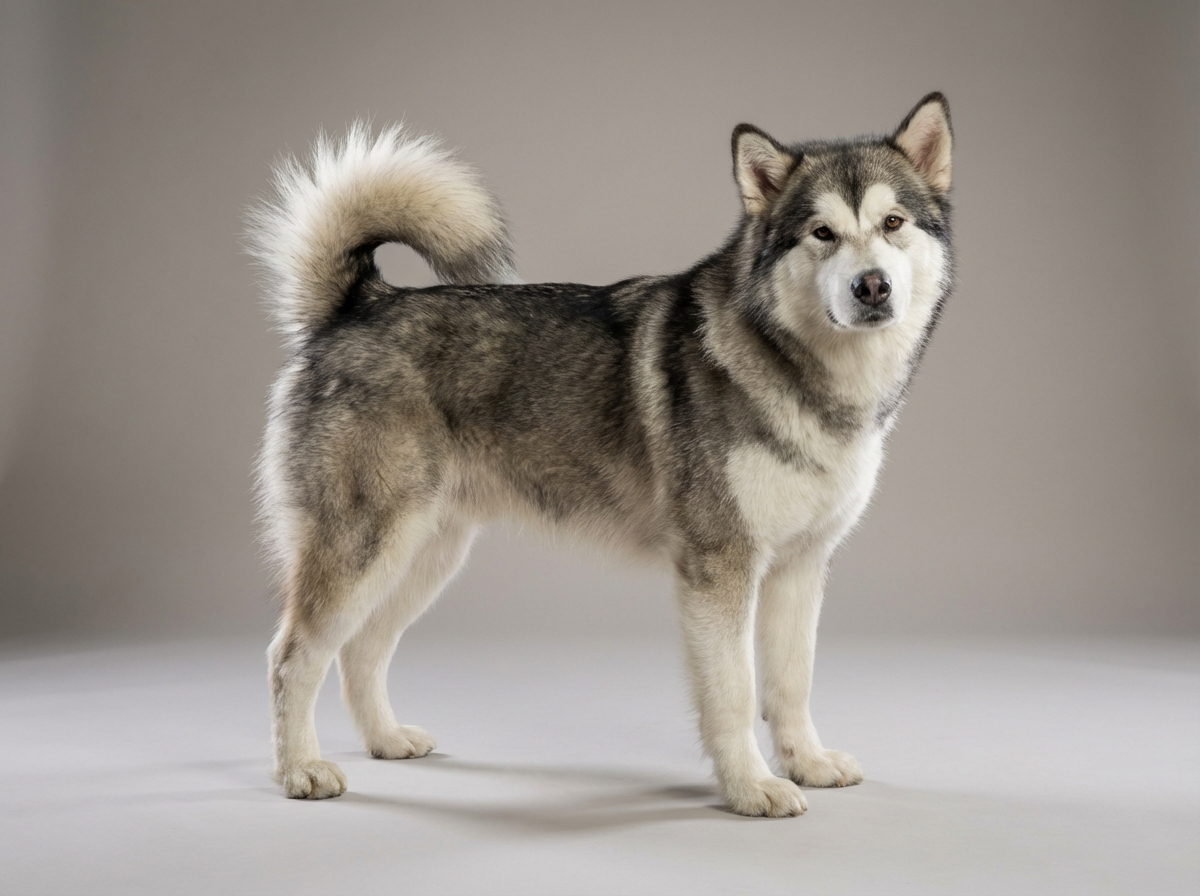
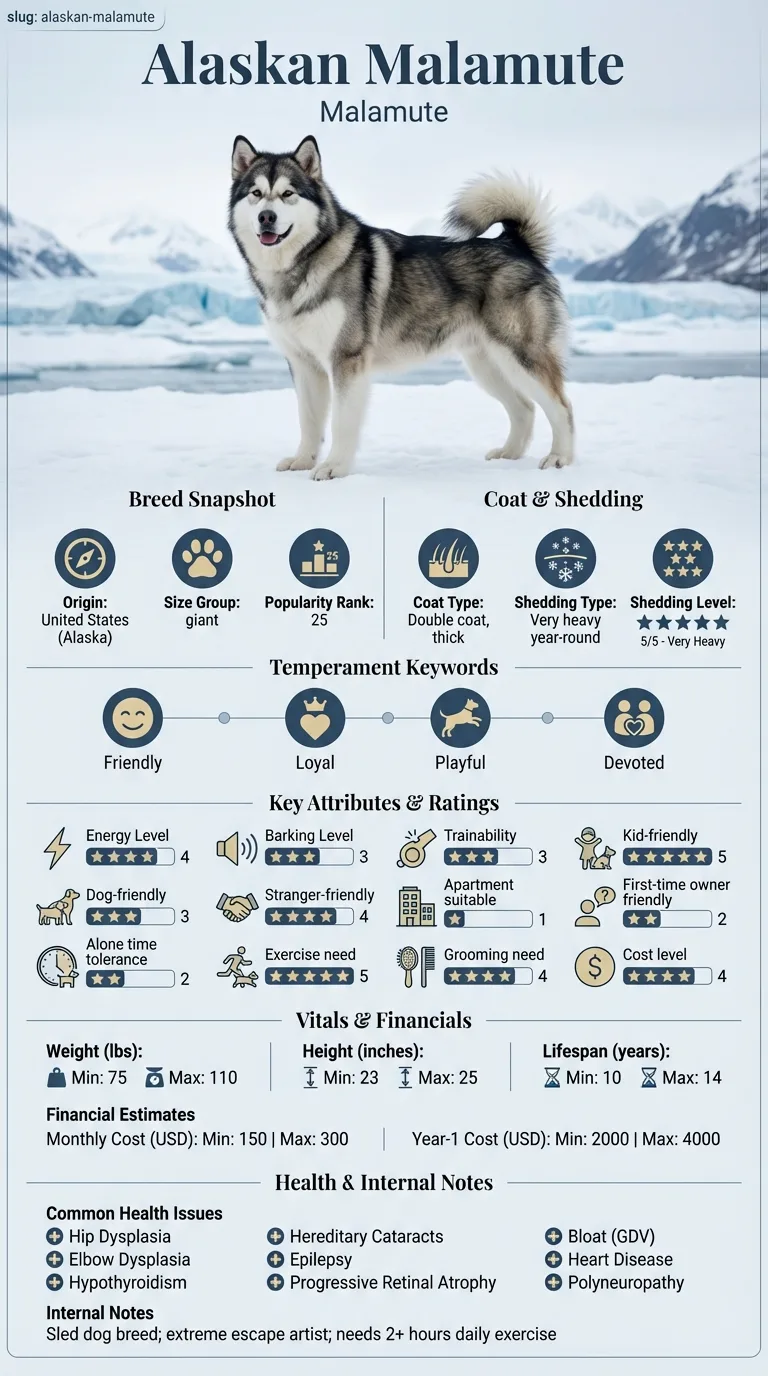
alaskan malamute infographic
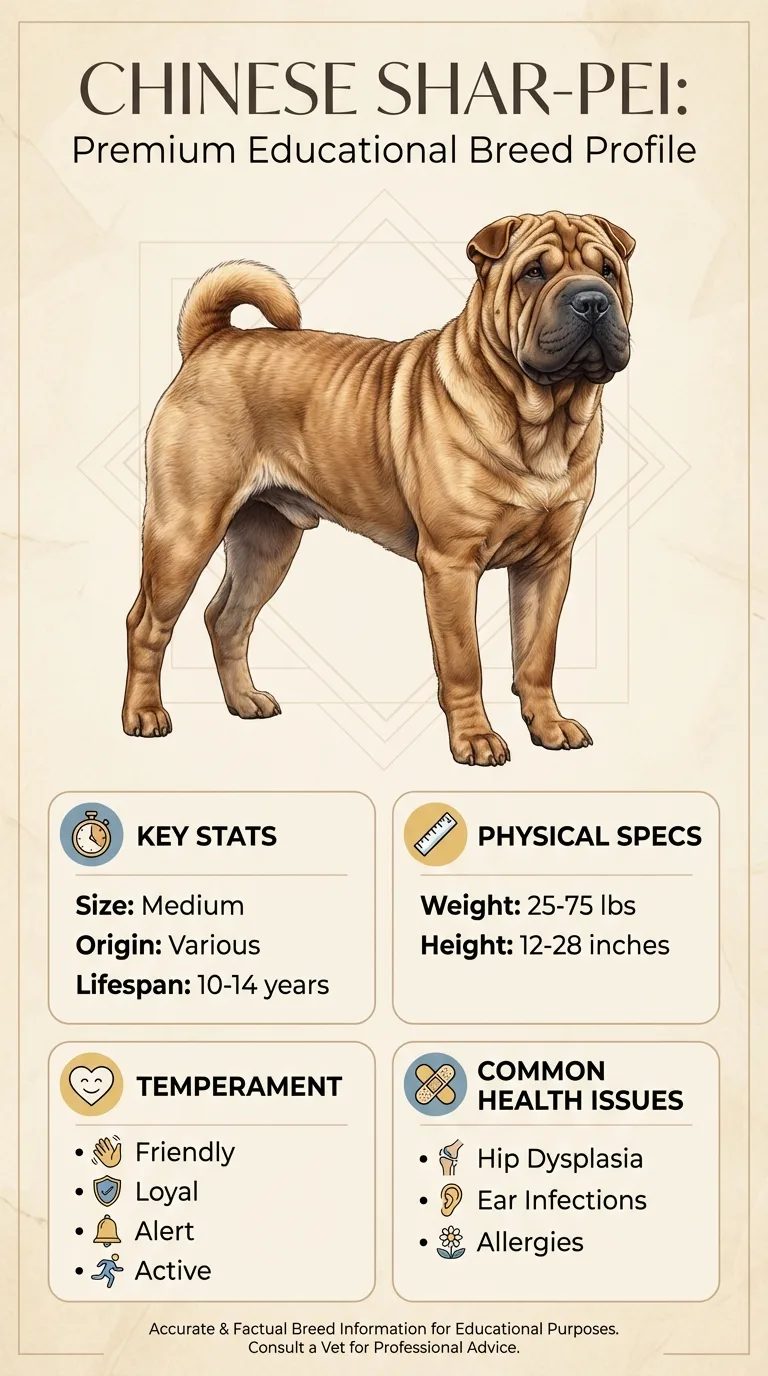
chinese shar pei infographic

This page is for someone weighing a low-output reserved breed against a high-output sociable one. It covers the exercise gap, daily skin and eyelid maintenance, a breed-specific inflammatory disease, temperament, and cost.

Quick verdict

The Shar-Pei asks for almost nothing outdoors and a daily commitment on the dog itself; the Malamute asks for two hours a day and leaves you alone the rest of the time.

Choose alaskan malamute if...

Choose the Alaskan Malamute if you are athletic and want a sociable dog. It rates 5/5 with children against the Shar-Pei's 3/5, 4/5 with strangers against 2/5, and lives 10 to 14 years against 8 to 12. You are accepting $150–$300 a month against $100–$200, 5/5 exercise, 5/5 shedding and 4/5 grooming.

Choose chinese shar pei if...

Choose the Chinese Shar-Pei if you cannot commit two hours a day and want a quiet, self-contained dog. It needs only 2/5 exercise, sheds at 2/5, rates 4/5 for apartments against 1/5 and tolerates being alone at 3/5. You are accepting daily wrinkle care, entropion risk and a serious inflammatory condition.

Head-to-head comparison

Featurealaskan malamutechinese shar peiWinner
Weight75–110 lbs45–60 lbsEqual
Height23–25 in18–20 inEqual
Lifespan10–14 years8–12 yearsalaskan malamute
CoatThick double coatShort and harshEqual
Grooming needHigh (4/5)Low (2/5)chinese shar pei
SheddingVery high (5/5)Low (2/5)chinese shar pei
Energy levelHigh (4/5)Low (2/5)Equal
Exercise needVery high (5/5)Low (2/5)chinese shar pei
TrainabilityModerate (3/5)Low (2/5)alaskan malamute
BarkingModerate (3/5)Low (2/5)chinese shar pei
Good with kidsVery high (5/5)Moderate (3/5)alaskan malamute
Good with other dogsModerate (3/5)Low (2/5)alaskan malamute
Friendly to strangersHigh (4/5)Low (2/5)alaskan malamute
Apartment suitabilityVery low (1/5)High (4/5)chinese shar pei
Good for first-time ownersLow (2/5)Low (2/5)Equal
Tolerates being aloneLow (2/5)Moderate (3/5)chinese shar pei
Typical monthly cost$150–$300$100–$200chinese shar pei
Typical first-year cost$2,000–$4,000$1,400–$2,900chinese shar pei

Deep dive

Wrinkles are a daily job, not a look

Skin fold dermatitis heads the Shar-Pei's condition list and it is the everyday reality of the breed.

The folds trap moisture, warmth and debris, which is a reliable recipe for bacterial and yeast infection. They need wiping and — the part that matters — thorough drying, especially after baths, swimming and rain. A Shar-Pei that smells is almost always telling you about a fold rather than a coat.

Entropion is the more serious consequence of the same skin. The eyelid rolls inward and the lashes abrade the cornea, which is painful and damages sight. It is common enough in the breed that many puppies have their eyelids temporarily tacked, and permanent surgical correction is frequently needed later. Ask a breeder directly about entropion in the line and in the individual puppy.

Ear infections are the third: the ear canal in this breed is unusually narrow, which no amount of cleaning changes.

The Malamute's maintenance is entirely coat and entirely seasonal — an undercoat rake and several long sessions during two heavy blows a year, and nothing daily at all.

Familial Shar-Pei fever and what it leads to

Familial Shar-Pei fever is a breed-specific inflammatory condition and it is the most important thing to understand before buying one.

It presents as episodes of high fever, often with a swollen hock joint, lasting a day or two and then resolving on their own. Because the dog recovers without treatment, owners frequently dismiss the first few episodes entirely.

That is the trap. Repeated inflammatory episodes are associated with amyloidosis, in which a protein deposits in the kidneys and liver and progressively destroys function. Renal failure is the usual endpoint and it is not reversible.

Episodes can be treated and their frequency reduced, which is exactly why recognising them early matters. A Shar-Pei with an unexplained fever and a puffy hock should be seen, and the words familial Shar-Pei fever should be said to the vet directly.

Hypothyroidism completes the list, and the breed's 8 to 12 year lifespan reflects the cumulative burden.

The Malamute's list is longer but less insidious: hip and elbow dysplasia, hypothyroidism, hereditary cataracts, progressive retinal atrophy, epilepsy, heart disease, bloat, inherited polyneuropathy and zinc-responsive skin disease.

Aloof against demonstrative

The Shar-Pei rates 2/5 with strangers and 2/5 with other dogs, and both figures are accurate. It does not greet visitors; it stands, watches, and declines to engage, then settles once it has decided. Owners describe it as catlike, and the description holds.

At 2/5 trainability it is stubborn rather than slow. It learns quickly and complies selectively, and it responds badly to repetition and worse to correction — short sessions with food are the only approach that works.

The Malamute is the opposite temperament in every respect: demonstrative, effusive with strangers at 4/5, excellent with children at 5/5, and completely useless as a guard.

Its social complication is same-sex intolerance with other dogs, which surfaces at social maturity around two years old, and its containment problem, which is permanent. The breed's own notes call it an extreme escape artist: it digs, climbs, works at latches and travels once loose.

Both breeds are clean and easy to house-train, which is a shared trait of the older Asian and northern breeds and rarely mentioned.

Heat, and where the money goes

Both struggle in warm weather. The Shar-Pei's harsh coat and heavy skin shed heat poorly, and the Malamute's thick Arctic double coat holds it in. Neither should be exercised in the middle of the day in summer, and neither coat should ever be clipped.

On money the Shar-Pei runs $100–$200 a month against $150–$300, and $1,400–$2,900 against $2,000–$4,000 in the first year.

That gap narrows sharply in practice. Skin infections, ear infections, eyelid surgery and fever episodes are common enough that a Shar-Pei's lifetime veterinary spend often exceeds a Malamute's despite the lower monthly figure and the smaller body. Insure early, and check specifically whether skin conditions are excluded.

The Malamute's expensive risks are orthopaedic surgery and a bloat emergency — larger events, and less certain.

On lifespan the Malamute is ahead at 10 to 14 years against 8 to 12, which is the reverse of what the size difference would suggest.

Alaskan Malamute vs Chinese Shar-Pei: two kinds of work

First-time owners ties at 2/5 and that is nearly the only thing these two agree on.

The Shar-Pei is the low-output dog: 2/5 exercise, 2/5 energy, 2/5 shedding, 2/5 barking, 4/5 for apartments, and it manages a working day at 3/5. On paper it is one of the easier large-ish dogs to fit into ordinary life.

The Malamute is the opposite: 5/5 exercise, 5/5 shedding, 4/5 grooming, 1/5 for apartments, and a 2/5 tolerance for solitude.

Where the Shar-Pei's cost sits is on the dog rather than in the diary — folds that need daily cleaning and drying, eyelids that frequently need surgery, and an inflammatory condition that damages kidneys over time.

On temperament the Malamute is far the more sociable animal: 5/5 with children against 3/5, 4/5 with strangers against 2/5, and 3/5 with other dogs against 2/5. The Shar-Pei is genuinely aloof.

Frequently asked questions

How much daily care do Shar-Pei wrinkles need?

Daily wiping and, more importantly, thorough drying — after baths, rain and swimming especially. Folds trap moisture and warmth and reliably become infected if left. A Shar-Pei that smells is usually telling you about a fold. This is a genuine daily commitment rather than an occasional grooming task.

What is familial Shar-Pei fever?

A breed-specific inflammatory condition producing episodes of high fever, often with a swollen hock, that resolve on their own within a day or two. It matters because repeated episodes are linked to amyloidosis, in which protein deposits progressively destroy kidney function. Report every episode rather than waiting.

Which needs less exercise?

The Shar-Pei, dramatically — 2/5 against the Malamute's 5/5. Two moderate walks cover it, and it rates 2/5 for energy indoors as well. The Malamute needs around two hours of pulling work a day and is not satisfied by walking.

Is the Shar-Pei unfriendly?

Aloof rather than unfriendly, at 2/5 with strangers against the Malamute's 4/5. It does not greet visitors — it stands, watches, declines to engage and then settles. Owners describe it as catlike. Socialisation from eight weeks keeps that reserve proportionate rather than defensive.

What is entropion and why does it matter here?

The eyelid rolls inward so the lashes abrade the cornea, which is painful and damages sight. The Shar-Pei's heavy facial skin makes it common enough that many puppies have their eyelids temporarily tacked and permanent surgery is often needed later. Ask a breeder about it in the line and in the puppy.

Which lives longer?

The Malamute, at 10 to 14 years against the Shar-Pei's 8 to 12, which reverses what the size difference would suggest. The Shar-Pei's figure reflects the cumulative burden of skin, eye and inflammatory disease rather than anything to do with its weight.

Which is cheaper to keep?

The Shar-Pei on the headline figures — $100–$200 a month against $150–$300 — but the gap narrows sharply in practice. Skin infections, ear infections, eyelid surgery and fever episodes are common enough that its lifetime veterinary spend often exceeds the Malamute's.

Quick answers

View more answers
Living

Malamute vs Chinese Shar-Pei: which should I choose?

The Shar-Pei if you cannot commit two hours a day and want a quiet, self-contained dog, and will do daily fold care. The Malamute if you are athletic and want a sociable dog that is good with children.

Costs

How much does each cost per month?

The Malamute runs $150–$300 a month and the Shar-Pei $100–$200, with first-year totals of $2,000–$4,000 and $1,400–$2,900. Check whether a Shar-Pei policy excludes skin conditions before buying it.

Behavior

Which copes better with a working day?

The Shar-Pei at 3/5 against the Malamute's 2/5. It is self-contained and sleeps. A bored Malamute digs up the garden and works on the fence line rather than simply waiting.

Health

Can either coat be clipped in summer?

No. Both breeds are heat sensitive and neither coat should be clipped. Move summer exercise to the cool ends of the day instead — the Malamute because its double coat holds heat, the Shar-Pei because heavy skin sheds it poorly.

Related DogBreedCompass guides

  • Alaskan Malamute breed guideThe Malamute profile covers exercise, containment and the breed's coat.
  • Chinese Shar-Pei breed guideThe Shar-Pei profile covers wrinkle care, eyelid problems and the breed's reserve.
  • Malamute vs Chow ChowThe Chow Chow is the other reserved Asian breed most often weighed against the Shar-Pei.
  • Akita vs Chinese Shar-PeiThe Akita comparison covers the same Shar-Pei issues against a Japanese guardian breed.
  • Shar-Pei genetic disordersThe inherited conditions worth screening for before buying a Shar-Pei puppy.
  • Malamute bloat and GDVBloat is a genuine emergency in the Malamute and every owner should know the signs.

Related guides

Important reminder

Health information here is general and is not veterinary advice. If your dog shows pain, sudden behaviour change, or worsening symptoms, consult a licensed veterinarian.

Some links on this site are affiliate links. We may earn a commission at no extra cost to you, and we only suggest products we believe are helpful for dog owners.

Find Your Perfect Breed

Match your lifestyle to the right dog.

Take quiz

Find your match

Not sure which breed is right for you? Take our 2-minute quiz to find out.

Take the quiz