Living
More affectionate breed?
The Cocker Spaniel, described as gentle and affectionate versus the Shar-Pei's reserved, independent nature.

Quick answer
More affectionate breed?
The Cocker Spaniel, described as gentle and affectionate versus the Shar-Pei's reserved, independent nature.
Chinese Shar-Pei or Cocker Spaniel? On paper they differ most on grooming need, and on the scales Chinese Shar-Pei is the heavier at 45–60 lbs. Here is how the two compare on everything that shapes an ordinary week.
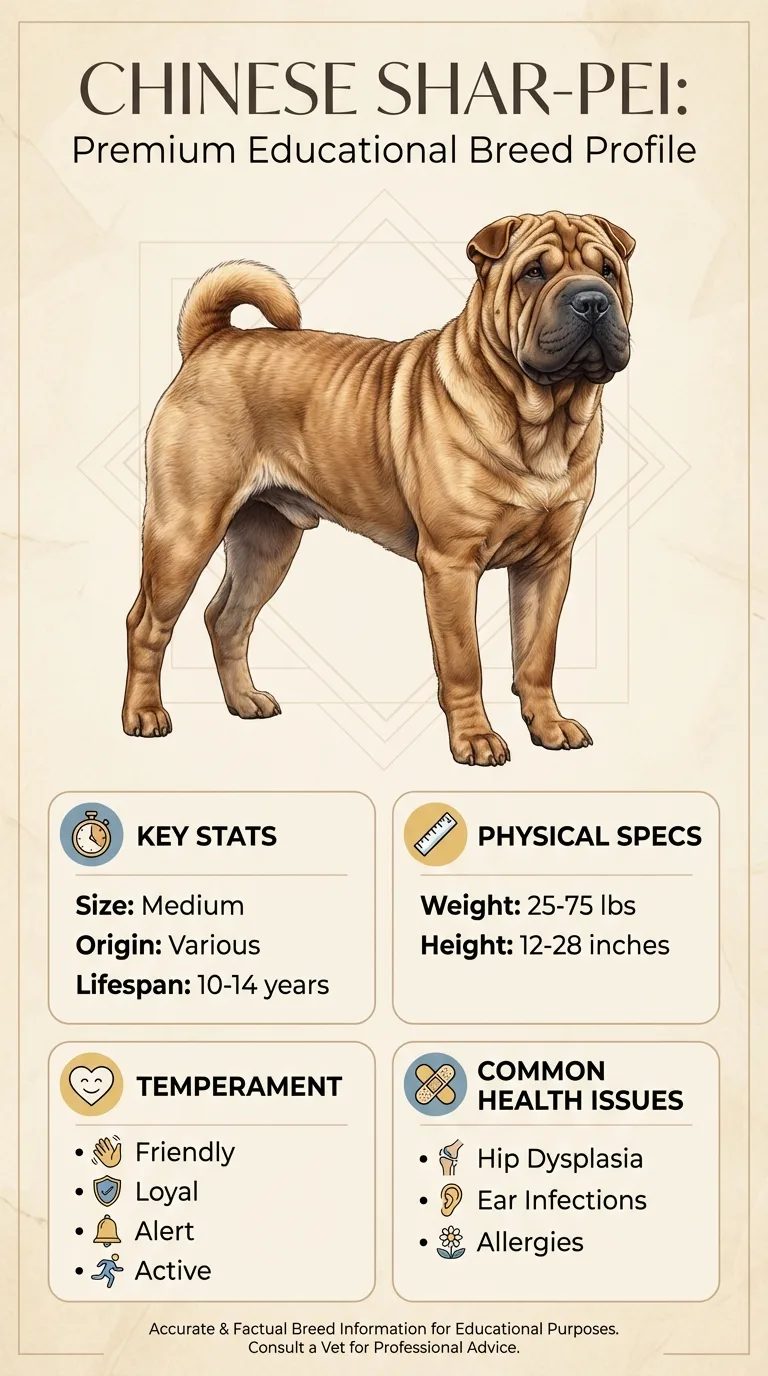
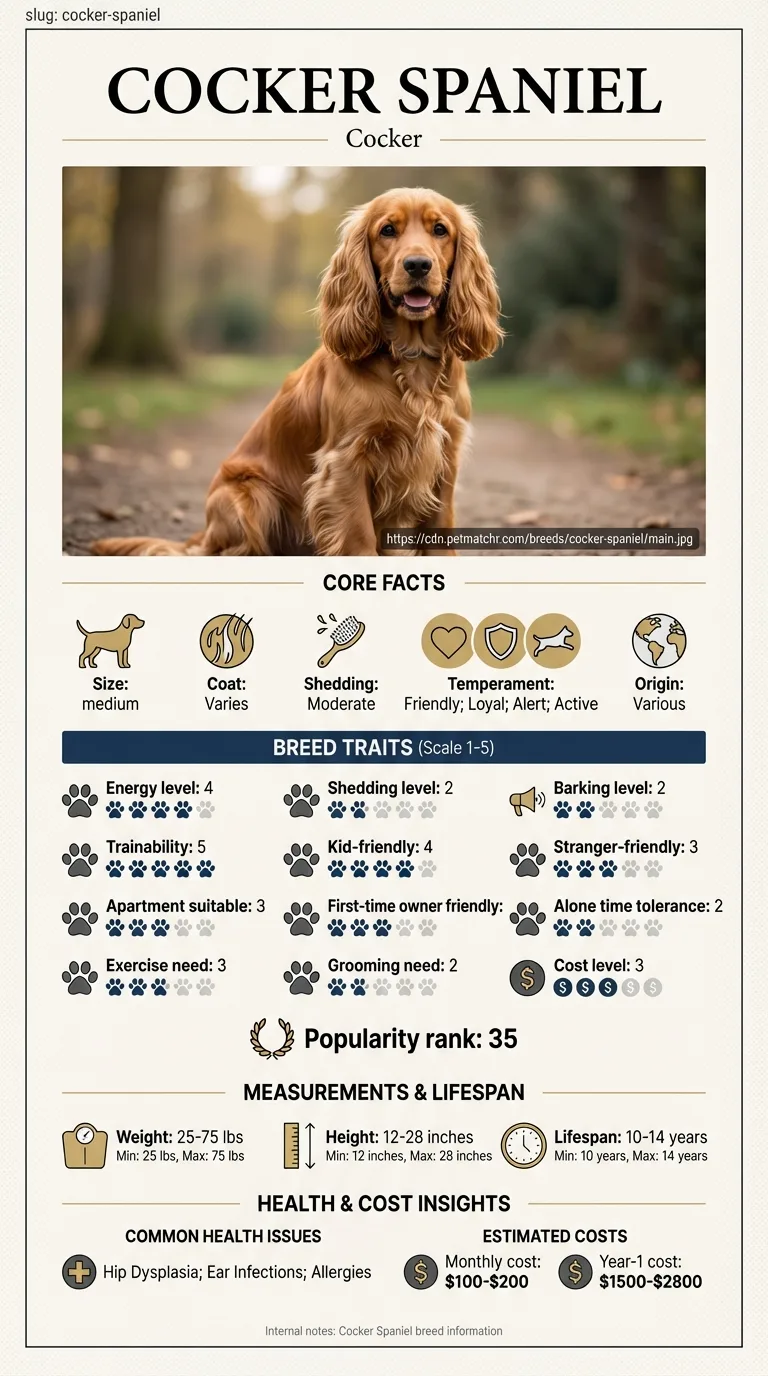
This is for someone already down to Chinese Shar-Pei and Cocker Spaniel and deciding between them. For this pair the decision usually turns on grooming need and good for first-time owners, so those are covered first and in most detail. Both rate 4/5 for flats, so housing does not settle this one. It is written for the decision rather than the breed history.
Between Chinese Shar-Pei and Cocker Spaniel, grooming need is what separates them, and Chinese Shar-Pei is the lower-effort dog of the two to keep.
Choose Chinese Shar-Pei if you do not want a standing grooming appointment, shedding is a problem in your house and your walking routine is modest.
Choose Cocker Spaniel if this is your first dog, there are young children at home and you already have another dog.
| Feature | chinese shar pei | cocker spaniel | Winner |
|---|---|---|---|
| Size class | medium | small | Equal |
| Weight | 45–60 lbs | 20–30 lbs | Equal |
| Height | 18–20 in | 13–16 in | Equal |
| Lifespan | 8–12 years | 10–14 years | cocker spaniel |
| Exercise need | Low (2/5) | Moderate (3/5) | chinese shar pei |
| Grooming need | Low (2/5) | Very high (5/5) | chinese shar pei |
| Shedding | Low (2/5) | Moderate (3/5) | chinese shar pei |
| Energy level | Low (2/5) | Moderate (3/5) | Equal |
| Barking | Low (2/5) | Moderate (3/5) | chinese shar pei |
| Apartment suitability | High (4/5) | High (4/5) | Equal |
| Good for first-time owners | Low (2/5) | High (4/5) | cocker spaniel |
| Tolerates being alone | Moderate (3/5) | Low (2/5) | chinese shar pei |
| Trainability | Low (2/5) | High (4/5) | cocker spaniel |
| Good with kids | Moderate (3/5) | Very high (5/5) | cocker spaniel |
| Good with other dogs | Low (2/5) | High (4/5) | cocker spaniel |
| Friendly to strangers | Low (2/5) | High (4/5) | cocker spaniel |
| Cost level | High (4/5) | Moderate (3/5) | cocker spaniel |
| Coat | Short and harsh | Silky and feathered | Equal |
| Origin | Various | Various | Equal |
| Typical monthly cost | $100–$200 | $80–$150 | Equal |
| Typical first-year cost | $1,400–$2,900 | $1,100–$2,300 | Equal |
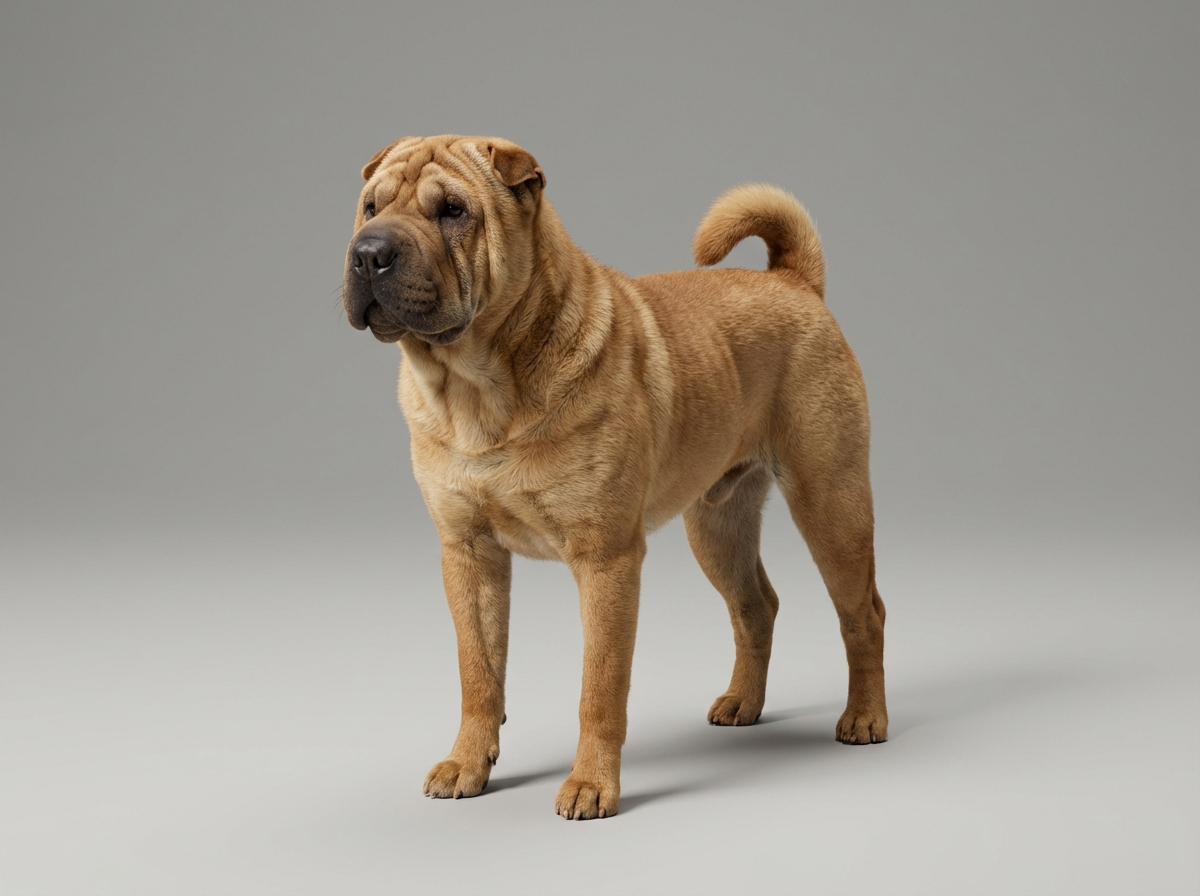
Weight tells most of the story here: the Chinese Shar-Pei's 45-to-60-pound medium frame dwarfs the Cocker Spaniel's 20-to-30-pound small build, and the height gap follows suit at 18-20 inches versus 13-16 inches. The Shar-Pei carries its bulk in a dense, short-coated, wrinkled package, while the Cocker Spaniel is a lighter, leggier sporting breed with a silky, feathered coat draped over a smaller frame. Someone picturing a lap-sized dog should look at the Cocker Spaniel; someone wanting a sturdier, more substantial presence in the house will find it in the Shar-Pei. The two don't overlap much on the scale, so size alone should settle a good portion of this decision quickly.
3 out of 5 versus 2 out of 5 — the Cocker Spaniel edges the Chinese Shar-Pei on exercise need, needing moderate daily activity where the Shar-Pei is content with low (2/5) exercise. Neither is an extreme-energy breed, but the Cocker Spaniel's sporting heritage as a flushing gundog means it appreciates a proper walk or play session most days, while the Shar-Pei is happy to lounge after a shorter outing. Owners who enjoy a moderately active daily routine, like a 30-to-40-minute walk plus some fetch, will suit the Cocker Spaniel's needs well; those wanting the lowest-effort exercise commitment on this comparison should lean toward the Shar-Pei.
The grooming gap here is one of the widest on the whole table: Cocker Spaniel grooming need sits at very high (5/5) thanks to its silky, feathered coat that mats easily and typically needs professional trimming every four to six weeks, while the Chinese Shar-Pei's short, harsh coat needs only low (2/5) upkeep. Shedding follows a similar pattern, moderate (3/5) for the Cocker Spaniel against low (2/5) for the Shar-Pei. Anyone who has owned a Cocker Spaniel before knows the ear-feathering alone requires regular attention to prevent matting and moisture buildup. Buyers who want minimal brushing and no grooming-salon budget line item should take the Shar-Pei's coat seriously as a deciding factor.
Both breeds score high (4/5) for apartment suitability, so space isn't the differentiator — noise and alone-time tolerance are. The Cocker Spaniel barks at a moderate (3/5) level versus the Shar-Pei's low (2/5), a small edge for the quieter breed in tight quarters. More significant is that the Cocker Spaniel rates low (2/5) for tolerating time alone, lower than the Shar-Pei's moderate (3/5), meaning a Cocker Spaniel left solo for long stretches is more prone to distress than a Shar-Pei in the same situation. Apartment dwellers with long commutes should weigh that alone-tolerance gap carefully, since it matters more day-to-day than the modest barking difference between the two.
The Cocker Spaniel is the clear pick for someone newer to dog ownership, rating high (4/5) for both trainability and first-time-owner suitability, powered by a temperament list that includes 'eager to please' — about as direct a training advantage as a breed description offers. The Chinese Shar-Pei rates low (2/5) on both measures, its independent, reserved nature requiring more experienced handling and patience to get consistent results. A first-time owner picturing an easy obedience-class experience should expect that with the Cocker Spaniel; the same owner choosing the Shar-Pei should be ready for a slower, more deliberate training process and possibly professional support.
Families weighing kids and socialization will find a lopsided comparison: the Cocker Spaniel rates very high (5/5) with kids, high (4/5) with other dogs, and high (4/5) with strangers, driven by a gentle, merry, affectionate temperament built for close companionship. The Chinese Shar-Pei trails on every measure — moderate (3/5) with kids, low (2/5) with other dogs, low (2/5) with strangers — consistent with its reserved, independent nature. Households that host frequently, have young children, or already own another dog will generally find the Cocker Spaniel the easier fit day to day, while the Shar-Pei suits a quieter household that isn't looking for an instantly outgoing family dog.
The Cocker Spaniel edges out a longer lifespan at 10 to 14 years against the Shar-Pei's 8 to 12, and its five flagged conditions — ear infections, cataracts, progressive retinal atrophy, hip dysplasia, and autoimmune hemolytic anemia — lean toward eye and ear health given its long, feathered ears. The Shar-Pei's list of five is dominated by its wrinkles: skin fold dermatitis and entropion both stem from its loose skin, joined by familial Shar-Pei fever, hypothyroidism, and ear infections, a condition both breeds share. Cocker Spaniel owners should keep a close eye on ear cleanliness given the breed's floppy, feathered ears, while Shar-Pei owners should plan for regular skin-fold checks from puppyhood onward.
The Chinese Shar-Pei carries the higher overall cost rating at high (4/5) against the Cocker Spaniel's moderate (3/5), and the dollar ranges confirm it: the Shar-Pei runs $100 to $200 monthly and $1,400 to $2,900 in year one, while the Cocker Spaniel runs somewhat lower at $80 to $150 monthly and $1,100 to $2,300 for the first year. That's a meaningful gap for budget-conscious buyers, even though the Cocker Spaniel's grooming needs are far higher — its very high (5/5) grooming score suggests professional grooming costs are already folded into that lower overall estimate, or that food and preventive-care costs for the larger Shar-Pei outweigh the grooming difference.
Chinese Shar-Pei weighs 45–60 lbs and lives 8–12 years; Cocker Spaniel weighs 20–30 lbs and lives 10–14 years. The two diverge most on grooming need, good for first-time owners and good with kids and 3 other rated axes. Almost every rated axis separates them at least slightly. In the table, a "winner" means easier for an ordinary household — not better. Size, coat and origin are recorded without a verdict. Because both breeds are scored the same way, the gaps are reliable even where the absolute numbers are rough.

The Chinese Shar-Pei needs far less, rated low (2/5) versus the Cocker Spaniel's very high (5/5), because the Cocker's silky feathered coat mats easily and needs regular trimming.
Yes, it rates very high (5/5) with kids, the top score on the table, thanks to its gentle, affectionate temperament — well above the Shar-Pei's moderate (3/5).
The Cocker Spaniel, rated high (4/5) for first-time owners versus the Shar-Pei's low (2/5), reflecting its more biddable, eager-to-please nature.
Not really — the Cocker Spaniel actually rates lower on alone-tolerance (low, 2/5) than the Shar-Pei (moderate, 3/5), so both need company or a plan for long workdays.
The Chinese Shar-Pei is substantially bigger, 45-60 lbs versus the Cocker Spaniel's 20-30 lbs.
The Cocker Spaniel is cheaper overall, at $1,100-$2,300 in year one versus $1,400-$2,900 for the Shar-Pei, despite its heavier grooming needs.
The Cocker Spaniel, with a 10-to-14-year lifespan versus the Shar-Pei's 8-to-12 years.
The Cocker Spaniel, described as gentle and affectionate versus the Shar-Pei's reserved, independent nature.
The Cocker Spaniel, rated high (4/5) versus the Shar-Pei's low (2/5).
The Chinese Shar-Pei, rated low (2/5) versus the Cocker Spaniel's moderate (3/5).
The Cocker Spaniel, rated high (4/5) versus the Shar-Pei's low (2/5).
Secure checkout on Stripe. We never see your card.
7-day money-back guarantee. Instant access.
Health information here is general and is not veterinary advice. If your dog shows pain, sudden behaviour change, or worsening symptoms, consult a licensed veterinarian.
Some links on this site are affiliate links. We may earn a commission at no extra cost to you, and we only suggest products we believe are helpful for dog owners.
We research and check what we publish, but we do not warrant that any figure, date, price, or statement is accurate, complete, or current, and we accept no liability for any loss, cost, injury, or other harm arising from the use of this site. Use it as one reference among several. You remain responsible for your own decisions and for your dog's care - confirm anything that matters with a licensed veterinarian or another qualified professional before you act on it. Full disclaimer.
Match your lifestyle to the right dog.
Take quizNot sure which breed is right for you? Take our 2-minute quiz to find out.
Take the quiz