Living
Which is the bigger dog?
The Shar-Pei, by a wide margin -- 45-60 lbs versus the Havanese's 7-13 lbs.

Quick answer
Which is the bigger dog?
The Shar-Pei, by a wide margin -- 45-60 lbs versus the Havanese's 7-13 lbs.
Chinese Shar-Pei or Havanese? On paper they differ most on good for first-time owners, and on the scales Chinese Shar-Pei is the heavier at 45–60 lbs. Here is how the two compare on everything that shapes an ordinary week.
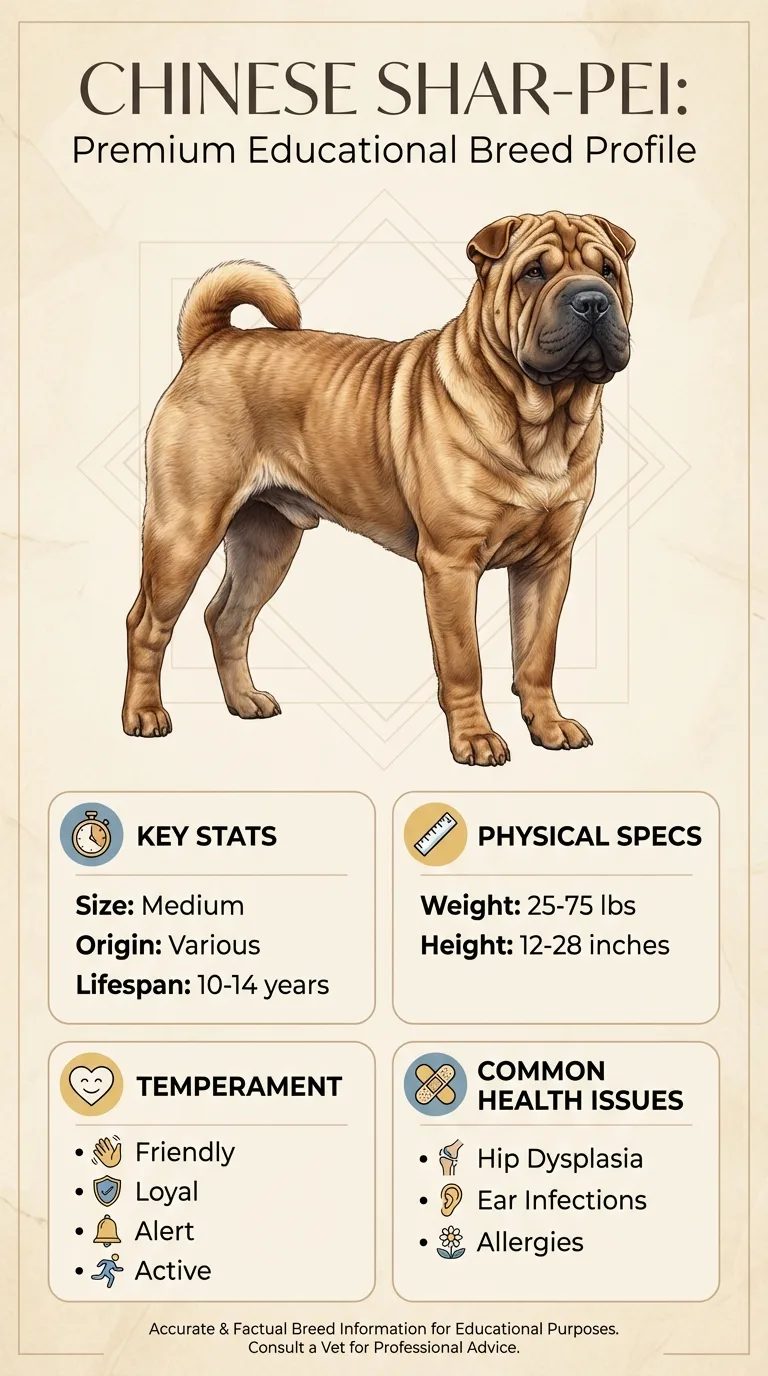
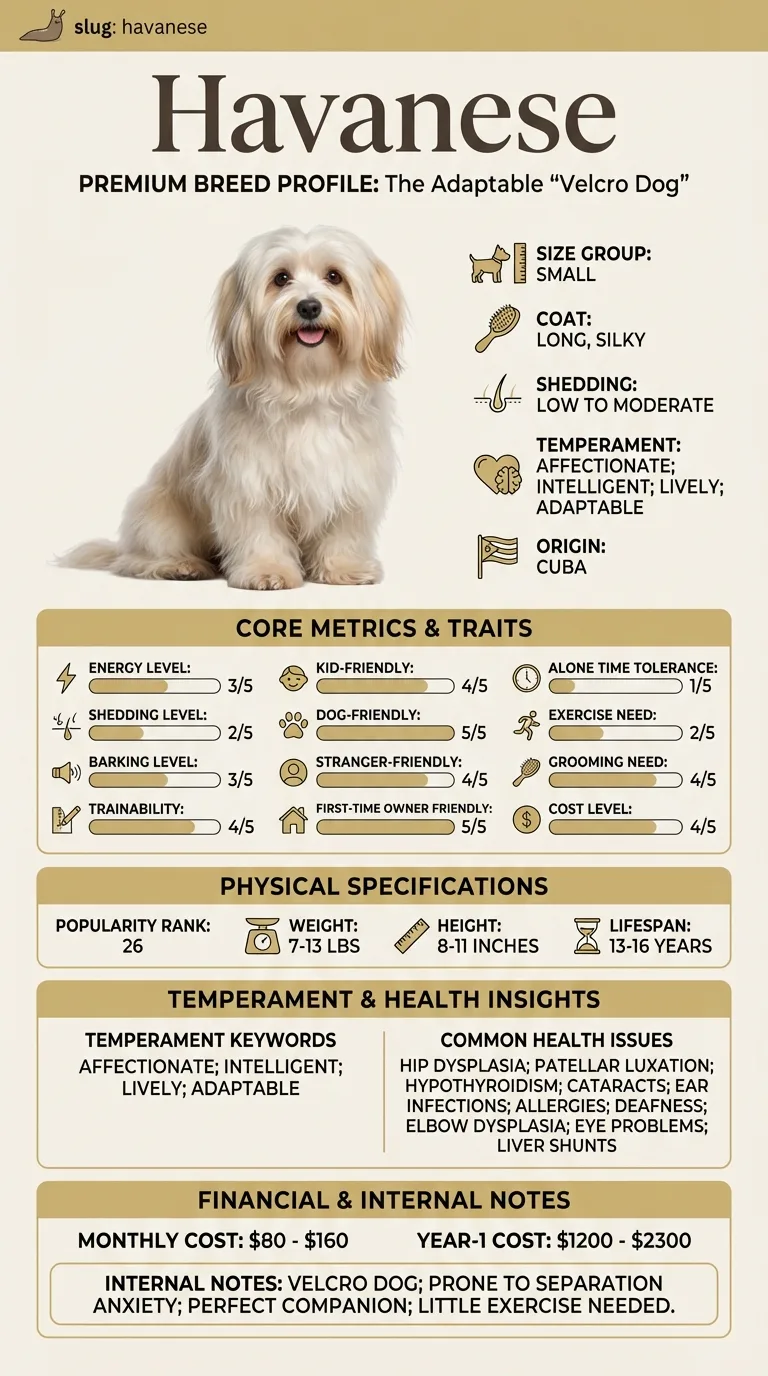
This is for someone already down to Chinese Shar-Pei and Havanese and deciding between them. For this pair the decision usually turns on good for first-time owners and good with other dogs, so those are covered first and in most detail. Anyone choosing from a flat has a clear answer here: Havanese rates 5/5 against 4/5. There is no origin story here — only what changes about your week.
Between Chinese Shar-Pei and Havanese, good for first-time owners is what separates them; neither is the lower-effort dog overall.
Choose Chinese Shar-Pei if you do not want a standing grooming appointment, the dog will be alone during the working day and you want a dog that is more watchful with visitors.
Choose Havanese if you are in a flat or a smaller home, this is your first dog and there are young children at home.
| Feature | chinese shar pei | havanese | Winner |
|---|---|---|---|
| Size class | medium | small | Equal |
| Weight | 45–60 lbs | 7–13 lbs | Equal |
| Height | 18–20 in | 8–11 in | Equal |
| Lifespan | 8–12 years | 13–16 years | havanese |
| Exercise need | Low (2/5) | Low (2/5) | Equal |
| Grooming need | Low (2/5) | High (4/5) | chinese shar pei |
| Shedding | Low (2/5) | Low (2/5) | Equal |
| Energy level | Low (2/5) | Moderate (3/5) | Equal |
| Barking | Low (2/5) | Moderate (3/5) | chinese shar pei |
| Apartment suitability | High (4/5) | Very high (5/5) | havanese |
| Good for first-time owners | Low (2/5) | Very high (5/5) | havanese |
| Tolerates being alone | Moderate (3/5) | Very low (1/5) | chinese shar pei |
| Trainability | Low (2/5) | High (4/5) | havanese |
| Good with kids | Moderate (3/5) | High (4/5) | havanese |
| Good with other dogs | Low (2/5) | Very high (5/5) | havanese |
| Friendly to strangers | Low (2/5) | High (4/5) | havanese |
| Cost level | High (4/5) | High (4/5) | Equal |
| Coat | Short and harsh | Long, silky | Equal |
| Origin | Various | Cuba | Equal |
| Typical monthly cost | $100–$200 | $80–$160 | Equal |
| Typical first-year cost | $1,400–$2,900 | $1,200–$2,300 | Equal |
Few pairings on this site are as size-mismatched as this one: the Havanese weighs just 7-13 lbs and stands 8-11 inches, a true small breed, while the Shar-Pei's 45-60 lbs and 18-20 inches make it three to eight times heavier and nearly double the height. The Havanese's long, silky coat and toy-adjacent build give it a delicate, portable presence, easily carried or fitting on a lap, whereas the Shar-Pei's dense, wrinkled body reads as solid and grounded even at medium size. Anyone drawn to both breeds should recognize this isn't a close comparison physically -- it's closer to comparing a lapdog to a small guard dog.
Exercise need actually ties at Low (2/5) for both breeds, a rare point of agreement given how different they are elsewhere, and energy level also lands close -- Moderate (3/5) for the Havanese against Low (2/5) for the Shar-Pei. The Havanese's Lively, Affectionate temperament shows up more as playful indoor energy and eagerness to be near people than as a demand for long walks or vigorous activity. The Shar-Pei's Calm, Independent nature produces a quieter kind of low energy that doesn't seek out play the way the Havanese does. Both are genuinely low-exercise breeds, just with very different personalities layered on top of that shared trait.
Shedding ties at Low (2/5) for both breeds, but grooming diverges sharply: the Havanese's long, silky coat rates High (4/5), requiring regular brushing to prevent matting and often professional trims, while the Shar-Pei's Low (2/5) grooming need reflects its short, harsh coat's minimal upkeep. That said, the Shar-Pei's skin folds demand their own specialized cleaning that a smooth-faced Havanese never needs, so low grooming for the Shar-Pei isn't quite as hands-off as the score alone suggests. Overall, a Havanese owner spends more time at the brush and groomer, while a Shar-Pei owner spends less time but with a more specialized routine.
The Havanese actually edges out even the apartment-friendly Shar-Pei here, rating Very high (5/5) on apartment suitability against the Shar-Pei's already-strong High (4/5) -- both are genuinely good choices for small-space living. Barking runs Moderate (3/5) for the Havanese versus Low (2/5) for the Shar-Pei, so the Havanese is the more vocal of the two, a common trait among small companion breeds. The bigger divide shows up in solitude tolerance: the Havanese rates Very low (1/5), among the lowest scores in this dataset, reflecting its Affectionate, people-focused nature, while the Shar-Pei's Moderate (3/5) makes it considerably more comfortable being left alone for stretches.
The Havanese rates High (4/5) on trainability and Very high (5/5) for first-time owners, making it one of the more beginner-friendly breeds in this comparison thanks to its Intelligent, Adaptable temperament. The Shar-Pei's Low (2/5) scores on both measures reflect a fundamentally different, more Independent working-dog temperament that doesn't share the Havanese's eagerness to please. A new owner will generally find Havanese training sessions move faster and with fewer setbacks, while Shar-Pei training rewards patience over speed and rarely produces the same reliably eager responsiveness a Havanese offers by breed design.
The Havanese outperforms the Shar-Pei across every social measure: High (4/5) with kids against Moderate (3/5), Very high (5/5) with other dogs against Low (2/5), and High (4/5) with strangers against Low (2/5). Its Affectionate, Lively temperament was bred specifically as a companion dog meant to charm households and visitors alike, a stark contrast to the Shar-Pei's more Reserved, selectively loyal nature. Families that host often, keep multiple pets, or want a dog that's instantly warm with new people will find the Havanese considerably easier to integrate than the Shar-Pei, which tends to reserve its affection for a smaller inner circle.
The Havanese has a substantial lifespan advantage, 13-16 years against the Shar-Pei's 8-12 -- among the longest-lived breeds compared against the Shar-Pei in this batch. Its health list includes hip dysplasia, patellar luxation, hypothyroidism, cataracts, ear infections, allergies, deafness, elbow dysplasia, eye problems, and liver shunts, with two conditions -- hypothyroidism and ear infections -- overlapping the Shar-Pei's own five-item list. The Shar-Pei's remaining concerns, skin fold dermatitis, entropion, and Familial Shar-Pei Fever, are specific to its wrinkled build and have no real Havanese parallel, while the Havanese's patellar luxation and eye issues are more typical of small-breed genetics.
Both breeds rate High (4/5) on overall cost level, but the Havanese actually runs cheaper in dollar terms: $80-$160 monthly and $1,200-$2,300 in year one, against the Shar-Pei's $100-$200 and $1,400-$2,900. That's a somewhat counterintuitive result given the Havanese's heavier grooming needs, but its much smaller body reduces food and medication costs enough to offset the extra brushing and trims. The Shar-Pei's higher costs trace back to its larger size relative to the Havanese and the specialized skin-fold and ear care its wrinkled build tends to require over a typical year.
Chinese Shar-Pei weighs 45–60 lbs and lives 8–12 years; Havanese weighs 7–13 lbs and lives 13–16 years. The two diverge most on good for first-time owners, good with other dogs and grooming need and 3 other rated axes. They are level on cost level, exercise need and shedding, so those cannot decide it. Where the table declares a winner it means less work for the owner, nothing more; descriptive rows are left as ties on purpose. The value here is in the differences between the two columns; treat any single score as approximate.

Both are strong choices -- the Havanese rates Very high (5/5) on apartment suitability and the Shar-Pei rates High (4/5) -- but the Havanese edges ahead.
The Havanese, rated Very high (5/5) for first-time owners against the Shar-Pei's Low (2/5).
The Shar-Pei, rated Moderate (3/5) versus the Havanese's Very low (1/5) -- the Havanese is prone to separation anxiety.
The Havanese, typically 13-16 years compared to the Shar-Pei's 8-12 years.
The Havanese, at $1,200-$2,300 in year one versus the Shar-Pei's $1,400-$2,900, despite the Havanese's heavier grooming needs.
Neither -- both tie at Low (2/5) on shedding, though the Havanese needs far more brushing to manage its long coat.
Yes -- both are prone to hypothyroidism and ear infections, though most of their other health concerns differ.
The Shar-Pei, by a wide margin -- 45-60 lbs versus the Havanese's 7-13 lbs.
The Havanese, rated High (4/5) against the Shar-Pei's Low (2/5).
The Havanese, rated Very high (5/5) versus the Shar-Pei's Low (2/5).
The Havanese, rated High (4/5) against the Shar-Pei's Low (2/5).
Secure checkout on Stripe. We never see your card.
7-day money-back guarantee. Instant access.
Health information here is general and is not veterinary advice. If your dog shows pain, sudden behaviour change, or worsening symptoms, consult a licensed veterinarian.
Some links on this site are affiliate links. We may earn a commission at no extra cost to you, and we only suggest products we believe are helpful for dog owners.
We research and check what we publish, but we do not warrant that any figure, date, price, or statement is accurate, complete, or current, and we accept no liability for any loss, cost, injury, or other harm arising from the use of this site. Use it as one reference among several. You remain responsible for your own decisions and for your dog's care - confirm anything that matters with a licensed veterinarian or another qualified professional before you act on it. Full disclaimer.
Match your lifestyle to the right dog.
Take quizNot sure which breed is right for you? Take our 2-minute quiz to find out.
Take the quiz