DogBreedCompass

Malamute or Malinois: Raw Power Against Directed Intensity

Both rate 5/5 for exercise and 1/5 for apartments. The Malinois goes further: 1/5 for first-time owners and 1/5 for tolerating time alone, which is as low as this site goes on both. It is a working police and military breed, and most of the Malinois that end up in ordinary homes are a mismatch rather than a bad dog.

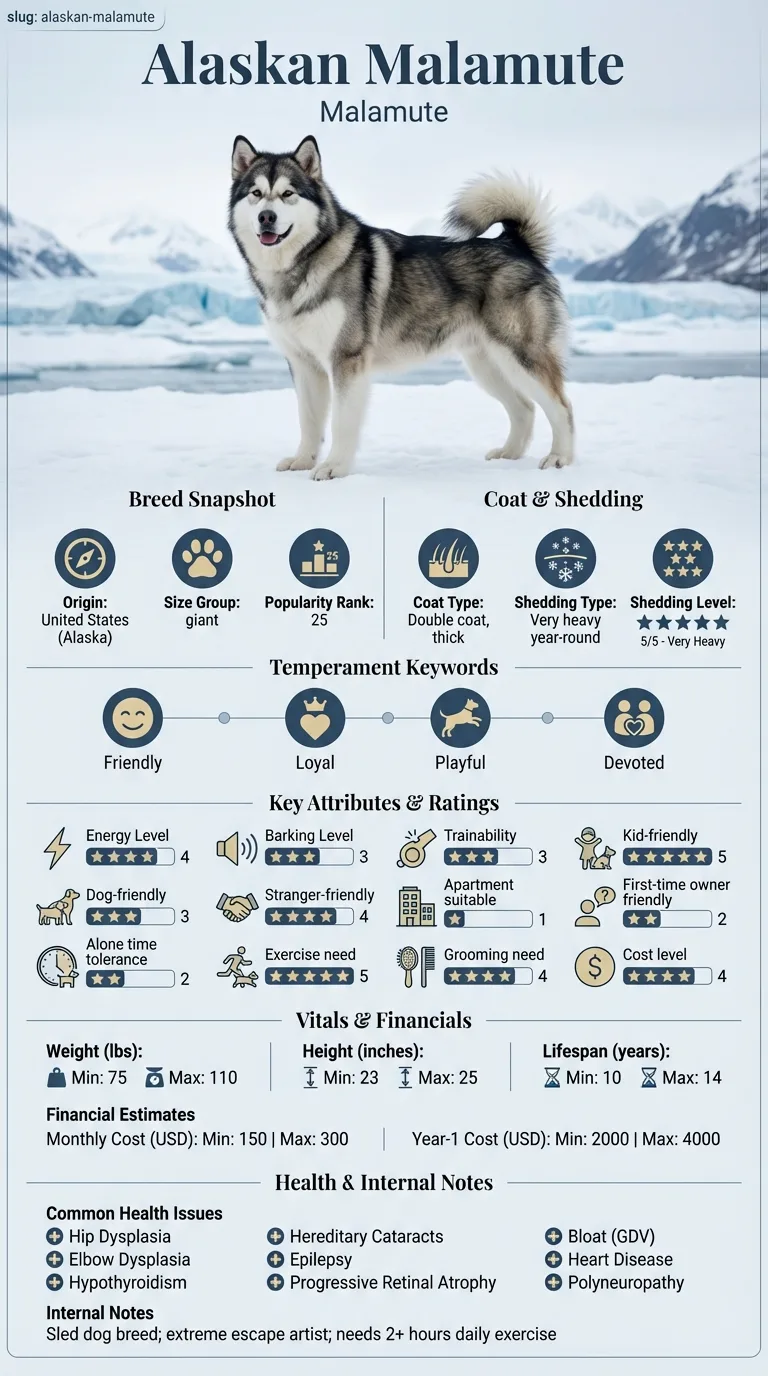
alaskan malamute infographic
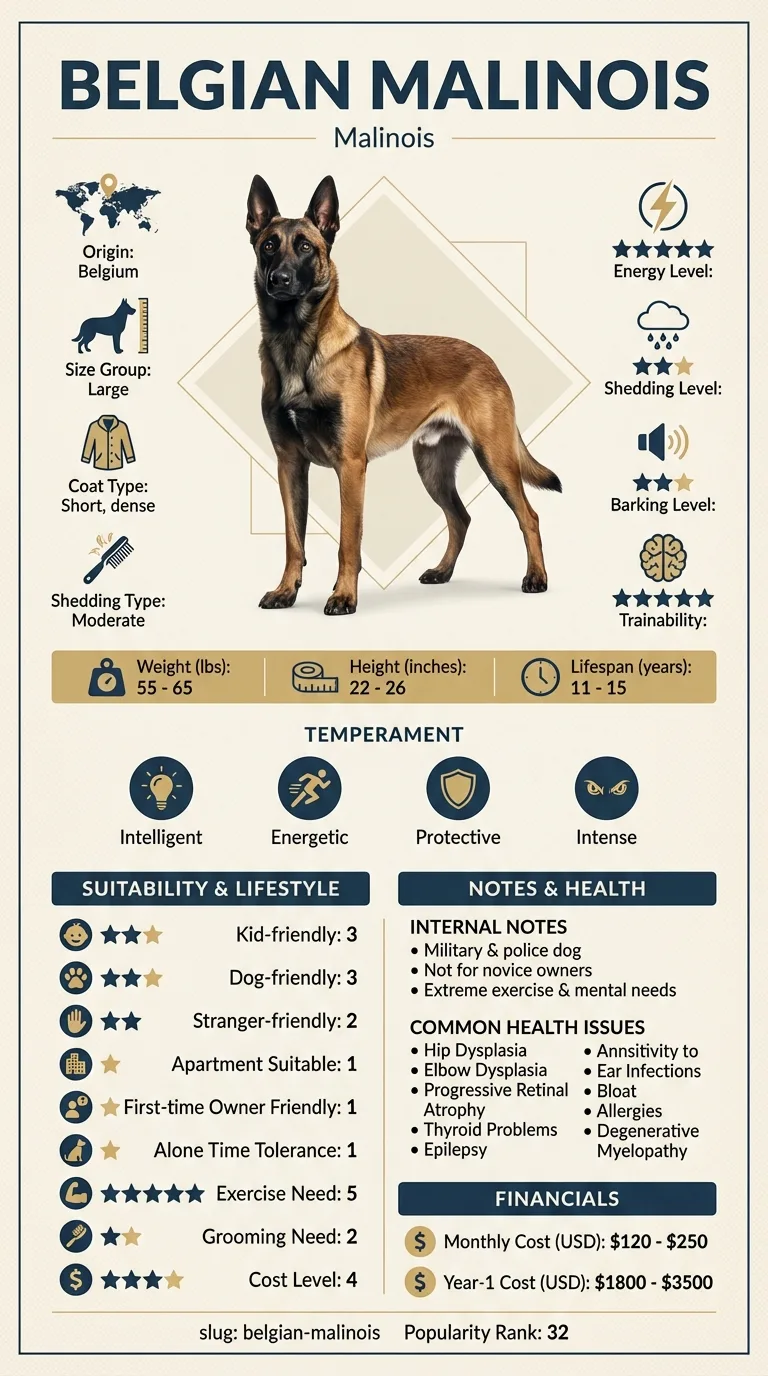
belgian malinois infographic

This page is for someone considering two demanding breeds and needing an honest account of what each is for. It covers drive and trainability, what a 1/5 solitude rating means, anaesthesia sensitivity, containment, and cost.

Quick verdict

The Malinois is the more capable dog and the more likely mistake; the Malamute is physically harder work and psychologically far less demanding.

Choose alaskan malamute if...

Choose the Alaskan Malamute if you want a sociable athletic dog and can meet the physical demand. It rates 5/5 with children against the Malinois's 3/5, 4/5 with strangers against 2/5, and tolerates being alone at 2/5 against 1/5. You are accepting $150–$300 a month, 5/5 shedding and a determined escape artist.

Choose belgian malinois if...

Choose the Belgian Malinois only if you will work it daily in a sport or a job and someone is home most of the day. It rates 5/5 for trainability, grooms at 2/5 and sheds at 3/5. You are accepting 1/5 for first-time owners, 1/5 for solitude, enormous drive, and a dog that needs a purpose rather than a garden.

Head-to-head comparison

Featurealaskan malamutebelgian malinoisWinner
Weight75–110 lbs55–65 lbsEqual
Height23–25 in22–26 inEqual
Lifespan10–14 years11–15 yearsbelgian malinois
CoatThick double coatShort and denseEqual
Grooming needHigh (4/5)Low (2/5)belgian malinois
SheddingVery high (5/5)Moderate (3/5)belgian malinois
Energy levelHigh (4/5)Very high (5/5)Equal
Exercise needVery high (5/5)Very high (5/5)Equal
TrainabilityModerate (3/5)Very high (5/5)belgian malinois
BarkingModerate (3/5)Moderate (3/5)Equal
Good with kidsVery high (5/5)Moderate (3/5)alaskan malamute
Good with other dogsModerate (3/5)Moderate (3/5)Equal
Friendly to strangersHigh (4/5)Low (2/5)alaskan malamute
Apartment suitabilityVery low (1/5)Very low (1/5)Equal
Good for first-time ownersLow (2/5)Very low (1/5)alaskan malamute
Tolerates being aloneLow (2/5)Very low (1/5)alaskan malamute
Typical monthly cost$150–$300$120–$250belgian malinois
Typical first-year cost$2,000–$4,000$1,800–$3,500belgian malinois

Deep dive

What a 5/5 working breed actually needs

A Malinois needs a job, not exercise. That distinction is the reason so many end up rehomed at eighteen months.

Two hours of running a day produces a superbly fit dog with an entirely unmet need. What satisfies the breed is structured work with a handler — protection sport, tracking, detection, obedience at a competitive level, or serious daily training with clear criteria and real intensity.

Without it, the drive turns inward and outward at once: relentless pacing, obsessive fixation on movement, destructive chewing, and nipping or herding anything that runs. In a breed this fast and this hard, that is not a nuisance — it is a management problem in a house with children.

The Malamute's 5/5 is different in kind. It wants to pull and to cover ground, and it is satisfied by physical output alone. Carting, scootering, canicross and long hikes do the job, and a Malamute that has worked will lie down.

Heat limits the Malamute and rarely limits the Malinois, whose short dense coat handles a much wider range.

A 1/5 solitude rating in a 60-pound working dog

The Malinois rates 1/5 for tolerating time alone, the same as a Cavalier or a Vizsla, and in a dog with this much drive that combination is genuinely difficult.

It bonds hard to one or two people, and long unbroken absences produce vocalising, destruction focused on exit points, and self-directed behaviour that can escalate into stereotypies. The severity is proportional to the drive.

Management starts on day one. Graduated absences from the first week, never pushed past the point where the dog becomes anxious. A properly worked dog before you leave, which for this breed means mental work rather than a walk. A crate or settled place trained as a good thing rather than a containment measure. For a full-time household, day care or a walker is not optional.

The Malamute at 2/5 is only marginally better and needs the same programme — pack breeds do not enjoy empty houses.

What differs is the failure mode. A bored Malamute digs up the garden and leaves. A bored Malinois works on the house and on itself.

Guarding, children and strangers

The Malinois rates 2/5 with strangers and 3/5 with children. That is not aggression; it is a working temperament with sharp thresholds, and it needs proportionate management.

A well-bred, well-socialised Malinois is discriminating rather than suspicious — it notices everything, defers to its handler, and does not escalate without cause. A poorly bred or under-socialised one is reactive, and in a dog this fast that is a serious problem. Buy from someone who works their dogs and will discuss temperament and nerve honestly.

With children the 3/5 reflects intensity rather than hostility: a Malinois that has decided running children are a herding problem is difficult to interrupt.

The Malamute is the opposite instrument. 5/5 with children and 4/5 with strangers, and a complete failure as a guard — it will greet an intruder happily and show him the garden.

Both rate 3/5 with other dogs, and in both cases same-sex intolerance appears at social maturity rather than in puppyhood, so socialisation has to continue well past the first year.

Anaesthesia, joints and money

Sensitivity to anaesthesia appears on the Belgian Malinois's condition list and it is worth raising with a vet before any procedure — a lean, low-body-fat breed can respond differently to standard protocols, and it is the kind of thing better discussed in advance than discovered.

Degenerative myelopathy is the other item to name. It is a progressive spinal cord disease appearing in middle age, beginning with a subtly dragging hind foot and scuffed nails and progressing to hind limb weakness. It is painless, which makes it easy to dismiss early, and there is a DNA test.

Hip and elbow dysplasia, progressive retinal atrophy, thyroid disease, epilepsy, ear infections, allergies and bloat complete the list.

The Malamute's list runs to hip and elbow dysplasia, hypothyroidism, hereditary cataracts, progressive retinal atrophy, epilepsy, heart disease, bloat, inherited polyneuropathy and zinc-responsive skin disease.

On money the Malinois is cheaper — $120–$250 a month against $150–$300, and $1,800–$3,500 against $2,000–$4,000 — with grooming at 2/5 against 4/5 and shedding at 3/5 against 5/5. It also lives a year longer.

Both carry a real bloat risk and both households should know the signs.

Alaskan Malamute vs Belgian Malinois: two hard breeds, different hardness

Exercise ties at 5/5, apartments tie at 1/5, barking ties at 3/5 and dog tolerance ties at 3/5. On paper these are two dogs nobody should take on lightly.

The Malinois is harder in the ways that matter most in a house. 1/5 for first-time owners and 1/5 for solitude are the lowest ratings available, and 2/5 with strangers and 3/5 with children make it a poor default family dog.

What it offers in return is 5/5 trainability — it is arguably the most capable working dog alive, and in the right hands it is extraordinary.

The Malamute is more forgiving socially: 5/5 with children, 4/5 with strangers. Its difficulty is physical and logistical rather than psychological — two hours of pulling work, a fence it will test daily, and a coat that produces an astonishing amount of hair.

The honest summary is that the Malamute asks for your legs and the Malinois asks for your life.

Frequently asked questions

Is a Belgian Malinois a suitable pet?

For most households, no. It rates 1/5 for first-time owners and 1/5 for solitude, the lowest available on both, along with 2/5 with strangers and 3/5 with children. It is a working police and military breed that needs a job rather than exercise, and most Malinois in ordinary homes are a mismatch rather than a bad dog.

Do both breeds need the same exercise?

Both rate 5/5, and the content is completely different. The Malamute wants to pull and cover ground and is satisfied by physical output. The Malinois needs structured work with a handler — protection sport, tracking, detection or competitive obedience. Two hours of running leaves a Malinois fit and unsatisfied.

Which is better with children?

The Malamute at 5/5 against the Malinois's 3/5. The Malamute is genuinely tolerant and demonstrative. The Malinois's rating reflects intensity rather than hostility — a working dog that has decided running children are a herding problem is fast and difficult to interrupt.

Is a Malamute a good guard dog?

No, and it is one of the worst in this batch. It rates 4/5 with strangers and 5/5 with children, and it will greet an intruder happily. If deterrence is what you want, the Malinois at 2/5 with strangers is the working breed doing that job — with everything else that comes attached.

What is degenerative myelopathy?

A progressive spinal cord disease that appears in middle age, starting with a subtly dragging hind foot and scuffed nails and progressing to hind limb weakness. It is painless, which is why it is often dismissed early. There is a DNA test and it belongs in any Malinois purchase conversation.

Which copes better with being left alone?

The Malamute at 2/5 against the Malinois's 1/5, though neither is good. Both were bred to work alongside others all day. The difference is the failure mode: a bored Malamute digs up the garden and escapes, while a bored Malinois works on the house and on itself.

Which is cheaper to keep?

The Malinois, at $120–$250 a month against the Malamute's $150–$300, and $1,800–$3,500 against $2,000–$4,000 in the first year. Grooming widens it: 2/5 against 4/5, and 3/5 shedding against 5/5. The Malinois also lives about a year longer.

Quick answers

View more answers
Living

Malamute vs Belgian Malinois: which should I choose?

The Malamute for almost any household choosing between the two — it is sociable, tolerant and satisfied by physical work. The Malinois only if you will train it daily in a sport or a job and someone is home most of the day.

Costs

How much does each cost per month?

The Malamute runs $150–$300 a month and the Malinois $120–$250, with first-year totals of $2,000–$4,000 and $1,800–$3,500. The Malinois is cheaper to feed and far cheaper to groom.

Living

Can either live in an apartment?

Neither — both rate 1/5, the lowest available. The Malamute's problem is size and output together; the Malinois's is drive and a 1/5 tolerance for being left. Neither is workable in a flat without an owner whose whole routine is built around the dog.

Health

What should I tell a vet before Malinois surgery?

That the breed carries a documented anaesthesia sensitivity. It is worth raising in advance rather than discovered — a lean, low-body-fat dog can respond differently to standard protocols.

Related DogBreedCompass guides

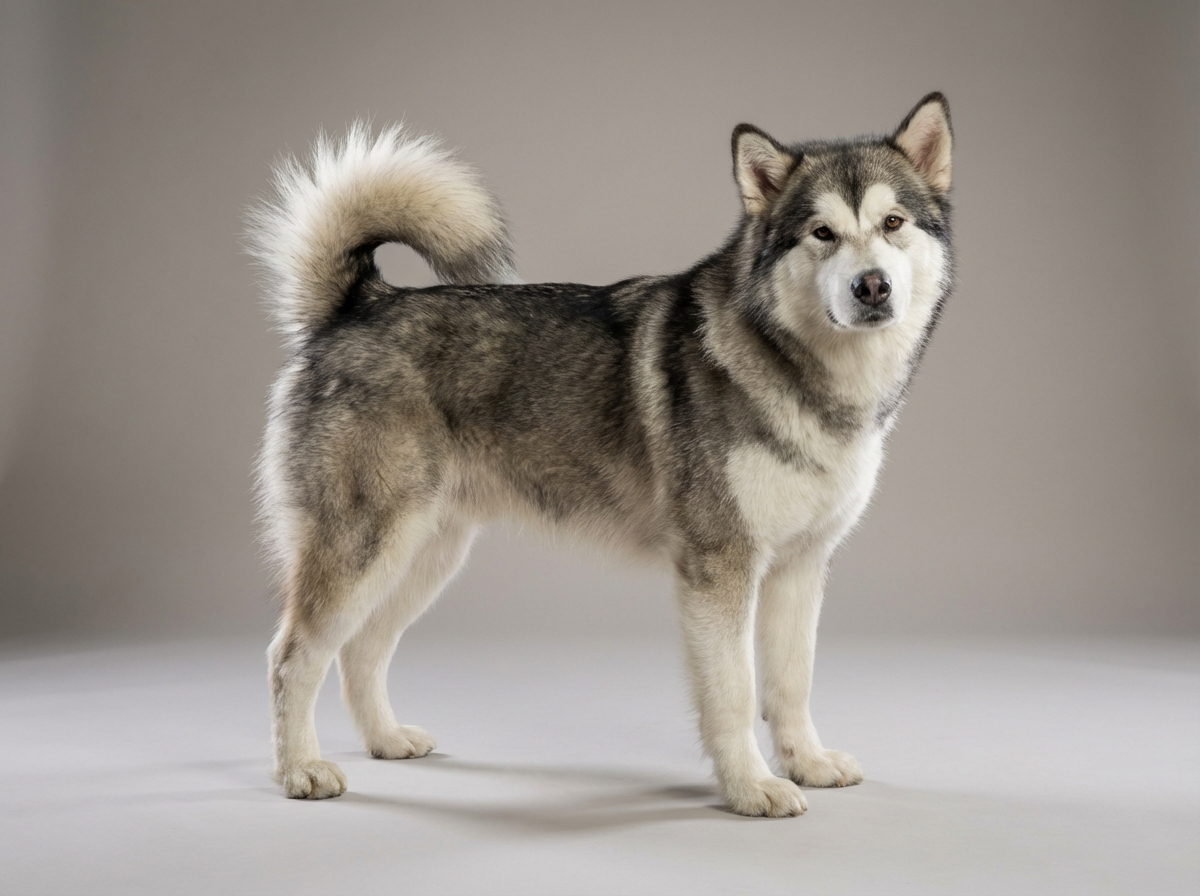
  • Alaskan Malamute breed guideThe Malamute profile covers exercise, containment and the breed's coat.
  • Belgian Malinois breed guideThe Malinois profile covers working drive, handler requirements and health testing.
  • Akita vs German ShepherdThe German Shepherd is the working breed most often weighed against the Malinois.
  • Malamute vs Australian ShepherdThe Australian Shepherd is the lower-intensity herding alternative in the same bracket.
  • Belgian Malinois anesthesia sensitivityAnaesthesia sensitivity is worth raising with a vet before any Malinois procedure.
  • Malamute bloat and GDVBloat is a genuine emergency in both breeds and every owner should know the signs.

Related guides

Important reminder

Health information here is general and is not veterinary advice. If your dog shows pain, sudden behaviour change, or worsening symptoms, consult a licensed veterinarian.

Some links on this site are affiliate links. We may earn a commission at no extra cost to you, and we only suggest products we believe are helpful for dog owners.

Find Your Perfect Breed

Match your lifestyle to the right dog.

Take quiz

Find your match

Not sure which breed is right for you? Take our 2-minute quiz to find out.

Take the quiz