Living
What is the energy level of a Belgian Malinois vs Great Dane?
Belgian Malinois have a high energy level, needing 1-2 hours of exercise daily, while Great Danes have a moderate energy level, requiring about 30-60 minutes.

Quick answer
What is the energy level of a Belgian Malinois vs Great Dane?
Belgian Malinois have a high energy level, needing 1-2 hours of exercise daily, while Great Danes have a moderate energy level, requiring about 30-60 minutes.
Choosing between a Belgian Malinois and a Great Dane? Both breeds are large and have unique characteristics, making this a tough decision.
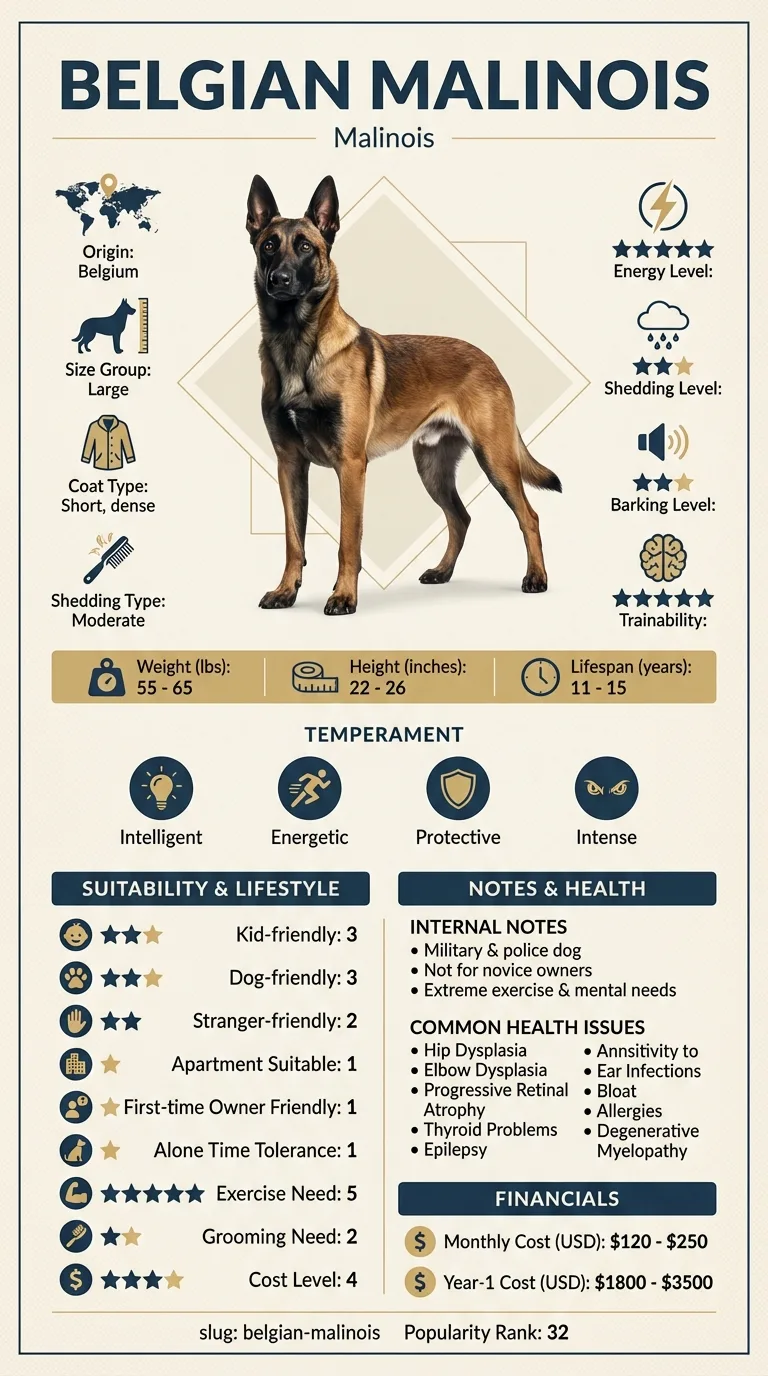
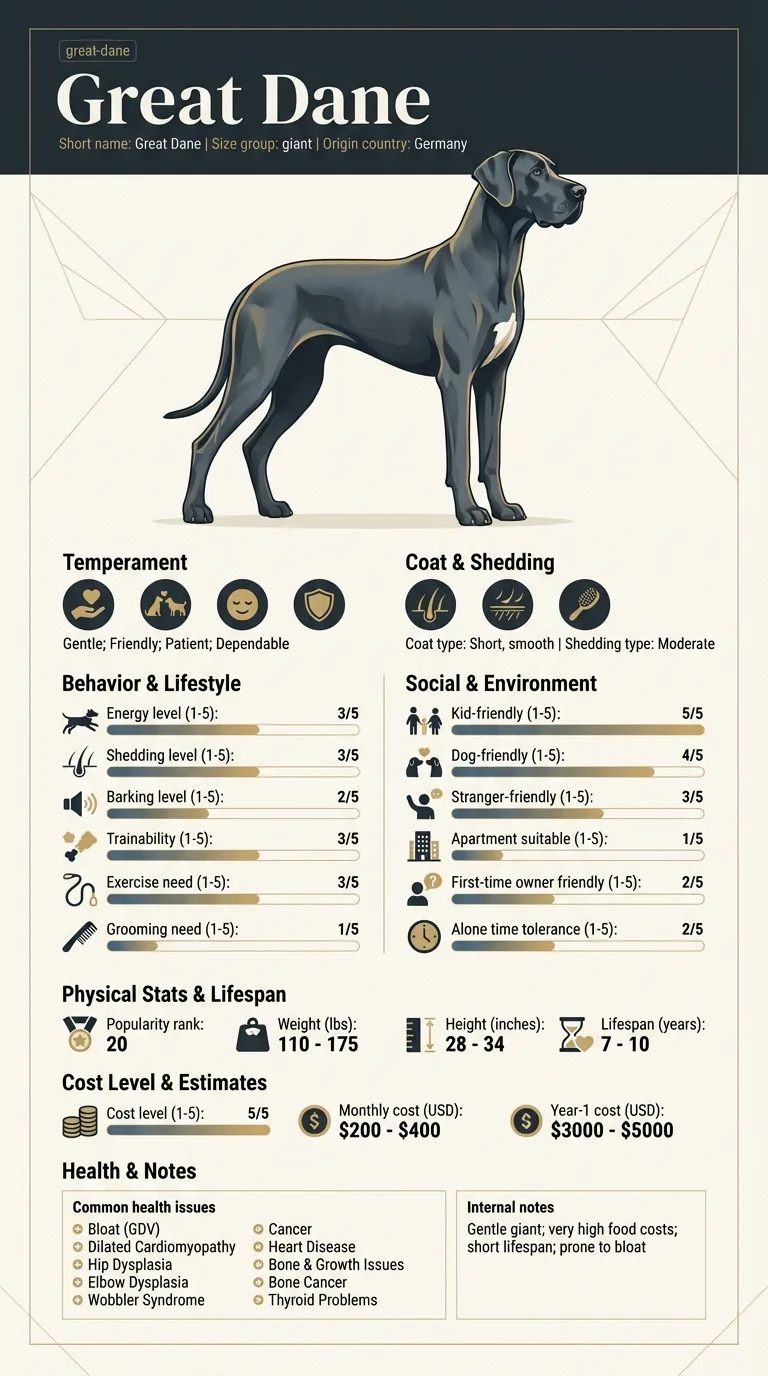
This comparison is perfect for families or individuals considering adding a large dog to their home. You might be weighing factors like energy levels, friendliness, and maintenance needs. Whether you're a first-time dog owner or someone looking for a specific temperament, understanding the differences between these two breeds will help you make an informed choice.
If you're looking for a protective, energetic companion, the Belgian Malinois is the way to go, while the Great Dane is perfect for a gentle, family-friendly giant.
Choose the Belgian Malinois if you have an active lifestyle and can commit to training and exercise. This breed thrives on physical and mental challenges and is not suited for novice owners.
Opt for the Great Dane if you want a calm, friendly dog that gets along well with kids and other pets. Despite their size, they have a gentle disposition and require less exercise than the Malinois.
| Feature | belgian malinois | great dane | Winner |
|---|---|---|---|
| Size class | large | giant | Equal |
| Weight | 55–65 lbs | 110–175 lbs | Equal |
| Height | 22–26 in | 28–34 in | Equal |
| Lifespan | 11–15 years | 7–10 years | belgian malinois |
| Exercise need | Very high (5/5) | Moderate (3/5) | great dane |
| Grooming need | Low (2/5) | Very low (1/5) | great dane |
| Shedding | Moderate (3/5) | Moderate (3/5) | Equal |
| Energy level | Very high (5/5) | Moderate (3/5) | Equal |
| Barking | Moderate (3/5) | Low (2/5) | great dane |
| Apartment suitability | Very low (1/5) | Very low (1/5) | Equal |
| Good for first-time owners | Very low (1/5) | Low (2/5) | great dane |
| Tolerates being alone | Very low (1/5) | Low (2/5) | great dane |
| Trainability | Very high (5/5) | Moderate (3/5) | belgian malinois |
| Good with kids | Moderate (3/5) | Very high (5/5) | great dane |
| Good with other dogs | Moderate (3/5) | High (4/5) | great dane |
| Friendly to strangers | Low (2/5) | Moderate (3/5) | great dane |
| Cost level | High (4/5) | Very high (5/5) | belgian malinois |
| Coat | Short, dense | Short, smooth | Equal |
| Origin | Belgium | Germany | Equal |
| Typical monthly cost | $120–$250 | $200–$400 | Equal |
| Typical first-year cost | $1,800–$3,500 | $3,000–$5,000 | Equal |
When comparing the Belgian Malinois and the Great Dane, energy levels are crucial. The Malinois has a high energy level of 5, needing plenty of exercise and mental stimulation. In contrast, the Great Dane, with a moderate energy level of 3, enjoys leisurely walks but doesn't require as much physical activity, making it more suitable for a less active lifestyle.
The Belgian Malinois excels in trainability with a score of 5, making it ideal for advanced training and dog sports. This breed thrives on challenges and tasks, which can be appealing for experienced owners. The Great Dane, scoring a 3, may require more patience and consistent training, especially due to its size and gentle temperament, meaning that training methods must be gentle yet firm.
Cost is another important consideration. The Belgian Malinois ranges from $120 to $250 monthly, while the Great Dane's costs can reach $200 to $400. Additionally, Great Danes often have higher food expenses and a shorter lifespan, which can increase overall ownership costs significantly over time.
When it comes to families with kids, the Great Dane comes out on top. They are known as gentle giants and tend to be patient and friendly with children. While the Belgian Malinois can be loyal and protective, their high energy and intense nature might be overwhelming for younger kids.
Neither the Belgian Malinois nor the Great Dane is ideal for apartment living, but the Great Dane has a slight advantage. Although they are large, they are generally more relaxed indoors compared to the Malinois, who needs plenty of exercise and mental stimulation. If you live in a smaller space, consider the Great Dane, but be ready for their size!
For first-time dog owners, the Great Dane is the better choice. Their friendly and easygoing nature makes them more manageable for novice owners. In contrast, the Belgian Malinois demands a lot of training, exercise, and mental challenges, which can be a struggle for someone new to dog ownership.
When it comes to ownership costs, the Belgian Malinois is generally less expensive to care for compared to the Great Dane. Monthly costs for a Malinois range from $120 to $250, while Great Danes can cost between $200 and $400. However, be aware that the Malinois may incur costs related to their high exercise needs and potential health issues.
In terms of energy levels, the Belgian Malinois clearly wins. With an energy level score of 5, they require a lot of physical and mental stimulation. The Great Dane, with a score of 3, is more laid-back, making it easier to manage for those who prefer a less active dog.


Choosing between a Belgian Malinois and a Great Dane depends on your lifestyle. If you need a protective, energetic dog, the Malinois is ideal. For a gentle giant that's great with kids, the Great Dane is the better choice.
Generally, the Belgian Malinois has lower initial purchase costs but higher monthly expenses due to their energy needs. The Great Dane, while more expensive overall, may have higher food costs and vet bills due to their size and health issues.
Belgian Malinois require a high level of exercise, ideally 1-2 hours daily. Great Danes, on the other hand, need moderate exercise, around 30-60 minutes a day. Consider your activity level when choosing between these breeds.
Belgian Malinois are usually easier to train due to their intelligence and eagerness to please, scoring a 5 out of 5 in trainability. Great Danes can be trained, but they are less driven, scoring around a 3.
Belgian Malinois can be family-friendly, but they may not be the best fit for families with young children due to their protective nature. Great Danes, however, are known for being gentle giants and are typically very good with kids.
Both breeds have moderate shedding levels, but grooming needs differ. Belgian Malinois require regular brushing to manage their short, dense coats, while Great Danes have short, smooth coats that are easier to maintain.
Belgian Malinois are not suitable for apartment living due to their high energy and need for space to run. Great Danes also struggle in apartments, but they adapt better due to their lower exercise requirements.
Belgian Malinois are prone to hip dysplasia and other genetic issues, while Great Danes are more susceptible to bloat and heart disease. Regular vet check-ups are essential for both breeds.
Belgian Malinois have a high energy level, needing 1-2 hours of exercise daily, while Great Danes have a moderate energy level, requiring about 30-60 minutes.
Both breeds have moderate shedding, but the Malinois may need more frequent brushing due to their dense coat.
Great Danes can be a decent choice for first-time owners, but their size and health needs require careful consideration.
The monthly cost of owning a Belgian Malinois typically ranges from $120 to $250, depending on food, grooming, and vet expenses.
Secure checkout on Stripe. We never see your card.
7-day money-back guarantee. Instant access.
This guide is not medical advice. If your dog shows pain, sudden behavior change, or worsening symptoms, consult a licensed veterinarian.
Some links may be affiliate links. We may earn a commission at no extra cost to you. We only suggest products we believe are helpful for dog owners.
We research and check what we publish, but we do not warrant that any figure, date, price, or statement is accurate, complete, or current, and we accept no liability for any loss, cost, injury, or other harm arising from the use of this site. Use it as one reference among several. You remain responsible for your own decisions and for your dog's care - confirm anything that matters with a licensed veterinarian or another qualified professional before you act on it. Full disclaimer.
Match your lifestyle to the right dog.
Take quizNot sure which breed is right for you? Take our 2-minute quiz to find out.
Take the quiz