DogBreedCompass

Malamute or Aussie: Pulling Power Against a Working Brain

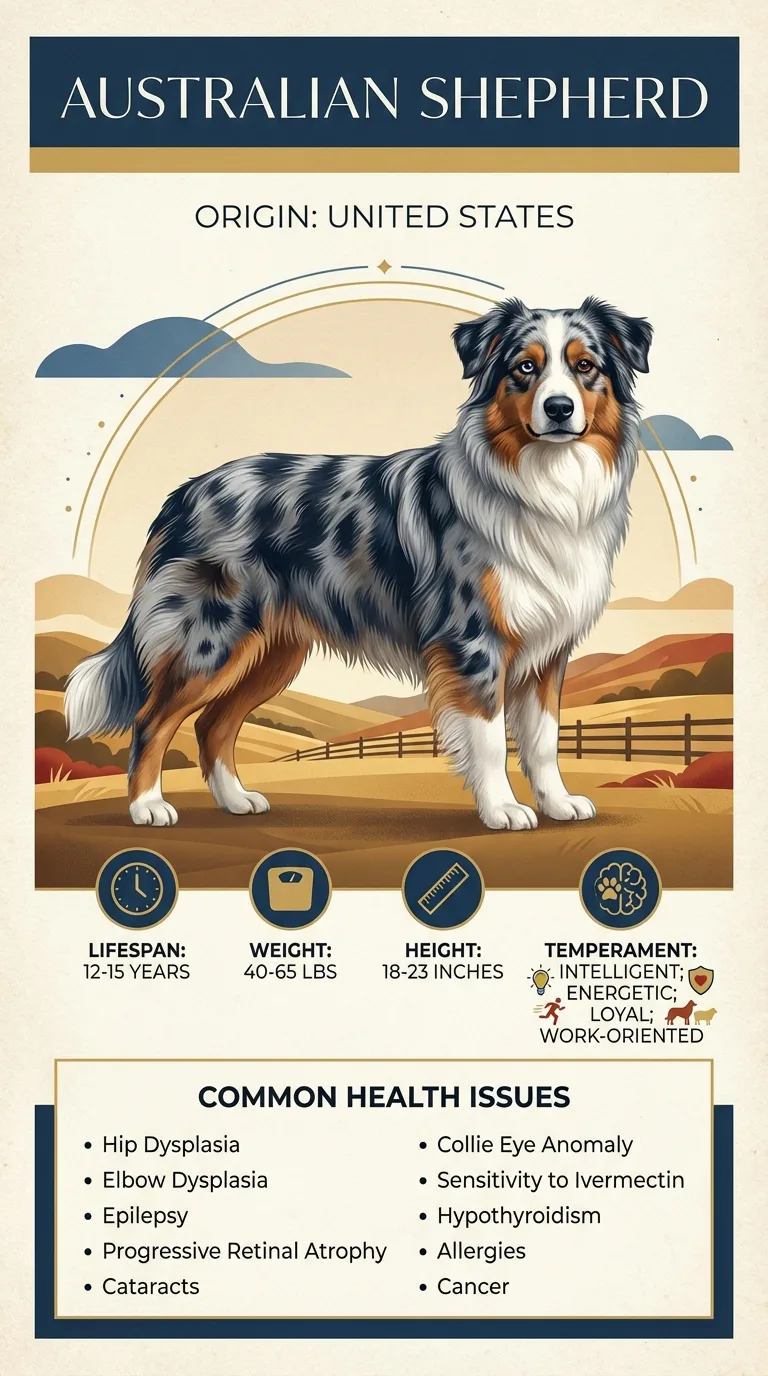
Both breeds rate 5/5 for exercise, 1/5 for apartments, 2/5 for first-time owners and 2/5 for tolerating time alone. They are equally unsuitable for a quiet household — and what they want from the two hours could hardly be more different. One needs to pull. The other needs to think.

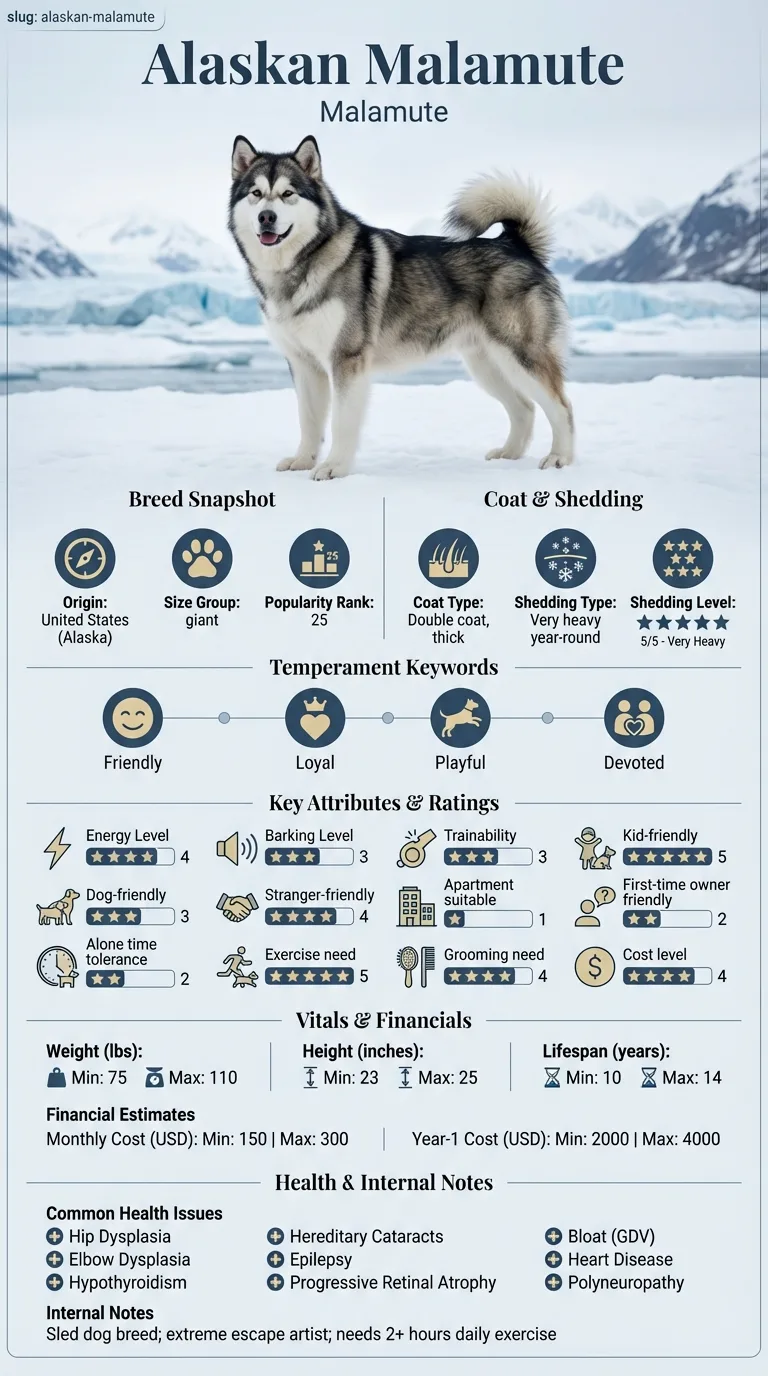
alaskan malamute infographic
australian shepherd infographic

This page is for someone who has accepted a high-output dog and is choosing which kind. It covers the difference between physical and mental work, trainability, two genetic tests every Aussie buyer should ask for, merle breeding, and cost.

Quick verdict

The Aussie is far more trainable and needs its brain used daily; the Malamute is stronger, hairier, more expensive and content with pure physical work.

Choose alaskan malamute if...

Choose the Alaskan Malamute if the exercise you can offer is physical rather than structured, and you want a sociable northern breed. It rates 5/5 with children and 4/5 with strangers against the Aussie's 4/5 and 2/5. You are accepting $150–$300 a month, 5/5 shedding, 4/5 grooming and a determined escape artist.

Choose australian shepherd if...

Choose the Australian Shepherd if you will train a dog every day and want one that learns fast. It rates 5/5 for trainability, 4/5 with other dogs, grooms at 3/5, sheds at 4/5 and costs $100–$200 a month. You are accepting 2/5 with strangers, herding behaviour, and a breed that becomes neurotic without a job.

Head-to-head comparison

Featurealaskan malamuteaustralian shepherdWinner
Weight75–110 lbs40–65 lbsEqual
Height23–25 in18–23 inEqual
Lifespan10–14 years12–15 yearsaustralian shepherd
CoatThick double coatMedium double coatEqual
Grooming needHigh (4/5)Moderate (3/5)australian shepherd
SheddingVery high (5/5)High (4/5)australian shepherd
Energy levelHigh (4/5)Very high (5/5)Equal
Exercise needVery high (5/5)Very high (5/5)Equal
TrainabilityModerate (3/5)Very high (5/5)australian shepherd
BarkingModerate (3/5)Moderate (3/5)Equal
Good with kidsVery high (5/5)High (4/5)alaskan malamute
Good with other dogsModerate (3/5)High (4/5)australian shepherd
Friendly to strangersHigh (4/5)Low (2/5)alaskan malamute
Apartment suitabilityVery low (1/5)Very low (1/5)Equal
Good for first-time ownersLow (2/5)Low (2/5)Equal
Tolerates being aloneLow (2/5)Low (2/5)Equal
Typical monthly cost$150–$300$100–$200australian shepherd
Typical first-year cost$2,000–$4,000$1,500–$2,800australian shepherd

Deep dive

Physical work against mental work

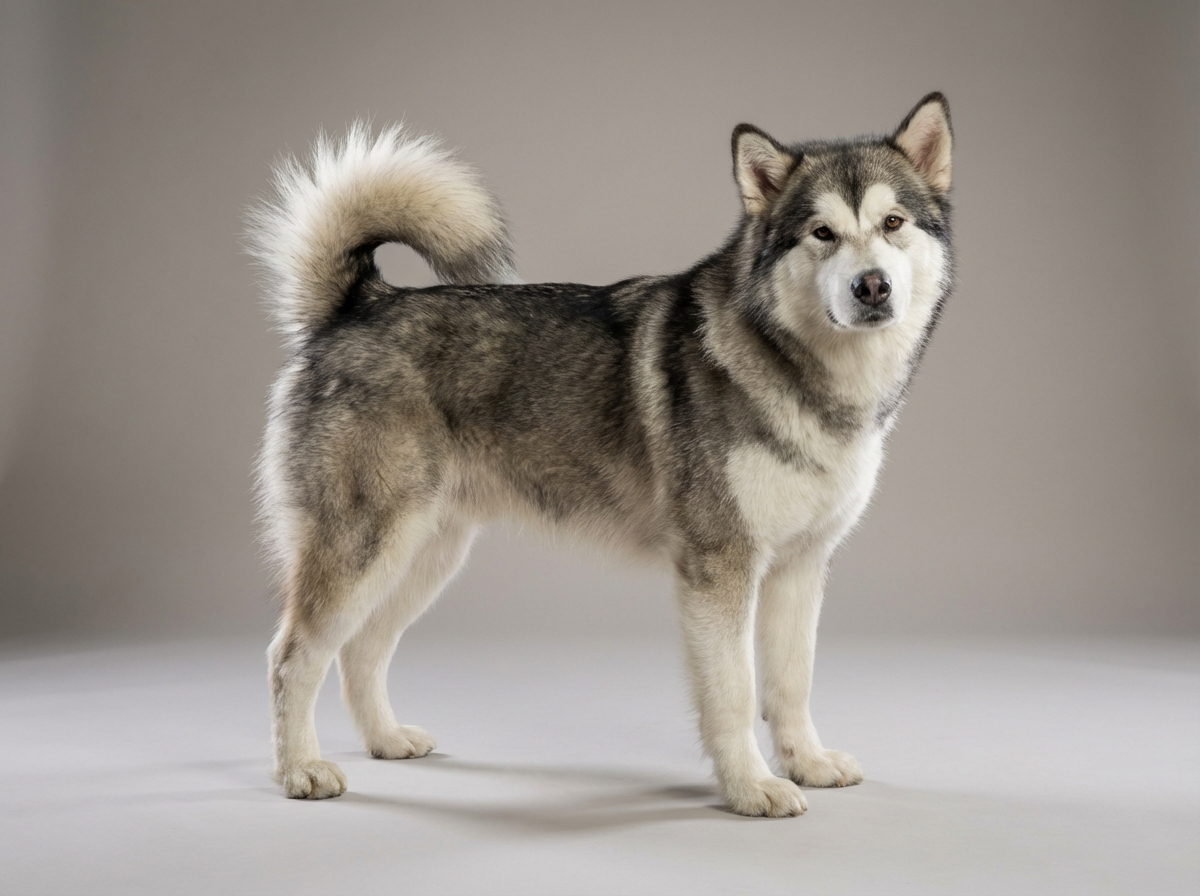
A Malamute wants to pull. Weight-pulling, carting, scootering, canicross and long hikes are what the breed was built for, and it will do them for hours without complaint. Heat is the limit — a thick Arctic coat means summer sessions move to the cool ends of the day.

An Australian Shepherd wants a task. Herding where available, but also agility, obedience, scent work, trick chains, treibball or serious daily training at home. Physical exercise alone produces an extremely fit dog with the same unmet need, which is the single most common mistake made with the breed.

The failure modes differ accordingly. An under-worked Malamute digs up the garden, escapes and howls. An under-worked Aussie becomes compulsive — shadow chasing, spinning, fixation on movement, and herding whatever runs, including children, cyclists and cars.

The practical implication is that the Aussie's requirement is partly available indoors and in bad weather, and the Malamute's is not. Fifteen minutes of scent work in a hallway does real work for an Aussie; it does nothing for a Malamute.

The reserved herder and the sociable sled dog

The Australian Shepherd's 2/5 with strangers is the row that surprises new owners. Aussies are devoted to their own household and genuinely reserved with people outside it — polite at best, avoidant or barky at worst if socialisation has been thin.

That needs work from eight weeks: calm exposure to people, surfaces and noises, continued well past the first year rather than treated as a course you finish.

Herding behaviour is the other management job. Circling, gathering and heel-nipping at running children or joggers is normal for the breed and needs interrupting early rather than being found charming.

The Malamute at 4/5 with strangers and 5/5 with children is the sociable one, and a poor guard as a result — it will greet an intruder happily. Its social complication is other dogs at 3/5, where same-sex intolerance is common and usually surfaces at social maturity.

The Aussie is better with other dogs at 4/5. So the two breeds have opposite social strengths: one is easy with people and harder with dogs, the other the reverse.

MDR1, eye testing and merle breeding

Three things belong in any Australian Shepherd purchase conversation.

MDR1 drug sensitivity is the first, and it will matter in an emergency. Many herding-breed dogs carry a mutation affecting a protein that keeps certain drugs out of the brain, and affected dogs can react severely to normal doses of some common medications, including particular wormers and sedatives. The test is cheap and done once — put the result on your vet's file and volunteer it at every new practice.

Eye testing is the second. Collie eye anomaly, progressive retinal atrophy and cataracts all appear in the breed. Puppies can be examined by an ophthalmologist and DNA tests exist for several of these.

Merle breeding is the third and it is the one to be firm about. Breeding two merle dogs together produces a proportion of double merle puppies, which are frequently deaf, blind, or both. A responsible breeder never does it. If a litter is advertised as merle to merle, walk away.

Hip and elbow dysplasia, epilepsy, hypothyroidism, allergies and cancer complete the list.

The Malamute's own list runs to hip and elbow dysplasia, hypothyroidism, hereditary cataracts, progressive retinal atrophy, epilepsy, heart disease, bloat, polyneuropathy and zinc-responsive skin disease.

Coat, containment and money

Both are double-coated and both shed heavily. The Malamute at 5/5 sheds year-round and blows its undercoat in sheets twice a year; the Aussie at 4/5 does much the same on a slightly smaller scale, with feathering on the legs and trousers that mats and needs brushing through.

Neither coat should ever be clipped. Grooming is 4/5 against 3/5.

Containment favours the Aussie. The Malamute's own breed notes call it an extreme escape artist — it digs, climbs, works at latches and travels once loose, so a fence dug in at the base and secured gates are the baseline. An Aussie is more likely to stay where its people are, though its recall still needs proofing against movement.

On money the Aussie runs $100–$200 a month against $150–$300, and $1,500–$2,800 against $2,000–$4,000 in the first year — mostly a weight difference.

And on lifespan the Aussie is ahead at 12 to 15 years against 10 to 14.

Alaskan Malamute vs Australian Shepherd: same demand, different currency

Five rows tie: exercise at 5/5, apartments at 1/5, first-time owners at 2/5, time alone at 2/5 and barking at 3/5. Both are two-hour dogs that should not live in a flat and should not be left all day.

What separates them is what the two hours has to contain. The Malamute is satisfied by physical output — pulling, hauling, covering distance. The Aussie is not. It rates 5/5 for trainability, and a 5/5 brain with 5/5 energy and no work invents its own, which in this breed means circling, nipping, obsessive fixation and noise.

The other real difference is strangers: 4/5 against 2/5. The Malamute greets everyone; the Australian Shepherd is genuinely reserved, and that catches people out because it looks like a friendly breed.

On cost the Aussie is a third cheaper, sheds slightly less at 4/5 against 5/5, grooms at 3/5 against 4/5, and lives two years longer.

Frequently asked questions

Do both breeds need the same amount of exercise?

Both rate 5/5, around two hours a day, but the content differs completely. The Malamute is satisfied by physical output — pulling, hauling, covering distance. The Australian Shepherd needs mental work as well, and physical exercise alone produces an extremely fit dog with the same unmet need.

What happens to an under-worked Australian Shepherd?

It becomes compulsive rather than merely naughty — shadow chasing, spinning, fixation on movement, and herding whatever runs, including children, cyclists and cars. Because it rates 5/5 for trainability, it learns those routines thoroughly, which is why they are hard to undo once established.

Are Australian Shepherds friendly with strangers?

No — 2/5, against the Malamute's 4/5, and it surprises most new owners. Aussies are devoted to their own household and genuinely reserved outside it. Calm socialisation from eight weeks, continued well past the first year, is what keeps that reserve proportionate rather than avoidant.

What is MDR1 and why does it matter?

A mutation common in herding breeds affecting a protein that keeps certain drugs out of the brain. Affected dogs can react severely to normal doses of some common medications, including particular wormers and sedatives. The test is cheap and done once — keep the result on your vet's file and volunteer it at every new practice.

Why should I avoid a merle-to-merle litter?

Because breeding two merle dogs together produces a proportion of double merle puppies, which are frequently deaf, blind, or both. A responsible breeder never does it. If a litter is advertised as merle to merle, that tells you what you need to know about the breeder rather than about the puppies.

Which is better with other dogs?

The Australian Shepherd at 4/5 against the Malamute's 3/5. Malamute same-sex intolerance is common and usually appears at social maturity around two years old. The breeds have opposite social strengths: the Malamute is easier with people, the Aussie easier with dogs.

Which is cheaper to keep?

The Australian Shepherd, at $100–$200 a month against the Malamute's $150–$300, and $1,500–$2,800 against $2,000–$4,000 in the first year. It also grooms at 3/5 against 4/5 and lives two years longer, at 12 to 15 against 10 to 14.

Quick answers

View more answers
Living

Malamute vs Australian Shepherd: which should I choose?

The Aussie if you will train a dog every day and want one that learns fast. The Malamute if the exercise you can offer is physical rather than structured, and you want a breed that is sociable with people.

Costs

How much does each cost per month?

The Malamute runs $150–$300 a month and the Australian Shepherd $100–$200, with first-year totals of $2,000–$4,000 and $1,500–$2,800.

Living

Can either live in an apartment?

Neither — both rate 1/5, the lowest available, for the same reason: 5/5 exercise and a 2/5 tolerance for being left alone. Neither should be a flat dog unless the owner's whole routine is built around it.

Health

What should I ask an Aussie breeder?

The MDR1 result, eye examination and DNA results covering Collie eye anomaly and progressive retinal atrophy, hip and elbow scores, and confirmation that the litter is not merle to merle.

Related DogBreedCompass guides

  • Alaskan Malamute breed guideThe Malamute profile covers exercise, containment and the breed's coat.
  • Australian Shepherd breed guideThe Australian Shepherd profile covers working outlets, coat care and genetic testing.
  • Malamute vs Border CollieThe Border Collie is the higher-intensity herding breed most often weighed against the Aussie.
  • Akita vs Alaskan MalamuteThe Akita comparison sets out how the Malamute differs from a Japanese guardian breed.
  • Australian Shepherd genetic disordersThe inherited conditions worth screening for before buying an Aussie puppy.
  • Malamute bloat and GDVBloat is a genuine emergency in the Malamute and every owner should know the signs.

Related guides

Important reminder

Health information here is general and is not veterinary advice. If your dog shows pain, sudden behaviour change, or worsening symptoms, consult a licensed veterinarian.

Some links on this site are affiliate links. We may earn a commission at no extra cost to you, and we only suggest products we believe are helpful for dog owners.

Find Your Perfect Breed

Match your lifestyle to the right dog.

Take quiz

Find your match

Not sure which breed is right for you? Take our 2-minute quiz to find out.

Take the quiz