DogBreedCompass

Akita or German Wirehaired Pointer: Two Reserved Workers

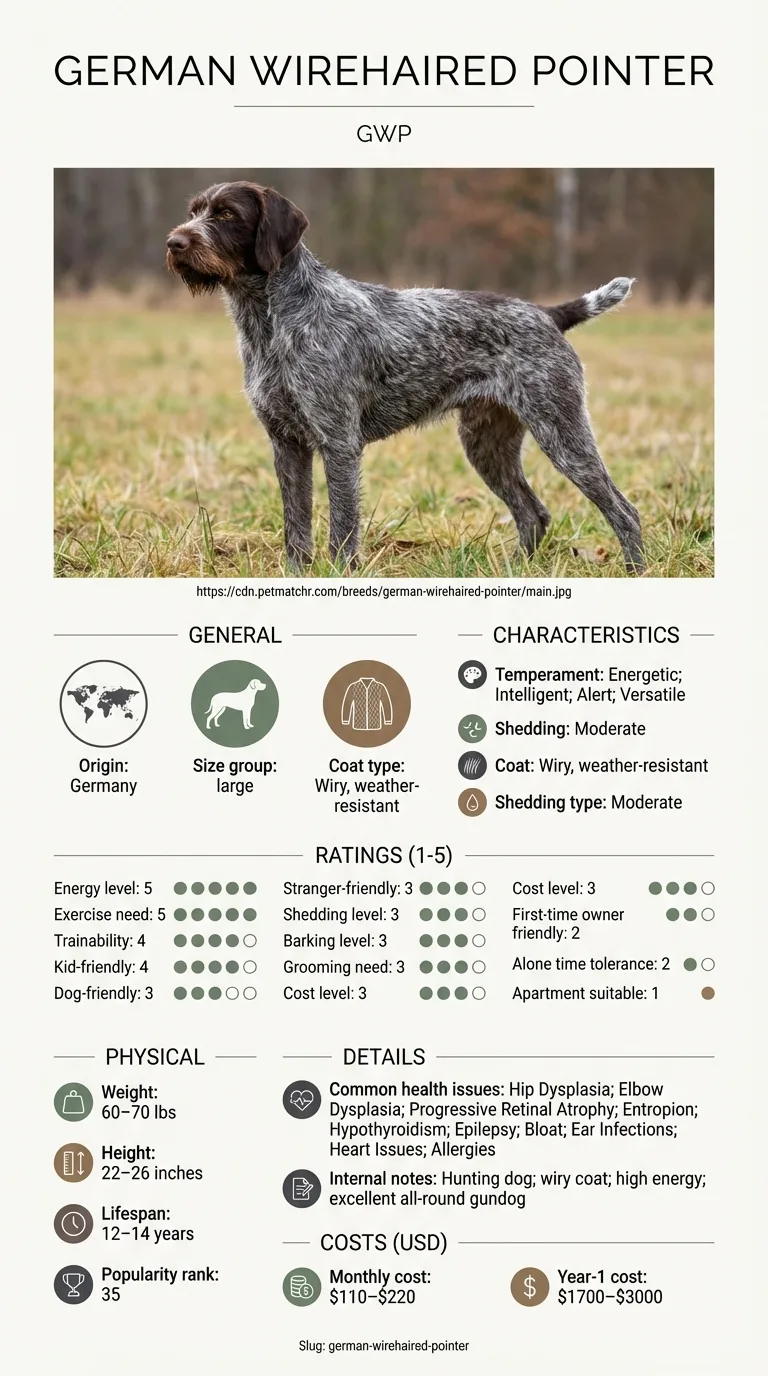
The German Wirehaired Pointer is the more standoffish of the German pointing breeds, rating 3/5 with strangers and 3/5 with other dogs where its shorthaired cousin rates 3/5 and 4/5. It is a gundog with a guardian streak, and it is the closest thing to a middle ground between these two very different dogs.

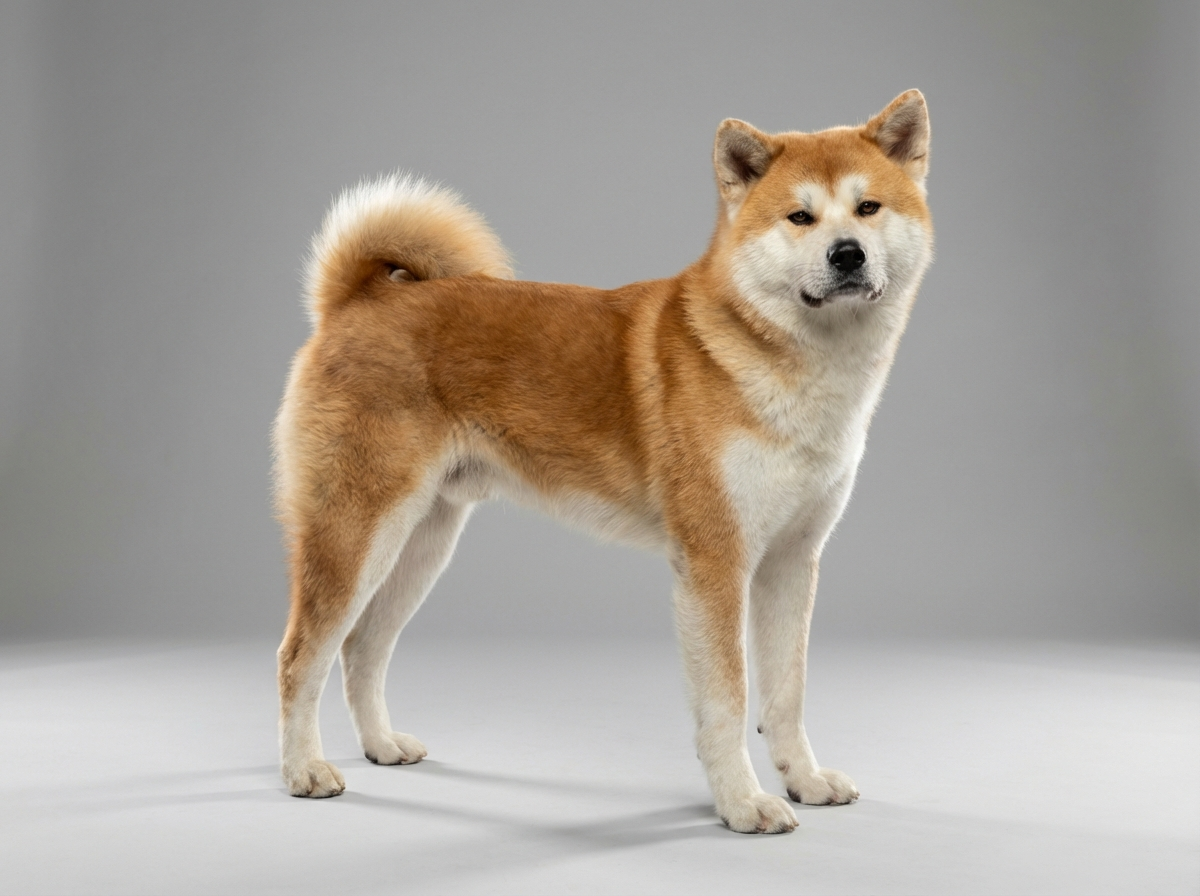
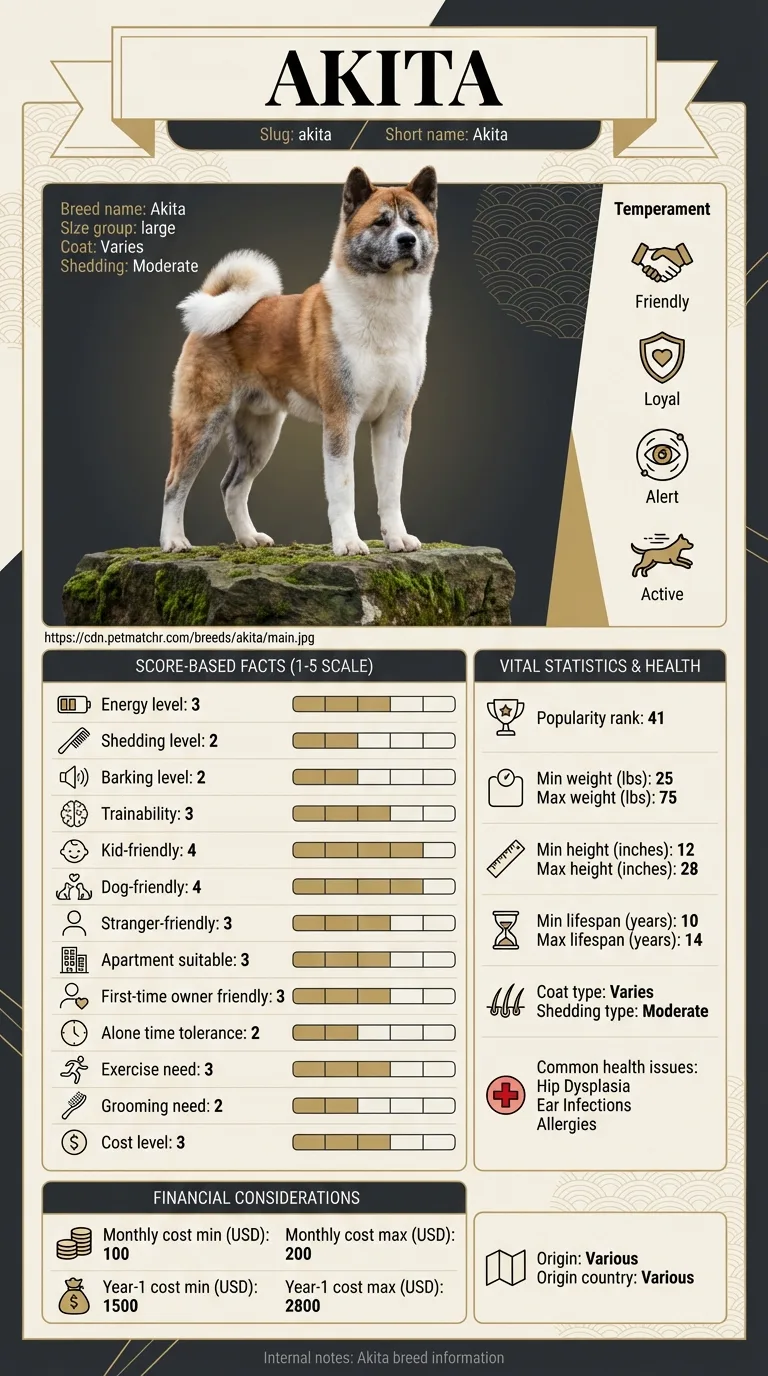
akita infographic
german wirehaired pointer infographic

This page is for someone weighing a hard-working gundog against a guardian, and for anyone deciding between the wirehaired and shorthaired German pointers. It covers exercise, what a wire coat actually needs, temperament and territoriality, health testing, and cost.

Quick verdict

The Wirehaired Pointer gives you a working dog with some of the reserve people want from a guardian, and it charges for it in exercise; the Akita gives you the reserve without the workload.

Choose akita if...

Choose the Akita if you cannot commit two hours a day. It needs 3/5 exercise against the GWP's 5/5, rates 2/5 for apartments against 1/5, tolerates being alone at 3/5 against 2/5, and barks at 2/5 against 3/5. You are accepting 3/5 trainability, 2/5 with other dogs, 5/5 shedding and up to 130 pounds.

Choose german wirehaired pointer if...

Choose the German Wirehaired Pointer if you are genuinely active and want a capable, weatherproof, moderately protective dog. It rates 4/5 for trainability and with children, lives 12 to 14 years — longer than either the Akita or the shorthaired GSP — and costs $110–$220 a month. You are accepting 5/5 exercise and a coat that needs stripping.

Head-to-head comparison

Featureakitagerman wirehaired pointerWinner
Weight70–130 lbs60–70 lbsEqual
Height24–28 in22–26 inEqual
Lifespan10–13 years12–14 yearsgerman wirehaired pointer
CoatDense double coatWiry, weather-resistantEqual
Grooming needModerate (3/5)Moderate (3/5)Equal
SheddingVery high (5/5)Moderate (3/5)german wirehaired pointer
Energy levelModerate (3/5)Very high (5/5)Equal
Exercise needModerate (3/5)Very high (5/5)akita
TrainabilityModerate (3/5)High (4/5)german wirehaired pointer
BarkingLow (2/5)Moderate (3/5)akita
Good with kidsModerate (3/5)High (4/5)german wirehaired pointer
Good with other dogsLow (2/5)Moderate (3/5)german wirehaired pointer
Friendly to strangersLow (2/5)Moderate (3/5)german wirehaired pointer
Apartment suitabilityLow (2/5)Very low (1/5)akita
Good for first-time ownersVery low (1/5)Low (2/5)german wirehaired pointer
Tolerates being aloneModerate (3/5)Low (2/5)akita
Typical monthly cost$110–$240$110–$220german wirehaired pointer
Typical first-year cost$1,700–$3,200$1,700–$3,000german wirehaired pointer

Deep dive

How it differs from the Shorthaired Pointer

If you are choosing between the two German pointers rather than against the Akita, the differences are real.

The Wirehaired is slightly heavier and squarer, and its coat is the point: a harsh, flat-lying outer coat with a dense undercoat, plus the beard and eyebrows. It sheds water, resists thorns and keeps the dog warm in conditions that would end a shorthaired dog's day.

Temperamentally it is the more reserved of the two — 3/5 with other dogs against the GSP's 4/5, and a stronger tendency to attach to one person and stay aloof from the rest. Owners often describe the GSP as everyone's friend and the GWP as their own dog.

On drive both are 5/5. Neither is a lower-energy option.

And the GWP lives longer, 12 to 14 years against 10 to 12, which is a meaningful advantage over a decade of ownership.

Against the Akita, the GWP's territorial streak is the interesting overlap — but it is a working dog first, and it will not be satisfied by guarding alone.

What a wire coat actually needs

The 3/5 grooming rating hides a specific skill requirement. A correct wire coat is maintained by hand-stripping — plucking dead hair out by the root — rather than by clipping.

Clipping cuts the harsh outer hairs and leaves the roots in place. Do it repeatedly and the coat softens, loses its water resistance and its ability to shed thorns, and starts to hold dirt and moisture against the skin. That is the opposite of what the coat exists to do.

Most owners either learn to strip the coat themselves — it is straightforward and the dog does not mind — or find a groomer who does it properly, which is not every groomer.

The beard is a daily reality nobody warns you about. It holds water after every drink, mud after every walk, and it will be wiped across furniture.

Shedding is 3/5, moderate and steady. The Akita's 5/5 is concentrated instead: a weekly brush for ten months, then two or three weeks twice a year of pulling a dense undercoat out in handfuls. Neither coat should be clipped, for related reasons.

Two hours a day, and a dog that watches the gate

The GWP wants around two hours of activity a day and, like all pointing breeds, it wants to search rather than to travel. Quartering ground, retrieving, working scent in cover — that is what tires it. A dog given only mileage becomes fitter without becoming calmer.

At 4/5 trainability it is willing but more independent-minded than a GSP, and it can be stubborn about repetition. It responds to fair, consistent handling and dislikes being nagged.

The territorial streak needs managing. A GWP that is not socialised broadly can become genuinely unwelcoming to visitors, which is a much bigger problem in a suburban house than in a farmyard. Introduce it to a wide range of people from eight weeks, and keep doing it.

At 2/5 for solitude it is a poor choice for an empty house. It attaches closely, and long absences produce restlessness and destruction.

The Akita's reserve is stronger at 2/5 and more stable — it assesses, decides and settles — but its dog intolerance arrives at social maturity around two years old and needs the same sustained socialisation.

Eyelids, joints, bloat and money

Entropion is the entry on the GWP's list that is easiest to miss. The eyelid rolls inward and the lashes abrade the cornea — painful, damaging to sight and surgically correctable. In a dog that works in cover, persistent squinting or a weeping eye should never be written off as a scratch from a bramble without a proper look.

Hip and elbow dysplasia sit alongside it, with progressive retinal atrophy, hypothyroidism, epilepsy, ear infections, heart issues and allergies. Hip and elbow scores plus eye certification on the parents are the standard questions.

Bloat is on the list and matters for the same reason it does in every deep-chested working breed. Learn the signs — unproductive retching, a distending abdomen, restlessness — and know where the nearest out-of-hours surgery is.

The Akita shares the bloat risk and adds autoimmune disorders, hypothyroidism, progressive retinal atrophy and hip dysplasia.

On money they are close: $110–$220 a month against $110–$240, and $1,700–$3,000 against $1,700–$3,200. The GWP's extra cost is the coat, if you pay someone to strip it; the Akita's is autoimmune disease, if it arrives.

Akita vs German Wirehaired Pointer: a gundog with opinions

Grooming ties at 3/5. Monthly cost is nearly identical. Both are large, both are weatherproof, both are reserved with people they do not know — the GWP at 3/5, the Akita at 2/5.

That reserve is what distinguishes the Wirehaired Pointer from most sporting breeds. It is not a dog that greets everyone at the door. Bred to work rough ground and also to mind the handler's property, it tends to be a one-family dog with a genuine territorial streak, which is unusual in a pointer.

Where they part company is workload. 5/5 exercise and 5/5 energy against 3/5 and 3/5. That is roughly two hours a day against forty-five to sixty minutes.

The GWP also lives longer than either the Akita or its shorthaired cousin — 12 to 14 years against 10 to 13 and 10 to 12 — which is worth noting because it is often assumed to be the tougher, shorter-lived dog of the two German pointers.

Frequently asked questions

How is a German Wirehaired Pointer different from a Shorthaired?

The Wirehaired is slightly heavier, carries a harsh weatherproof coat with a beard and eyebrows, and is more reserved — 3/5 with other dogs against the GSP's 4/5, with a stronger tendency to attach to one person. It also lives longer, 12 to 14 years against 10 to 12. Both rate 5/5 for exercise.

Can a wire coat be clipped?

It should not be. A correct wire coat is hand-stripped — dead hair plucked out by the root. Clipping cuts the harsh outer hairs and leaves the roots, so the coat softens over time and loses its water resistance and its ability to shed thorns. Learn to strip it, or find a groomer who does.

How much exercise does a GWP need?

Around two hours a day, and it should be searching rather than travelling — quartering ground, retrieving and working scent in cover. A dog given only mileage becomes fitter without becoming calmer. The Akita at 3/5 needs forty-five to sixty minutes of walking and no structured work.

Is the German Wirehaired Pointer protective?

More than most gundogs. It was bred to mind its handler's property as well as work game, and it rates 3/5 with strangers where most sporting breeds rate 4/5. That needs managing with broad socialisation from eight weeks, because a suburban house has far more visitors than a farmyard does.

What should I ask a GWP breeder?

Hip and elbow scores by number, eye certification covering progressive retinal atrophy and entropion, and thyroid results. Ask about epilepsy in the line, and about coat texture in the parents — a soft or open coat is a functional fault, not just a cosmetic one.

Which lives longer?

The German Wirehaired Pointer, at 12 to 14 years against the Akita's 10 to 13, and it also outlives its shorthaired cousin at 10 to 12. That is often surprising, since the GWP is usually assumed to be the harder-working and therefore shorter-lived of the German pointers.

Which is cheaper to keep?

They are close — $110–$220 a month for the GWP against $110–$240 for the Akita, and $1,700–$3,000 against $1,700–$3,200 in the first year. The GWP's extra cost is coat stripping if you pay for it; the Akita's is autoimmune disease, which is expensive to diagnose and often lifelong to manage.

Quick answers

View more answers
Living

Akita vs German Wirehaired Pointer: which should I choose?

The GWP if you are genuinely active and want a capable, weatherproof dog with some natural reserve. The Akita if you cannot commit two hours a day and want the reserve without the workload.

Costs

How much does each cost per month?

The GWP runs $110–$220 a month and the Akita $110–$240, with first-year totals of $1,700–$3,000 and $1,700–$3,200 — effectively the same dog to budget for.

Health

What is entropion and why does it matter here?

The eyelid rolls inward so the lashes abrade the cornea. It is painful, damages sight and is surgically correctable. In a dog working in cover, a squinting or weeping eye is too easily blamed on a bramble scratch.

Living

Does the beard need looking after?

Daily, in practice. It holds water after every drink and mud after every walk, and it will be wiped on the nearest furniture. It is the part of wire-coat ownership nobody mentions in advance.

Related DogBreedCompass guides

  • Akita breed guideThe Akita profile covers guardian temperament and the long socialisation window the breed needs.
  • German Wirehaired Pointer guideThe GWP profile covers coat stripping, working style and the breed's territorial streak.
  • Akita vs German Shorthaired PointerThe Shorthaired Pointer is the more sociable and more common of the two German pointers.
  • Akita vs WeimaranerThe Weimaraner is the other large German hunting breed in the same bracket.
  • German Wirehaired Pointer eye problemsEye problems in a dog that works in cover are easy to misattribute to injury.
  • Akita autoimmune diseasesAutoimmune disease is the Akita's most distinctive burden and the first question for a breeder.

Related guides

Important reminder

Health information here is general and is not veterinary advice. If your dog shows pain, sudden behaviour change, or worsening symptoms, consult a licensed veterinarian.

Some links on this site are affiliate links. We may earn a commission at no extra cost to you, and we only suggest products we believe are helpful for dog owners.

Find Your Perfect Breed

Match your lifestyle to the right dog.

Take quiz

Find your match

Not sure which breed is right for you? Take our 2-minute quiz to find out.

Take the quiz