Living
Akita vs Jack Russell Terrier: which should I choose?
The Jack Russell if you are genuinely active, want a small long-lived dog and can live with a 5/5 barker. The Akita if you want a quiet house and only have a walk in your day.

Quick answer
Akita vs Jack Russell Terrier: which should I choose?
The Jack Russell if you are genuinely active, want a small long-lived dog and can live with a 5/5 barker. The Akita if you want a quiet house and only have a walk in your day.
The Jack Russell rates 5/5 for energy, 5/5 for exercise and 5/5 for barking. It weighs 13 to 17 pounds. This is the clearest illustration on the site that a dog's demands have nothing to do with its size, and it is why the breed rates only 2/5 for apartments.
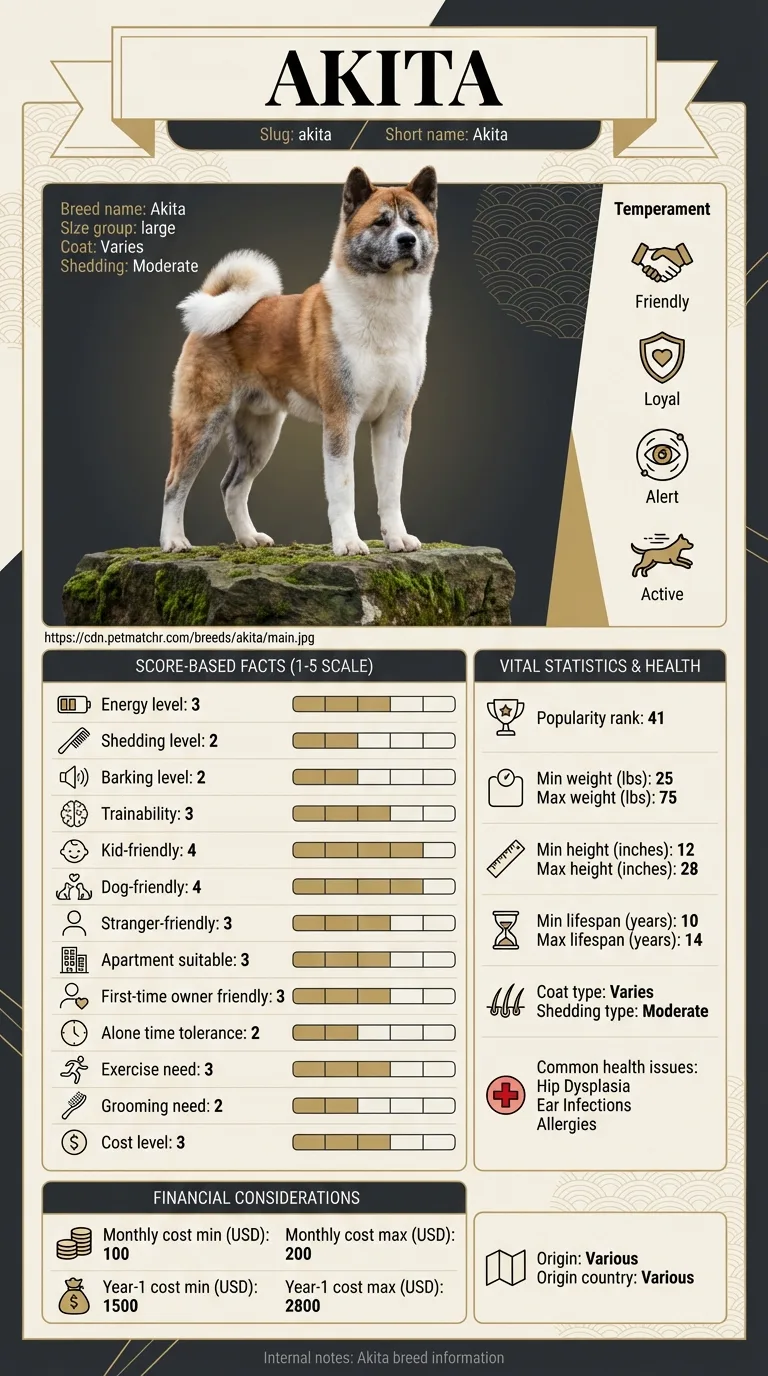
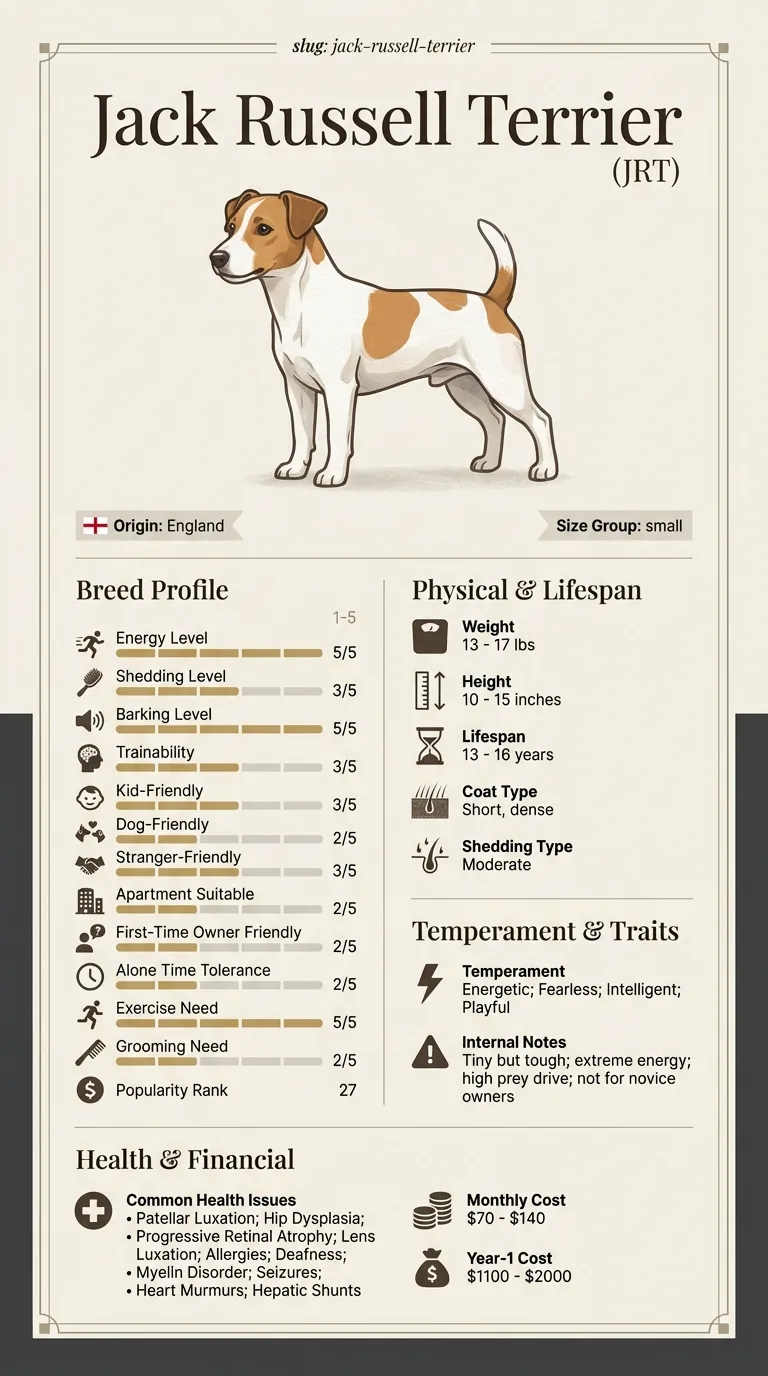
This page is for someone comparing two breeds that look nothing alike and share more than expected. It covers the energy and noise gap, the prey drive both carry, an eye emergency specific to terriers, and what each costs to keep.
The Jack Russell is the cheapest and most demanding dog in this comparison; the Akita is the most expensive and the most restful, and neither is a good first dog.
Choose the Akita if you want a quiet house. It barks at 2/5 against the Jack Russell's 5/5, needs 3/5 exercise against 5/5, and tolerates being alone at 3/5 against 2/5. You are accepting 1/5 for first-time owners, 5/5 shedding, up to 130 pounds, $110–$240 a month and a shorter life at 10 to 13 years.
Choose the Jack Russell if you are genuinely active and want a small, cheap, long-lived dog with enormous character. It lives 13 to 16 years, costs $70–$140 a month — the lowest here — and grooms at only 2/5. You are accepting 5/5 barking, 5/5 exercise, 2/5 with other dogs and a serious prey drive.
| Feature | akita | jack russell terrier | Winner |
|---|---|---|---|
| Weight | 70–130 lbs | 13–17 lbs | Equal |
| Height | 24–28 in | 10–15 in | Equal |
| Lifespan | 10–13 years | 13–16 years | jack russell terrier |
| Coat | Dense double coat | Short and dense | Equal |
| Grooming need | Moderate (3/5) | Low (2/5) | jack russell terrier |
| Shedding | Very high (5/5) | Moderate (3/5) | jack russell terrier |
| Energy level | Moderate (3/5) | Very high (5/5) | Equal |
| Exercise need | Moderate (3/5) | Very high (5/5) | akita |
| Trainability | Moderate (3/5) | Moderate (3/5) | Equal |
| Barking | Low (2/5) | Very high (5/5) | akita |
| Good with kids | Moderate (3/5) | Moderate (3/5) | Equal |
| Good with other dogs | Low (2/5) | Low (2/5) | Equal |
| Friendly to strangers | Low (2/5) | Moderate (3/5) | jack russell terrier |
| Apartment suitability | Low (2/5) | Low (2/5) | Equal |
| Good for first-time owners | Very low (1/5) | Low (2/5) | jack russell terrier |
| Tolerates being alone | Moderate (3/5) | Low (2/5) | akita |
| Typical monthly cost | $110–$240 | $70–$140 | jack russell terrier |
| Typical first-year cost | $1,700–$3,200 | $1,100–$2,000 | jack russell terrier |
A Jack Russell wants ninety minutes to two hours of genuine activity a day, and it wants a job on top. This is a dog bred to work underground against a fox: fearless, persistent and physically extraordinary for its size.
Walking alone does not touch it. What works is terrier-appropriate outlet — earthdog activities, flyball, agility, scent games, and structured training that gives the dog something to do with its intensity.
An under-exercised Jack Russell is one of the most destructive small dogs there is. Digging is the classic outlet, and a JRT can excavate a lawn with genuine efficiency. Barking, chewing, and obsessive fixation on balls and small movements follow.
The breed also lives 13 to 16 years, which means this is not a phase. A twelve-year-old Jack Russell is often still doing this.
The Akita at 3/5 needs forty-five to sixty minutes of walking and then settles heavily somewhere inconvenient. Across a decade, that difference is thousands of hours.
The Jack Russell's 5/5 for barking is functional in origin. A terrier working underground had to be audible from the surface so the handler could dig to the right spot, and the breed was selected for a voice that carries through earth.
That voice is now aimed at the doorbell. It is loud, sharp and persistent, and while training reduces it, the baseline is the highest on the scale.
Prey drive is the trait both breeds carry seriously, and it produces the same practical rules. Neither should be trusted off-lead in an area with wildlife, livestock or roads until recall has been proofed extensively, and for many individuals it never will be. Neither should be assumed safe with cats, rabbits or small pets, especially ones it did not grow up with.
Fencing needs to account for different methods. The Akita will go over or through; the Jack Russell will go under. A terrier that has decided there is something on the other side of a fence will dig with total commitment, and dig fast.
With children both rate 3/5. The JRT's caveat is a low tolerance for rough handling and a quick, decisive response to it.
Lens luxation appears on the Jack Russell's condition list and it is the item worth knowing about before you need to know about it.
The lens is held in place by fibres that, in affected dogs, weaken and break. The lens then slips out of position. If it moves forward it blocks the drainage of fluid inside the eye, pressure rises rapidly, and that is acute glaucoma — intensely painful and capable of destroying sight within hours.
The signs are a suddenly cloudy or bluish eye, obvious pain, squinting, a red eye and a dog rubbing its face. This is a same-day emergency, and prompt treatment can save the eye.
There is a DNA test for primary lens luxation and it is the single most valuable question to ask a Jack Russell breeder.
The rest of the list runs to patellar luxation, hip dysplasia, progressive retinal atrophy, deafness — worth BAER testing — allergies, seizures and hepatic shunts.
The Akita's burden is autoimmune and endocrine instead: immune-mediated disease of skin, eyes and blood, hypothyroidism, progressive retinal atrophy, hip dysplasia and bloat.
At $70–$140 a month and $1,100–$2,000 in the first year, the Jack Russell is the least expensive dog in this batch to run. A 15-pound working terrier eats little, needs almost no grooming at 2/5, and is generally robust.
The Akita runs $110–$240 a month and $1,700–$3,200 in the first year, most of it food and weight-dosed products.
The Jack Russell's real cost is not money. It is two hours a day for thirteen to sixteen years, a fence that has to be dug-proofed, and a household that can tolerate a 5/5 barker. Those are the terms, and they do not change with training — training makes them manageable rather than optional.
The veterinary risks are mostly small-dog risks: knees, eyes, dental care. Emergency eye treatment for lens luxation is the one large unpredictable item.
The Akita's expensive risks are autoimmune disease and bloat — less likely, much larger when they arrive.
On lifespan the terrier wins clearly, 13 to 16 years against 10 to 13.
Five rows tie here, and they are not the ones anyone expects: trainability at 3/5, children at 3/5, other dogs at 2/5, apartments at 2/5, and coat length in the sense that both are short-to-medium working coats.
The dog tolerance tie is the interesting one. Both breeds rate 2/5, and in both cases it is hard-wired rather than a training failure. The Akita's is guardian intolerance that arrives at social maturity; the Jack Russell's is terrier scrappiness that has never cared about size differentials, which is considerably more dangerous to the terrier than to anything it picks on.
The apartment tie is the other useful one. A 15-pound dog rating the same as a 130-pound dog for flat living tells you that the rating measures output and noise, not footprint.
Where they diverge completely is volume and stamina: 5/5 against 2/5 on barking, 5/5 against 3/5 on exercise.

Ninety minutes to two hours a day at 5/5 exercise and 5/5 energy, plus a job — earthdog work, agility, flyball or scent games. Walking alone does not satisfy it. An under-exercised Jack Russell digs, barks and chews, and it will still be doing this at twelve, since the breed lives 13 to 16 years.
Because the rating measures output and noise rather than footprint. At 5/5 exercise and 5/5 barking, a Jack Russell in a flat is a problem for you and for your neighbours. The Akita rates the same 2/5 for opposite reasons — size in shared corridors and heavy shedding rather than noise.
More than any breed on this site — 5/5, against the Akita's 2/5. It is functional in origin: a terrier working underground had to be audible from the surface, so the breed was selected for a voice that carries through earth. Training reduces it substantially but the baseline is the highest there is.
The fibres holding the lens in place weaken and break, and the lens slips out of position. If it moves forward it blocks fluid drainage and pressure rises fast, causing acute glaucoma that can destroy sight within hours. A suddenly cloudy, painful eye is a same-day emergency. There is a DNA test — ask for it.
Cautiously. It rates 2/5 with other dogs — the same as the Akita — and terrier scrappiness pays no attention to size differences, which is far more dangerous to the terrier than to whatever it takes on. Prey drive toward cats and small pets is genuine and does not reliably fade with familiarity.
The Jack Russell, at $70–$140 a month against the Akita's $110–$240, and $1,100–$2,000 against $1,700–$3,200 in the first year — the cheapest dog in this batch. Its real price is time and tolerance rather than money: two hours a day and a 5/5 barker for up to sixteen years.
Both need a secure one, and they defeat fences differently. The Akita goes over or through; the Jack Russell goes under. A terrier that has decided something interesting is on the other side will dig with complete commitment and considerable speed, so the fence line needs to be buried or reinforced at ground level.
The Jack Russell if you are genuinely active, want a small long-lived dog and can live with a 5/5 barker. The Akita if you want a quiet house and only have a walk in your day.
The Jack Russell runs $70–$140 a month and the Akita $110–$240, with first-year totals of $1,100–$2,000 and $1,700–$3,200. The terrier is the cheapest dog in this batch to feed and groom.
The Jack Russell, at 13 to 16 years against the Akita's 10 to 13. That matters for the exercise commitment — this is not an energetic phase that passes, it is the whole life of the dog.
Neither — both rate 2/5. The Akita's intolerance is guardian temperament arriving at social maturity; the Jack Russell's is terrier scrappiness that ignores size entirely and gets it into trouble it cannot finish.
Secure checkout on Stripe. We never see your card.
7-day money-back guarantee. Instant access.
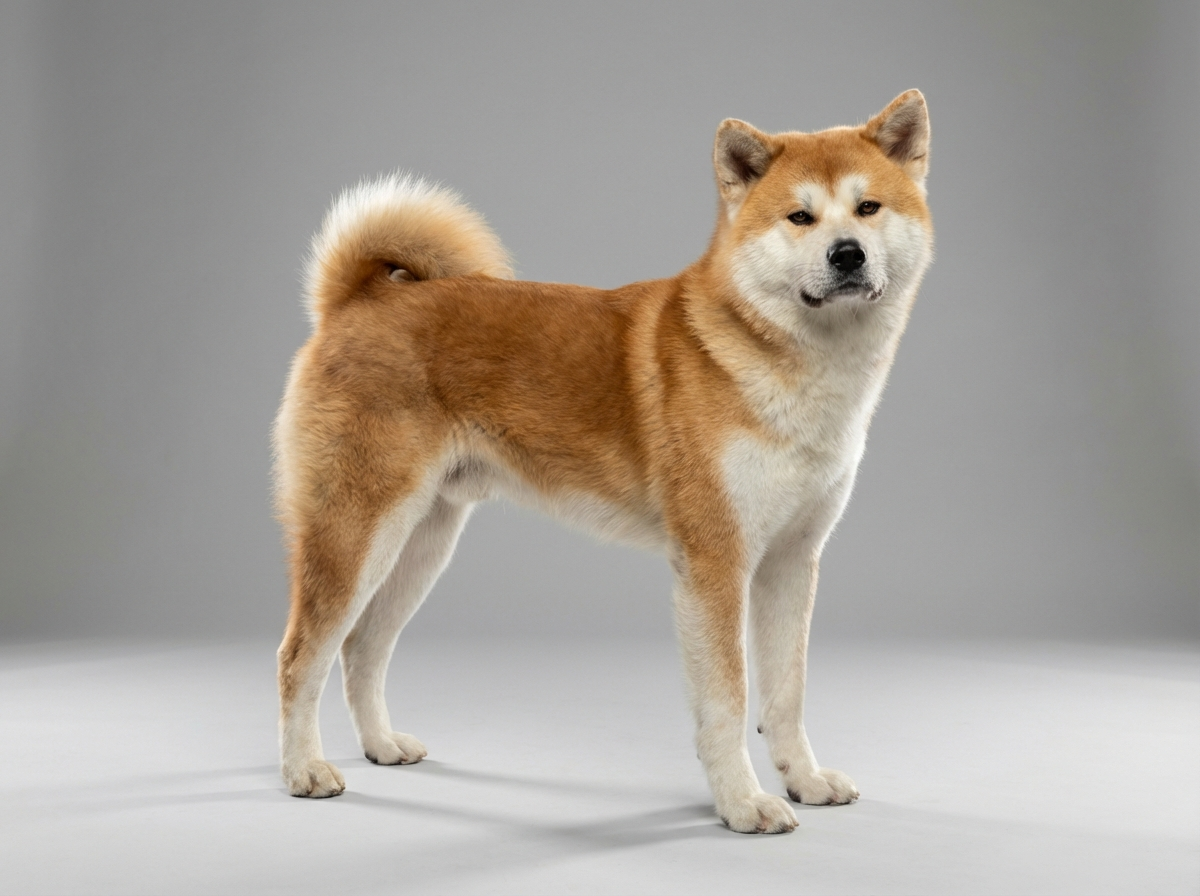
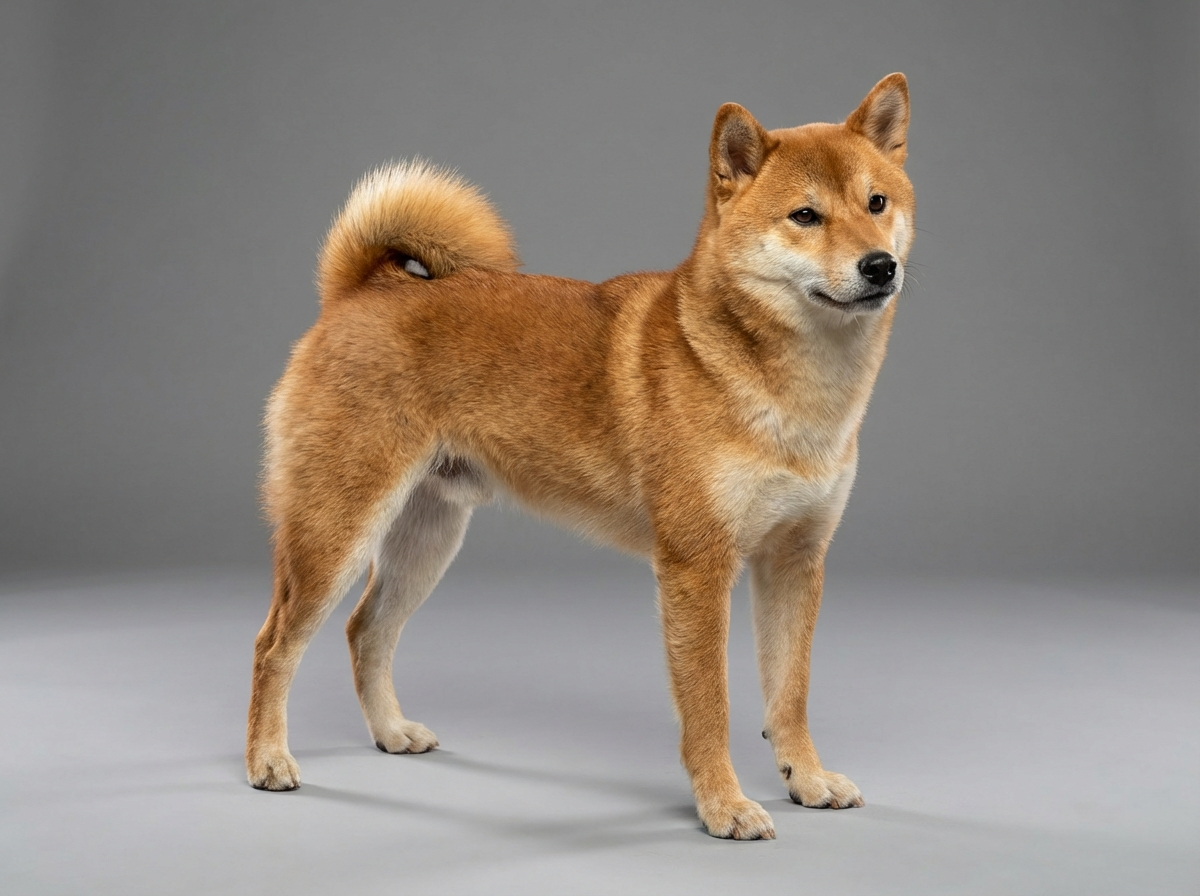
Health information here is general and is not veterinary advice. If your dog shows pain, sudden behaviour change, or worsening symptoms, consult a licensed veterinarian.
Some links on this site are affiliate links. We may earn a commission at no extra cost to you, and we only suggest products we believe are helpful for dog owners.
We research and check what we publish, but we do not warrant that any figure, date, price, or statement is accurate, complete, or current, and we accept no liability for any loss, cost, injury, or other harm arising from the use of this site. Use it as one reference among several. You remain responsible for your own decisions and for your dog's care - confirm anything that matters with a licensed veterinarian or another qualified professional before you act on it. Full disclaimer.
Match your lifestyle to the right dog.
Take quizNot sure which breed is right for you? Take our 2-minute quiz to find out.
Take the quiz