Costs
Akita cost in Omaha
About $95–$180/month, $1,450–$2,600 for year one — below the national average.

See Akita price across all cities →
Quick answer
Akita cost in Omaha
About $95–$180/month, $1,450–$2,600 for year one — below the national average.
An Akita in Omaha costs about $95–$180 a month, with the first year around $1,450–$2,600 — below the national average for the breed.
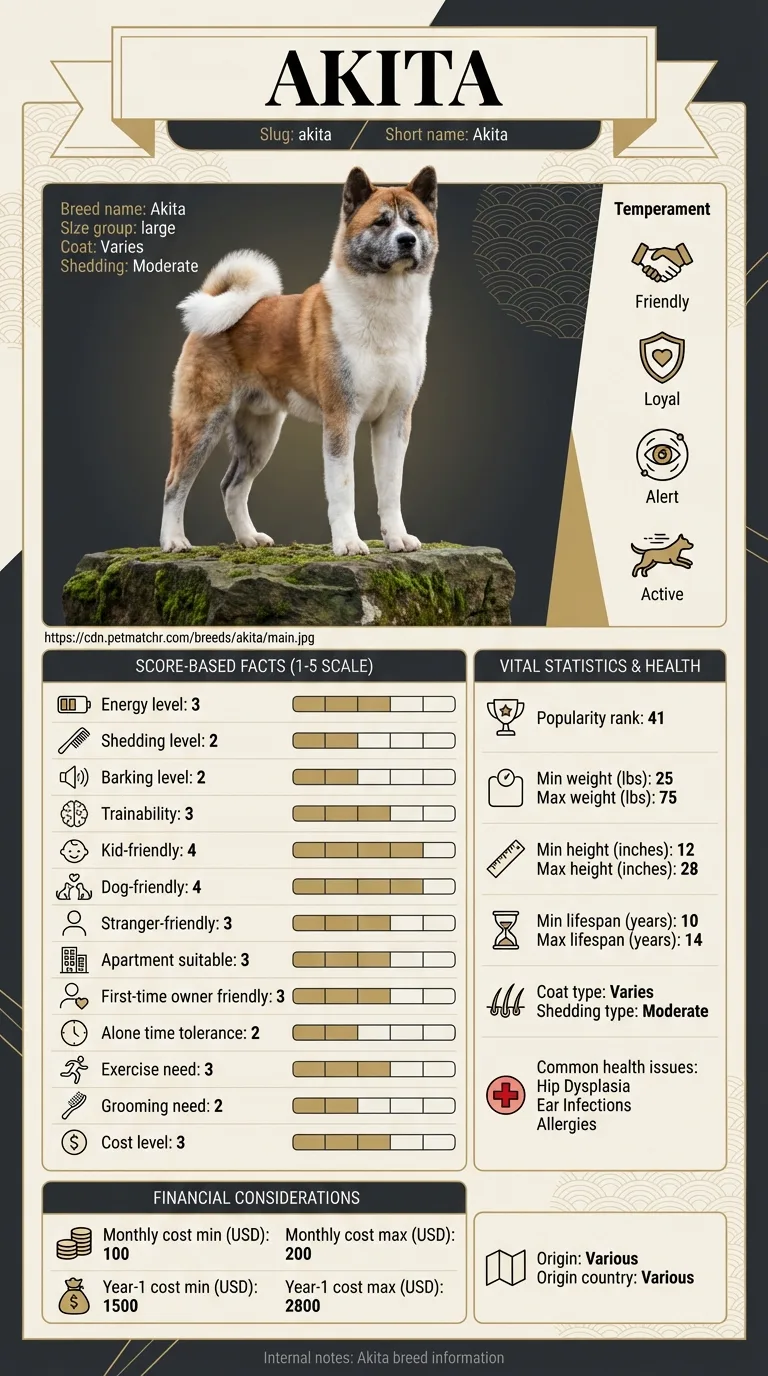
The breed's own risks apply here as anywhere — hip dysplasia and the Akita's tendency toward ear infections are the likeliest sources of an unplanned bill. Omaha's Great Plains winters also mean cold-weather care and a clearly seasonal, rather than year-round, parasite-prevention cost.
These figures adjust the Akita's typical national cost range down for Omaha, reflecting Nebraska's below-average general cost of living and a diversified local economy that has kept pet-service pricing stable and predictable.
Estimate · source: estimation · confidence: medium · updated 2026-09-05 · not a quote
| Item | Cost range |
|---|---|
One-time setup (initial vet visit, spay/neuter, large-breed gear) Covers the first exam, vaccinations, spay/neuter if needed, and gear sized for the breed's adult weight — priced at Omaha's generally affordable rates. | $345 - $600 |
| Item | Cost range |
|---|---|
Food Sized for the breed's large adult frame; Nebraska's below-average general prices help keep this toward the lower end nationally. | $44 - $74 |
Grooming Akitas mostly self-groom; at-home brushing through the coat-blow seasons covers most needs without frequent professional visits. | $9 - $20 |
Flea & tick prevention Nebraska's genuine Great Plains winter keeps this clearly seasonal rather than year-round, one of the shorter active windows this site covers. | $11 - $22 |
Each range starts from a national baseline for this breed's size class and is then adjusted for local cost of living and veterinary pricing. The baselines, and the source each one came from, are listed on our sources page (dataset 2026.09). Two inputs, the purchase price and the emergency reserve, have no published national figure we could verify, so we leave them to you rather than invent them.
These are planning estimates, not quotes. Your own numbers will move with the individual dog, your vet and your insurer. Build a budget with your own figures.
For an Akita in Omaha, insurance mainly comes down to the breed's hip dysplasia risk, since the local vet market itself runs below the national average.
A surgical hip procedure still runs into real money even at Omaha's below-average rates, so buying a policy while the dog is young — before anything is on record — is worth pricing out given the breed's documented risk.
Owners who've set aside $2,000 or more specifically for a vet emergency, and who are comfortable managing that bill themselves, can reasonably self-insure instead of paying a recurring premium.
Omaha already prices below the national average; the realistic remaining savings come from routine-care habits and managing the seasonal parasite window.
Omaha's economy is unusually diversified for a city of its size — major insurance and financial-services companies, along with logistics and food processing, have given it steadier growth than a lot of comparably sized cities tied to a single dominant industry. That stability shows up in pet-care pricing too: rather than the sharp increases some faster-growing cities on this site have seen, Omaha's vet and pet-service costs have moved gradually, staying comfortably below the national average.
As a regional hub for the broader Great Plains, Omaha has a reasonably deep veterinary market for its size, including access to specialists for most cases without the multi-hour referral drive a smaller city on this site might require. That's a modest, easy-to-overlook advantage.
Nebraska winters are genuinely cold, part of the broader Great Plains climate pattern, which shortens the flea-and-tick season to a clear, limited window compared with a Southern or coastal city. The Akita's dense double coat, bred for cold-climate work, handles an Omaha winter well, though the usual small considerations — paw protection on icy or salted sidewalks, some flexibility in exercise timing during the coldest days — still apply.

An Omaha Akita owner tracked their pet-care spending across several years and found it remarkably stable, unlike a friend in a faster-growing city whose costs had climbed noticeably over the same period. Asking a local vet about it confirmed that Omaha's diversified, steadily growing economy had kept local pricing changes gradual rather than the sharp jumps a boom-and-bust market can see. The consistency made long-term budgeting genuinely easier than in a more volatile market.
Key takeaway: A city with a diversified, stable economy like Omaha's tends to see gradual rather than sudden pet-care cost changes — a real, if quiet, advantage for anyone trying to budget years in advance rather than just for the coming year.
About $95–$180, covering food, routine vet care, grooming and parasite prevention. Omaha's diversified, stable economy has kept this comfortably below the national average for the breed.
Roughly $1,450–$2,600, including the initial vet exam, spay/neuter if needed, and large-breed gear on top of ongoing monthly costs.
Yes, reasonably so — as a regional hub for the Great Plains, Omaha has a deeper veterinary market than its general size might suggest, including access to specialist care for most cases without a long referral drive.
It shortens the flea-and-tick season to a clear seasonal window rather than a year-round cost, and adds small cold-weather considerations like paw protection on salted sidewalks, though the breed's coat handles the cold itself well.
Worth pricing out given the breed's hip dysplasia risk — even in a below-average-cost market like Omaha, a surgical procedure can run into real money, and insurance is cheapest bought before the dog has anything on a vet record.
Around $600 covers a typical significant vet visit in this market. If hip dysplasia becomes a specific concern, building toward $2,000 gets closer to what a surgical procedure would cost at Omaha-area rates.
About $95–$180/month, $1,450–$2,600 for year one — below the national average.
This guide is not medical advice. If your dog shows pain, sudden behavior change, or worsening symptoms, consult a licensed veterinarian.
Some links may be affiliate links. We may earn a commission at no extra cost to you. We only suggest products we believe are helpful for dog owners.
We research and check what we publish, but we do not warrant that any figure, date, price, or statement is accurate, complete, or current, and we accept no liability for any loss, cost, injury, or other harm arising from the use of this site. Use it as one reference among several. You remain responsible for your own decisions and for your dog's care - confirm anything that matters with a licensed veterinarian or another qualified professional before you act on it. Full disclaimer.
One sheet with every line item, the emergency fund and when insurance pays off - unlocks on this page.
You get: 12-month budget sheet
No spam. One-click unsubscribe. See our privacy policy.
Preview page 1 before you decide.