Living
Which is smaller?
The Havanese, at just 7-13 lbs and 8-11 inches, versus the GWP's 60-70 lbs and 22-26 inches.

Quick answer
Which is smaller?
The Havanese, at just 7-13 lbs and 8-11 inches, versus the GWP's 60-70 lbs and 22-26 inches.
German Wirehaired Pointer or Havanese? On paper they differ most on apartment suitability, and on the scales German Wirehaired Pointer is the heavier at 60–70 lbs. Here is how the two compare on everything that shapes an ordinary week.
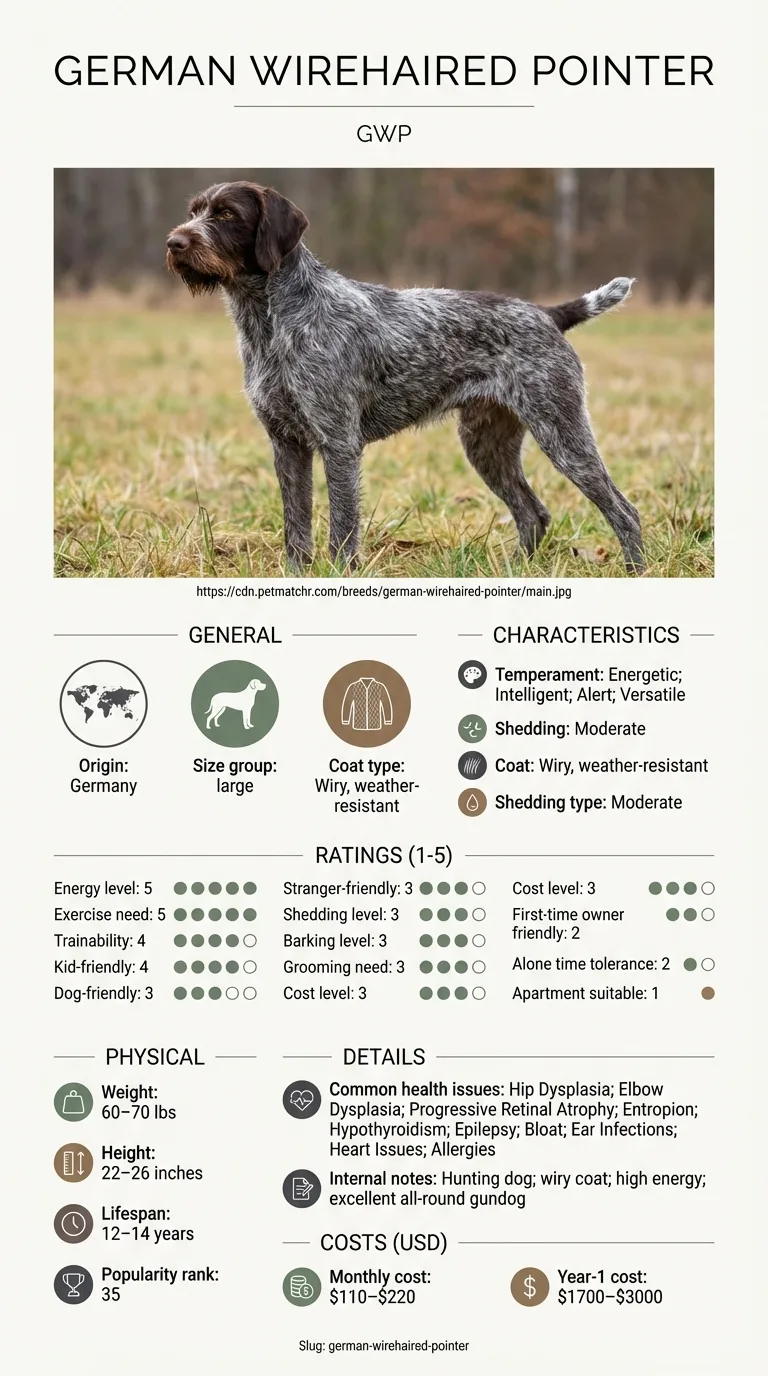
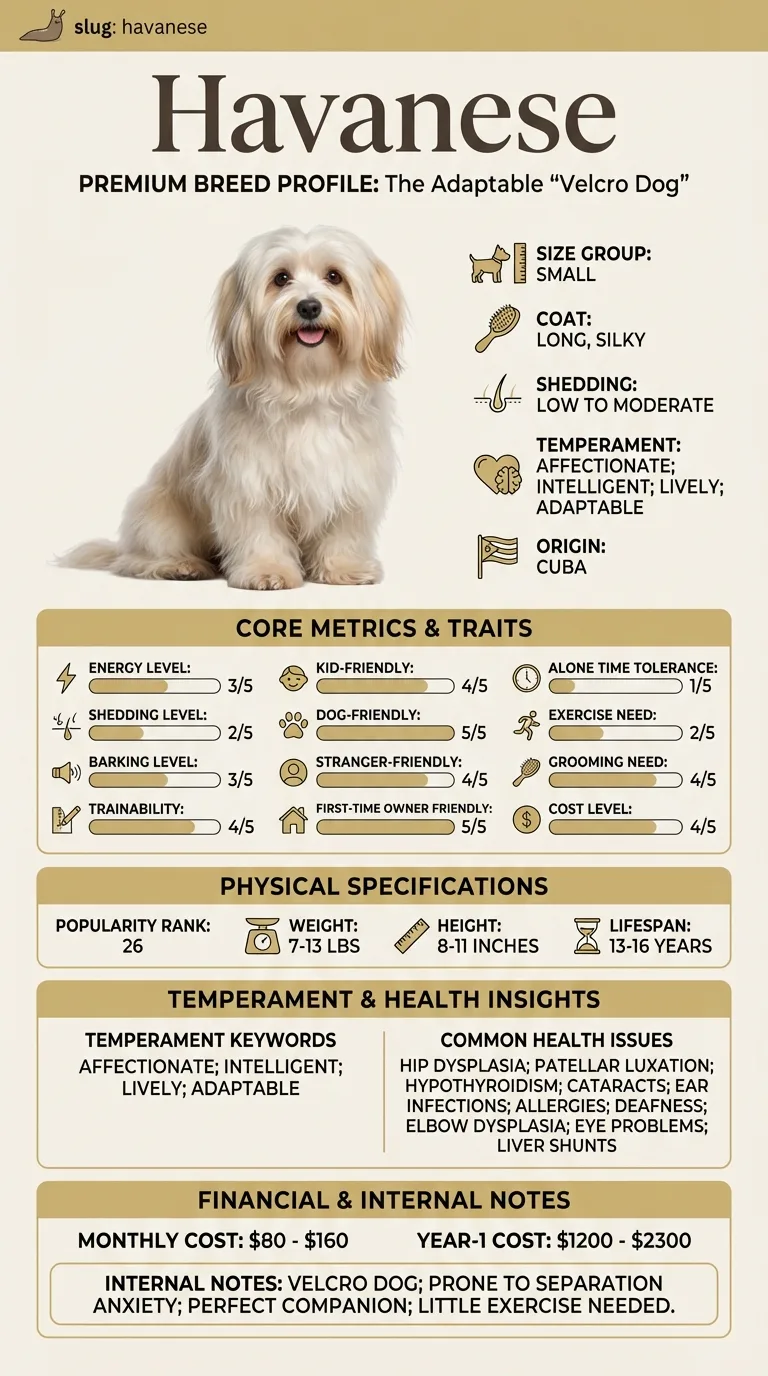
This is for someone already down to German Wirehaired Pointer and Havanese and deciding between them. For this pair the decision usually turns on apartment suitability and exercise need, so those are covered first and in most detail. Anyone choosing from a flat has a clear answer here: Havanese rates 5/5 against 1/5. The focus throughout is on daily consequences rather than breed background.
Between German Wirehaired Pointer and Havanese, apartment suitability is what separates them, and Havanese is the lower-effort dog of the two to keep.
Choose German Wirehaired Pointer if you do not want a standing grooming appointment, you want a dog that can keep up with an active routine and you want a dog that is more watchful with visitors.
Choose Havanese if you are in a flat or a smaller home, this is your first dog and shedding is a problem in your house.
| Feature | german wirehaired pointer | havanese | Winner |
|---|---|---|---|
| Size class | large | small | Equal |
| Weight | 60–70 lbs | 7–13 lbs | Equal |
| Height | 22–26 in | 8–11 in | Equal |
| Lifespan | 12–14 years | 13–16 years | havanese |
| Exercise need | Very high (5/5) | Low (2/5) | havanese |
| Grooming need | Moderate (3/5) | High (4/5) | german wirehaired pointer |
| Shedding | Moderate (3/5) | Low (2/5) | havanese |
| Energy level | Very high (5/5) | Moderate (3/5) | Equal |
| Barking | Moderate (3/5) | Moderate (3/5) | Equal |
| Apartment suitability | Very low (1/5) | Very high (5/5) | havanese |
| Good for first-time owners | Low (2/5) | Very high (5/5) | havanese |
| Tolerates being alone | Low (2/5) | Very low (1/5) | german wirehaired pointer |
| Trainability | High (4/5) | High (4/5) | Equal |
| Good with kids | High (4/5) | High (4/5) | Equal |
| Good with other dogs | Moderate (3/5) | Very high (5/5) | havanese |
| Friendly to strangers | Moderate (3/5) | High (4/5) | havanese |
| Cost level | Moderate (3/5) | High (4/5) | german wirehaired pointer |
| Coat | Wiry, weather-resistant | Long, silky | Equal |
| Origin | Germany | Cuba | Equal |
| Typical monthly cost | $110–$220 | $80–$160 | Equal |
| Typical first-year cost | $1,700–$3,000 | $1,200–$2,300 | Equal |
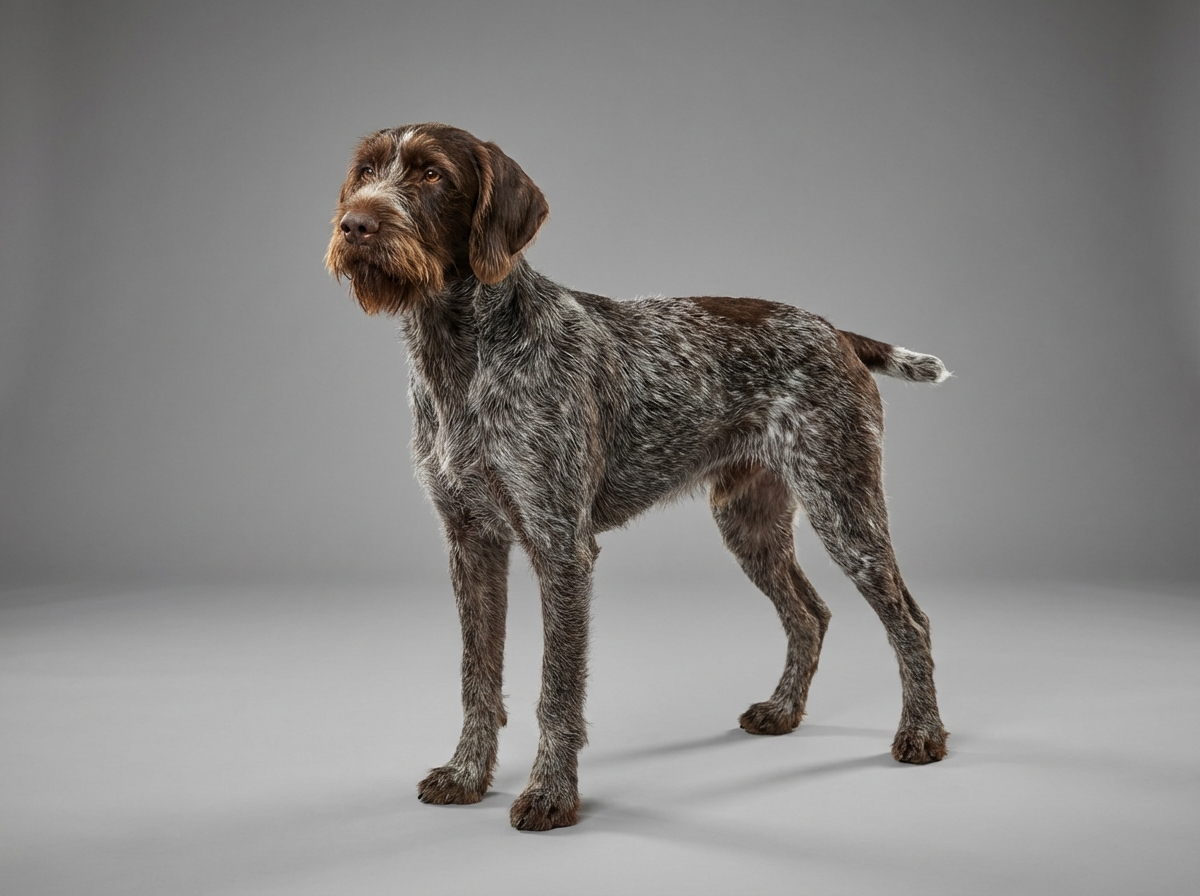
A Havanese weighs as little as 7 lbs, a fraction of the GWP's 60-70 lb range, and stands just 8-11 inches against the GWP's 22-26 — a size gap wide enough that a full-grown Havanese could nearly fit inside a GWP's chest cavity by volume. The GWP's wiry, weather-resistant coat and rugged large-breed build stand in total contrast to the Havanese's small frame and long, silky coat, bred purely as a companion rather than a field worker. Gear budgets diverge just as sharply: a GWP needs a large-breed crate and heavy-duty leash setup, while a Havanese can travel and sleep comfortably in accessories sized for a dog a tenth its weight.
Exercise need splits these two dramatically: very high (5/5) for the GWP against low (2/5) for the Havanese, a three-point gap that's among the widest in any GWP comparison on this site. The Havanese still carries moderate (3/5) energy day to day — it's not a lazy dog — but its exercise needs can be met with modest indoor play and short walks, worlds apart from the GWP's need for genuine fieldwork or long runs. That gap alone is often enough to settle this particular comparison for anyone without regular access to open space.
The Havanese demands more grooming time despite its tiny size: high (4/5) against the GWP's moderate (3/5), since that long, silky coat mats easily without regular brushing. Shedding runs the other way, though — low (2/5) for the Havanese against moderate (3/5) for the GWP — so Havanese owners trade more brushing time for less hair actually ending up on the floor.
This category is nearly a clean sweep for the Havanese: very high (5/5) apartment suitability against the GWP's very low (1/5), and very high (5/5) for first-time owners against the GWP's low (2/5). Barking ties at moderate (3/5) for both, so noise isn't the differentiator — space and beginner-friendliness clearly are. One reversal worth noting: the Havanese actually tolerates being alone worse than the GWP, a very low (1/5) against the GWP's low (2/5), consistent with its intensely companion-oriented, affectionate temperament.
Trainability ties at high (4/5) for both breeds, which is a notable result given how differently these two dogs were bred to work — the GWP for independent fieldwork, the Havanese for close human companionship. The gap shows up instead in the first-time-owner score, where the Havanese's very high (5/5) rating dwarfs the GWP's low (2/5), meaning a novice owner will likely find the Havanese's obedience just as achievable but far less physically demanding to reach.
Kids tie at high (4/5) for both breeds. The Havanese pulls ahead with other dogs, very high (5/5) against the GWP's moderate (3/5), and with strangers, high (4/5) against the GWP's moderate (3/5) — numbers consistent with its adaptable, lively temperament and its history as a social lapdog bred to enjoy company broadly rather than bond narrowly. Multi-pet households and families who regularly host visitors will likely find the Havanese the more relaxed presence day to day.
The Havanese lives longer, 13-16 years against the GWP's 12-14, and its health list, while just as long at ten items, leans toward smaller-breed issues: patellar luxation, cataracts, deafness and liver shunts alongside hip dysplasia and allergies shared with the GWP. The GWP's distinct entries include entropion, epilepsy, bloat and heart issues — concerns more typical of larger, deeper-chested breeds. Neither list is short, but the type of risk differs meaningfully by size class, and that distinction is worth raising with a vet when scheduling breed-appropriate screening for either dog.
The Havanese rates higher for overall cost, high (4/5) against the GWP's moderate (3/5), despite its lower food and gear needs — a reflection of purchase price and the recurring grooming that silky coat demands. Monthly spending actually favors the Havanese though, $80-$160 against the GWP's $110-$220, and first-year totals follow the same pattern at $1,200-$2,300 versus $1,700-$3,000, so the higher cost rating doesn't translate into higher raw dollar figures here.
German Wirehaired Pointer weighs 60–70 lbs and lives 12–14 years; Havanese weighs 7–13 lbs and lives 13–16 years. The two diverge most on apartment suitability, exercise need and good for first-time owners and 2 other rated axes. They are level on barking, good with kids and trainability, so those cannot decide it. The table below marks a winner only where one breed is genuinely easier for a typical owner; size and origin are facts rather than merits and stay level. Ratings come from one source applied to both breeds, so they are meaningful against each other rather than as absolute scores.

Yes, very much so — it rates a very high (5/5) for first-time owners, one of the highest scores in this comparison, versus the GWP's low (2/5).
The Havanese, decisively — it rates very high (5/5) for apartment suitability against the GWP's very low (1/5).
The German Wirehaired Pointer, rated very high (5/5) versus the Havanese's low (2/5) — one of the largest exercise gaps on this site.
No — it actually tolerates being alone worse than the GWP, rating very low (1/5) against the GWP's low (2/5), consistent with its highly companion-oriented nature.
The Havanese, typically 13-16 years compared to the GWP's 12-14 years.
The Havanese, at $80-$160 a month versus the GWP's $110-$220, despite carrying a higher overall cost rating.
Yes — it rates very high (5/5) for compatibility with other dogs, well above the GWP's moderate (3/5).
The Havanese, at just 7-13 lbs and 8-11 inches, versus the GWP's 60-70 lbs and 22-26 inches.
The German Wirehaired Pointer, rated moderate (3/5) versus the Havanese's high (4/5).
The Havanese, whose very high (5/5) first-time-owner score far exceeds the GWP's low (2/5).
The Havanese, rated low (2/5) versus the GWP's moderate (3/5).
Secure checkout on Stripe. We never see your card.
7-day money-back guarantee. Instant access.
Health information here is general and is not veterinary advice. If your dog shows pain, sudden behaviour change, or worsening symptoms, consult a licensed veterinarian.
Some links on this site are affiliate links. We may earn a commission at no extra cost to you, and we only suggest products we believe are helpful for dog owners.
We research and check what we publish, but we do not warrant that any figure, date, price, or statement is accurate, complete, or current, and we accept no liability for any loss, cost, injury, or other harm arising from the use of this site. Use it as one reference among several. You remain responsible for your own decisions and for your dog's care - confirm anything that matters with a licensed veterinarian or another qualified professional before you act on it. Full disclaimer.
Match your lifestyle to the right dog.
Take quizNot sure which breed is right for you? Take our 2-minute quiz to find out.
Take the quiz