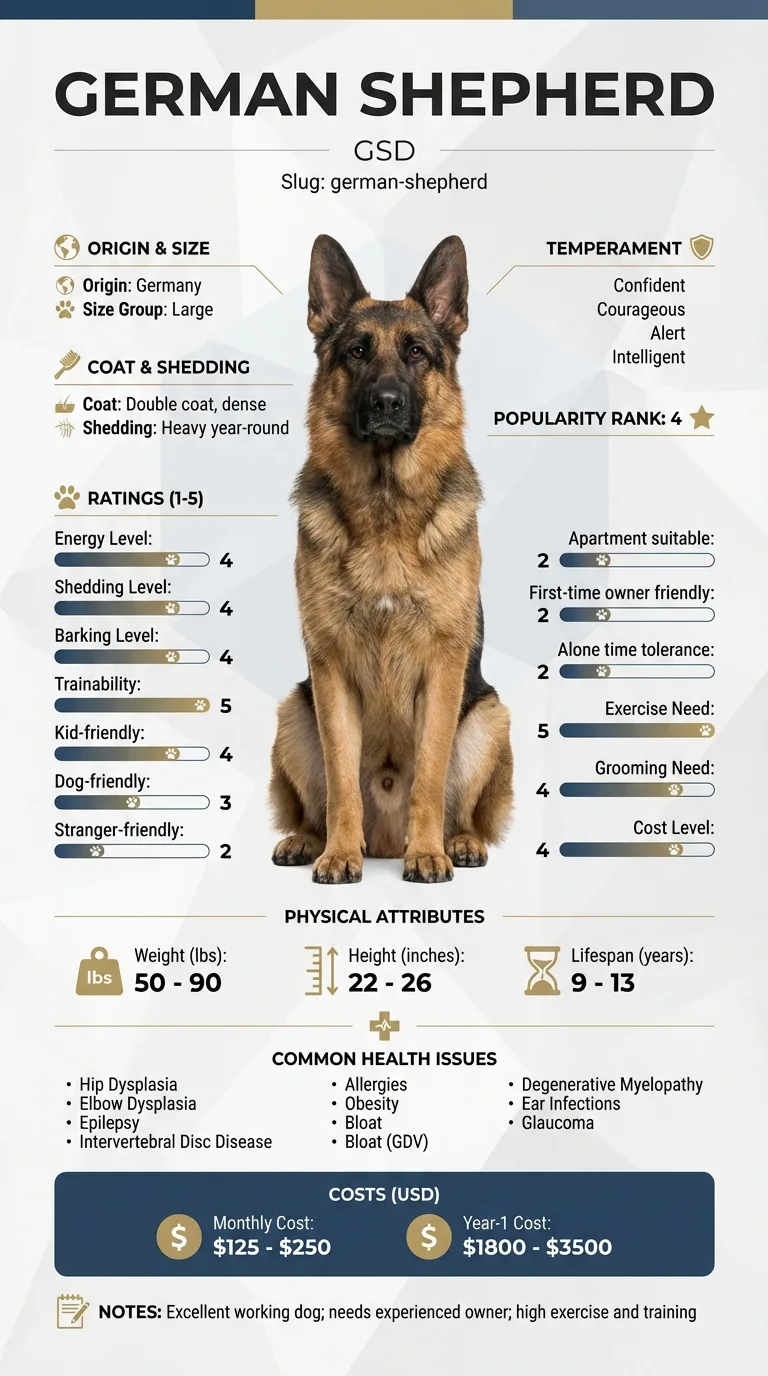
Hip dysplasia and elbow dysplasia head the German Shepherd's list, and the breed's association with them is deserved. Both are testable in the parents, both are scored numerically, and both scores should be seen rather than described. A breeder who says the parents are fine without producing numbers is not answering the question.
Degenerative myelopathy is the entry that matters most and worries owners least early on. It is a progressive disease of the spinal cord that appears in middle age or later, beginning with a subtly dragging hind foot and scuffed nails, progressing to hind limb weakness and eventually paralysis. It is not painful, which is part of what makes it hard. There is a DNA test, and it should be part of any Shepherd purchase conversation.
The rest of the list runs to epilepsy, intervertebral disc disease, allergies, ear infections, glaucoma, obesity and bloat.
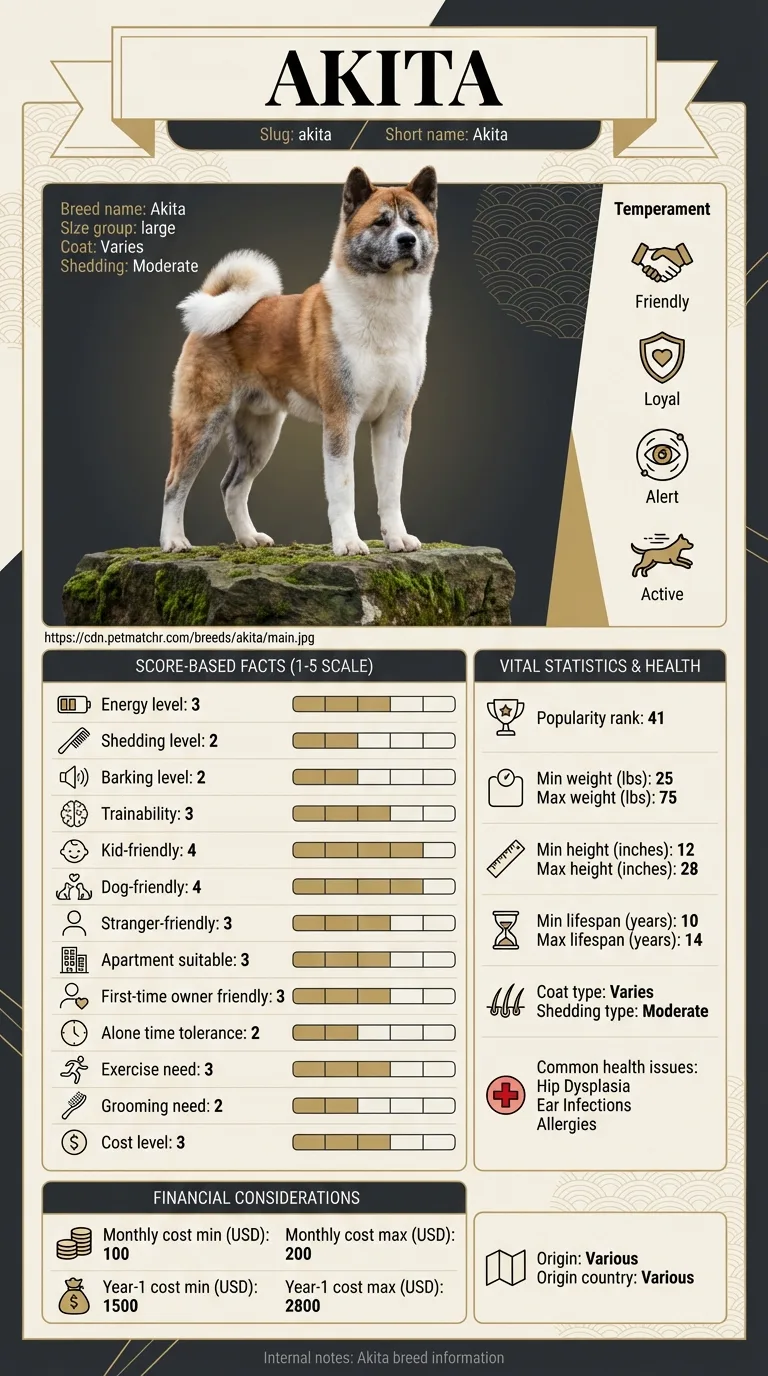
The Akita's burden is autoimmune and endocrine: immune-mediated disease of skin, eyes and blood, hypothyroidism, progressive retinal atrophy, hip dysplasia and bloat.
Both are deep-chested and both need a household that recognises gastric dilatation-volvulus — unproductive retching, a distending abdomen, restlessness — as an emergency.