Health
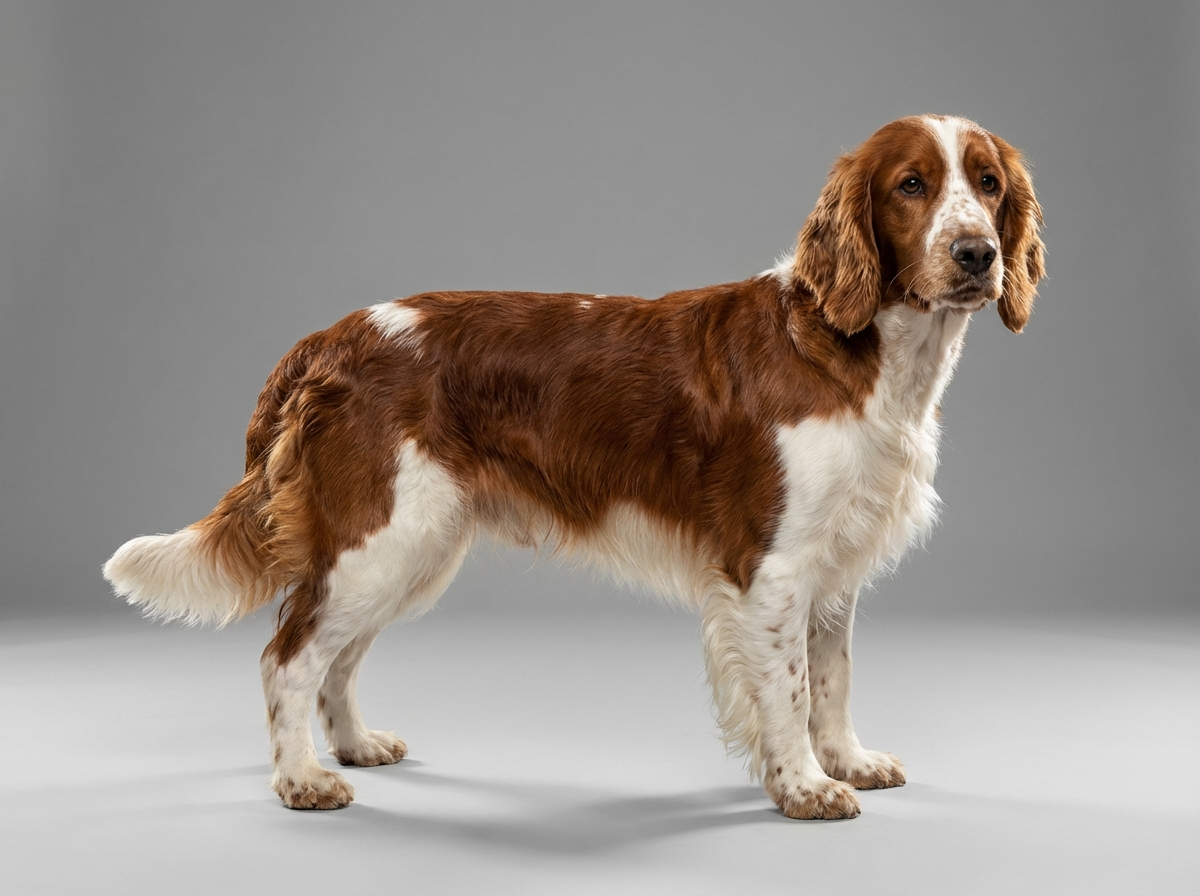
Is X-SCID documented in Welsh Springer Spaniels?
No — it's characterized specifically in Basset Hounds and Cardigan Welsh Corgis.

Quick answer
Is X-SCID documented in Welsh Springer Spaniels?
No — it's characterized specifically in Basset Hounds and Cardigan Welsh Corgis.
It sounds like exactly the kind of thing a careful new owner should screen for, but X-SCID has only ever been mapped to two breeds, and the Welsh Springer isn't one of them.
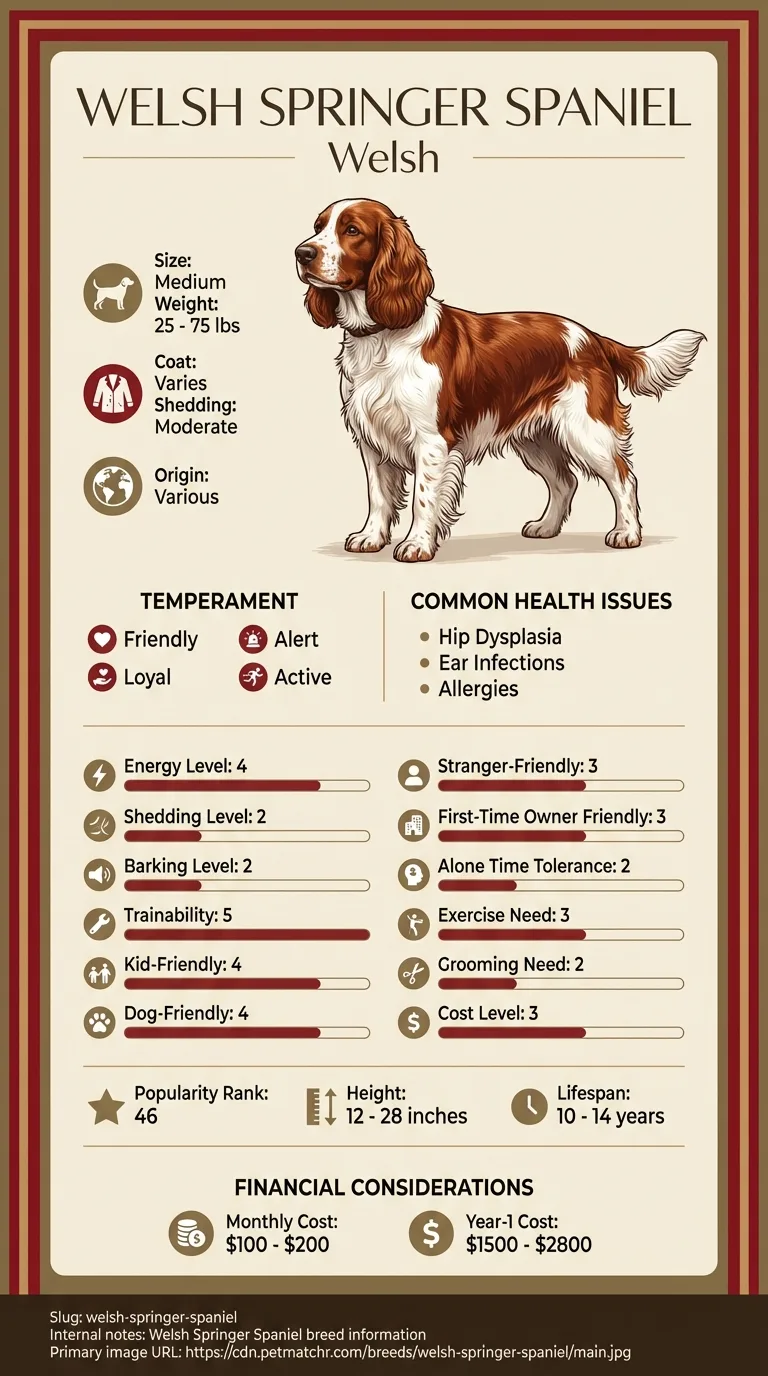
This page is for owners and breeders who came across X-SCID while reading broadly about canine genetic disease and want a straight answer on whether it has any bearing on a Welsh Springer Spaniel.
This guide is not medical advice. If your dog shows pain, sudden behavior change, or worsening symptoms, consult a licensed veterinarian.
Some links may be affiliate links. We may earn a commission at no extra cost to you. We only suggest products we believe are helpful for dog owners.
We research and check what we publish, but we do not warrant that any figure, date, price, or statement is accurate, complete, or current, and we accept no liability for any loss, cost, injury, or other harm arising from the use of this site. Use it as one reference among several. You remain responsible for your own decisions and for your dog's care - confirm anything that matters with a licensed veterinarian or another qualified professional before you act on it. Full disclaimer.
X-linked severe combined immunodeficiency is a rare, fatal genetic disease characterized as a research model in Basset Hounds and Cardigan Welsh Corgis, with no documented occurrence in Welsh Springer Spaniels. Owners who encounter it while researching this breed are better served focusing on the breed's real, documented issues: hip dysplasia, ear infections, epilepsy, glaucoma, and hypothyroidism.
Even within Basset Hounds and Cardigan Welsh Corgis, X-SCID is extremely rare and mostly known through research colonies rather than widespread pet-population cases. It has no established incidence in Welsh Springer Spaniels at all, making it essentially a non-issue for this breed rather than a low-probability risk.
The mutation responsible for X-SCID has been identified and studied specifically within Basset Hound and Cardigan Welsh Corgi research populations, giving researchers a clear genetic map for those two breeds. Welsh Springer Spaniel genetics have not produced any comparable finding, and the breed's known heritable issues run through entirely different genetic pathways tied to joints, ears, eyes, and the thyroid.
Because X-SCID is a single-gene inherited condition rather than one shaped by environment, and because it isn't established in Welsh Springer genetics to begin with, there are no environmental triggers worth discussing for this breed. Environmental factors are far more relevant to the breed's actual issues, such as ear infections aggravated by moisture trapped under the Welsh Springer's drop ears.
See a vet promptly for a puppy that isn't gaining weight, seems persistently lethargic, or has recurring infections that don't resolve with standard treatment. In a Welsh Springer Spaniel, common infections, parasites, or nutritional gaps are far more likely explanations than a rare immunodeficiency documented only in other breeds.
See all Welsh Springer Spaniel health problems, which breeds are prone to x scid, or the full Welsh Springer Spaniel breed guide for temperament, exercise needs and ownership costs.
There's no meaningful timeline to track for X-SCID in this breed since it isn't a documented risk to begin with. The more useful timeline is age-appropriate screening for the breed's real issues: hip evaluations around skeletal maturity, ongoing ear checks throughout life, and thyroid panels typically starting in early middle age.
Success here looks like redirecting research energy toward the Welsh Springer Spaniel's actual documented health profile rather than chasing a disease with no established connection to the breed. An owner who understands hip dysplasia, ear infection prevention, epilepsy signs, glaucoma symptoms, and hypothyroidism management is far better prepared than one focused on X-SCID.
General canine genetics articles often list every known inherited immunodeficiency in one place, with no breed filter attached, which is how a condition mapped to Basset Hounds and Cardigan Welsh Corgis ends up next to a search for Welsh Springer Spaniel health problems. The mutation causing X-SCID sits on the X chromosome and has been traced through specific research colonies of those two breeds; no equivalent mutation has been identified or reported in Welsh Springer bloodlines.
Breed club health surveys and veterinary genetics literature on the Welsh Springer Spaniel consistently center on a different set of concerns: hip dysplasia, chronic ear infections, epilepsy, glaucoma, and hypothyroidism. None of that literature references SCID of any kind, which is the clearest signal that this is a breed-mismatch question rather than an emerging risk.
Before treating any rare genetic disease as relevant to your dog, run it through a few quick checks. These apply to X-SCID and to plenty of other conditions that circulate in general dog-health content.

The Welsh Springer Spaniel's genuinely documented endocrine issue, hypothyroidism, is a far more useful place to focus immune-related attention than X-SCID. In many dogs it develops through autoimmune thyroiditis, where the body's own immune system gradually attacks thyroid tissue, which is a real and treatable immune-mediated process rather than a fatal congenital absence of immunity.
That distinction matters practically: hypothyroidism is manageable for the rest of a dog's life with daily medication and periodic bloodwork, while X-SCID as documented in its actual breeds is fatal in early puppyhood regardless of treatment. If immune-system health is your concern for a Welsh Springer, thyroid panels and general bloodwork with your vet are the relevant tool, not screening for a Basset Hound and Corgi research disease.

Renata, in Savannah, Georgia, spent weeks reading veterinary genetics papers before bringing home her Welsh Springer Spaniel puppy, and one paper on X-SCID in Basset Hounds and Cardigan Welsh Corgis left her worried enough to bring it up at the puppy's first vet visit. Her vet walked through the paper's actual breed attribution with her and pointed out that Welsh Springer genetics had never produced a comparable finding. They spent the rest of the appointment on a plan for the issues that actually matter in this breed: a hip evaluation schedule, a habit of drying the puppy's ears after every swim, and a note to start thyroid screening in a few years. Renata left with a folder of breed-specific information instead of a rare-disease worry that never applied to her dog.
Key takeaway: A rare genetic disease documented in two unrelated breeds isn't a meaningful risk for a Welsh Springer Spaniel, and the research time is far better spent on the breed's real, well-documented health profile.
No. It's a genetically characterized disease in Basset Hounds and Cardigan Welsh Corgis, and there is no documented case or identified mutation for it in Welsh Springer Spaniels.
It's a fatal inherited immunodeficiency in which affected puppies lack functional B and T lymphocytes and typically die of infections within the first few months of life. The mutation causing it has been mapped specifically in Basset Hound and Cardigan Welsh Corgi research lines.
There's no established genetic test or screening protocol for X-SCID in this breed because it isn't documented as occurring in it. A more useful question to ask a breeder is about hip, thyroid, and eye clearances, which are the conditions actually tracked in the breed.
It's extremely unlikely; puppies with true X-SCID become critically ill with severe, unrelenting infections in early infancy and rarely survive long enough to go home. A puppy that catches occasional mild illnesses is far more likely dealing with common causes like parasites, a developing immune system, or minor infections.
Focus on the breed's documented list: hip dysplasia, recurrent ear infections (common given the Welsh Springer's drop ears), epilepsy, glaucoma, and hypothyroidism. Routine vet checkups and appropriate screening for these give far more useful information than researching an unrelated rare disease.
Broad canine genetics roundups often list notable inherited diseases without always making the affected breeds prominent, so a Basset Hound and Corgi research condition can appear alongside content aimed at any breed. Reading the fine print on which breeds are actually named is the fix.
No, they're unrelated conditions. Hypothyroidism in this breed is often autoimmune in origin and is a manageable, treatable endocrine disease, while X-SCID as documented elsewhere is a fatal congenital immunodeficiency with no relevance to Welsh Springer genetics.
No — it's characterized specifically in Basset Hounds and Cardigan Welsh Corgis.
Hip dysplasia, ear infections, epilepsy, glaucoma, and hypothyroidism are the breed's documented concerns.
No such test exists for Welsh Springer Spaniels because the disease isn't established in the breed.
It's highly improbable; common infections, parasites, or nutritional issues are far more likely explanations in this breed.
No — this is a veterinary genetics question, not something training addresses.
A one-page prep sheet for this condition: the signs, the questions to ask, what to get priced. Unlocks here.
You get: Vet visit prep sheet
No spam. One-click unsubscribe. See our privacy policy.
Preview page 1 before you decide.