Health
What should I do if my Schnauzer (Standard) is diagnosed with X-SCID?
Consult your vet immediately for a management plan and follow their advice closely.

Quick answer
What should I do if my Schnauzer (Standard) is diagnosed with X-SCID?
Consult your vet immediately for a management plan and follow their advice closely.
Schnauzer (Standard) x-scid is a serious health issue involving severe combined immunodeficiency. It can profoundly affect your dog's quality of life.
New and experienced Schnauzer (Standard) owners alike may find this issue particularly challenging. Those with limited access to veterinary care or resources might feel even more overwhelmed.
This guide is not medical advice. If your dog shows pain, sudden behavior change, or worsening symptoms, consult a licensed veterinarian.
Some links may be affiliate links. We may earn a commission at no extra cost to you. We only suggest products we believe are helpful for dog owners.
We research and check what we publish, but we do not warrant that any figure, date, price, or statement is accurate, complete, or current, and we accept no liability for any loss, cost, injury, or other harm arising from the use of this site. Use it as one reference among several. You remain responsible for your own decisions and for your dog's care - confirm anything that matters with a licensed veterinarian or another qualified professional before you act on it. Full disclaimer.
Check this first
Understanding when your Schnauzer (Standard) x-scid needs immediate medical attention is crucial. If you notice any red-flag signs, it's time to call your vet right away. These signs include severe lethargy, persistent vomiting, difficulty breathing, or any sign of swelling, especially around the face or neck. If your dog is showing these symptoms, don't wait—get help immediately!
On the other hand, if your Schnauzer is experiencing mild symptoms like occasional sneezing, slight lethargy, or a mild cough, you can monitor these conditions at home. Keep an eye on their behavior and note any changes. It's essential to have a plan in place for these situations, focusing on rest and hydration. If symptoms persist or worsen, reach out to your vet for advice.
In summary, knowing the difference between an emergency and a situation that can be managed at home can help keep your Schnauzer safe. Always err on the side of caution; when in doubt, consult your veterinarian.
If any of these apply, call your vet or an emergency clinic now. The rest of this page is for the cases that are not an emergency.
Schnauzers (Standard) x-scid face a serious issue with X-SCID, or severe combined immunodeficiency. This condition leaves them vulnerable to infections, making daily life challenging. Owners may notice their dog frequently falling ill or struggling to recover from minor ailments.
X-SCID is rare but can significantly impact affected Schnauzers (Standard). While not every dog in this breed will have this condition, it's essential for owners to be aware of the signs and symptoms.
Schnauzers (Standard) can inherit genetic traits that make them more susceptible to certain health issues, like X-SCID. This condition is a rare genetic disorder that affects their immune system. If both parents carry the gene, it's more likely for their puppies to have this issue.
While genetics play a significant role, environmental factors can also impact the severity of X-SCID symptoms. Stressful living conditions, poor diet, or lack of proper veterinary care can worsen the health of a Schnauzer (Standard) with this condition.
Consult your vet if you notice significant changes in your dog's health, such as frequent infections or lethargy. Early intervention is crucial for managing X-SCID effectively.
Avoiding these common mistakes can help manage your Schnauzer (Standard) x-scid's condition effectively.
Start here: Standard Schnauzer Most Common Genetic Disorders: Screening
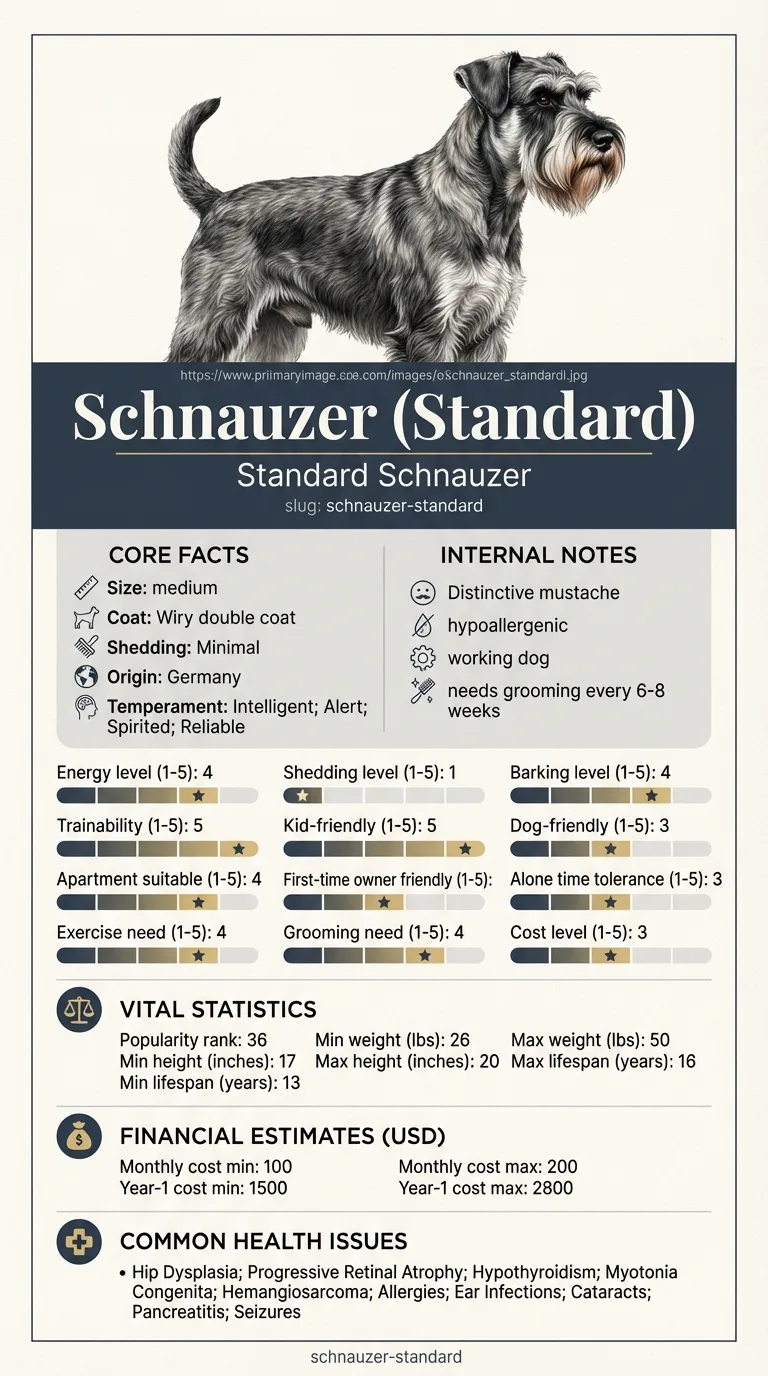
See all Schnauzer Standard health problems, which breeds are prone to x scid, or the full Schnauzer Standard breed guide for temperament, exercise needs and ownership costs.
It typically takes 3 to 6 months of consistent care and management to see significant improvements in a Schnauzer (Standard) with X-SCID.
Success means your Schnauzer (Standard) can engage in activities safely, has fewer health issues related to the condition, and exhibits improved social behavior.
Maggie, a first-time dog owner in Denver, adopted a cheerful Schnauzer (Standard) named Max. Soon after bringing him home, she noticed he was frequently sick and lacked energy. After consulting with her vet, Maggie learned Max had X-SCID. Determined to help him thrive, she enrolled in a training program focused on managing his condition and socializing him safely. With time and patience, Max learned to enjoy playdates with other dogs, albeit in controlled environments, and Maggie became an advocate for dog owners facing similar challenges. Their bond strengthened as they navigated this journey together.
Key takeaway: Facing health challenges like X-SCID is tough, but with the right training and support, you can help your Schnauzer (Standard) lead a fulfilling life.
X-SCID, or severe combined immunodeficiency, is a rare genetic disorder. It affects your Schnauzer's immune system, making them vulnerable to infections. If you suspect your dog has this condition, consult your vet for testing and advice. This answer relates to Schnauzer (Standard) x-scid.
Managing a Schnauzer (Standard) with X-SCID involves providing a safe environment and avoiding exposure to infectious agents. Regular vet check-ups and vaccinations are crucial to monitor their health and prevent complications.
While there is no cure for X-SCID, treatment focuses on managing symptoms and preventing infections. Your vet may recommend specific vaccinations and medications to help your Schnauzer cope.
Yes, X-SCID is a genetic condition that can be inherited. It’s important to discuss any health concerns with your breeder and consider genetic testing if you plan to breed your Schnauzer (Standard).
Provide a calm environment, ensure proper nutrition, and follow your vet's recommendations for care. Keeping your Schnauzer stress-free can help boost their recovery.
X-SCID is typically a genetic condition present from birth, so older Schnauzers usually do not develop it later in life. However, if you notice unusual health issues, consult your vet for appropriate tests.
If you suspect your Schnauzer (Standard) has X-SCID, it's crucial to take them to the vet as soon as possible. Early diagnosis and intervention can help manage symptoms and improve their quality of life.
Consult your vet immediately for a management plan and follow their advice closely.
Keep your Schnauzer away from sick animals and maintain a clean home environment to reduce exposure to germs.
Regular vet check-ups, a healthy diet, and a low-stress environment are key to managing your dog's health.
Management costs can vary, but expect to spend extra on vet visits and medications, potentially raising monthly expenses.
A one-page prep sheet for this condition: the signs, the questions to ask, what to get priced. Unlocks here.
You get: Vet visit prep sheet
No spam. One-click unsubscribe. See our privacy policy.
Preview page 1 before you decide.