Health
What are quick tips for Maltese x-scid?
Keep your Maltese away from sick dogs and environments where infections may spread. Regular vet visits are key for monitoring health.

Quick answer
What are quick tips for Maltese x-scid?
Keep your Maltese away from sick dogs and environments where infections may spread. Regular vet visits are key for monitoring health.
Maltese x-scid, or X-SCID, is a rare but serious condition that affects your dog's immune system. This can leave your furry friend vulnerable to infections and health issues.
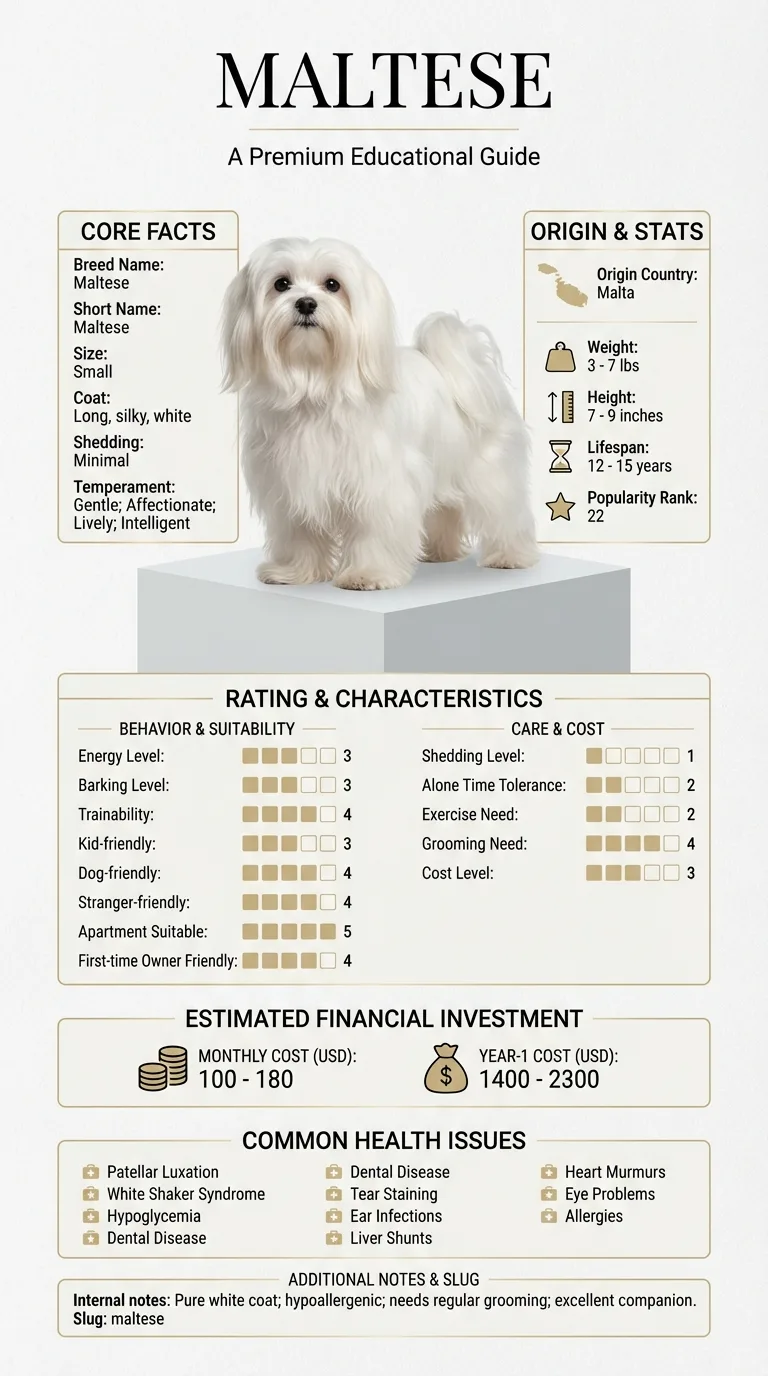
This issue typically affects owners who may notice their Maltese frequently getting sick or having difficulty recovering from illnesses. First-time dog owners or those unfamiliar with rare conditions like x-scid may feel particularly overwhelmed when trying to manage their dog's health.
This guide is not medical advice. If your dog shows pain, sudden behavior change, or worsening symptoms, consult a licensed veterinarian.
Some links may be affiliate links. We may earn a commission at no extra cost to you. We only suggest products we believe are helpful for dog owners.
We research and check what we publish, but we do not warrant that any figure, date, price, or statement is accurate, complete, or current, and we accept no liability for any loss, cost, injury, or other harm arising from the use of this site. Use it as one reference among several. You remain responsible for your own decisions and for your dog's care - confirm anything that matters with a licensed veterinarian or another qualified professional before you act on it. Full disclaimer.
Check this first
Understanding when Maltese x-scid becomes an emergency is crucial for your dog's health. If your Maltese shows severe signs of illness, such as excessive vomiting, diarrhea, lethargy, or pale gums, it’s time to call your vet immediately. These symptoms may indicate a serious infection or underlying health issue that needs urgent care.
In addition, if you notice your Maltese struggling to breathe, having difficulty walking, or displaying signs of severe pain, don’t wait. These are red flags that require immediate veterinary attention. Delaying care in these situations can lead to more serious complications.
On the other hand, if your Maltese x-scid shows mild symptoms like occasional sneezing, slight lethargy, or a decrease in appetite, you can monitor these signs at home. Keep a close watch on their behavior and maintain a record of any changes. It’s wise to have a conversation with your vet about a care plan and when to seek further help.
If any of these apply, call your vet or an emergency clinic now. The rest of this page is for the cases that are not an emergency.
Maltese x-scid, or X-Linked Severe Combined Immunodeficiency, is a rare but serious condition that affects the immune system of Maltese dogs. This disease leaves them vulnerable to infections, making even minor health issues a major concern. Daily life for a Maltese x-scid can involve frequent vet visits and careful monitoring to prevent infections.
X-scid is rare in Maltese breeds but can occur, particularly in dogs with a family history. It's crucial for potential owners to be aware of this condition and its implications.
Maltese dogs can inherit X-SCID due to their genetic predisposition. This condition is caused by a genetic mutation affecting their immune system, making them vulnerable to infections. Although it's rare, the breed's small size and specific lineage can increase the risk.
Environmental factors can also play a role. A lack of proper vaccinations or exposure to pathogens in unclean surroundings may exacerbate health issues. Additionally, stress from changes in their home environment can weaken their immune response.
Consult your vet if you notice any signs of illness or unusual behavior in your Maltese. Symptoms like lethargy, loss of appetite, or frequent infections may indicate that your dog needs medical attention.
Avoiding common pitfalls can help you manage your Maltese x-scid effectively. Here are some mistakes to watch out for and safer alternatives.
Start here: Maltese Most Common Genetic Disorders: What to Screen For
See all Maltese health problems, which breeds are prone to x scid, or the full Maltese breed guide for temperament, exercise needs and ownership costs.
It typically takes 3 to 6 months to notice significant improvements in a Maltese with X-SCID. Consistent care and follow-up with your vet are essential.
Success looks like a Maltese that shows fewer signs of distress, enjoys playtime more, and responds better to training. Building a stronger bond with your dog is key.
Laura, a first-time dog owner in Seattle, adopted Max, a Maltese with X-SCID. Initially, Max was anxious and prone to health issues. After a few weeks, Laura consulted a vet, who recommended a mix of socialization and training tailored for Max's condition. With patience, Laura created a routine that included short training sessions and gentle playtime. Max gradually became more confident and started enjoying walks in the park, allowing Laura to see the joy in his eyes.
Key takeaway: The journey to support a Maltese with X-SCID requires patience and understanding. Consistent care and tailored training can lead to a happier, healthier pup.
Maltese x-scid, or severe combined immunodeficiency, is a rare genetic disorder that affects the immune system. This condition makes your Maltese more susceptible to infections and illnesses, which can be life-threatening without proper care.
To support a Maltese with x-scid, regular veterinary check-ups are essential. Keeping your dog in a clean environment and minimizing exposure to other animals can help prevent infections. Also, discuss specific treatments with your vet.
Signs of x-scid may include frequent infections, poor growth, and lethargy. If your Maltese seems unusually tired or gets sick often, it’s crucial to seek veterinary advice immediately.
Currently, there is no cure for x-scid, but supportive care can help manage the symptoms. Your vet may recommend specific medications or treatments to help strengthen your Maltese's immune system.
If your Maltese is frequently getting sick, has recurrent infections, or shows signs of chronic diarrhea, these could be symptoms of X-SCID. It's crucial to consult your vet for a proper diagnosis if you notice these issues.
Training is important for any dog, including those with X-SCID. While you can't change the condition, ensuring your Maltese is well-socialized and follows basic commands can make life easier and reduce stress.
X-SCID can significantly impact your Maltese's lifespan due to increased vulnerability to infections. With proper care and regular vet check-ups, you may be able to manage the condition and provide your pet with a good quality of life.
Yes, it's best to avoid strenuous activities or places with high exposure to other dogs, as they could expose your Maltese to infections. Always consult your vet for tailored advice on activities that are safe for your dog.
X-SCID is not contagious and cannot be passed to other dogs. However, it is a hereditary condition, so responsible breeding practices are essential to prevent its spread in future generations.
Keep your Maltese away from sick dogs and environments where infections may spread. Regular vet visits are key for monitoring health.
For a Maltese with x-scid, regular veterinary check-ups every 3-6 months are recommended to keep track of their health.
A high-quality, balanced diet is essential for maintaining health. Consult your vet for specific dietary recommendations to support your Maltese's immune system.
Yes, despite their health issues, Maltese can still be trained. Focus on positive reinforcement techniques to encourage learning.
A one-page prep sheet for this condition: the signs, the questions to ask, what to get priced. Unlocks here.
You get: Vet visit prep sheet
No spam. One-click unsubscribe. See our privacy policy.
Preview page 1 before you decide.