Health
What are some quick tips for Miniature Schnauzer x-scid?
Regular vet visits and a low-stress environment are key for managing x-scid in Miniature Schnauzers. Keep their vaccinations current and watch for any signs of infection.

Quick answer
What are some quick tips for Miniature Schnauzer x-scid?
Regular vet visits and a low-stress environment are key for managing x-scid in Miniature Schnauzers. Keep their vaccinations current and watch for any signs of infection.
Miniature Schnauzer x-scid can present serious health challenges that affect your dog's quality of life.
Typical owners facing this problem may include first-time dog parents or busy families who might not recognize the signs of health issues. Those who love their Mini Schnauzers deeply but are unsure how to manage behavior and health concerns effectively often feel overwhelmed.
This guide is not medical advice. If your dog shows pain, sudden behavior change, or worsening symptoms, consult a licensed veterinarian.
Some links may be affiliate links. We may earn a commission at no extra cost to you. We only suggest products we believe are helpful for dog owners.
We research and check what we publish, but we do not warrant that any figure, date, price, or statement is accurate, complete, or current, and we accept no liability for any loss, cost, injury, or other harm arising from the use of this site. Use it as one reference among several. You remain responsible for your own decisions and for your dog's care - confirm anything that matters with a licensed veterinarian or another qualified professional before you act on it. Full disclaimer.
Check this first
Recognizing when Miniature Schnauzer x-scid becomes an emergency is vital for your dog's health. If your Mini Schnauzer shows signs of severe lethargy, difficulty breathing, or persistent vomiting, these are red flags. Additionally, if they have unusual bleeding or swelling, it’s crucial to call your vet immediately. These symptoms indicate that your dog may be in serious distress or suffering from a severe complication related to x-scid.
On the other hand, if your Miniature Schnauzer is experiencing mild symptoms such as occasional sneezing, a slight cough, or a minor decrease in energy, you can monitor these symptoms at home. Keep track of any changes and ensure they are eating and drinking normally. In these cases, developing a care plan with your vet might be the best approach. Regular vet check-ups can help manage the condition effectively and spot any potential issues before they escalate.
In summary, when it comes to Miniature Schnauzer x-scid, err on the side of caution. Always trust your instincts as a pet owner. If your dog shows any severe symptoms, make that call to your vet right away. For milder signs, observation and a well-communicated plan with your vet can help keep your pup happy and healthy.
If any of these apply, call your vet or an emergency clinic now. The rest of this page is for the cases that are not an emergency.
Miniature Schnauzers with X-SCID (Severe Combined Immunodeficiency) face serious health challenges. This genetic condition means their immune system is severely compromised, making them vulnerable to infections and illnesses. Owners may notice frequent sickness or unusual lethargy in their dogs, which can be heart-wrenching.
X-SCID is a rare condition, but it can occur in Miniature Schnauzers. Awareness of this issue is essential for prospective owners, as it can have a significant impact on their pet's quality of life.
The Miniature Schnauzer has a genetic predisposition to X-SCID, a rare condition that affects their immune system. This breed's unique genetic makeup can lead to a decreased ability to fight off infections, making them more vulnerable to illnesses.
Environmental factors also play a role. Stressful situations, such as changes in the household or lack of socialization, can exacerbate anxiety and immune issues in Miniature Schnauzers. Additionally, exposure to other sick animals can increase their risk of infections.
It's essential to consult a vet if you notice signs of illness, such as lethargy, poor appetite, or frequent infections. They can provide guidance on managing X-SCID and recommend specific care strategies.
Avoid these common mistakes that can worsen your Miniature Schnauzer's X-SCID symptoms. Instead, try these safer alternatives for better management.
Start here: Miniature Schnauzer Most Common Genetic Disorders: Screening
See all Miniature Schnauzer health problems, which breeds are prone to x scid, or the full Miniature Schnauzer breed guide for temperament, exercise needs and ownership costs.
Most owners can see improvements in their Miniature Schnauzer's behavior within 2 to 4 months of consistent care under your vet's plan.
Success means your Miniature Schnauzer feels less anxious, responds positively to training cues, and shows a more relaxed demeanor in various situations.
Emma, a busy nurse living in Chicago, adopted Max, a Miniature Schnauzer, who struggled with X-SCID and separation anxiety. Initially, Emma faced daily challenges; Max would bark excessively and tear up the furniture whenever she left the house. After consulting a trainer and committing to a structured training plan, Emma gradually worked on creating a calm environment. Using positive reinforcement, Emma rewarded Max for quiet behavior and gradually increased his alone time. After a few months, Max began to relax when left alone, and his barking decreased significantly, allowing Emma to focus on her work without worry.
Key takeaway: With patience and the right training approach, even a Miniature Schnauzer with X-SCID can learn to manage anxiety and improve behavior.
Miniature Schnauzers can inherit X-SCID, a rare genetic condition that affects their immune system. This means they have a hard time fighting infections. If you notice symptoms like frequent infections, consult your vet for testing. This answer relates to Miniature Schnauzer x-scid.
The best way to help your Miniature Schnauzer with x-scid is to work closely with your veterinarian. They can provide guidance on managing infections and may suggest treatments to support your dog's immune health. Regular vet visits are essential.
Signs of x-scid can include persistent infections, poor growth, and lethargy. If your Miniature Schnauzer seems unusually tired or gets sick often, it's important to visit the vet for a thorough examination.
While there is currently no cure for x-scid, treatment focuses on managing symptoms and preventing infections. Your vet may recommend specialized care and medications to help keep your Miniature Schnauzer as healthy as possible.
To prevent infections, keep your Miniature Schnauzer away from crowded places and ensure they are up-to-date on vaccinations. Regular vet check-ups are crucial for early detection and management of any health issues.
If your Miniature Schnauzer is anxious because of their health condition, consider creating a calm environment at home. Training techniques, like positive reinforcement, can also help alleviate anxiety. Consult a behaviorist if needed.
Signs of X-SCID in your Miniature Schnauzer can include frequent infections, poor growth, and a general lack of energy. If your dog is showing unusual symptoms, it’s important to consult your vet for a thorough examination.
Yes, X-SCID is a genetic condition, so it’s important to check if siblings or parents might also be affected. Genetic testing can provide more information about the risk of X-SCID in related dogs.
Providing a stress-free environment and maintaining a routine can help your Miniature Schnauzer feel more secure. Regular vet check-ups and keeping them away from crowded places can also minimize health risks.
If your Miniature Schnauzer is suffering and their quality of life diminishes due to X-SCID, it may be time to consider euthanasia. Discuss your concerns with your vet to make the best decision for your pet.
Regular vet visits and a low-stress environment are key for managing x-scid in Miniature Schnauzers. Keep their vaccinations current and watch for any signs of infection.
Use positive reinforcement techniques to train your Miniature Schnauzer with x-scid. Keep training sessions short and fun to reduce stress.
Be prepared for higher vet bills due to frequent check-ups and potential treatments for infections. Monthly costs could increase to around $180.
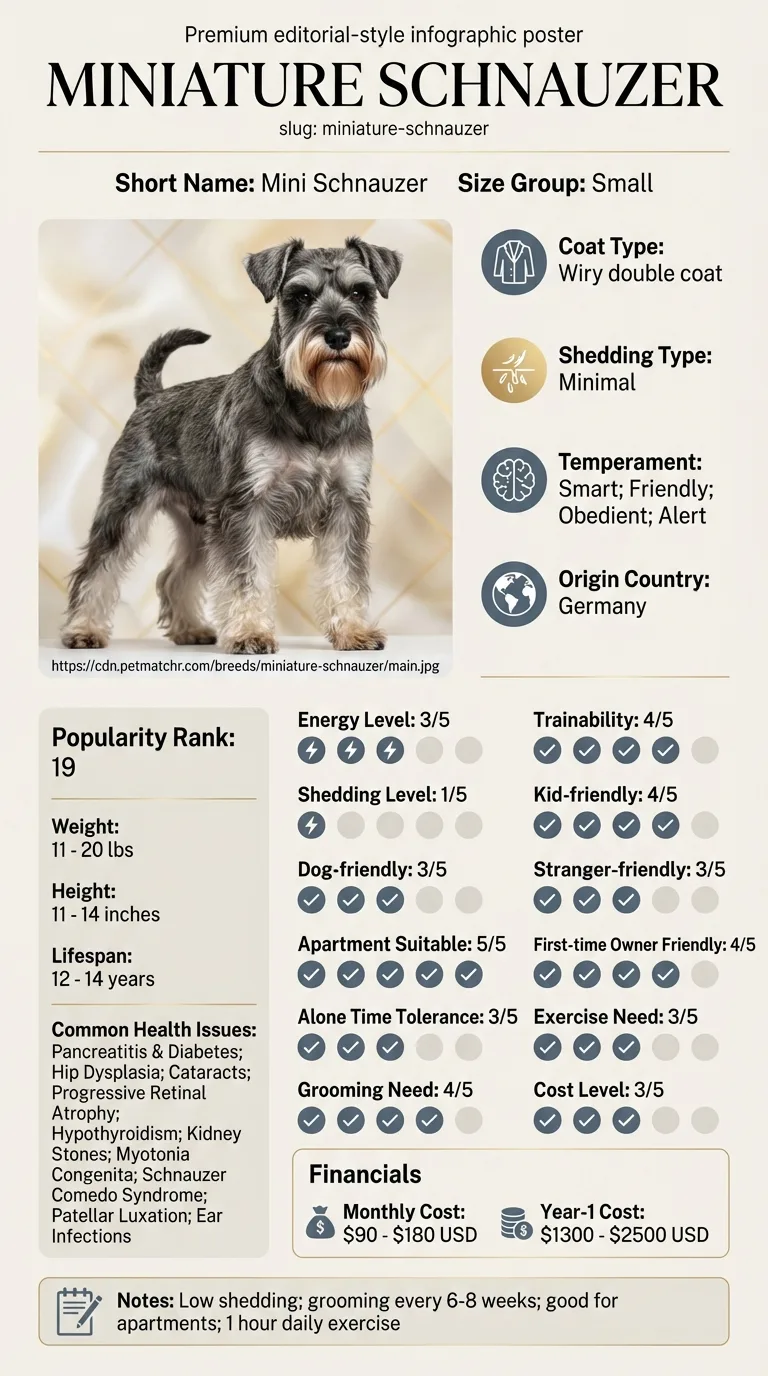
Yes, Miniature Schnauzers are suitable for apartments, but ensure they have a quiet space to rest and recover from any health issues.
Miniature Schnauzers with x-scid may need extra emotional support. Spend quality time with them to build trust and reduce anxiety.
A one-page prep sheet for this condition: the signs, the questions to ask, what to get priced. Unlocks here.
You get: Vet visit prep sheet
No spam. One-click unsubscribe. See our privacy policy.
Preview page 1 before you decide.