Health
What is osteochondritis dissecans in dogs?
OCD is a developmental joint condition where cartilage fails to properly attach to bone during a puppy's rapid growth phase, sometimes separating into a flap that irritates the joint.

Quick answer
What is osteochondritis dissecans in dogs?
OCD is a developmental joint condition where cartilage fails to properly attach to bone during a puppy's rapid growth phase, sometimes separating into a flap that irritates the joint.
A joint growing fast enough to keep pace with a big, active puppy's frame doesn't always finish the job cleanly, and OCD is what happens when a piece of that cartilage gets left behind.
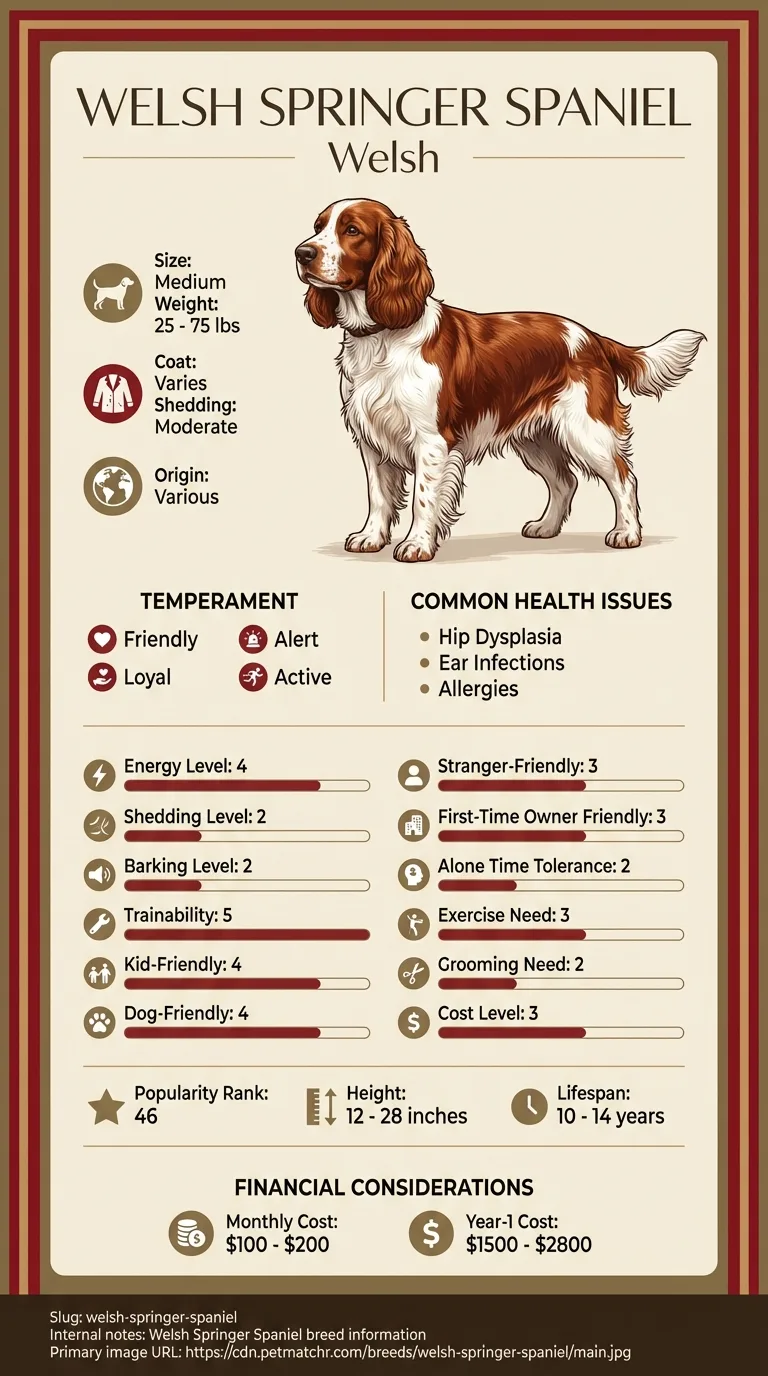
Owners of large, fast-growing Welsh Springer Spaniel puppies, typically between four and eight months old, who notice sudden lameness without any obvious injury, are the ones most likely to encounter this.
This guide is not medical advice. If your dog shows pain, sudden behavior change, or worsening symptoms, consult a licensed veterinarian.
Some links may be affiliate links. We may earn a commission at no extra cost to you. We only suggest products we believe are helpful for dog owners.
We research and check what we publish, but we do not warrant that any figure, date, price, or statement is accurate, complete, or current, and we accept no liability for any loss, cost, injury, or other harm arising from the use of this site. Use it as one reference among several. You remain responsible for your own decisions and for your dog's care - confirm anything that matters with a licensed veterinarian or another qualified professional before you act on it. Full disclaimer.
Osteochondritis dissecans is a developmental joint condition where cartilage fails to properly attach to bone during a puppy's rapid growth phase, most often affecting Welsh Springer Spaniel puppies between four and eight months old. Rapid growth is a known contributing factor, and the resulting sudden, unexplained lameness is often mistaken for a minor sprain rather than investigated promptly.
OCD occurs across many medium and large fast-growing breeds and is not specifically flagged as this breed's top documented condition, but any actively growing Welsh Springer Spaniel puppy carries some risk, particularly if growth is rapid or activity is not moderated during the developmental window.
As a medium, genuinely athletic breed with real growth momentum during puppyhood, a Welsh Springer Spaniel's developing joints, particularly the shoulder, are subject to the same cartilage-to-bone conversion process that can go wrong in any fast-growing dog, making growth rate management a meaningful factor for this breed's puppies specifically.
A diet that pushes growth speed, combined with high-impact activity like jumping during the peak growth window, are the main environmental factors that convert a developmental vulnerability into an actual cartilage flap and resulting lameness.
Talk to your vet promptly about any sudden, unexplained limp in a puppy between four and eight months old, especially one with no clear triggering injury, since early diagnosis generally leads to better treatment options and outcomes. A puppy completely unable to bear weight or showing signs of severe pain needs prompt veterinary evaluation.
See all Welsh Springer Spaniel health problems, which breeds are prone to osteochondritis dissecans ocd, or the full Welsh Springer Spaniel breed guide for temperament, exercise needs and ownership costs.
Diagnosis typically happens within days to a couple of weeks of a limp appearing, and treatment, whether conservative rest over several weeks or surgery with a similar recovery period, generally resolves the issue well before adulthood.
Success looks like prompt evaluation of any unexplained puppy limp, appropriate treatment based on severity, and a young dog that grows into full, comfortable joint function as an adult.
During normal puppy development, a layer of cartilage gradually converts to solid bone as the skeleton matures. OCD happens when this conversion process goes wrong in a specific spot, most often the shoulder, though it can occur elsewhere, leaving a piece of cartilage that never properly attaches. Under the mechanical stress of a growing, increasingly active puppy's weight and movement, that loose piece can partially or fully separate, creating a flap that irritates the joint with every movement.
Rapid growth is a well-documented risk factor, since a skeleton developing very quickly gives less time for that cartilage-to-bone conversion to happen cleanly. A Welsh Springer Spaniel puppy fed to grow quickly, or one simply genetically inclined to a faster growth curve, carries more opportunity for this conversion process to go wrong somewhere along the way than a puppy growing at a slower, steadier pace.
The resulting lameness typically appears with no clear triggering injury: a puppy that was running normally starts limping on one leg, often worse after exercise and better after rest, though it can also present as a subtler, intermittent hitch in the gait rather than an obvious limp. Because this pattern can look like a minor sprain, many cases aren't investigated immediately, even though earlier diagnosis generally means better treatment options.

Because rapid growth is a known contributing factor, much of the useful prevention centers on feeding and exercise choices during the specific window when this condition develops.
Six-month-old Welsh Springer puppy Juniper had been playing normally in the yard when her owner, Beth, noticed her suddenly favoring her right front leg with no obvious fall or injury. Assuming a minor sprain, Beth rested Juniper for a few days, but the limp kept returning after any real activity. At a vet visit a week later, x-rays revealed a cartilage lesion consistent with OCD in Juniper's shoulder. Given the size of the lesion, Beth's vet recommended surgical removal of the loose cartilage fragment rather than continued conservative management. Juniper recovered fully over the following two months, and Beth's vet adjusted her diet to a more measured large-breed puppy formula to support steadier growth going forward.
Key takeaway: A limp with no obvious cause in a young, fast-growing puppy is worth investigating promptly rather than assuming a sprain, since the treatment window matters for how well a developmental joint problem like this resolves.
It is a developmental condition where a piece of cartilage fails to properly attach to the underlying bone during a puppy's rapid growth phase, sometimes separating into a flap that irritates the joint.
Sudden lameness with no clear triggering injury, often worse after exercise and better after rest, typically appearing between four and eight months old, is the classic presentation.
A skeleton developing very quickly gives less time for cartilage to convert cleanly to bone, so faster-growing puppies, whether from diet or genetics, carry more opportunity for this process to go wrong.
X-rays are typically the first step, sometimes followed by more detailed imaging like CT or MRI if the diagnosis isn't clear, to locate and assess the affected cartilage.
Treatment ranges from conservative rest and activity restriction for milder cases to surgical removal of the loose cartilage fragment for more significant ones, decided based on severity and location.
Feeding a large or growing breed formula rather than one designed to maximize growth speed, and limiting high-impact activity during the rapid growth window, are the main prevention strategies.
OCD is a developmental joint condition where cartilage fails to properly attach to bone during a puppy's rapid growth phase, sometimes separating into a flap that irritates the joint.
Sudden lameness with no clear injury, worse after exercise and better after rest, typically between four and eight months old, is the classic sign.
Feeding a large or growing breed formula rather than one designed to maximize growth speed, and limiting high-impact activity during the rapid growth window, help reduce risk.
X-rays are the standard first diagnostic step, sometimes followed by more detailed imaging if the diagnosis isn't immediately clear.
Costs range from an exam and imaging for a mild case to surgical removal of a cartilage fragment for a more significant one, so early evaluation helps keep costs and recovery time lower.
A one-page prep sheet for this condition: the signs, the questions to ask, what to get priced. Unlocks here.
You get: Vet visit prep sheet
No spam. One-click unsubscribe. See our privacy policy.
Preview page 1 before you decide.