DogBreedCompass
← Back to breed profileEvery breed’s cost in New York City

Welsh Springer Spaniel Cost in New York City

See Welsh Springer Spaniel price across all cities →

Quick answer

Welsh Springer Spaniel cost in New York City

About $145 to $290 a month and $2,030 to $4,205 in year one. The overlooked local line is transport: at 35 to 55 pounds this breed cannot use the subway, so every recurring veterinary visit its documented conditions generate is a paid car journey or a long walk.

Budget roughly $145 to $290 a month for a Welsh Springer Spaniel in New York City, and $2,030 to $4,205 across year one. Those figures put this near the top of the list, and most owners anticipate the veterinary and boarding prices behind them. The line almost nobody anticipates is transport, and it exists because of a rule about size.

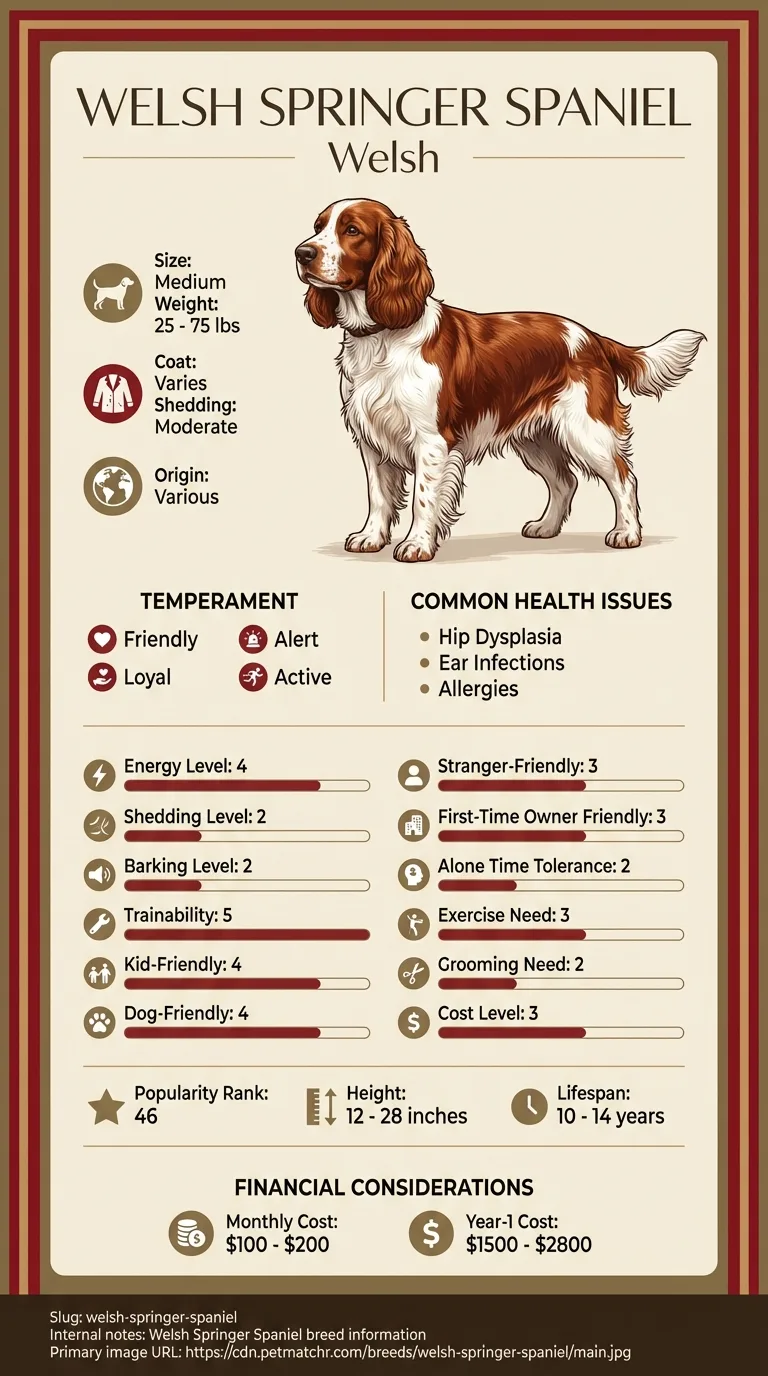
Welsh Springer Spaniel Cost in New York City infographic

Why costs vary

This matters more for this breed than for most because of what is on its documented list. Ear infections need rechecks. Epilepsy needs monitoring visits. Glaucoma needs an ophthalmologist rather than a general practice. Every one of those is a repeat journey, and here every journey is a paid one.

Cost summary

Top-of-market service pricing with an eight-month prevention window, plus a transport line that most budgets for this city omit entirely.

Estimate · source: estimation · confidence: medium · updated 2026-09-06 · not a quote

First year
$2030 - $4205
Ongoing monthly
$145 - $290

First-year expenses

ItemCost range
One-time setup: first exam, spay or neuter, gear
Choosing a walkable primary practice at this stage saves more than any single purchase here.
$580 - $950

Monthly expenses

ItemCost range
Food for a 35-to-55-pound active dog
Priced at inner-borough retail rates, among the highest on this list.
$70 - $118

Is pet insurance worth it?

A policy covers the treatment but not the getting there, which is worth remembering in the one city where the journey is a genuine line item.

When insurance makes sense

Strong case at these prices. Quote it before anything is recorded, and budget transport separately since no policy reimburses it.

When you might skip it

Only with a reserve genuinely sized to this market, which is considerably larger than a national-average figure.

Ways to save without cutting essentials

The New York City savings come from choosing your geography carefully once, rather than from economising repeatedly.

  • Pick a primary veterinary practice you can walk to, even if a cheaper one is two neighbourhoods away.
  • Ask which specialists your practice refers to and where they are, before you need a referral.
  • Work out your route to a twenty-four-hour hospital in advance, including how you would travel at night.
  • Walk to routine appointments in decent weather; this breed will happily cover a couple of miles.
  • Position the dog on the inside of the pavement and favour cross-streets, which costs nothing and suits a reserved temperament.

New York City Cost Factors: Every Vet Trip Is a Car

Work it through concretely. A puppy year involves a vaccination series, a spay or neuter, and a handful of follow-ups. A dog with recurring ear trouble adds a recheck two weeks after every course. A dog on anticonvulsants adds periodic bloodwork. A referral to a board-certified specialist means travelling to whichever borough that specialist practises in, at whatever hour the appointment falls.

None of those can be done by subway with a fifty-pound dog. Ride-hailing services allow drivers to decline animals and frequently do, particularly in the rain, which is precisely when you have an appointment. Yellow taxis are at the driver's discretion. The reliable options — a pet-specific car service, or knowing a driver who is happy to take dogs — cost more and need booking rather than hailing.

The planning that saves the most money is therefore about geography. Choose a primary veterinary practice you can genuinely walk to, even if a slightly cheaper one sits two neighbourhoods away, because the fare difference will erase the saving within a year. Ask that practice which specialists they refer to and where those specialists are, so a referral does not become a cross-borough expedition by default. And identify one twenty-four-hour emergency hospital you could reach at three in the morning, along with how you would actually get there — this is not a decision to be making while holding a dog with a painful eye.

The alternative worth knowing about is the least glamorous one: for a dog this size, in reasonable weather, many of these trips are simply a walk. A breed rated 4 out of 5 on exercise need will not object to two miles across town.

Density, an Eight-Month Season, and a Dog That Keeps Its Distance

Everything else here is expensive in the ways you would expect. Grooming, boarding, daycare and routine veterinary work all price near the top of the country, and an apartment household without a yard usually acquires a dog-walking line as a matter of course. Real winters at least keep flea and tick prevention to about eight months instead of twelve.

Temperament is worth planning around in a city this dense. This breed is documented as reserved with strangers and rated 3 out of 5 on stranger friendliness — not a difficult dog, simply one that does not seek out unfamiliar people. Lobbies, lifts and packed sidewalks put it shoulder to shoulder with strangers dozens of times a day with no ability to create distance. Building a habit of positioning the dog on the inside of the pavement, and using quieter cross-streets rather than avenues where the route allows, costs nothing and makes the daily walk considerably less taxing for it.

The city's veterinary depth is genuine compensation. Board-certified ophthalmology, neurology and internal medicine are all available here without leaving the metropolitan area, which for a breed with this documented list is worth more than it looks on paper — provided you have solved the problem of how the dog gets there.

Welsh Springer Spaniel Cost in New York City - Density, an Eight-Month Season, and a Dog That Keeps Its Distance

Nine Rechecks, Nine Fares

A Welsh Springer in Queens went through a difficult year of recurring ear trouble — four courses of treatment, each with a follow-up appointment two weeks later, plus the annual visit. The practice was excellent and reasonably priced for the city. It was eleven crosstown journeys, most of them in weather, none of them possible on the subway. Her owner totalled the fares at the end of the year and found they had come to more than two of the treatment courses had. She moved to a practice six blocks from home the following spring, which cost slightly more per visit and considerably less per year.

Key takeaway: For a medium-sized dog in this city, proximity to the veterinarian is a financial decision rather than a convenience, because the subway is not an option and the visits repeat.

Frequently asked questions

How much does a Welsh Springer Spaniel cost per month in New York City?

About $145 to $290, near the top of this list, driven by service prices and by an apartment household's typical dog-walking costs.

What is the first-year total?

Roughly $2,030 to $4,205, covering the first exam, vaccination series, spay or neuter if needed, and gear alongside monthly costs.

Can this breed ride the subway?

No. Transit rules require dogs to be in a carrier, and at 35 to 55 pounds this breed cannot practically be carried through a station. Plan on walking or on a car for every trip.

Why does that matter more for a Welsh Springer?

Because its documented conditions generate repeat visits — ear rechecks, seizure monitoring, ophthalmology follow-ups — and in this city every one of those journeys has a fare attached.

How do I keep transport costs down?

Choose a primary practice within walking distance even if it is not the cheapest, ask where they refer, and identify a reachable emergency hospital in advance rather than at three in the morning.

What emergency fund makes sense in New York City?

Around $1,015 for a serious unplanned visit at local pricing, and it is worth holding a little beyond that for the transport an emergency will also require.

Quick answers

View more answers
Costs

Welsh Springer Spaniel cost in New York City

About $145 to $290 a month and $2,030 to $4,205 in year one. The overlooked local line is transport: at 35 to 55 pounds this breed cannot use the subway, so every recurring veterinary visit its documented conditions generate is a paid car journey or a long walk.

Related DogBreedCompass guides

Important reminder

This guide is not medical advice. If your dog shows pain, sudden behavior change, or worsening symptoms, consult a licensed veterinarian.

Some links may be affiliate links. We may earn a commission at no extra cost to you. We only suggest products we believe are helpful for dog owners.

Get the 12-month budget for this breed in your city

One sheet with every line item, the emergency fund and when insurance pays off - unlocks on this page.

You get: 12-month budget sheet

No spam. One-click unsubscribe. See our privacy policy.

Preview page 1 before you decide.

Related guides